Every arpeggio, dominant 7th and diminished 7th for Grades 1 to 8
The complete arpeggio requirements of the ABRSM Piano syllabus for 2025 and 2026, one grade at a time, engraved on a grand stave: every arpeggio in root position and inversion, every dominant 7th with its resolution, and every diminished 7th.
Introduction
An arpeggio is a chord taken one note at a time. Where a scale walks every step of the key, the arpeggio leaps along its skeleton: root, 3rd, 5th, and round again. Pianists meet the shape everywhere, from Alberti basses to concerto flourishes, and the exam asks for it at every grade because playing one well proves things a scale cannot: a hand that knows the chord under the fingers, a thumb that travels calmly over wide gaps, and an arm that carries the hand up the keyboard instead of leaving the fingers to stretch for it.
This guide collects the arpeggio side of the syllabus in one place. The syllabus itself groups the requirements exactly this way: its speed table lists "arpeggios, including dominant and diminished 7ths" as one family, and this guide follows that grouping. Plain arpeggios run from Grade 1, the diminished 7th arrives at Grade 5, and the dominant 7th at Grade 6. From Grade 7 the plain arpeggios turn over into first inversion, and at Grade 8 into second.
Scales and arpeggios together carry 21 of the 150 marks at every grade, and the arpeggio requests are usually the shorter half of that conversation with the examiner. They are also where a shaky hand shows first, because there is nowhere to hide between the notes: each leap either lands in the middle of the key or it does not.
Everything here matches the companion volume, ABRSM Piano Scales, which covers the full requirement lists including the scales. The engravings and the requirement tables in both are generated from the same transcription of the official syllabus, and the official qualification specification remains the authority if the two ever disagree.
How to use this guide
Chapter 1 gives the ground rules and speeds. Chapter 2 explains the notation. Chapters 3 to 10 are Grades 1 to 8, one chapter per grade, each opening with the official requirement tables and then engraving every item. Chapter 11 is about practising arpeggios, and chapter 12 lays the whole family out in summary tables.
Nothing in a grade chapter assumes you have read the earlier ones, so if you are preparing a particular grade, start there.
1. The ground rules
The rules below come from the syllabus and apply to every requirement in this guide.
From memory. All arpeggios and 7ths are played from memory.
Even notes, legato. Everything in this family is played in even notes and legato. Unlike the scales, arpeggios are never asked staccato at any grade.
No pedal. All requirements are played without pedalling.
Root position unless stated. Arpeggios and dominant 7ths are in root position except where the syllabus says otherwise, which it does at Grade 7 (arpeggios in first inversion only) and Grade 8 (second inversion only).
Dominant 7ths resolve. Every dominant 7th must finish by resolving on the tonic of its key. The engravings show the resolution as the closing longer note.
Any octave, any fingering. You may start at any octave provided the required range is covered, hands one octave apart for hands-together work, and any fingering that produces a successful musical outcome is acceptable.
In the exam the examiner asks for at least one of each type on the grade's list, majors before minors, naming the key or starting note and, for hands-separately items, the hand.
Speeds
Guide speeds, not requirements. They relate to groups of four semiquavers, so crotchet = 58 means four notes at 58 beats per minute, and the minim marks mean eight notes per beat.
| Requirement | Grade 1 | Grade 2 | Grade 3 | Grade 4 | Grade 5 | Grade 6 | Grade 7 | Grade 8 |
|---|---|---|---|---|---|---|---|---|
| Arpeggios (including dominant and diminished 7ths) | crotchet = 58 | crotchet = 63 | crotchet = 72 | crotchet = 80 | minim = 44 | minim = 50 | minim = 56 | minim = 66 |
2. Reading the notation
The engravings follow the same conventions as the companion scales volume.
Grand stave, both hands. Right hand on the upper stave, left hand on the lower, one octave apart. For hands-separately requirements the picture still shows both staves: practise each on its own.
Semiquavers in fours. Notes are semiquavers beamed in fours, the final note lengthened to mark the close, with no time signatures and no barlines.
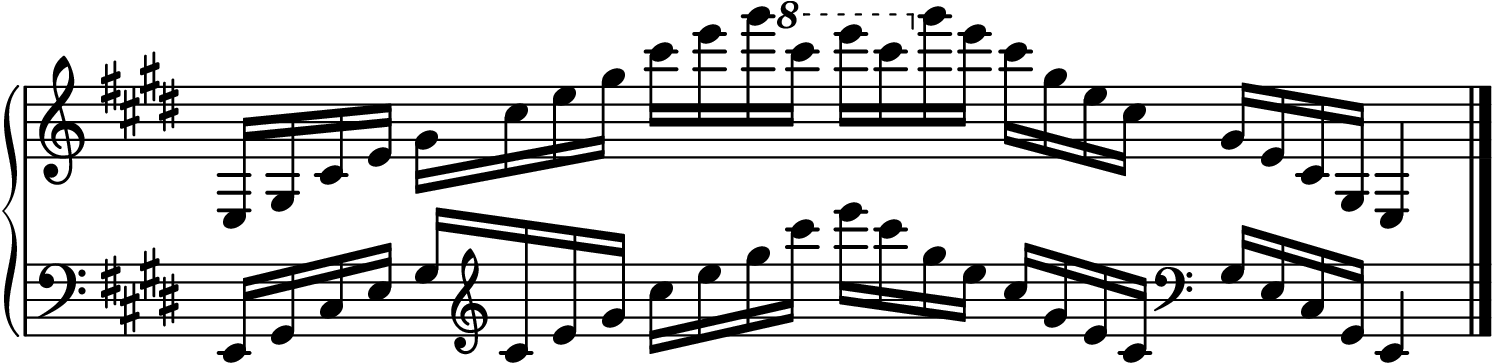
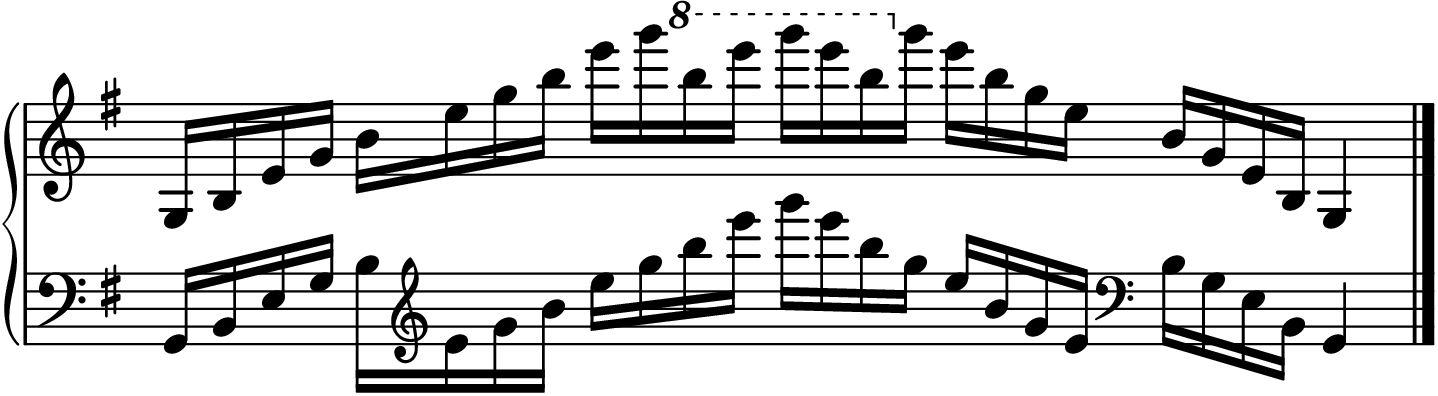
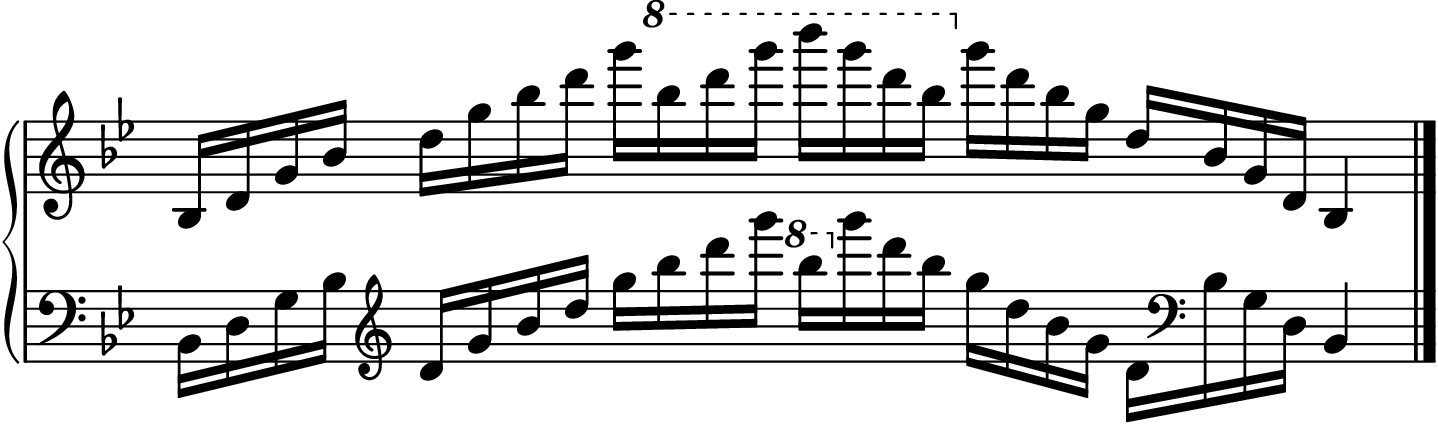
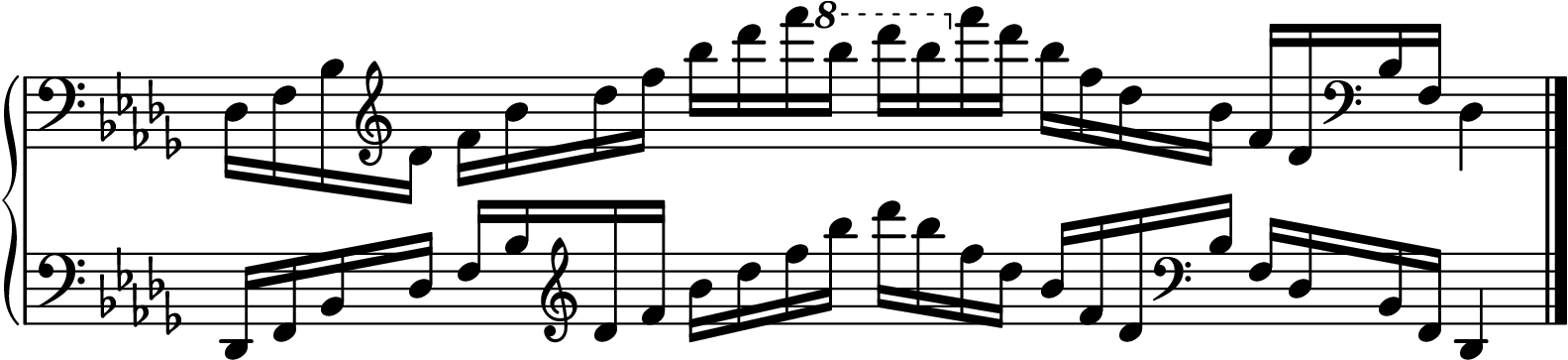
Inversions. A first-inversion arpeggio starts on the 3rd of the chord, a second-inversion arpeggio on the 5th. The engraving simply begins on that note and climbs the same chord.
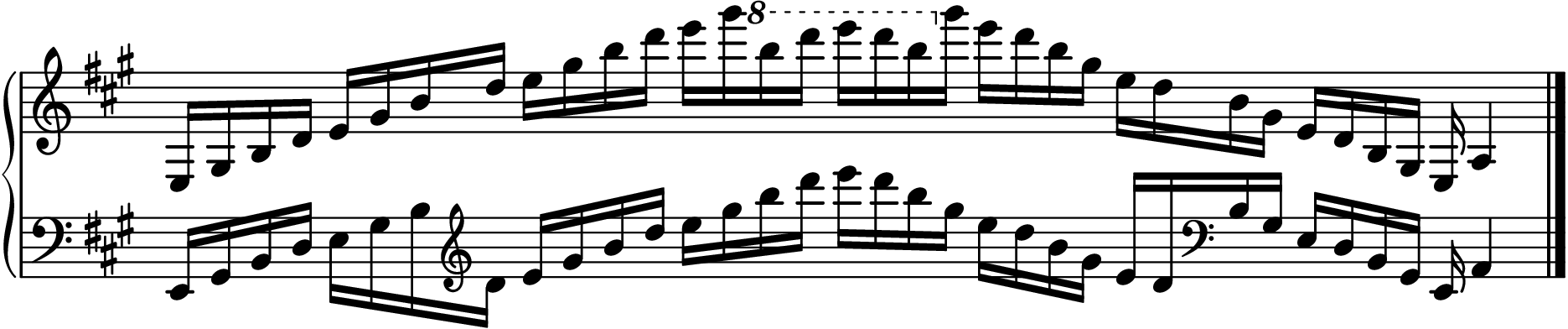
Dominant 7ths. Engraved in root position on the dominant of the named key, with the key signature of that key, and closing with the resolution on to the tonic, written here a 4th above the final root.
Diminished 7ths. Spelled as stacked minor 3rds, adjusted where that would need a double flat. Enharmonic spellings are equally acceptable in an exam played from memory.
Clef changes and octave signs. Four-octave requirements change clef mid-line or carry an 8va bracket where they leave the stave. The notes are the same; only the spelling on the page changes.
The circle of fifths and the sevenths
The keys the requirements come from are best seen on the circle of fifths: the major keys arranged clockwise from C at the top, each step rising a perfect 5th and adding one sharp, each anticlockwise step falling a 5th and adding one flat, with the relative minors on the inner ring. The companion volume, ABRSM Piano Scales, gives the circle a full chapter; what matters here is what it says about the sevenths.
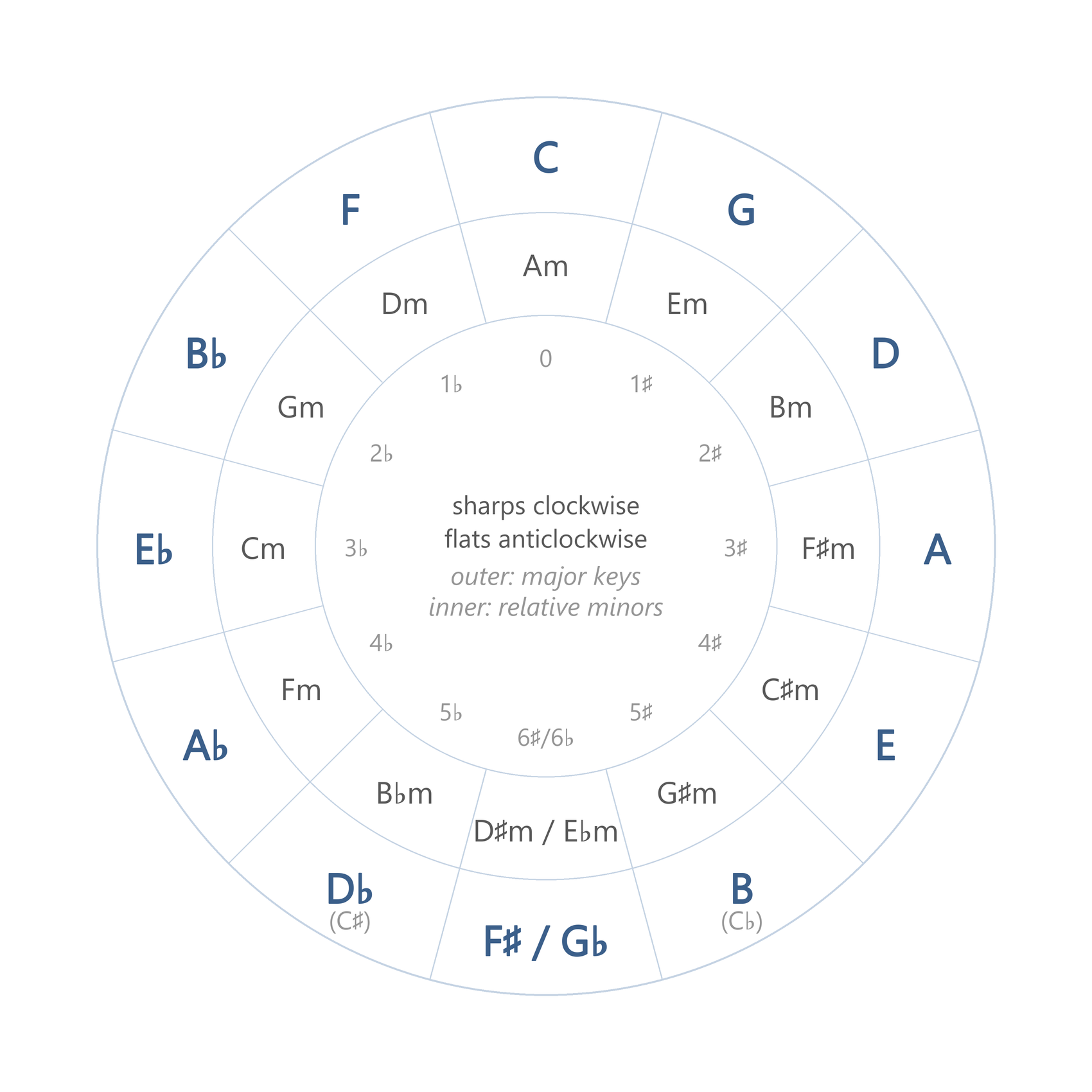
The dominant 7th lives one step clockwise of its key. Asked for the dominant 7th in the key of D, you build the chord on A, D's clockwise neighbour, and the required resolution on to the tonic is the single anticlockwise step home. Every dominant 7th in Grades 6 to 8 is that same move made from a different position, which is why naming the dominant to yourself before playing, as chapter 11 suggests, quickly becomes automatic.
The diminished 7th has its own geometry. Its four notes sit a minor 3rd apart, and keys a minor 3rd apart stand at every third position of the circle, so each diminished 7th marks out a perfect square on it. Play the diminished 7th starting on C and its four notes, C, E flat, F sharp and A, are exactly the four tonics of Grade 8's scale keys: the syllabus's last square and this chord are the same shape.
3. Grade 1
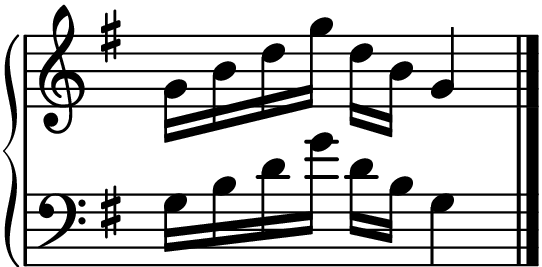
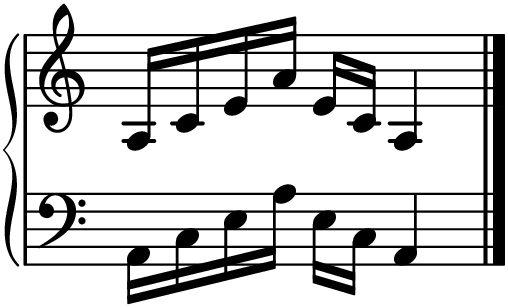
Grade 1 has two arpeggios, G major and A minor, one octave with each hand separately. Two chords, six different notes: the whole family starts here.
Arpeggios
| Requirement | Range | How |
|---|---|---|
| G major, A minor | 1 octave | hands separately |
G major arpeggio (one octave)
A minor arpeggio (one octave)
4. Grade 2
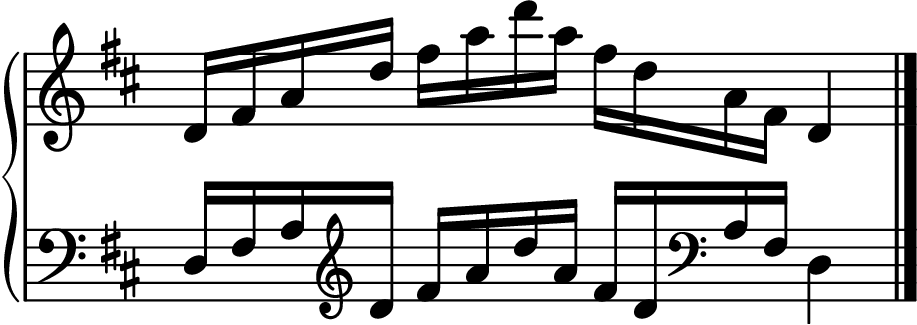
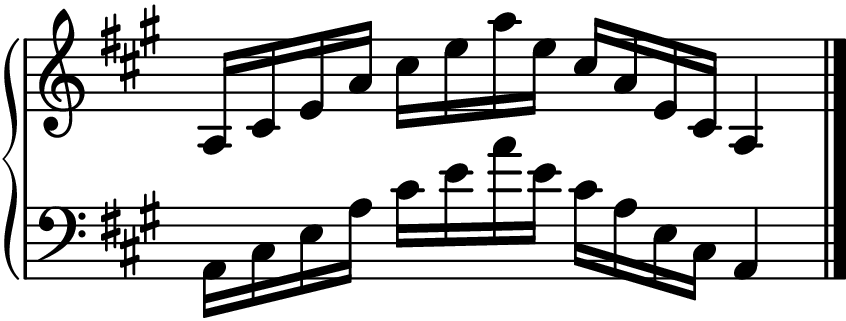
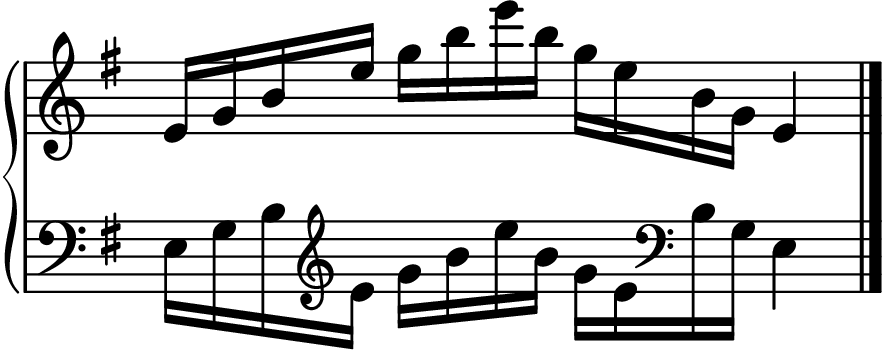
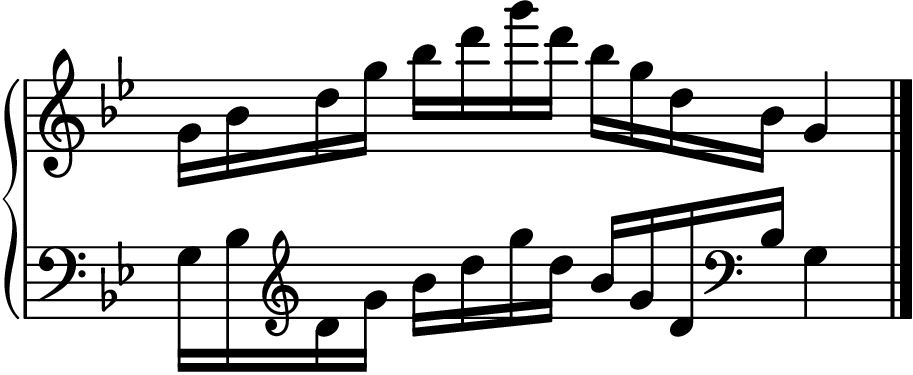
Grade 2 stretches the arpeggio to two octaves and four keys, D and A majors with E and G minors, still hands separately. The two-octave shape means the thumb now travels under twice each way.
Arpeggios
| Requirement | Range | How |
|---|---|---|
| D, A majors; E, G minors | 2 octaves | hands separately |
D major arpeggio (two octaves)
A major arpeggio (two octaves)
E minor arpeggio (two octaves)
G minor arpeggio (two octaves)
5. Grade 3
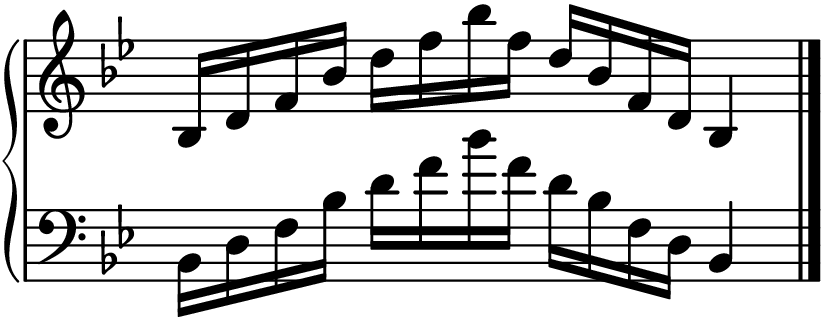
Grade 3 brings the first hands-together arpeggios, in last grade's four keys, and adds B flat and E flat majors with B and C minors hands separately. Eight keys in all, the largest list so far.
Arpeggios
| Requirement | Range | How |
|---|---|---|
| D, A majors; E, G minors | 2 octaves | hands together |
| B flat, E flat majors; B, C minors | 2 octaves | hands separately |
D major arpeggio (two octaves)
A major arpeggio (two octaves)
E minor arpeggio (two octaves)
G minor arpeggio (two octaves)
B flat major arpeggio (two octaves)
E flat major arpeggio (two octaves)
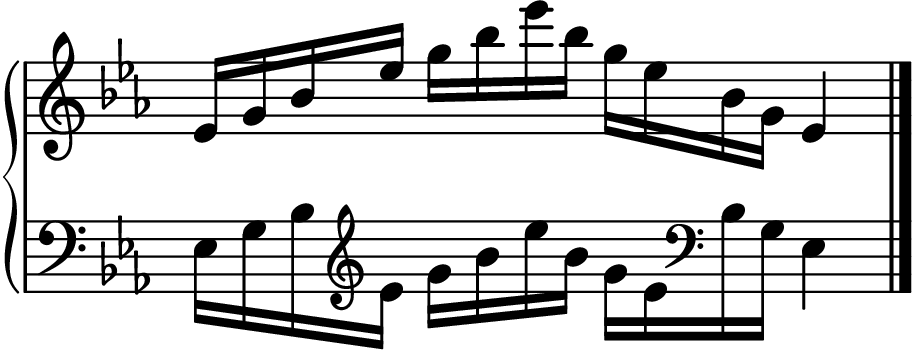
B minor arpeggio (two octaves)
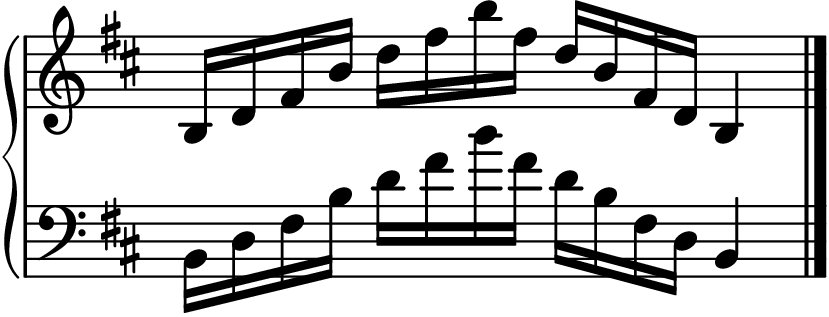
C minor arpeggio (two octaves)
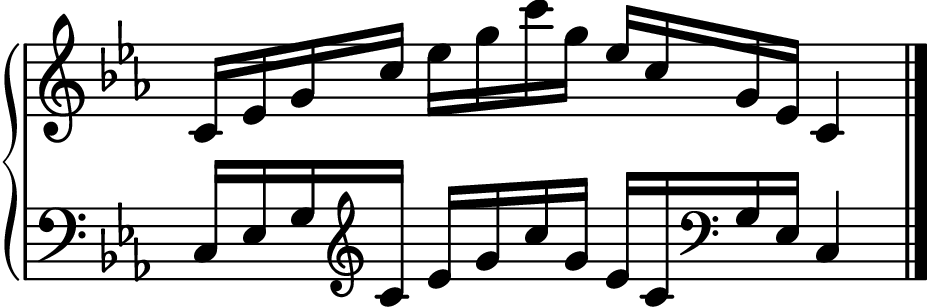
6. Grade 4
Grade 4 moves B flat, E flat, B and C to hands together and pushes the separate hands into the remote keys: B, F sharp and A flat majors, F sharp and F minors.
Arpeggios
| Requirement | Range | How |
|---|---|---|
| B flat, E flat majors; B, C minors | 2 octaves | hands together |
| B, F sharp, A flat majors; F sharp, F minors | 2 octaves | hands separately |
B flat major arpeggio (two octaves)
E flat major arpeggio (two octaves)
B minor arpeggio (two octaves)
C minor arpeggio (two octaves)
B major arpeggio (two octaves)
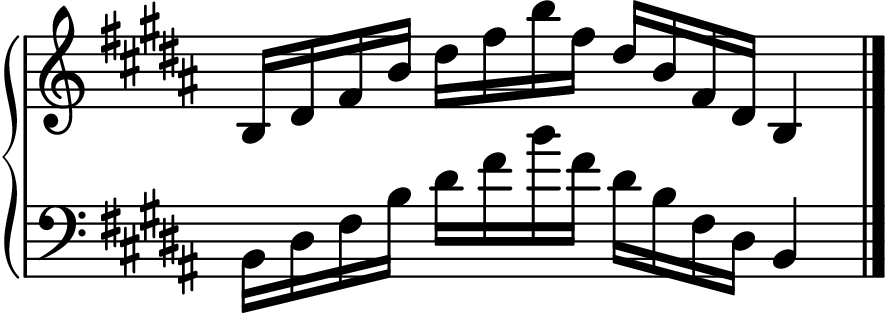
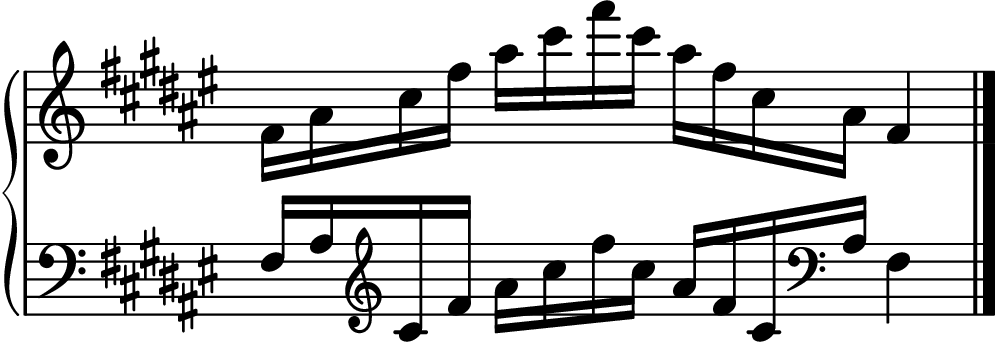
F sharp major arpeggio (two octaves)
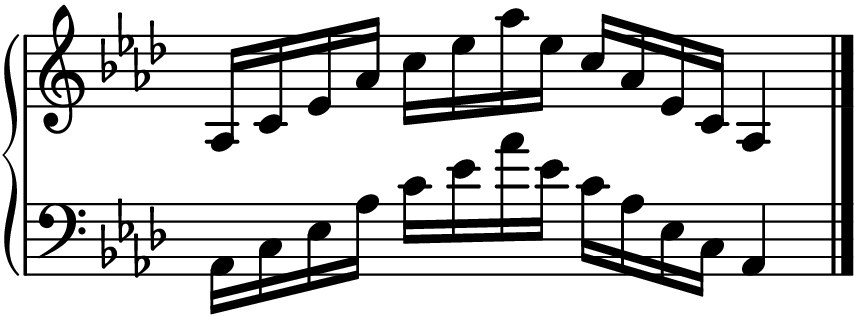
A flat major arpeggio (two octaves)
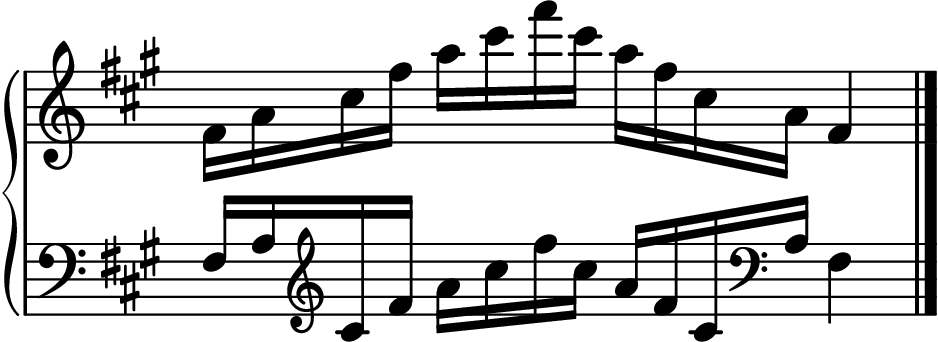
F sharp minor arpeggio (two octaves)
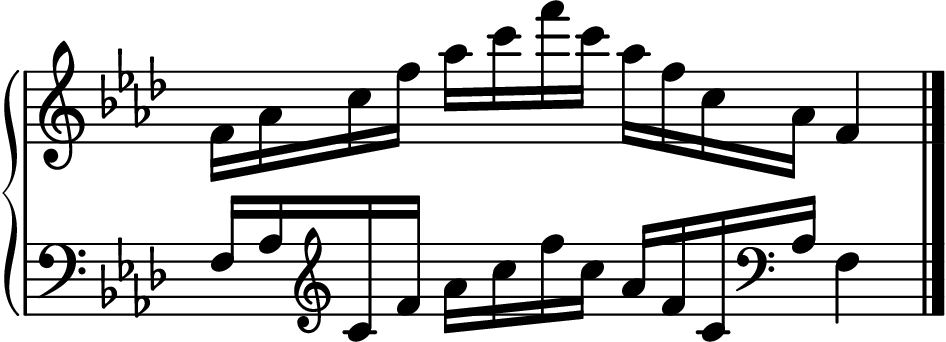
F minor arpeggio (two octaves)
7. Grade 5
Grade 5 asks for twelve arpeggios, all hands together: A, E, B, F sharp, A flat and D flat majors with F sharp, C sharp, G sharp, E flat, F and B flat minors. The diminished 7th also arrives, starting on B, hands separately.
Arpeggios
| Requirement | Range | How |
|---|---|---|
| A, E, B, F sharp, A flat, D flat majors | 2 octaves | legato; hands together |
| F sharp, C sharp, G sharp, E flat, F, B flat minors | 2 octaves | legato; hands together |
A major arpeggio (two octaves)
E major arpeggio (two octaves)
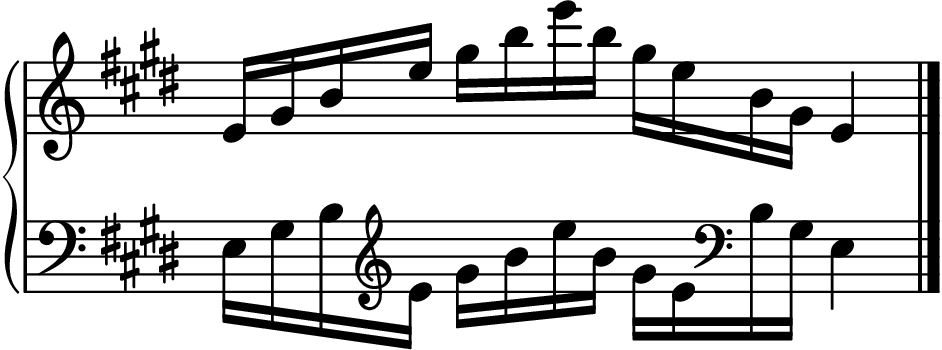
B major arpeggio (two octaves)
F sharp major arpeggio (two octaves)
A flat major arpeggio (two octaves)
D flat major arpeggio (two octaves)
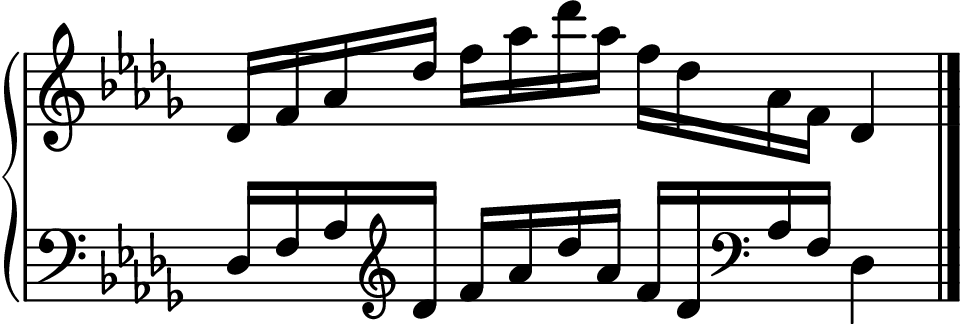
F sharp minor arpeggio (two octaves)
C sharp minor arpeggio (two octaves)
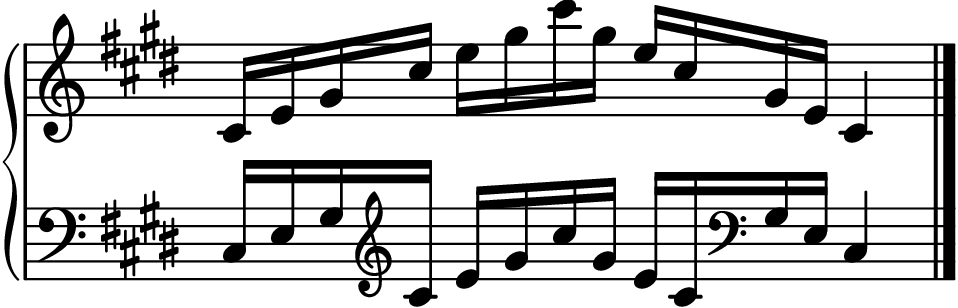
G sharp minor arpeggio (two octaves)
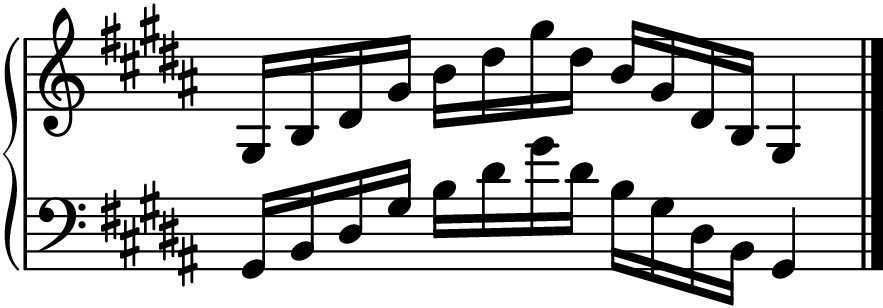
E flat minor arpeggio (two octaves)
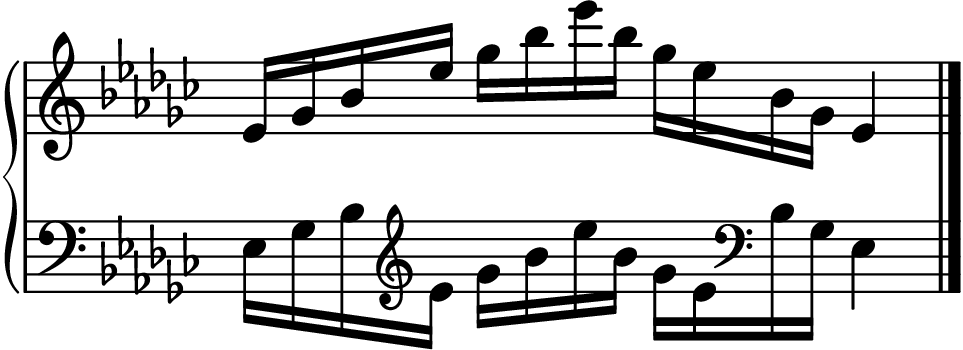
F minor arpeggio (two octaves)
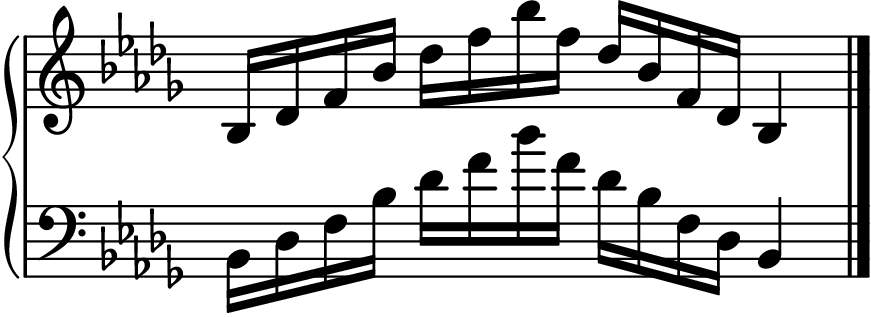
B flat minor arpeggio (two octaves)
Diminished 7th
| Requirement | Range | How |
|---|---|---|
| starting on B | 2 octaves | legato; hands separately |
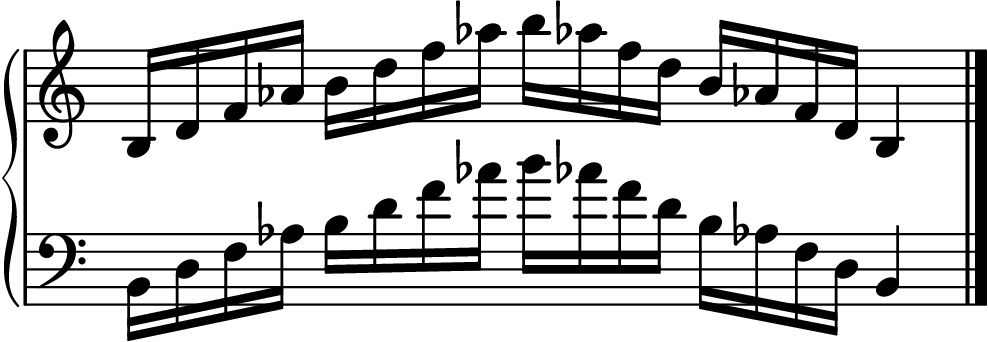
Diminished 7th starting on B (two octaves)
8. Grade 6
Grade 6 doubles the range to four octaves, hands together, in D, F, A flat and B major and minor. The dominant 7th appears in the same four keys, resolving on the tonic, and the diminished 7th goes to four octaves hands together, starting on G sharp or B.
Arpeggios
| Requirement | Range | How |
|---|---|---|
| D, F, A flat, B majors; D, F, G sharp, B minors | 4 octaves | legato; hands together (root position) |
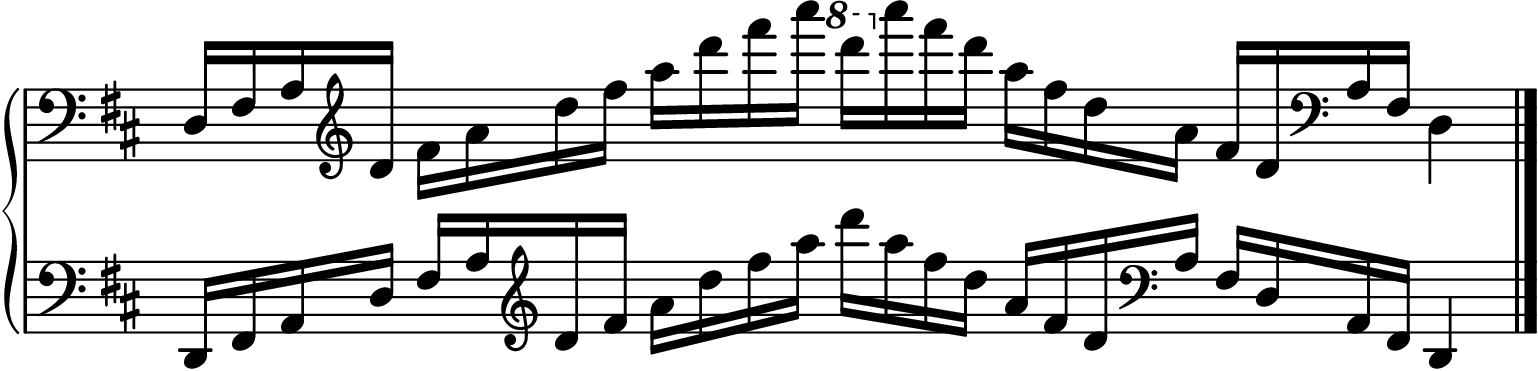
D major arpeggio (four octaves)
F major arpeggio (four octaves)
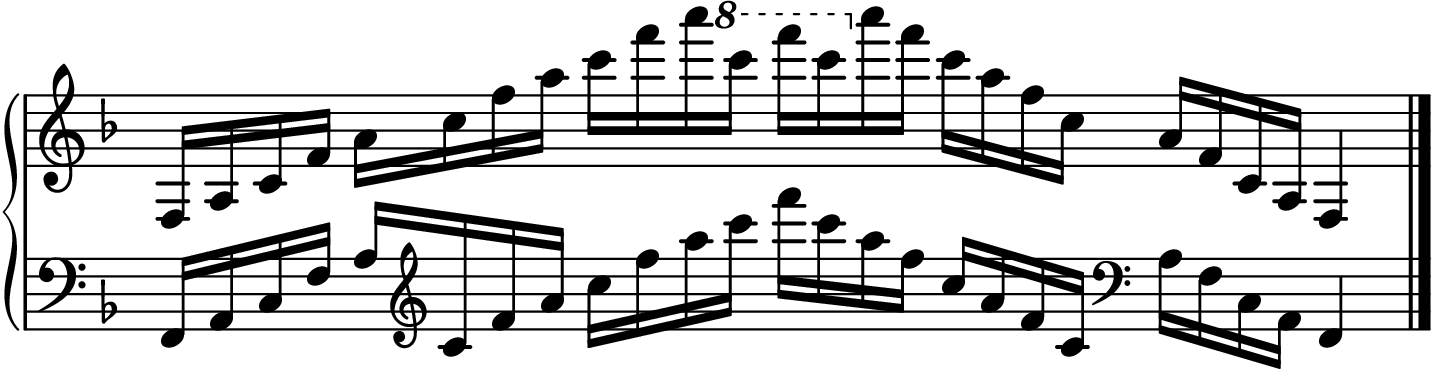
A flat major arpeggio (four octaves)
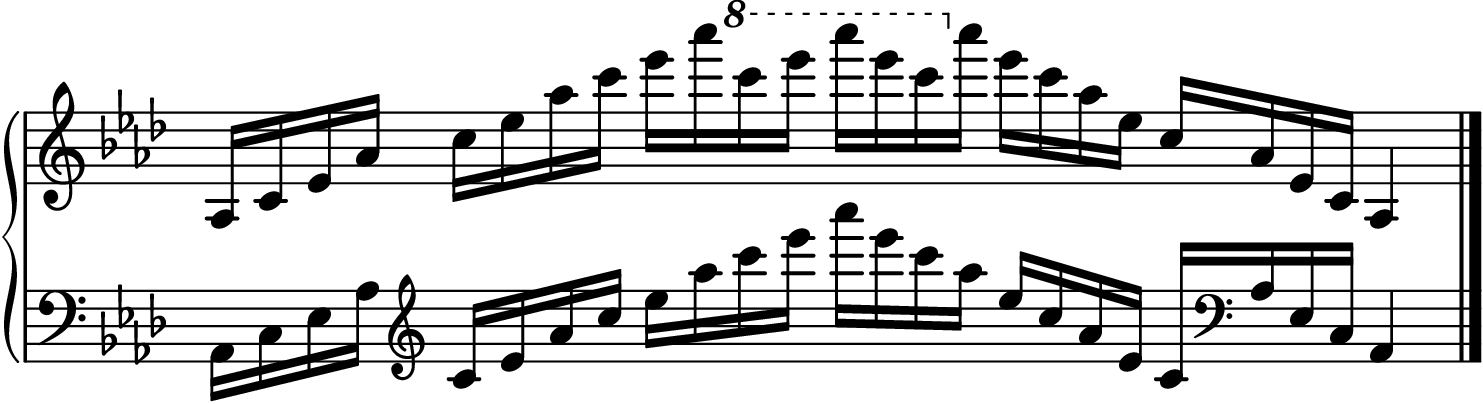
B major arpeggio (four octaves)
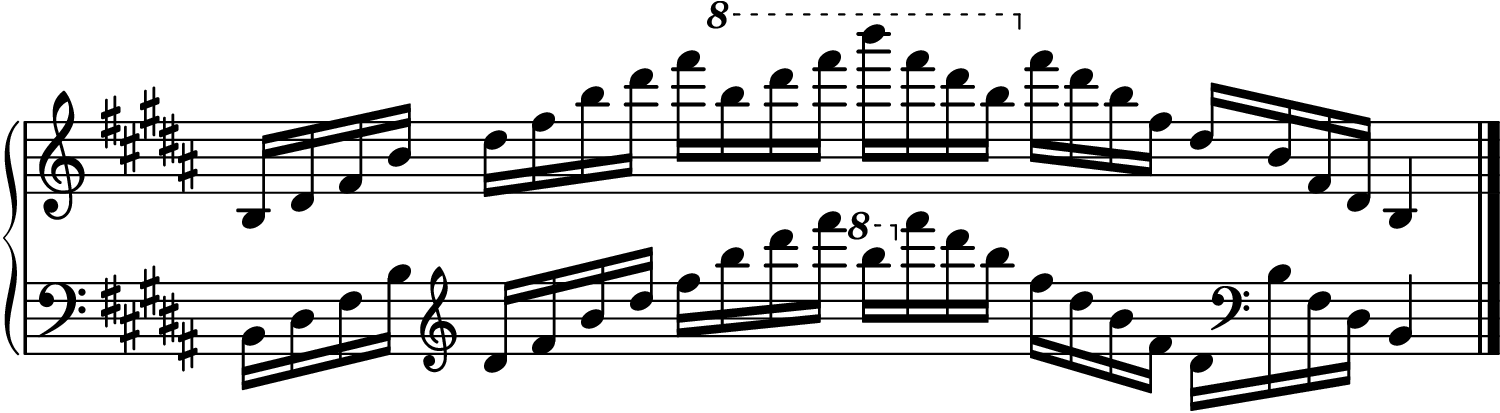
D minor arpeggio (four octaves)
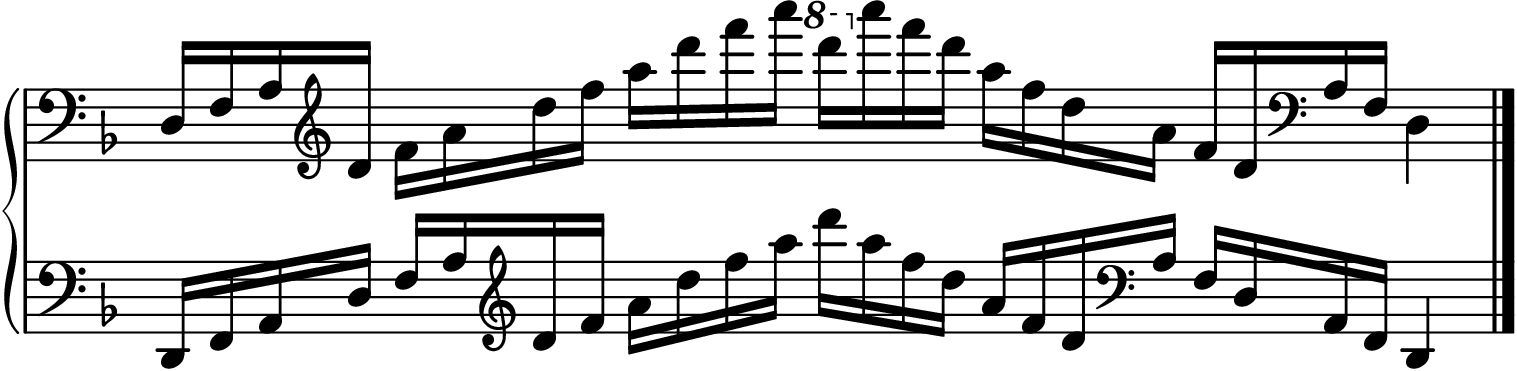
F minor arpeggio (four octaves)
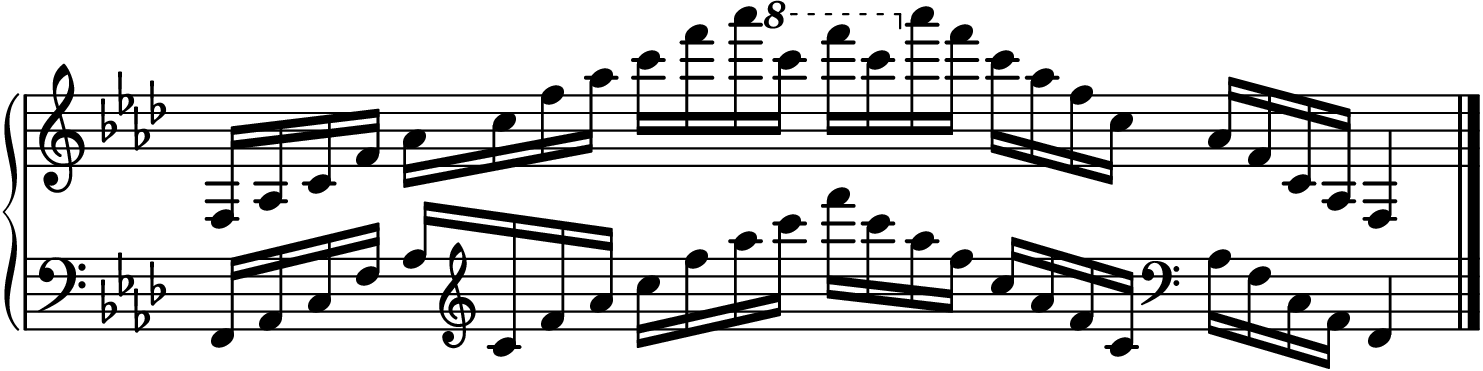
G sharp minor arpeggio (four octaves)
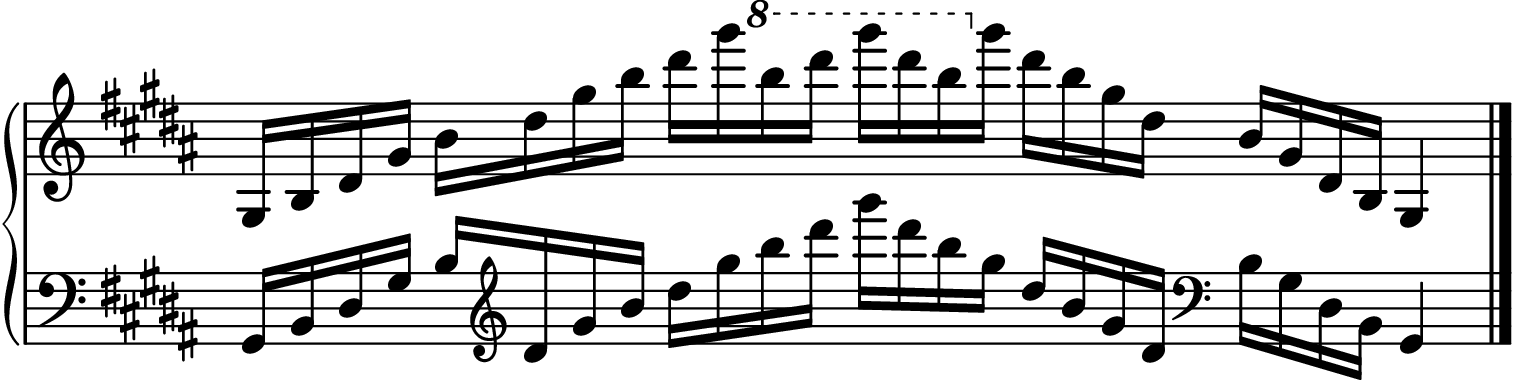
B minor arpeggio (four octaves)
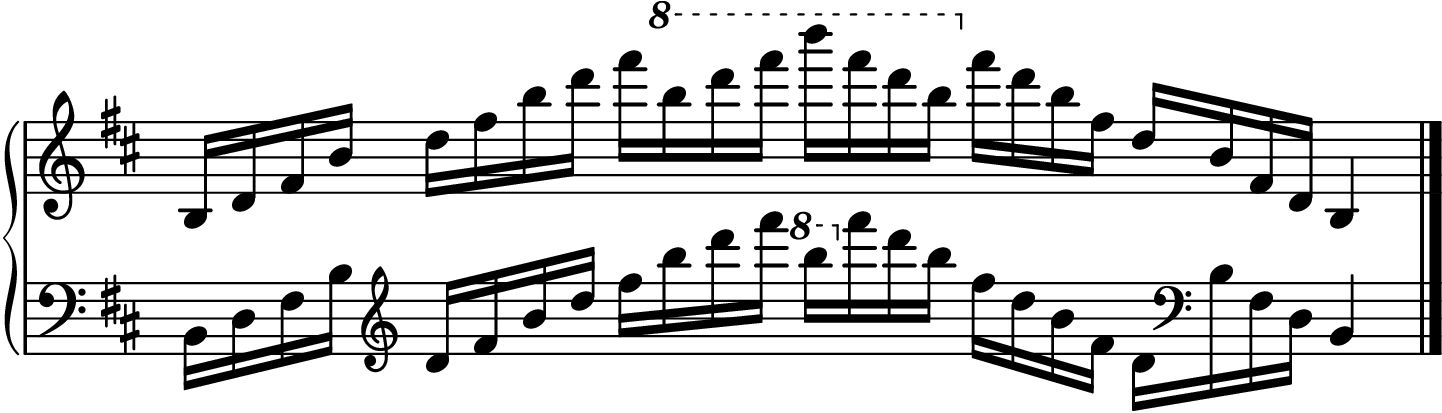
Dominant sevenths (resolving on the tonic)
| Requirement | Range | How |
|---|---|---|
| in the keys of D, F, A flat and B | 4 octaves | legato; hands together |
Dominant 7th in the key of D (four octaves)
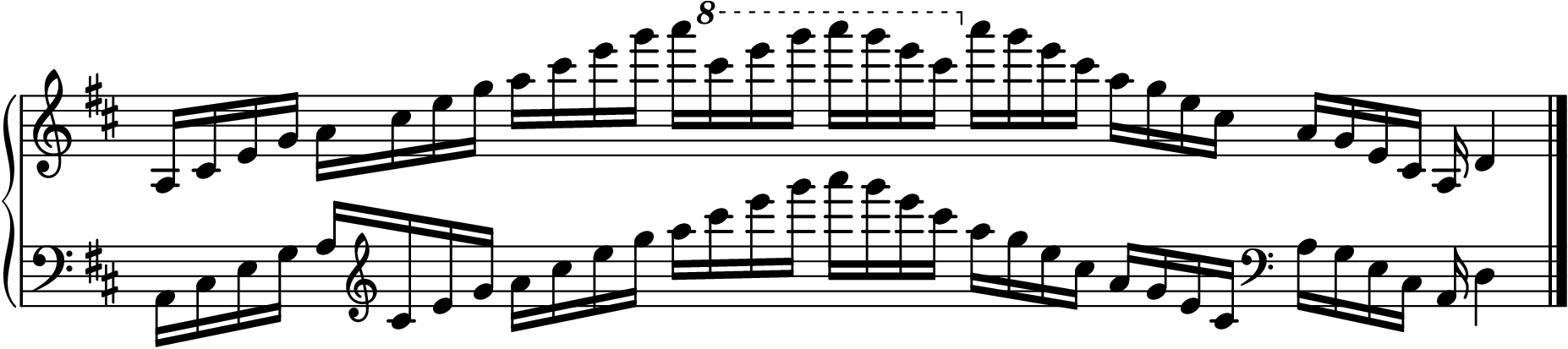
Dominant 7th in the key of F (four octaves)

Dominant 7th in the key of A flat (four octaves)
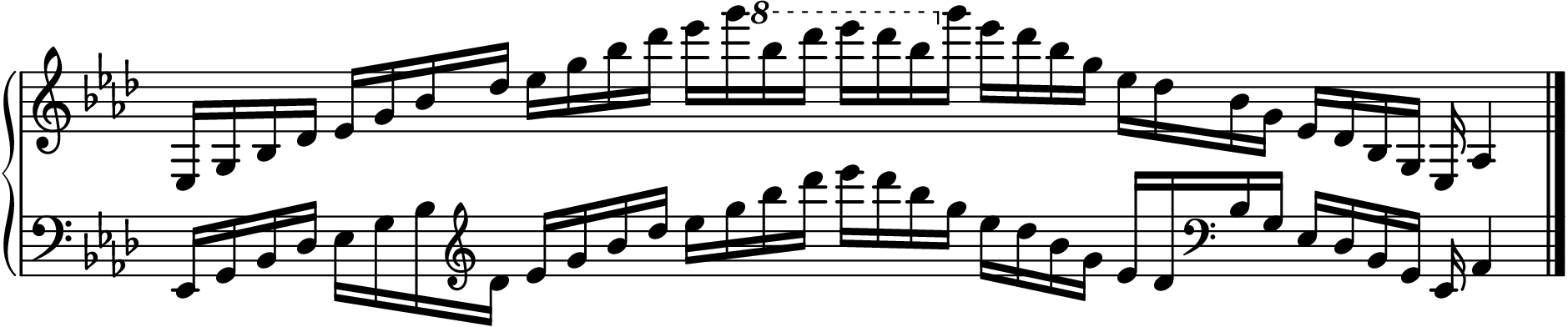
Dominant 7th in the key of B (four octaves)
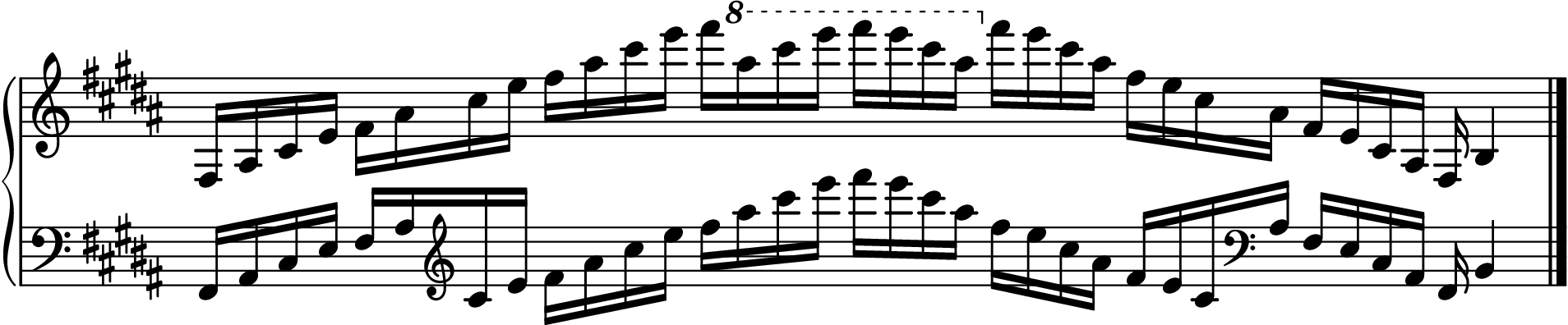
Diminished sevenths
| Requirement | Range | How |
|---|---|---|
| starting on G sharp; starting on B | 4 octaves | legato; hands together |
Diminished 7th starting on G sharp (four octaves)
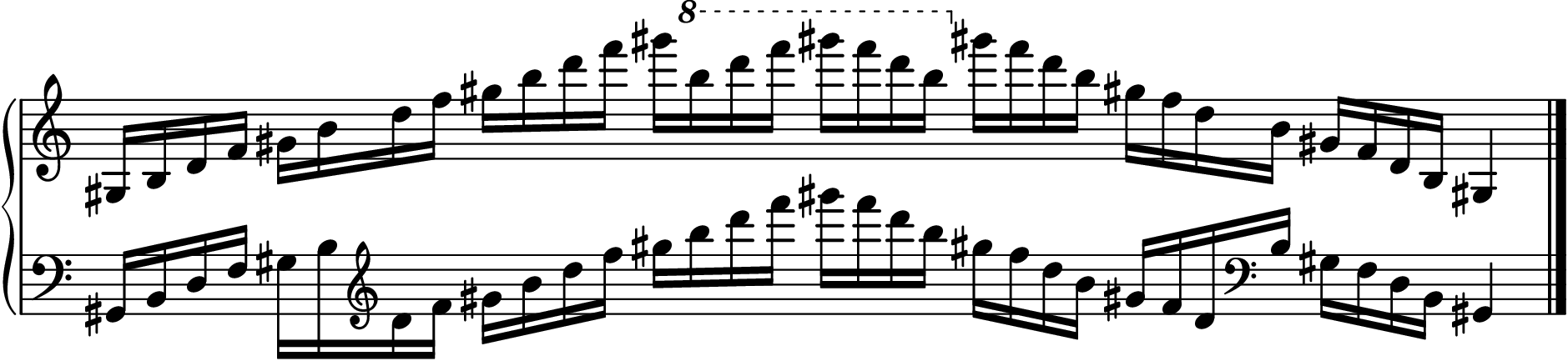
Diminished 7th starting on B (four octaves)
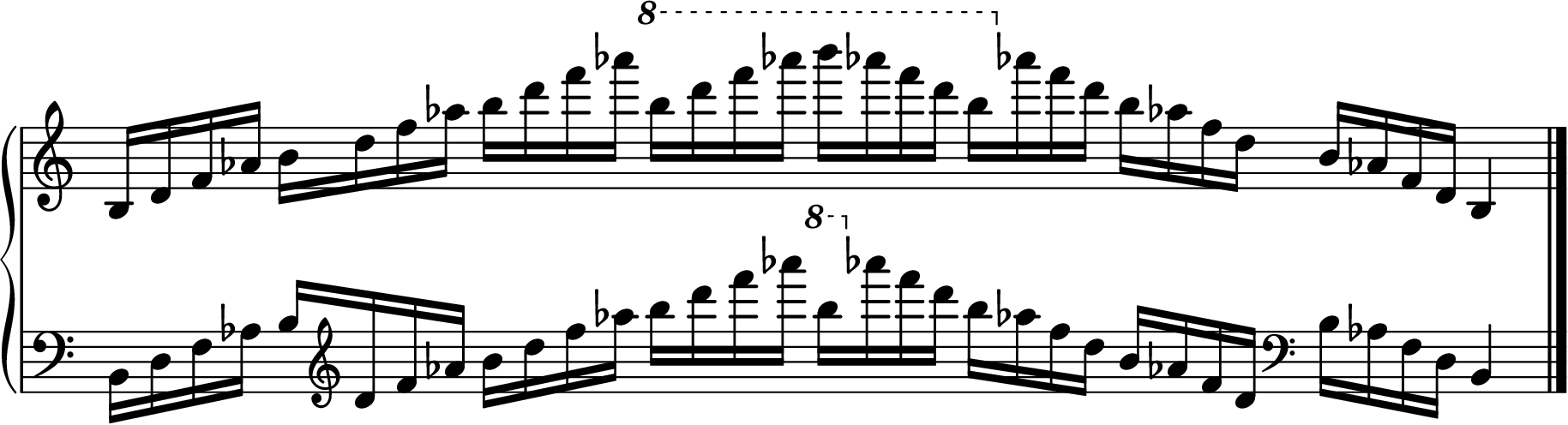
9. Grade 7
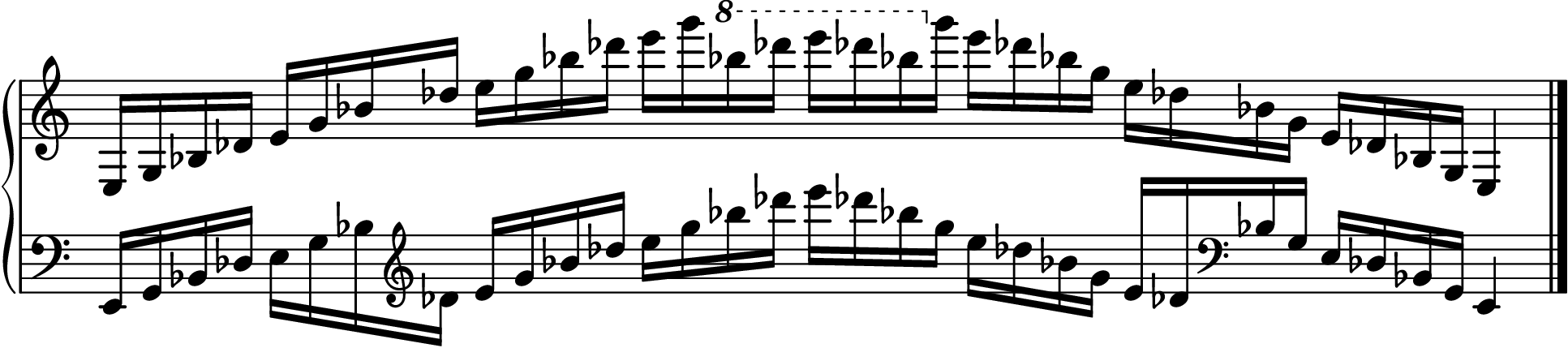
Grade 7 turns the arpeggio over: first inversion only, four octaves hands together, in D flat, E, G and B flat major and minor. Dominant 7ths come in the same four keys, and diminished 7ths start on B flat or E.
Arpeggios
| Requirement | Range | How |
|---|---|---|
| D flat, E, G, B flat majors; C sharp, E, G, B flat minors | 4 octaves | legato; hands together; first inversion only |
D flat major arpeggio, first inversion (four octaves)
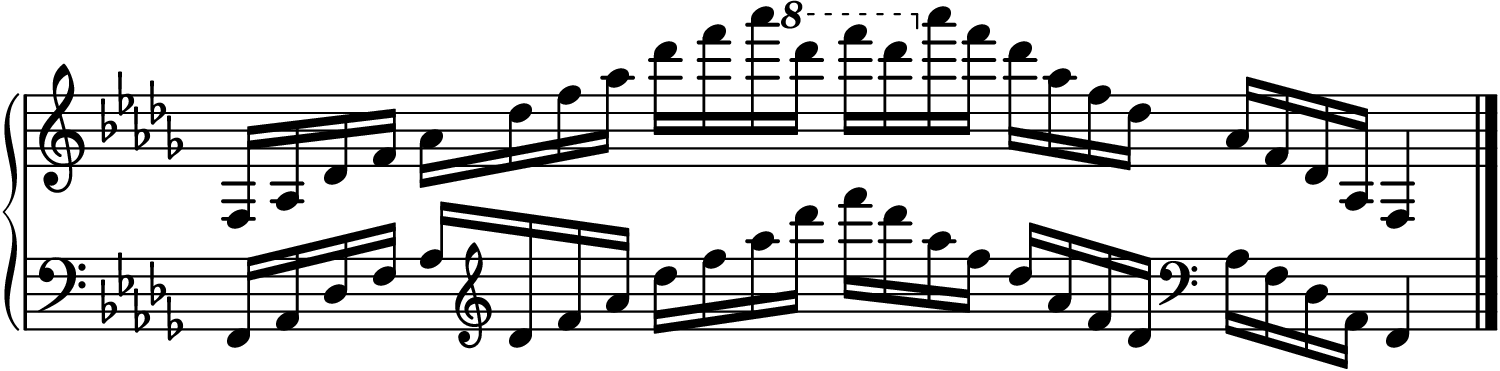
E major arpeggio, first inversion (four octaves)
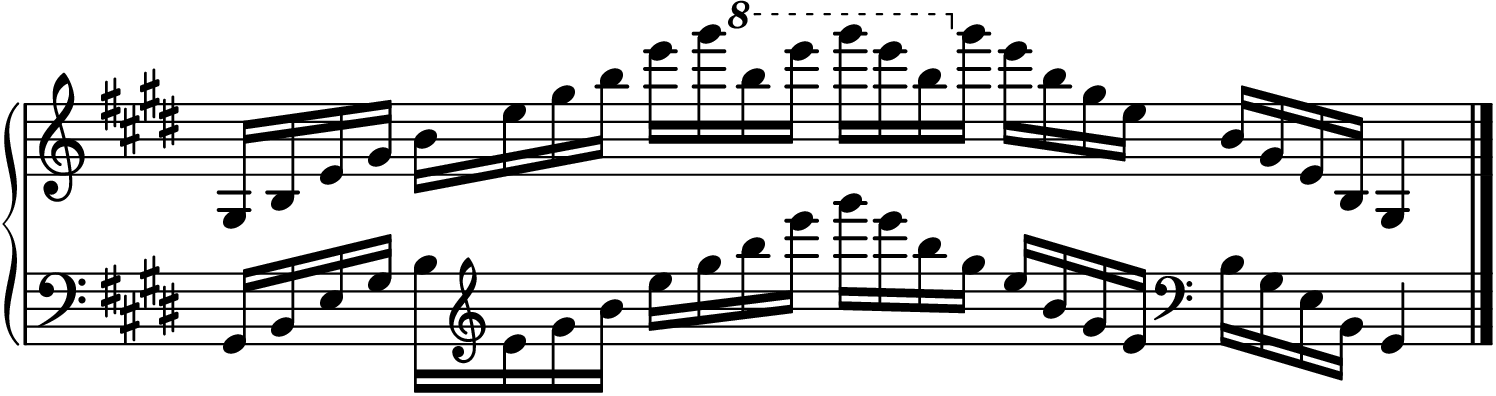
G major arpeggio, first inversion (four octaves)
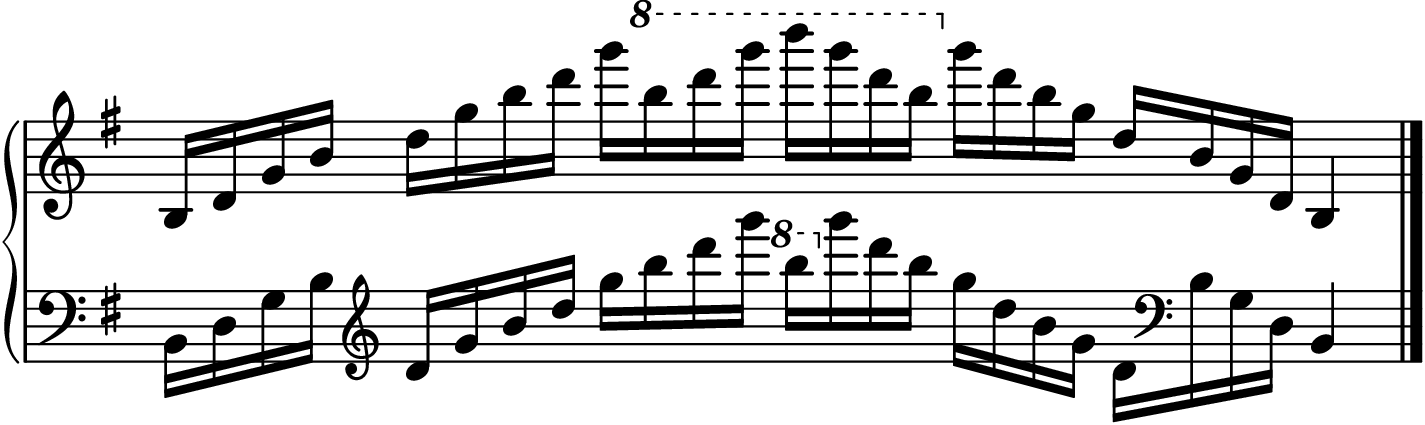
B flat major arpeggio, first inversion (four octaves)
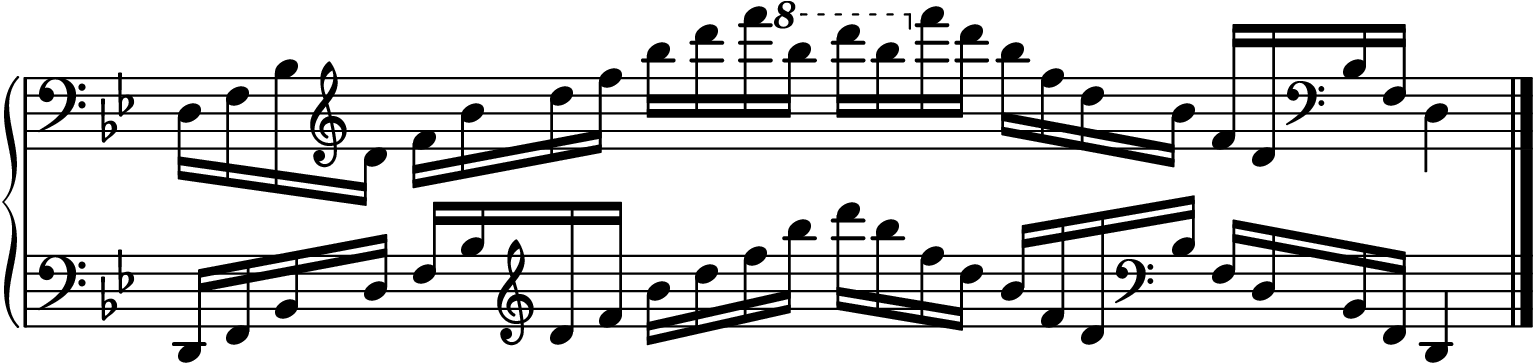
C sharp minor arpeggio, first inversion (four octaves)
E minor arpeggio, first inversion (four octaves)
G minor arpeggio, first inversion (four octaves)
B flat minor arpeggio, first inversion (four octaves)
Dominant sevenths (resolving on the tonic)
| Requirement | Range | How |
|---|---|---|
| in the keys of D flat, E, G and B flat | 4 octaves | legato; hands together |
Dominant 7th in the key of D flat (four octaves)
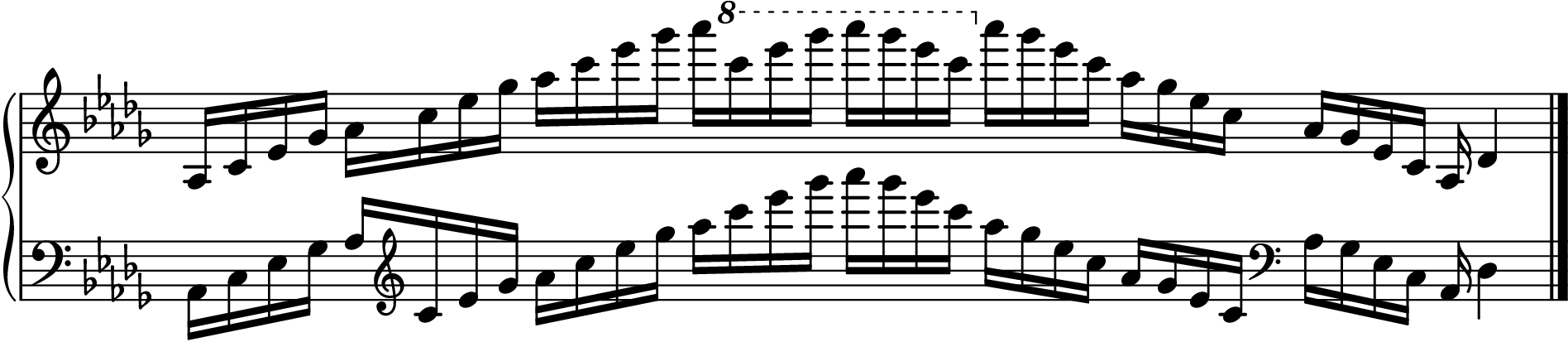
Dominant 7th in the key of E (four octaves)
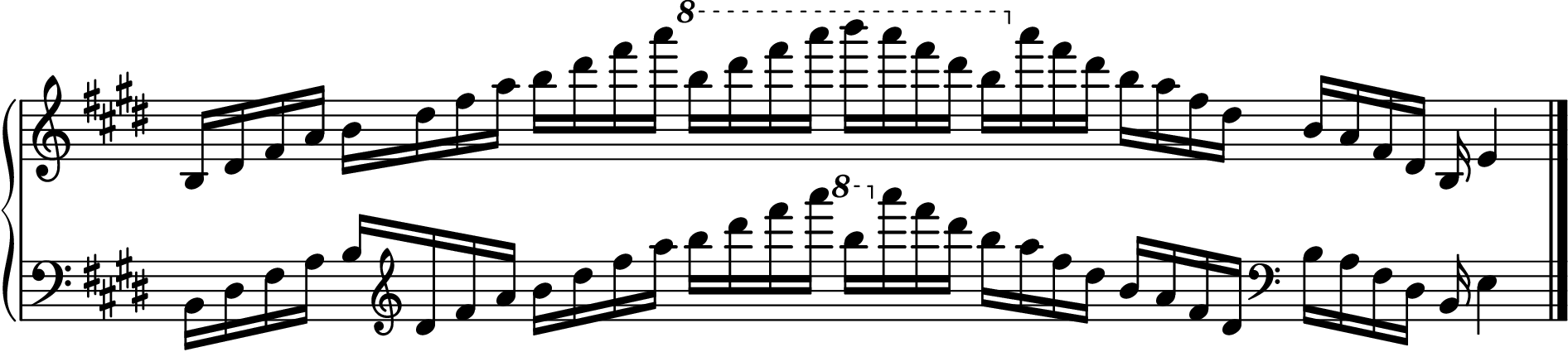
Dominant 7th in the key of G (four octaves)

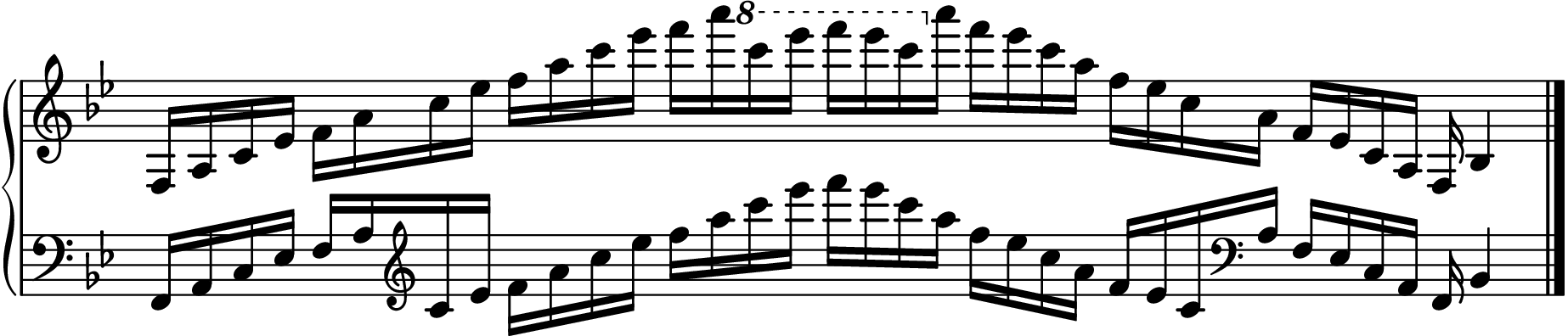
Dominant 7th in the key of B flat (four octaves)
Diminished sevenths
| Requirement | Range | How |
|---|---|---|
| starting on B flat; starting on E | 4 octaves | legato; hands together |
Diminished 7th starting on B flat (four octaves)
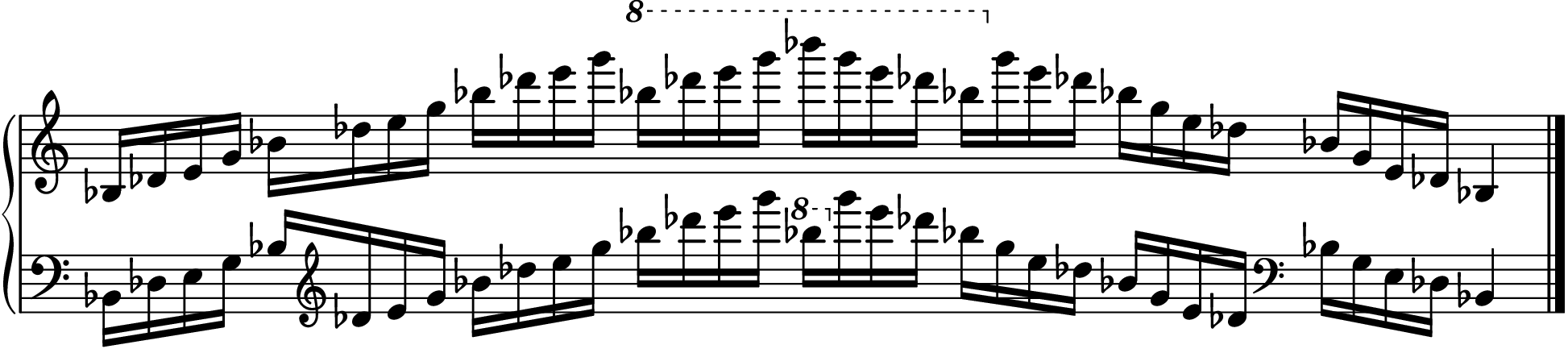
Diminished 7th starting on E (four octaves)
10. Grade 8
Grade 8 completes the set with second-inversion arpeggios, four octaves hands together, in C, E flat, F sharp and A major and minor, plus dominant 7ths in those keys and diminished 7ths starting on E flat or C.
Arpeggios
| Requirement | Range | How |
|---|---|---|
| C, E flat, F sharp, A majors; C, E flat, F sharp, A minors | 4 octaves | legato; hands together; second inversion only |
C major arpeggio, second inversion (four octaves)
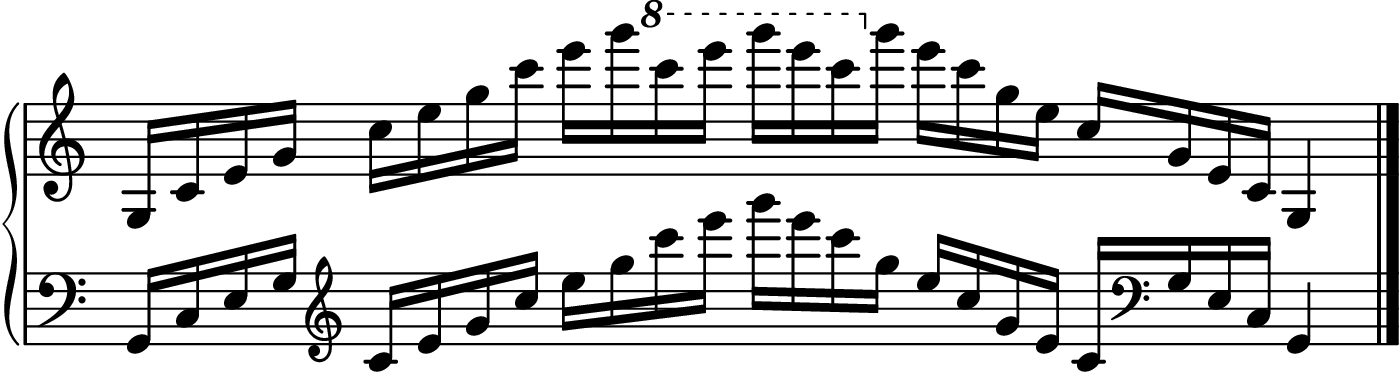
E flat major arpeggio, second inversion (four octaves)
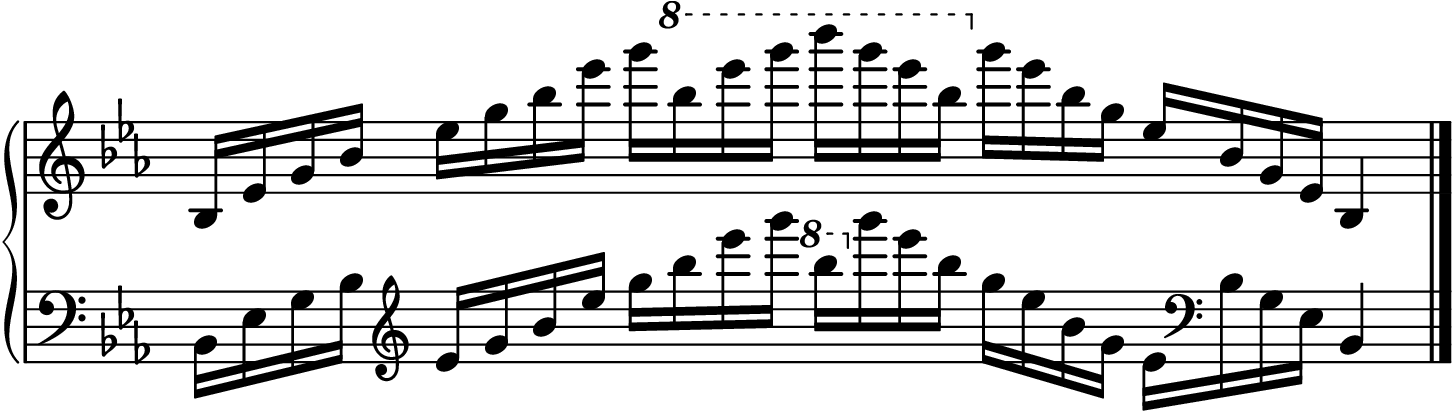
F sharp major arpeggio, second inversion (four octaves)
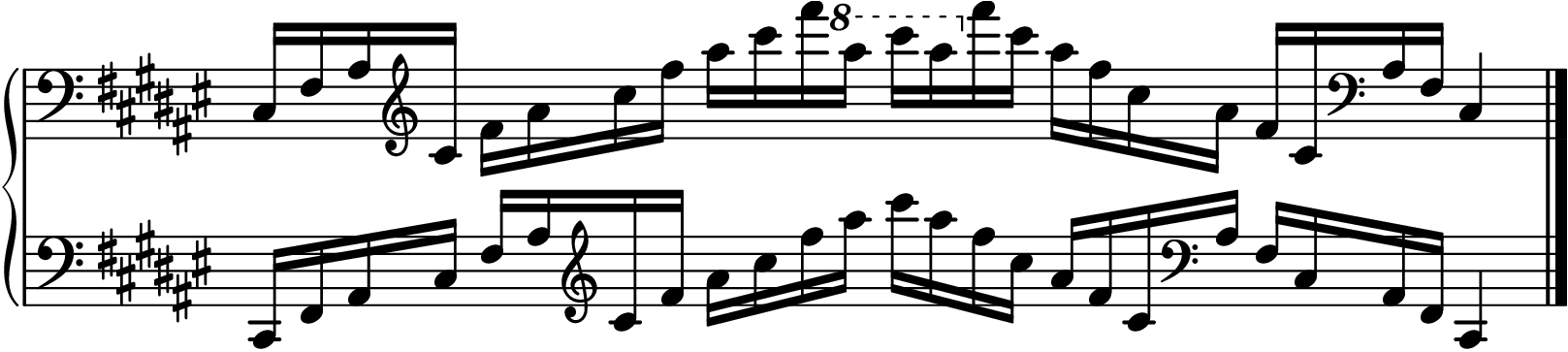
A major arpeggio, second inversion (four octaves)
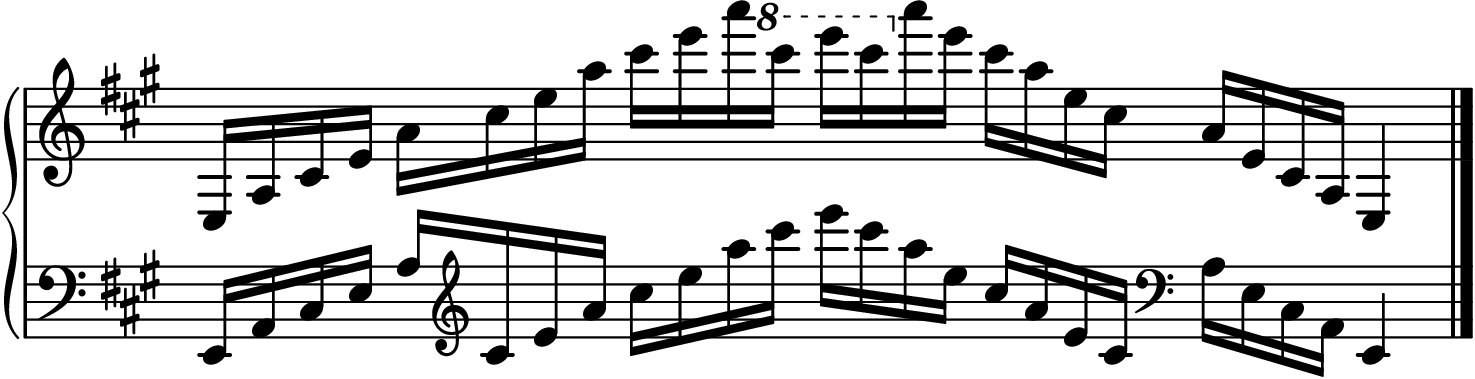
C minor arpeggio, second inversion (four octaves)
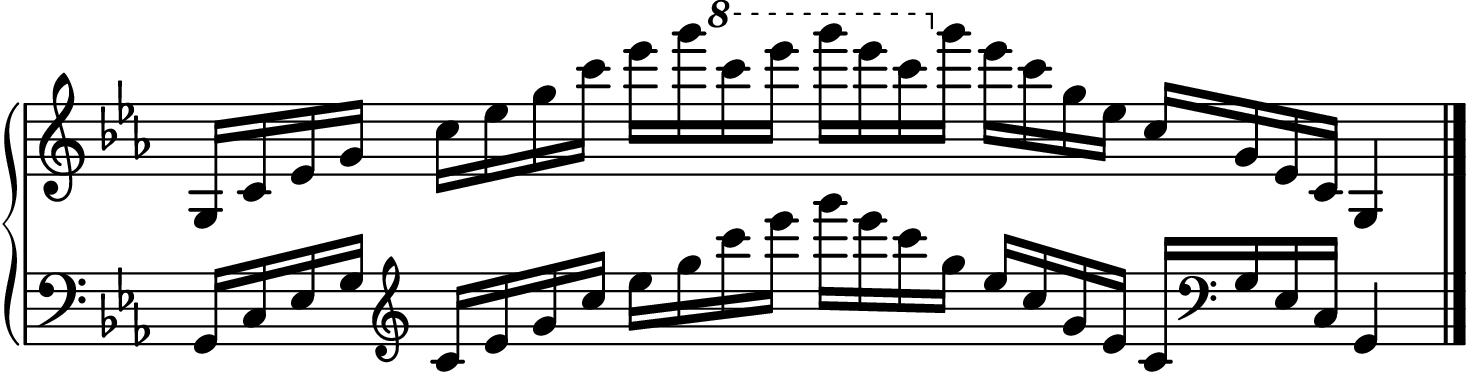
E flat minor arpeggio, second inversion (four octaves)
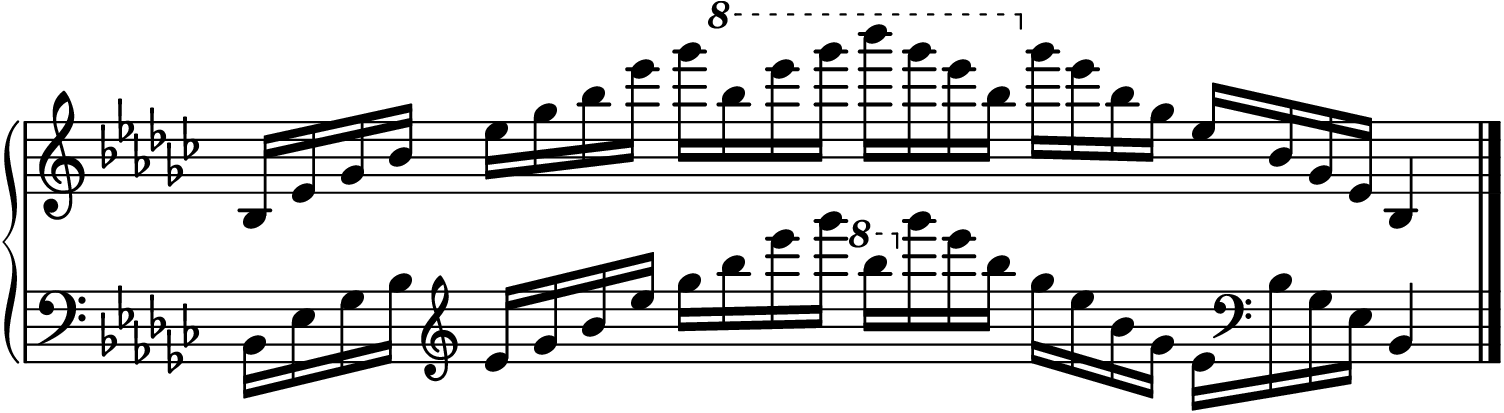
F sharp minor arpeggio, second inversion (four octaves)
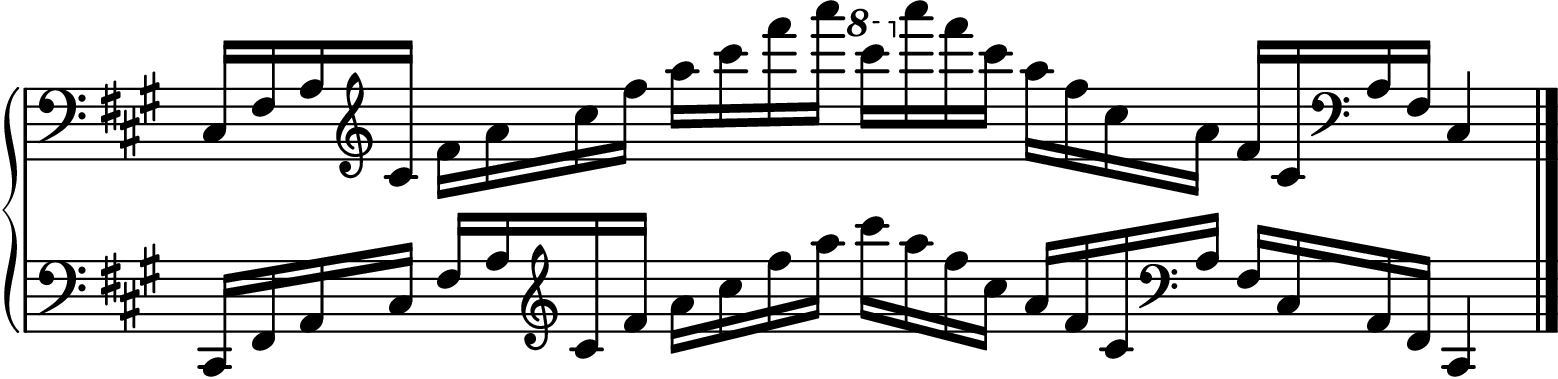
A minor arpeggio, second inversion (four octaves)
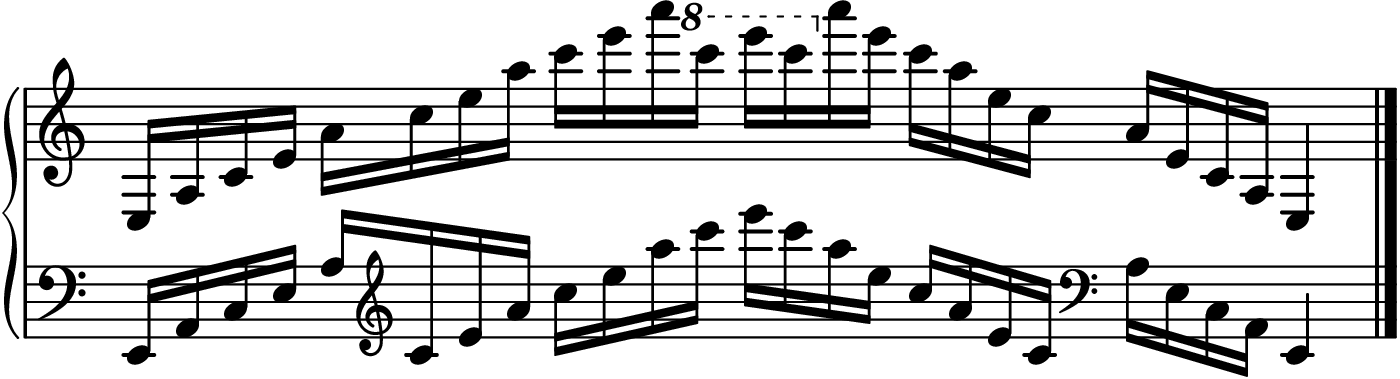
Dominant sevenths (resolving on the tonic)
| Requirement | Range | How |
|---|---|---|
| in the keys of C, E flat, F sharp and A | 4 octaves | legato; hands together |
Dominant 7th in the key of C (four octaves)
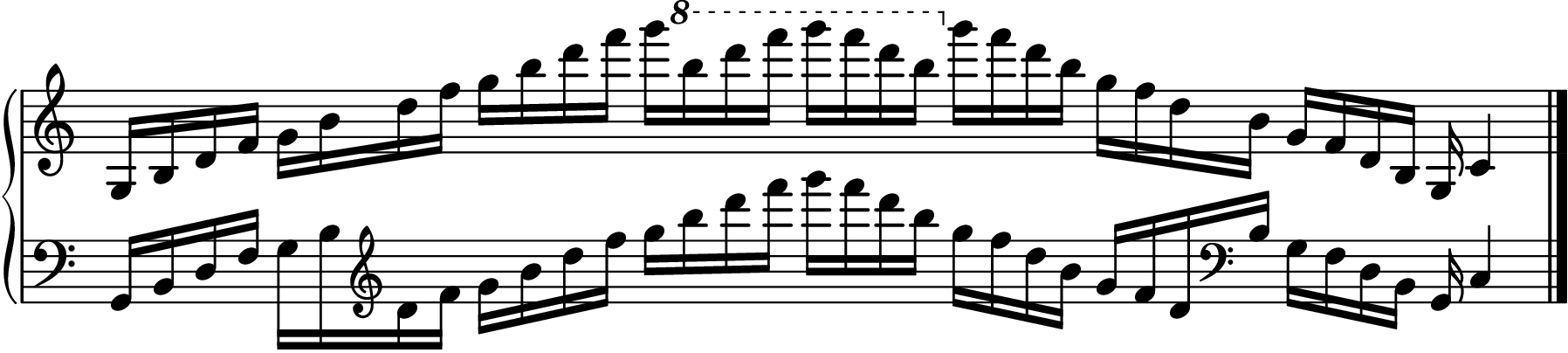
Dominant 7th in the key of E flat (four octaves)
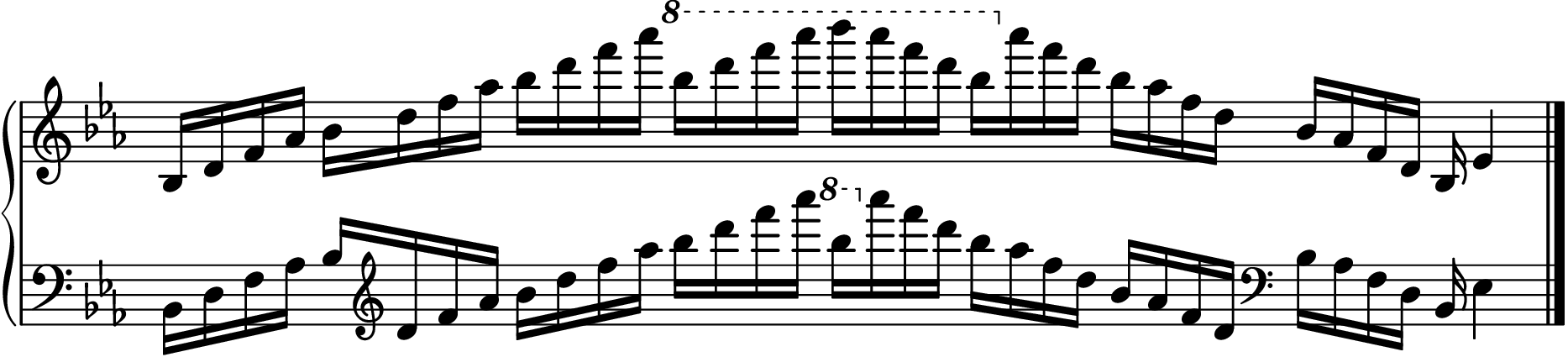
Dominant 7th in the key of F sharp (four octaves)

Dominant 7th in the key of A (four octaves)
Diminished sevenths
| Requirement | Range | How |
|---|---|---|
| starting on E flat; starting on C | 4 octaves | legato; hands together |
Diminished 7th starting on E flat (four octaves)
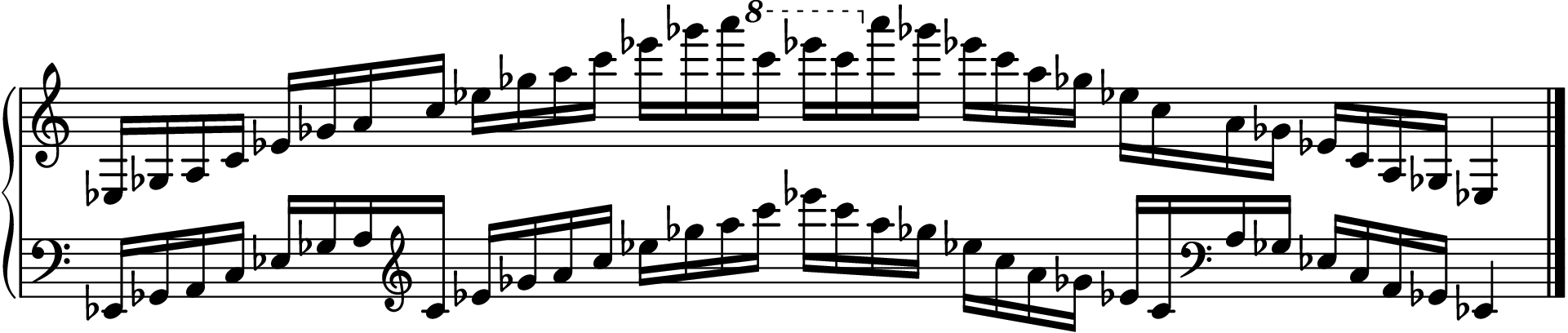
Diminished 7th starting on C (four octaves)

11. Practising arpeggios
Arpeggios reward a different kind of practice from scales. The notes are fewer, the gaps are wider, and nearly everything that goes wrong goes wrong in the air between one note and the next.
Let the arm lead. Fingers alone can stretch a 3rd; they cannot comfortably stretch the 4ths and octave leaps an arpeggio strings together. Keep the wrist level and let the elbow carry the hand sideways so that each finger arrives above its key before it plays. If a note lands on the key's edge, the arm got there late.
Prepare the thumb early. In an ascending right-hand arpeggio the thumb should be moving under the hand the moment it is released, not waiting until it is needed. Practise stopping on the note before each thumb turn and checking, without playing, that the thumb already sits over its target. The same habit serves the left hand coming down.
Practise the chord, then the arpeggio. Play the notes of each new arpeggio as a solid chord, both hands, and feel the shape of the hand that holds it. The arpeggio is that hand opened out in time. When the chord shape is secure, the leaps stop being distances and become fingers you already own.
Inversions are new shapes, not new chords. A first-inversion C major arpeggio contains the same three notes; what changes is which finger meets which note and where the wide gap falls. Practise each inversion as its own solid chord first, and notice that the awkward stretch moves to a different pair of fingers.
Give the dominant 7th its context. It is the V7 chord of its key, and the syllabus asks for it by key, not by starting note. Before playing, name the dominant to yourself, and always finish with the resolution: the exam requirement is the arrival on the tonic, and a habit of stopping on the root instead is the commonest slip.
The diminished 7th is the most regular shape on the piano: minor 3rd on minor 3rd, the same distance every time. Fix one fingering and it repeats every four notes in any octave. Play it slowly and listen for evenness; with every interval identical, any bump is your hand, not the music.
Then, as with the scales, practise being asked. Call the requirements in a shuffled order, majors before minors, and play what is called from memory at the guide speed. Retrieval under mild pressure is the skill the exam actually tests.
12. The arpeggio family at a glance
Arpeggio keys by grade
| Grade | Hands together | Hands separately | Range | Position |
|---|---|---|---|---|
| 1 | G major, A minor | 1 octave | root | |
| 2 | D, A majors; E, G minors | 2 octaves | root | |
| 3 | D, A majors; E, G minors | B flat, E flat majors; B, C minors | 2 octaves | root |
| 4 | B flat, E flat majors; B, C minors | B, F sharp, A flat majors; F sharp, F minors | 2 octaves | root |
| 5 | A, E, B, F sharp, A flat, D flat majors; F sharp, C sharp, G sharp, E flat, F, B flat minors | 2 octaves | root | |
| 6 | D, F, A flat, B majors and minors | 4 octaves | root | |
| 7 | D flat, E, G, B flat majors; C sharp, E, G, B flat minors | 4 octaves | first inversion | |
| 8 | C, E flat, F sharp, A majors and minors | 4 octaves | second inversion |
Sevenths by grade
| Grade | Dominant 7ths (by key) | Diminished 7ths (by starting note) |
|---|---|---|
| 5 | B (2 octaves, hands separately) | |
| 6 | D, F, A flat, B | G sharp; B (4 octaves, hands together) |
| 7 | D flat, E, G, B flat | B flat; E (4 octaves, hands together) |
| 8 | C, E flat, F sharp, A | E flat; C (4 octaves, hands together) |
What each grade adds
| Grade | New at this grade |
|---|---|
| 1 | Arpeggios, one octave, hands separately |
| 2 | Two-octave range |
| 3 | Hands together |
| 4 | The remote keys, hands separately |
| 5 | Twelve keys hands together; the diminished 7th |
| 6 | Four-octave range; the dominant 7th with its resolution |
| 7 | First-inversion arpeggios |
| 8 | Second-inversion arpeggios |
About this guide
The requirement lists, ranges, hand instructions and guide speeds are transcribed from the ABRSM Piano Practical Grades syllabus for 2025 and 2026, whose scale and arpeggio requirements are unchanged since the 2021 revision. The official qualification specification remains the authority; if this guide and the syllabus ever disagree, the syllabus wins. The engravings were generated with LilyPond from the same data as the tables and are shared with the companion volume, ABRSM Piano Scales, which covers the complete requirement lists including the scales.
Naming follows British convention throughout: crotchet and minim for the note values, semiquaver for the running notes, stave for the five lines, and sharpened or flattened where a note is raised or lowered.