Every scale and arpeggio for Grades 1 to 8, engraved
The complete scale and arpeggio requirements of the ABRSM Piano syllabus for 2025 and 2026, one grade at a time, with every requirement written out on a grand stave: all the majors and minors, the contrary-motion and chromatic scales, scales in 3rds and 6ths, whole-tone scales, arpeggios, dominant 7ths and diminished 7ths.
Introduction
Ask a pianist what they remember about their grade exams and the answer is usually the scales. Pieces change every two years; the scales are always there, grade after grade, growing from a single octave of C major into four-octave sweeps in every key. They are the part of the exam most candidates practise least willingly, and the part that pays the practice back most reliably.
The syllabus asks for them because they work. Every scale is a small technical study: thumb turns, evenness, hand coordination, key geography. A candidate who can play an F sharp major scale from memory, hands together, at speed, has solved problems that turn up in every piece written in F sharp major. Examiners hear within a few notes whether the fingers know the key or are finding it as they go.
There is also a plain arithmetic reason to take them seriously. Scales and arpeggios carry 21 of the 150 marks at every grade, the same weight as sight-reading. Candidates near a boundary pass or miss distinctions on this component, and unlike the pieces it can be made almost risk free: the notes are known years in advance and there are no surprises on the day.
This guide sets out the full requirement list for every grade of the current syllabus, which runs unchanged from the 2021 revision through 2025 and 2026, and engraves each one on a grand stave so you can see exactly which notes are wanted. It is a reference and a practice companion. What it is not is a substitute for the official publications: the syllabus itself is the authority on what will be asked, and ABRSM's own scale books add fingering suggestions this guide deliberately leaves out.
Use it at the piano. Read a requirement, play it slowly, and let the picture confirm what your hands already suspect. A scale learnt from the sound and the shape of the keyboard sticks far better than one read note by note off the page.
How to use this guide
Chapters 1 and 2 explain the ground rules and the notation, and chapter 3 the circle of fifths, the one diagram that organises every key the syllabus will ask of you. Chapters 4 to 11 cover Grades 1 to 8, one chapter per grade; each opens with the official requirement tables, then engraves every item. Chapter 12 is about practising, and chapter 13 gathers the whole syllabus into summary tables so you can see the road from Grade 1 to Grade 8 in one place.
If you are preparing a particular grade, go straight to its chapter. Nothing in a grade chapter assumes you have read the earlier ones.
Companion documents cover the surrounding theory. Technical Names and Roman Numerals spells every major and minor key. Piano Chords covers the chords the arpeggios come from. Musical Modes covers the scales beyond major and minor.
1. The ground rules
The syllabus states a handful of rules that apply to every requirement at every grade. They are worth knowing exactly, because most lost marks in this component come from ignoring one of them rather than from wrong notes.
From memory. All scales and arpeggios must be played from memory. There is no music stand between you and this part of the exam.
Even notes. Everything is played in even notes. Speed matters less than steadiness: a slightly slower scale with even quavers beats a fast one that stumbles at the thumb turns.
Legato unless stated. Every requirement is prepared legato unless the syllabus says staccato. Staccato first appears at Grade 5, and from Grade 6 the examiner chooses legato or staccato for the similar-motion and chromatic scales, so both must be ready.
No pedal. All requirements are played without pedalling.
Any octave, right span. You may start at any octave, provided the required range is covered. For hands-together work the hands stay one octave apart unless the syllabus says otherwise, as it does for the scales a 3rd or 6th apart.
Tonic on the outside. Scales in 3rds, or a 3rd apart, begin with the tonic as the lower note. Scales in 6ths, or a 6th apart, begin with the tonic as the upper note.
Sevenths resolve or do not. Dominant 7ths are played in root position and must finish by resolving on the tonic. Diminished 7ths simply return to their starting note.
Any fingering. The syllabus allows any fingering that produces a successful musical outcome. Standard fingerings exist because they work, but they are not marked.
In the exam itself, the examiner asks for at least one of each type on the list, majors before minors within a type, and names the key or starting note, the hand for hands-separately items, and the articulation where there is a choice. From Grade 6 upward the minor form, harmonic or melodic, is also the examiner's choice, which is why both forms appear in those chapters.
Speeds
The syllabus gives guide speeds rather than requirements. They relate to groups of four semiquavers, so a scale marked crotchet = 60 runs at four notes per beat, and the minim marks at the higher grades mean eight notes per beat.
| Requirement | Grade 1 | Grade 2 | Grade 3 | Grade 4 | Grade 5 | Grade 6 | Grade 7 | Grade 8 |
|---|---|---|---|---|---|---|---|---|
| Scales (including contrary-motion, chromatic and whole-tone) | crotchet = 60 | crotchet = 66 | crotchet = 80 | crotchet = 100 | minim = 60 | minim = 72 | minim = 80 | minim = 88 |
| Arpeggios (including dominant and diminished 7ths) | crotchet = 58 | crotchet = 63 | crotchet = 72 | crotchet = 80 | minim = 44 | minim = 50 | minim = 56 | minim = 66 |
| Scales a 3rd apart / a 6th apart (including chromatic) | minim = 60 | minim = 60 | ||||||
| Legato scales in 3rds | minim = 46 | minim = 52 | ||||||
| Staccato scales in 3rds / in 6ths | minim = 54 | minim = 54 |
2. Reading the notation
Every requirement in this guide is engraved the same way, so one explanation covers all of them.
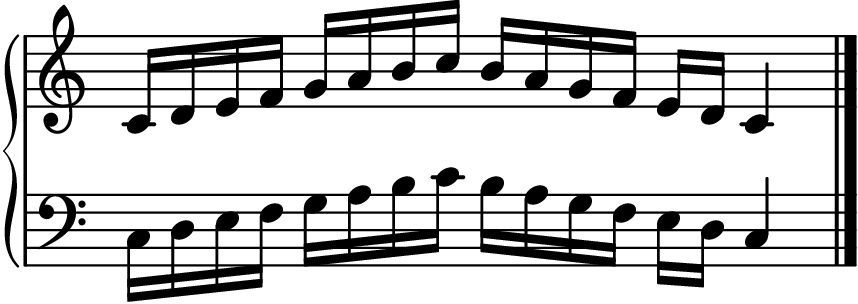
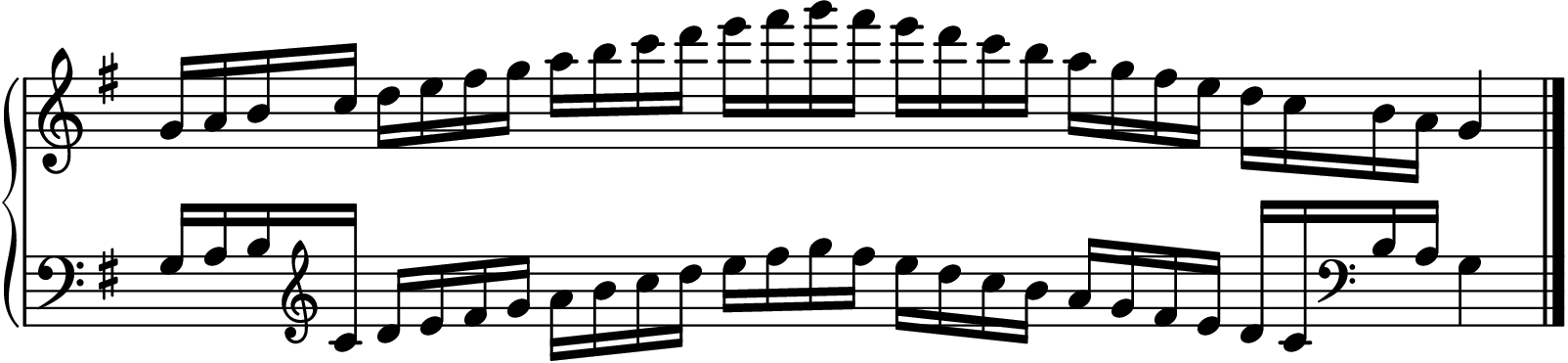
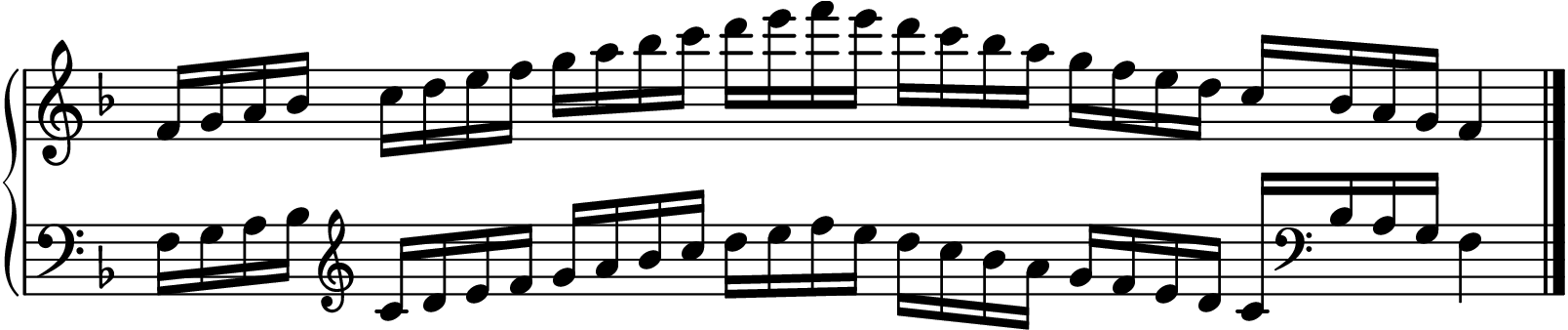
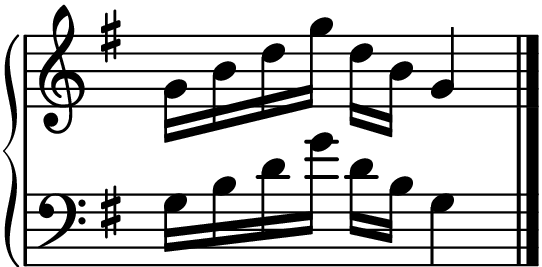
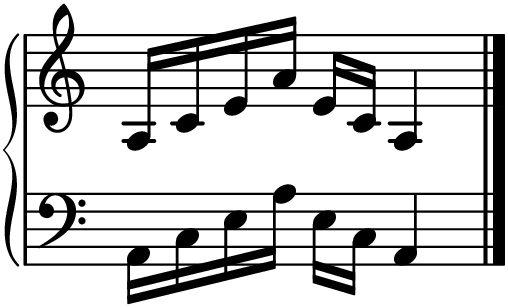
Grand stave, both hands. Each picture shows the right hand on the upper stave and the left hand on the lower, one octave apart unless the requirement says otherwise. Where the syllabus asks for hands separately, the picture still shows both hands: practise each stave on its own, and the examiner will name the hand on the day. Where it asks for hands together, the picture is exactly what you play.
Semiquavers in fours. Notes are written as semiquavers beamed in groups of four, matching the syllabus speed table, with the final note lengthened to mark the close. There are no time signatures and no barlines; a scale is one unbroken line of sound, and the notation says so.
Accidentals are restated. Because there are no barlines, every accidental that departs from the key signature is printed each time it occurs, and cancelling naturals are printed on the way down in melodic minors. What you see is always literally what you play.
Clef changes and octave signs. Four-octave requirements run off the top of the treble stave and off the bottom of the bass. Where they do, the engraving changes clef mid-line or marks the top octave with an 8va bracket. The notes are the same; only the spelling on the page changes.
Chromatic spelling. Chromatic scales are spelled with sharps on the way up and the same spelling mirrored on the way down, keeping the starting note's own spelling at every octave. Other spellings are equally acceptable in the exam, which is played from memory anyway.
Sevenths. Dominant 7ths are engraved in root position with the final resolution on to the tonic shown as the closing longer note. Diminished 7ths are spelled as stacked minor 3rds, adjusted where that would need a double flat; enharmonic equivalents are fine.
3. The circle of fifths
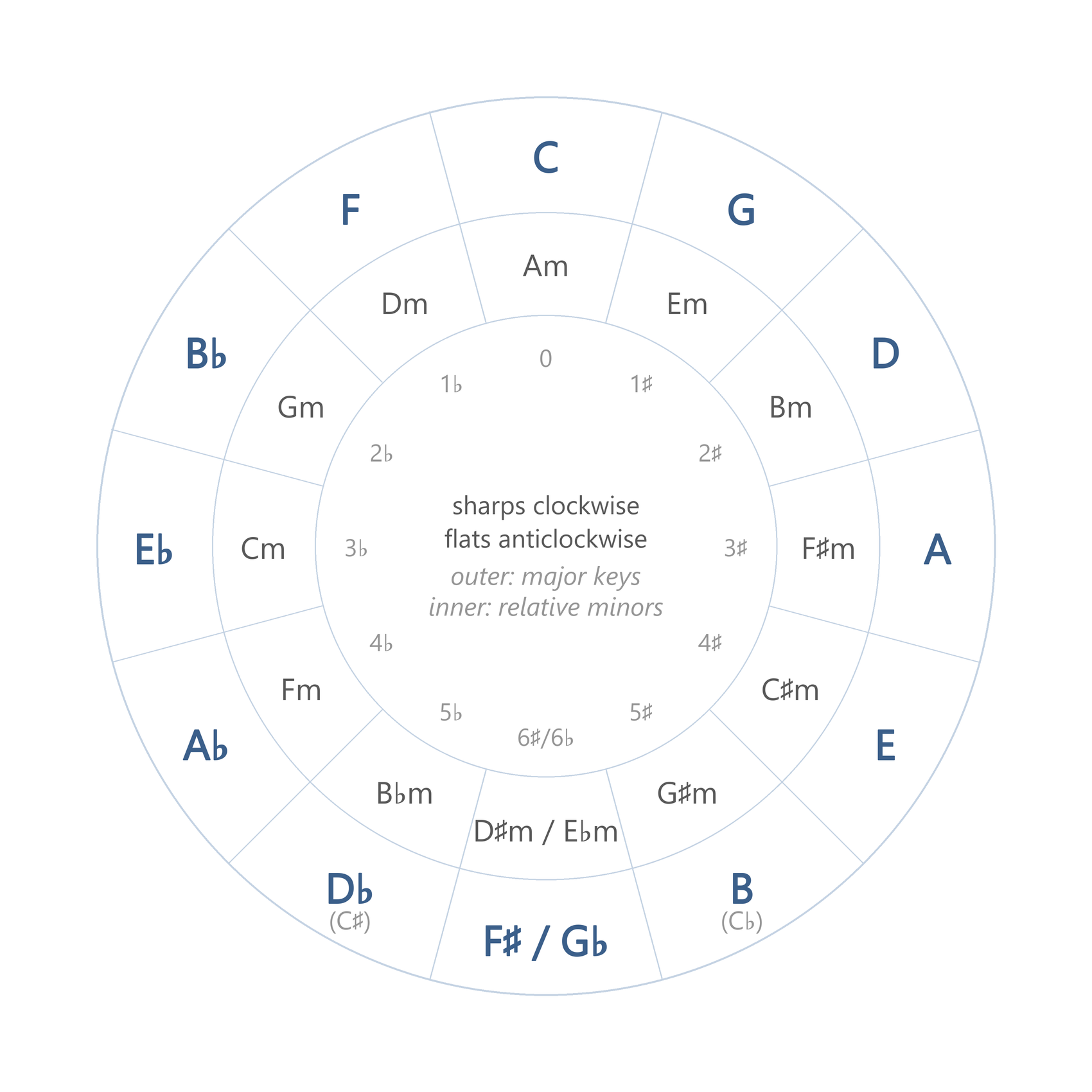
Thirty keys, seven sharps to seven flats, and eight grades of requirements drawn from them: it sounds like a lot to hold in the head. One picture holds it all. Arrange the major keys around a clock face, C at the top, rising a perfect 5th with each clockwise step, and every key signature, every relative minor and every family relationship between keys falls into place. Pianists who know the circle stop learning scales as thirty separate facts and start seeing one pattern visited from thirty angles.
Reading it
Each clockwise step rises a perfect 5th and adds one sharp: C, G, D, A, E, B, F sharp. Each anticlockwise step falls a perfect 5th and adds one flat: C, F, B flat, E flat, A flat, D flat. The count of accidentals is simply how many steps you stand from C, and the direction tells you whether they are sharps or flats.
The inner ring holds each major key's relative minor, the minor key that shares its signature. It always sits three semitones below its major: A minor inside C, E minor inside G, G minor inside B flat. When the examiner asks for a minor scale, its place on the circle, and so its signature, is the one it shares with the relative major outside it.
At the bottom of the circle the two directions meet, and three pairs of keys name the same sounds: B and C flat, F sharp and G flat, D flat and C sharp. On the piano each pair is played with identical keys; only the spelling differs. That is why the syllabus can ask for D flat major at one grade and F sharp major at another without ever leaving the twelve notes of the keyboard.
The order of the accidentals
Sharps enter a key signature in a fixed order: F, C, G, D, A, E, B. Flats enter in the exact reverse: B, E, A, D, G, C, F. Both rows are themselves chains of 5ths, which is the circle showing through inside every signature.
Two shortcuts follow. In a sharp key, the last sharp of the signature is the leading note, a semitone below the tonic: three sharps end with G sharp, so the key is A major. In a flat key, the second-to-last flat names the key: four flats run B, E, A, D, and the second-to-last is A flat, so the key is A flat major. For the minors, find the major these tricks name and take the relative three semitones below.
What it tells you at the piano
The circle is a map of how keys are related, and the distance between two keys is the number of steps between them.
Neighbours are family. One step clockwise from any key sits its dominant; one step anticlockwise sits its subdominant. Each neighbour shares six of the key's seven notes, which is why a piece drifts most easily into exactly these keys, and why examiners' scale lists so often pair them.
The dominant 7th lives one step clockwise. The dominant 7th "in the key of D" is built on A, D's clockwise neighbour, and its resolution on to the tonic is one anticlockwise step home. Every dominant 7th in Grades 6 to 8 is this same move in a different place on the circle.
Signatures read at sight. Count the accidentals in any signature, walk that many steps from C in the right direction, and you have the key without spelling out a scale. Two sharps: two steps clockwise, D major or B minor. Five flats: five steps anticlockwise, D flat major or B flat minor.
Transposition is rotation. Moving a piece up a 5th, or naming the scale a 5th above the one you just played, is one step round the circle. Practising scales in circle order, C, G, D and onward, touches every key once and returns home, which is why so many pianists run their daily scales that way.
How the grades walk the circle
The syllabus is a slow tour of the circle. Grade 1 stands at the top: C major with its two neighbours, G and F, one step each way. Grades 2 to 4 push outward a step or two at a time, sharpwise through D and A, flatwise through B flat and E flat, until Grade 4 reaches the bottom of the circle with B, F sharp and A flat. Grade 5 gathers the far side, five majors from three sharps round to five flats.
From Grade 6 the pattern changes shape. Each of the last three grades takes four major keys spaced a minor 3rd apart, which on the circle is every third position: a square. Grade 6 draws D, F, A flat and B; Grade 7 rotates the square one step to D flat, E, G and B flat; Grade 8 rotates it again to C, E flat, F sharp and A. Three squares, three steps of rotation, and between them the last three grades touch all twelve positions.
| Grade | Major keys | On the circle |
|---|---|---|
| 1 | C, G, F | the top: home and both neighbours |
| 2 | G, F, D, A | two steps clockwise, one anticlockwise |
| 3 | D, A, B flat, E flat | three steps out in each direction |
| 4 | B flat, E flat, B, F sharp, A flat | reaching the bottom of the circle |
| 5 | A, E, B, F sharp, D flat, A flat | the far side, three sharps to five flats |
| 6 | D, F, A flat, B | a square: every third position |
| 7 | D flat, E, G, B flat | the same square, one step round |
| 8 | C, E flat, F sharp, A | the square lands on home |
The minors follow the same tour on the inner ring, each keeping to the signature of its relative major. Once the circle is familiar, the grade lists stop looking arbitrary: every year of scales is a region of one map, and by Grade 8 the map is complete.
4. Grade 1
Grade 1 asks for five scales, one contrary-motion scale and two arpeggios. C major is the only hands-together scale, and only for one octave; everything else is hands separately over two octaves. The minors may be played in natural, harmonic or melodic form, whichever the candidate prefers.
Scales (similar motion)
| Requirement | Range | How |
|---|---|---|
| C major | 1 octave | hands together |
| G, F majors | 2 octaves | hands separately |
| A, D minors (natural or harmonic or melodic, at candidate's choice) | 2 octaves | hands separately |
C major (one octave)
G major (two octaves)
F major (two octaves)
A minor, natural (two octaves)

A minor, harmonic (two octaves)

A minor, melodic (two octaves)

D minor, natural (two octaves)
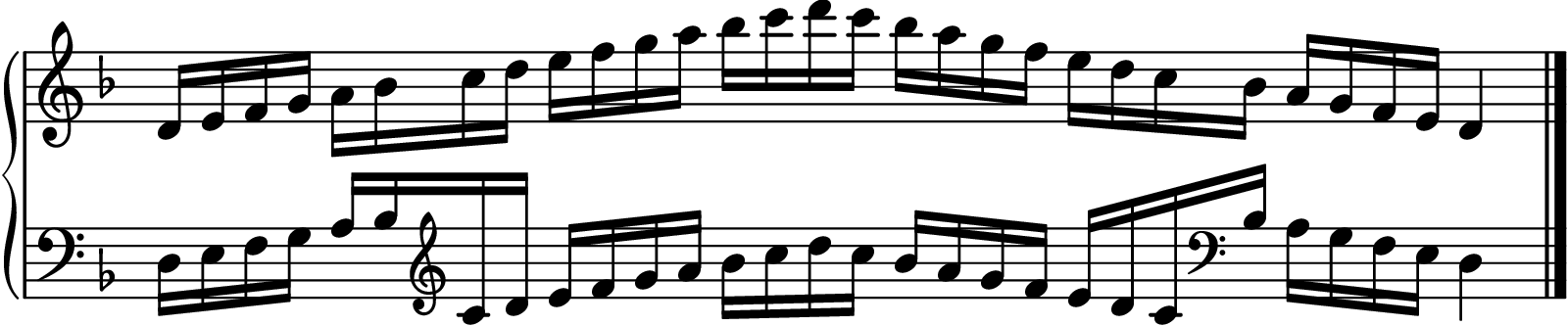
D minor, harmonic (two octaves)
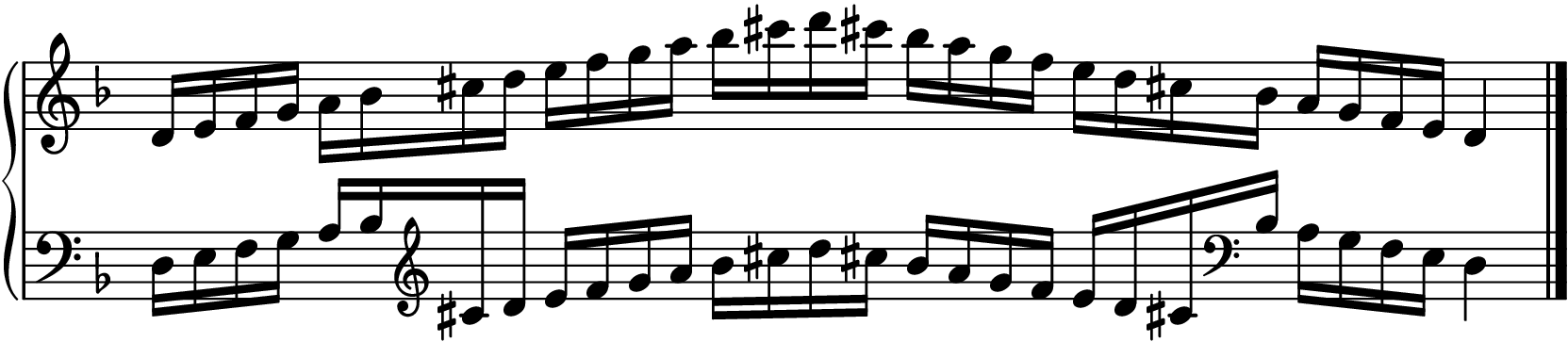
D minor, melodic (two octaves)
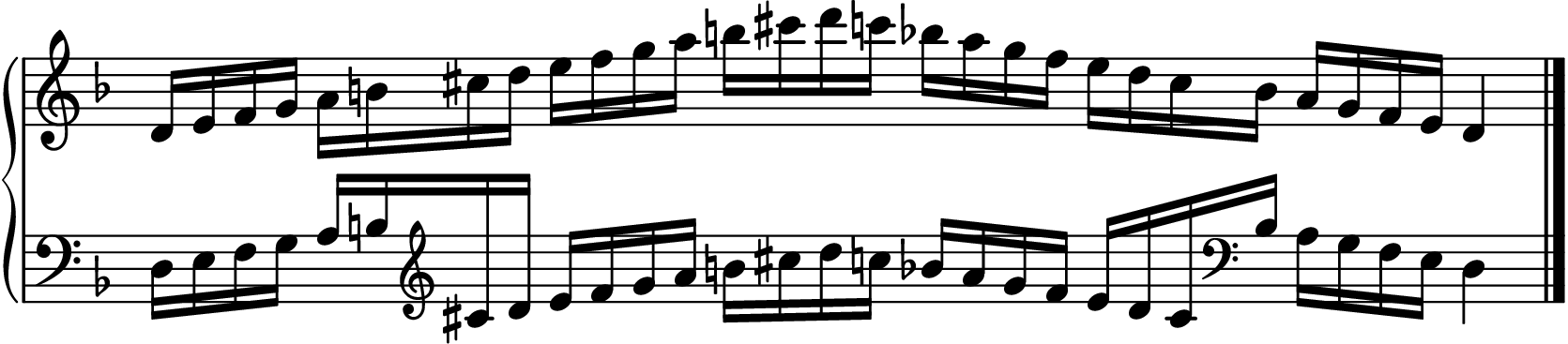
Contrary-motion scale
| Requirement | Range | How |
|---|---|---|
| C major | 1 octave | hands starting on the tonic (unison) |
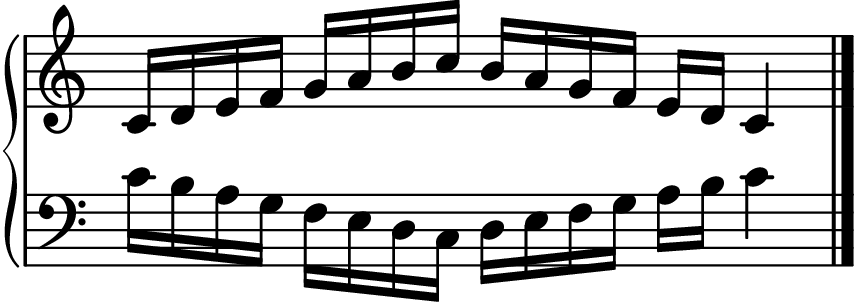
C major, contrary motion (one octave)
Arpeggios
| Requirement | Range | How |
|---|---|---|
| G major, A minor | 1 octave | hands separately |
G major arpeggio (one octave)
A minor arpeggio (one octave)
5. Grade 2
Grade 2 moves last year's hands-separate scales to hands together and adds D and A majors with E and G minors, hands separately. The chromatic scale makes its first appearance, one octave on D, and the arpeggio list grows to four keys.
Scales (similar motion)
| Requirement | Range | How |
|---|---|---|
| G, F majors | 2 octaves | hands together |
| A, D minors (natural or harmonic or melodic, at candidate's choice) | 2 octaves | hands together |
| D, A majors | 2 octaves | hands separately |
| E, G minors (natural or harmonic or melodic, at candidate's choice) | 2 octaves | hands separately |
G major (two octaves)
F major (two octaves)
A minor, natural (two octaves)
A minor, harmonic (two octaves)
A minor, melodic (two octaves)
D minor, natural (two octaves)
D minor, harmonic (two octaves)
D minor, melodic (two octaves)
D major (two octaves)
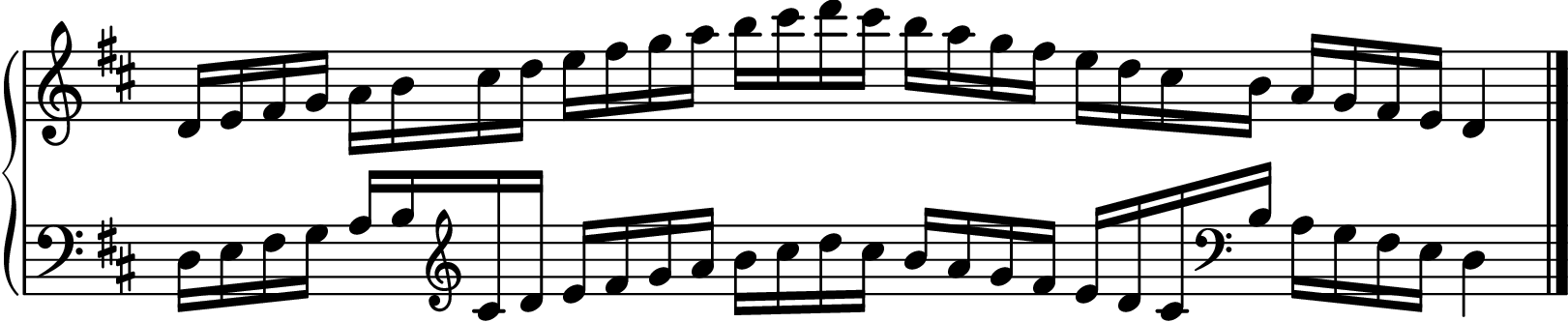
A major (two octaves)

E minor, natural (two octaves)
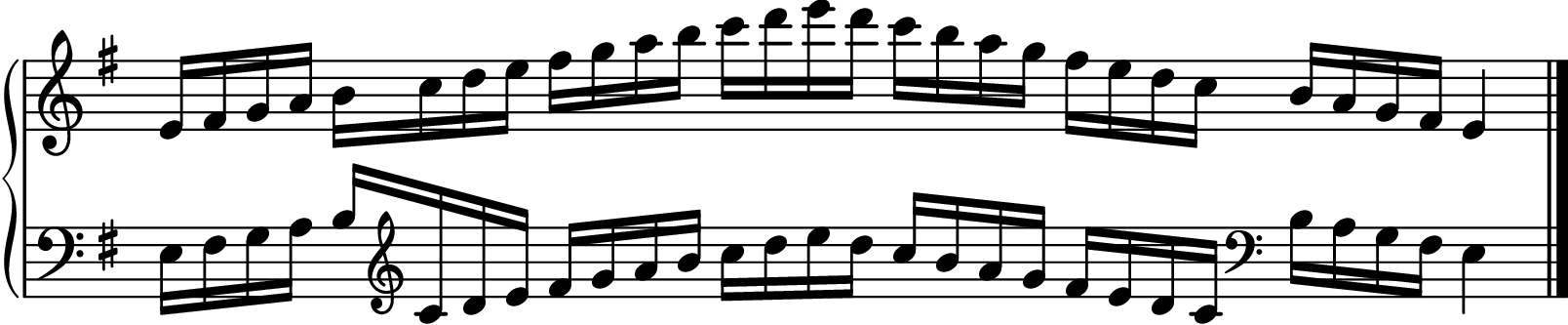
E minor, harmonic (two octaves)
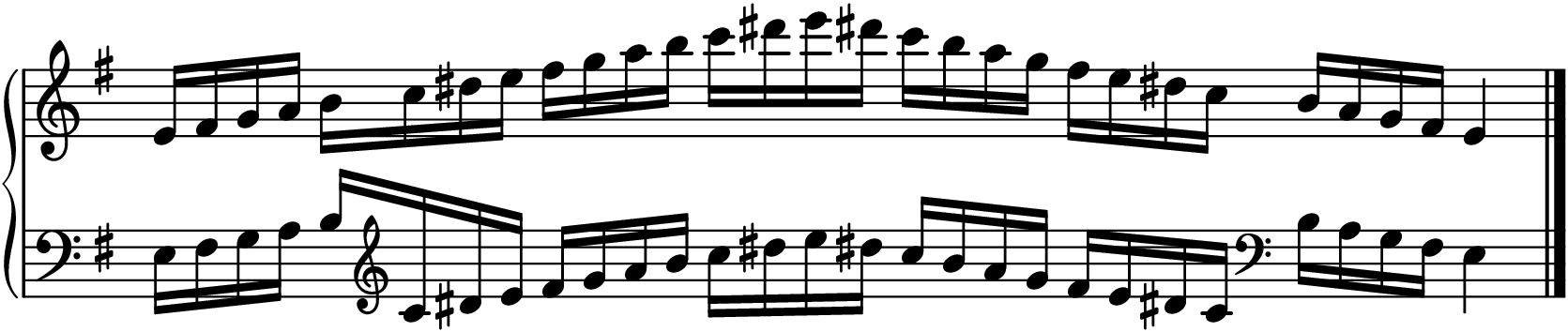
E minor, melodic (two octaves)
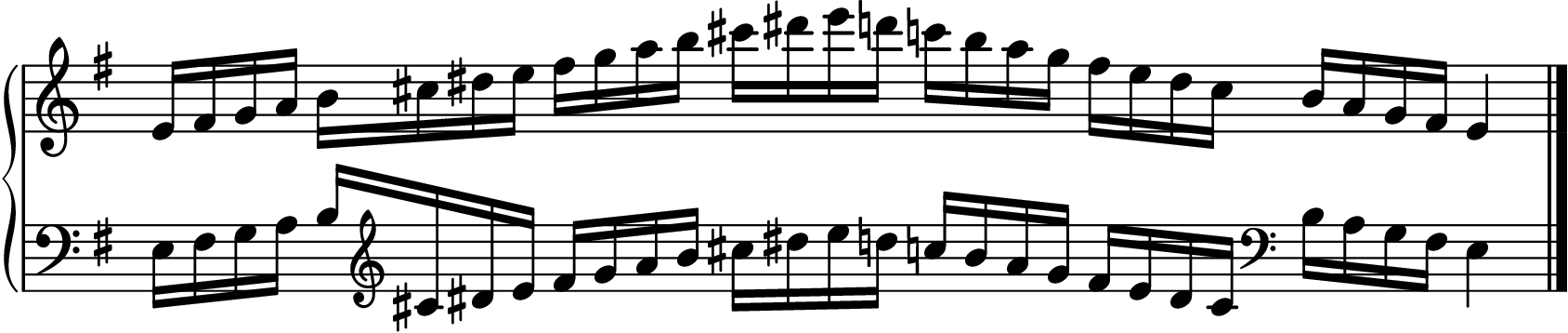
G minor, natural (two octaves)
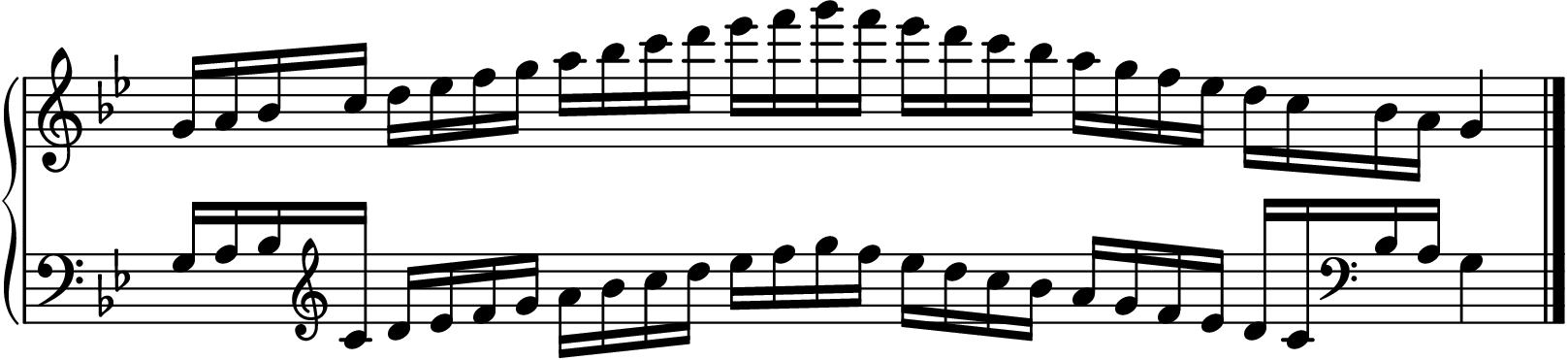
G minor, harmonic (two octaves)
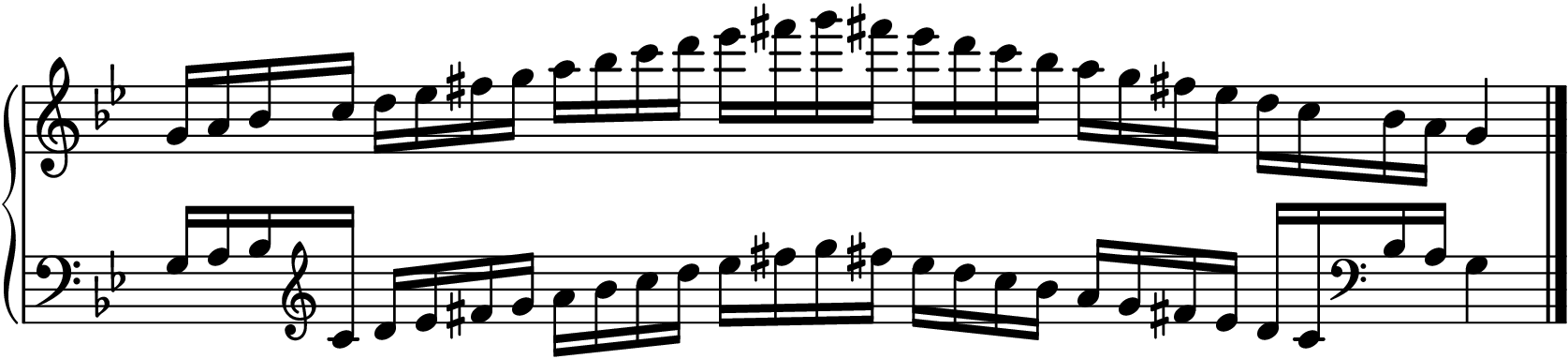
G minor, melodic (two octaves)
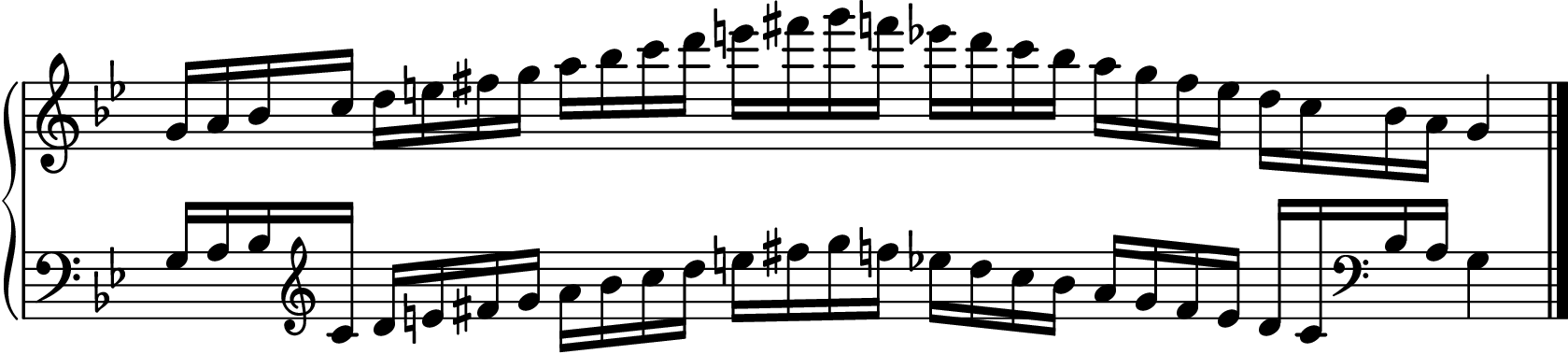
Contrary-motion scale
| Requirement | Range | How |
|---|---|---|
| C major | 2 octaves | hands starting on the tonic (unison) |
C major, contrary motion (two octaves)
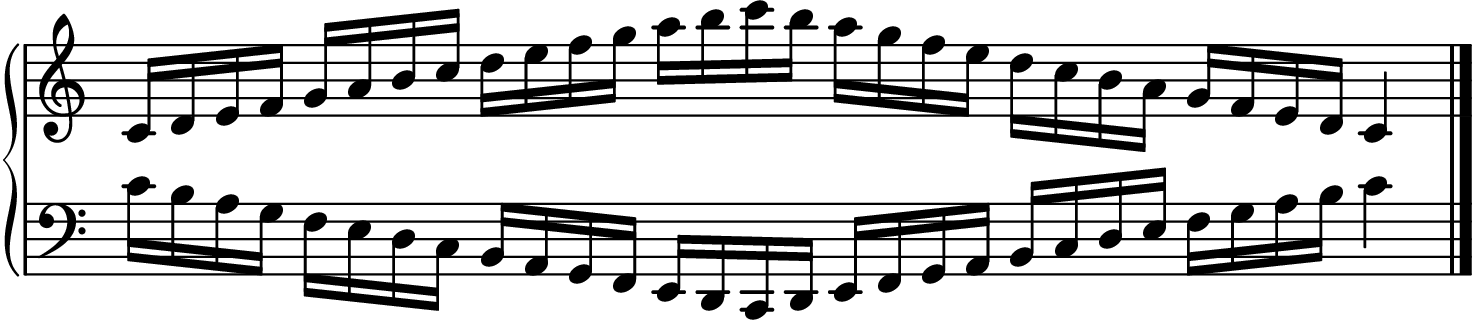
Chromatic scale
| Requirement | Range | How |
|---|---|---|
| starting on D | 1 octave | hands separately |
Chromatic scale starting on D (one octave)
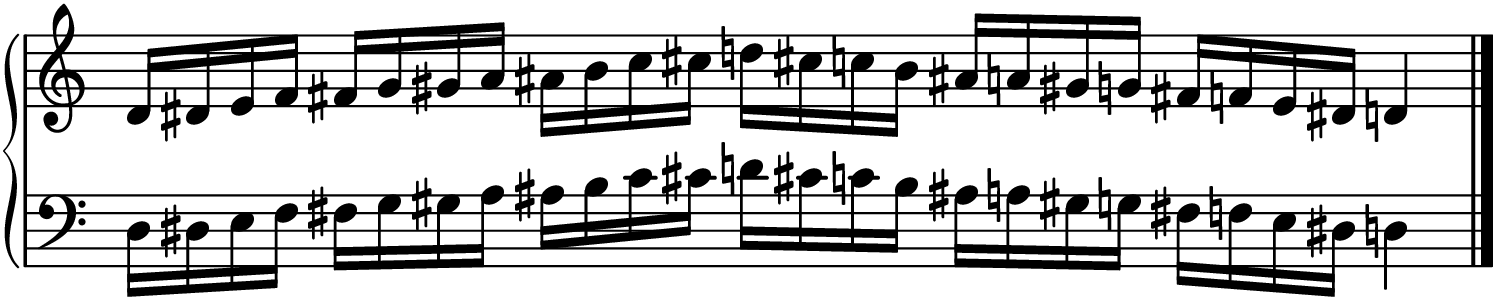
Arpeggios
| Requirement | Range | How |
|---|---|---|
| D, A majors; E, G minors | 2 octaves | hands separately |
D major arpeggio (two octaves)
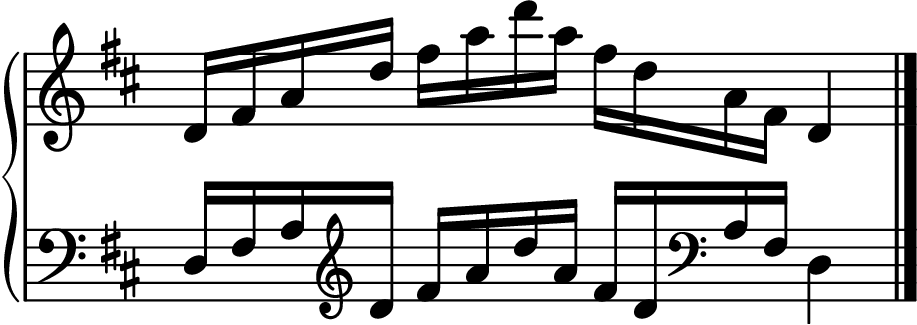
A major arpeggio (two octaves)
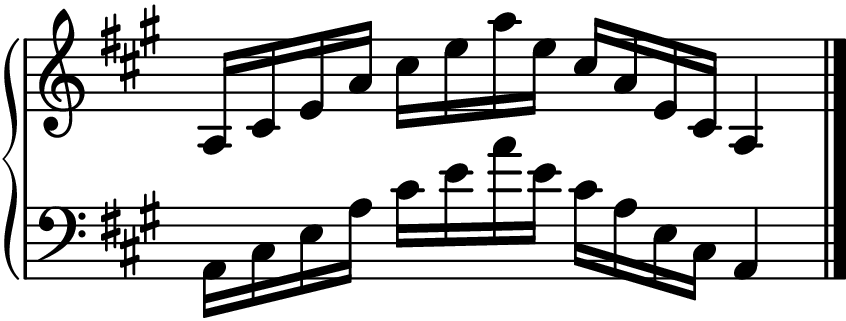
E minor arpeggio (two octaves)
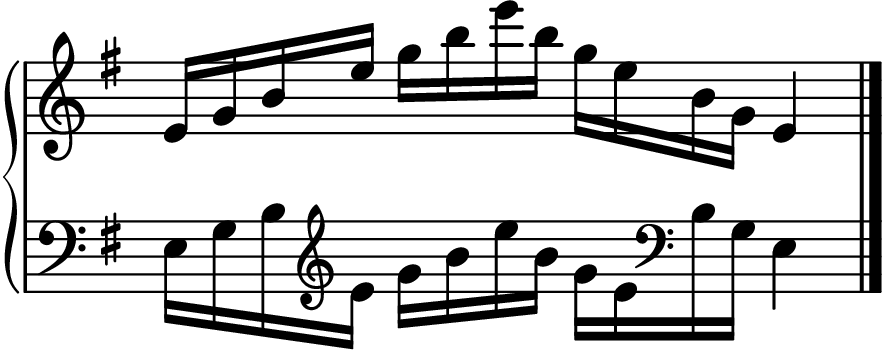
G minor arpeggio (two octaves)
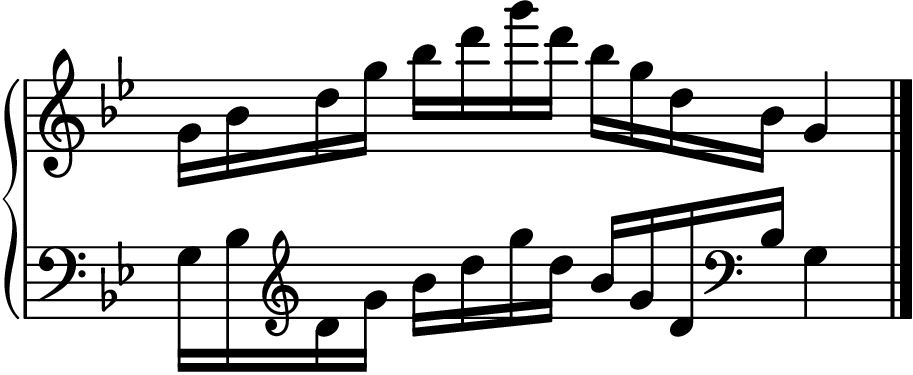
6. Grade 3
Grade 3 pushes into the flat keys with B flat and E flat majors, brings the first hands-together arpeggios, and replaces the plain chromatic scale with a contrary-motion one. From here on the minors drop the natural form: harmonic or melodic, at the candidate's choice.
Scales (similar motion)
| Requirement | Range | How |
|---|---|---|
| D, A majors | 2 octaves | hands together |
| E, G minors (harmonic or melodic, at candidate's choice) | 2 octaves | hands together |
| B flat, E flat majors | 2 octaves | hands separately |
| B, C minors (harmonic or melodic, at candidate's choice) | 2 octaves | hands separately |
D major (two octaves)
A major (two octaves)
E minor, harmonic (two octaves)
E minor, melodic (two octaves)
G minor, harmonic (two octaves)
G minor, melodic (two octaves)
B flat major (two octaves)
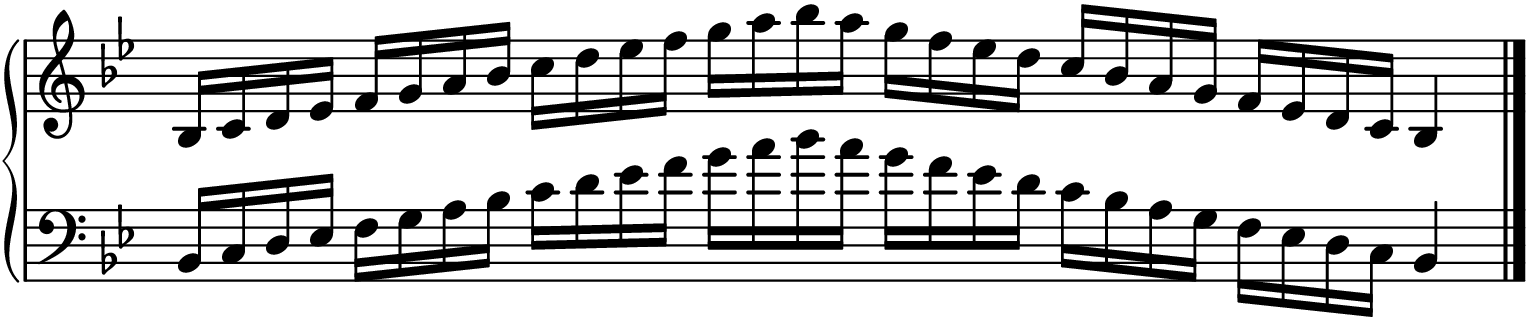
E flat major (two octaves)
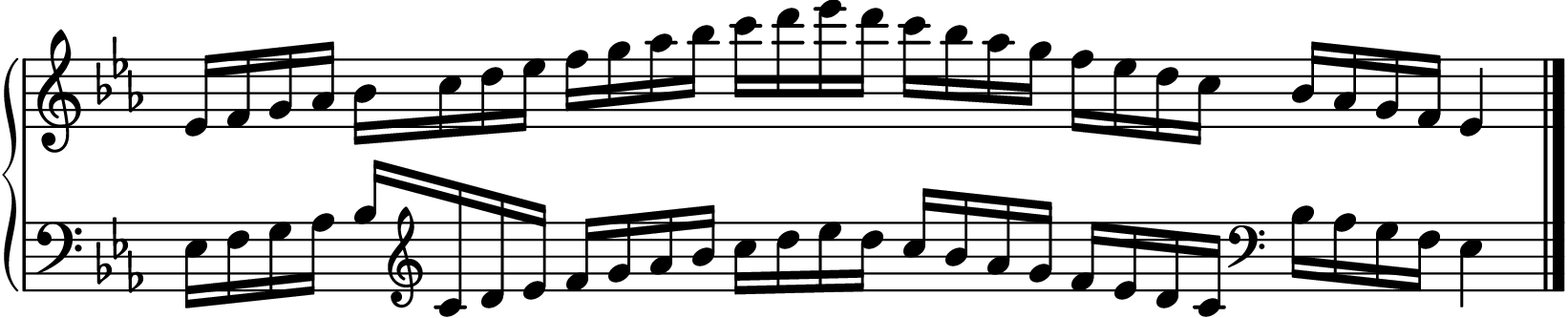
B minor, harmonic (two octaves)
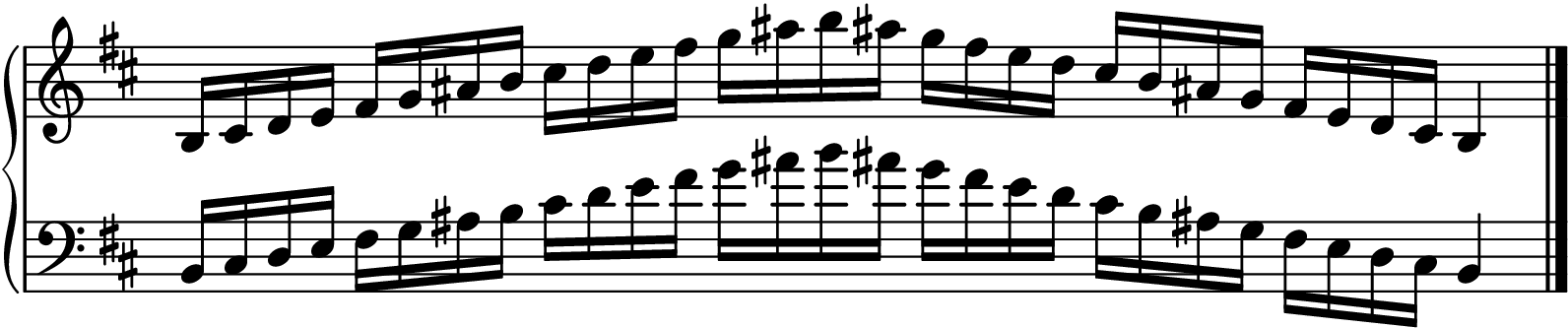
B minor, melodic (two octaves)
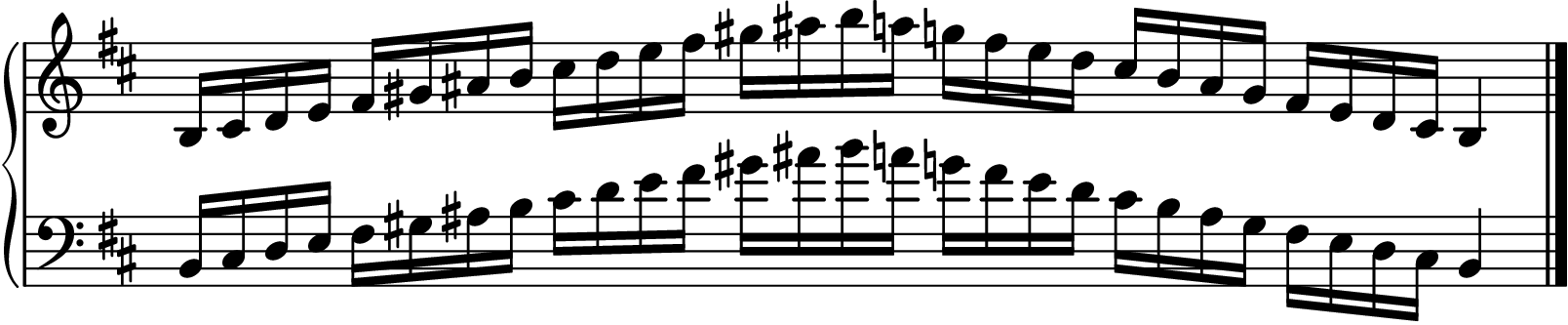
C minor, harmonic (two octaves)
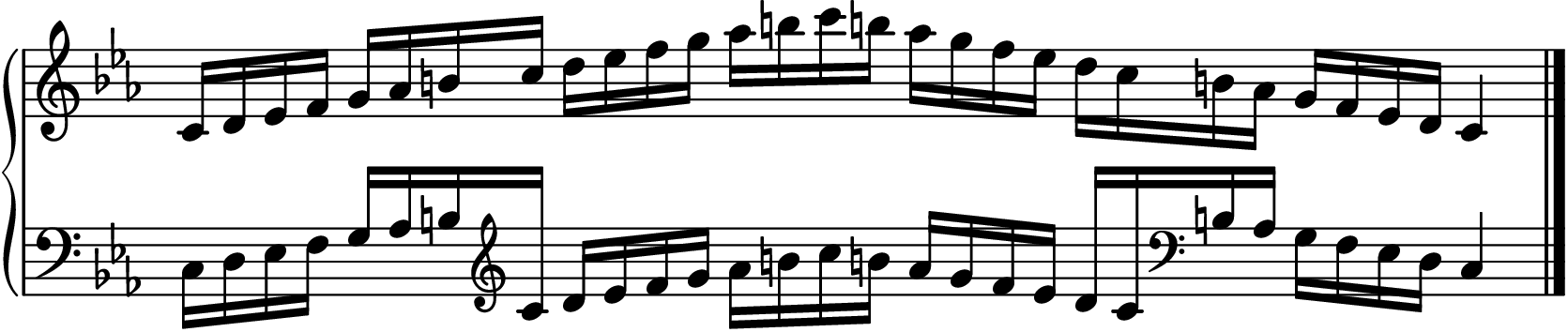
C minor, melodic (two octaves)
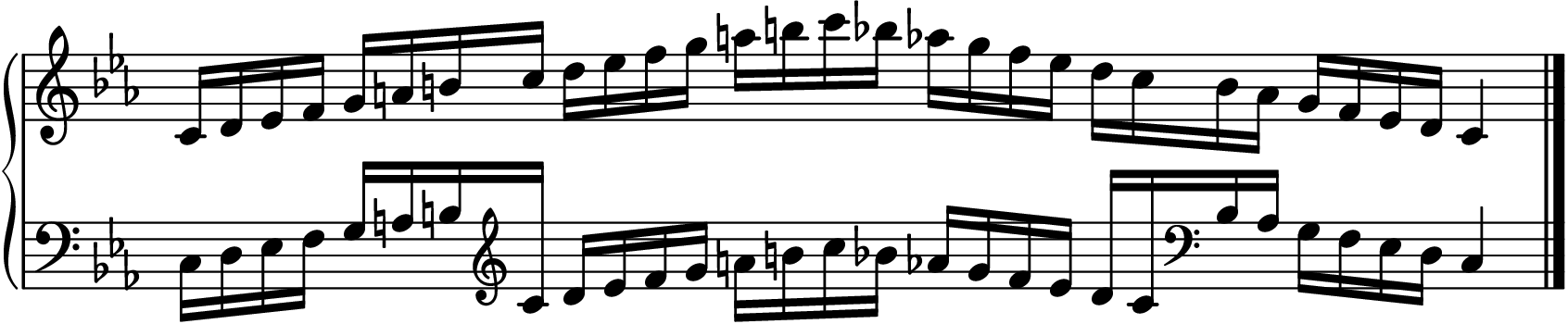
Contrary-motion scale
| Requirement | Range | How |
|---|---|---|
| E major | 2 octaves | hands starting on the tonic (unison) |
E major, contrary motion (two octaves)
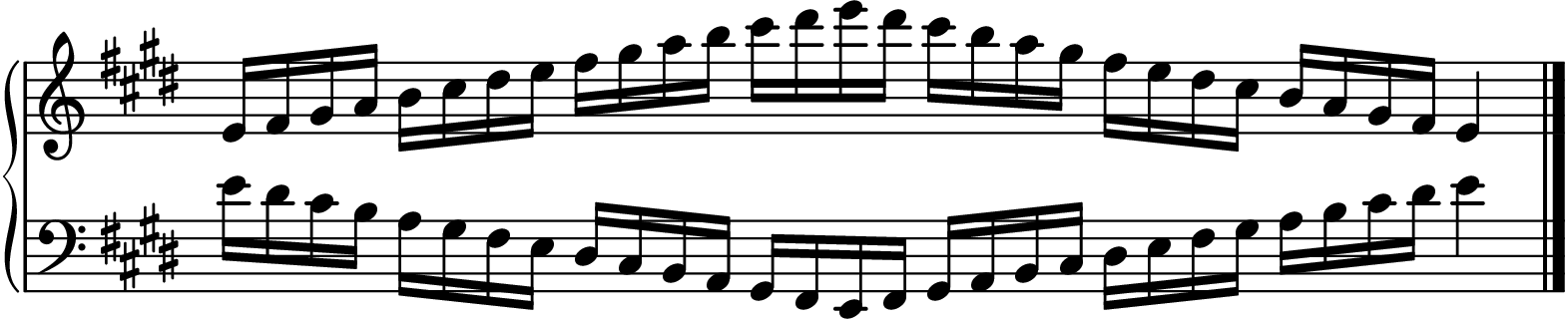
Chromatic contrary-motion scale
| Requirement | Range | How |
|---|---|---|
| starting on D | 1 octave | hands starting on the stated note (unison) |
Chromatic contrary-motion scale starting on D (one octave)

Arpeggios
| Requirement | Range | How |
|---|---|---|
| D, A majors; E, G minors | 2 octaves | hands together |
| B flat, E flat majors; B, C minors | 2 octaves | hands separately |
D major arpeggio (two octaves)
A major arpeggio (two octaves)
E minor arpeggio (two octaves)
G minor arpeggio (two octaves)
B flat major arpeggio (two octaves)
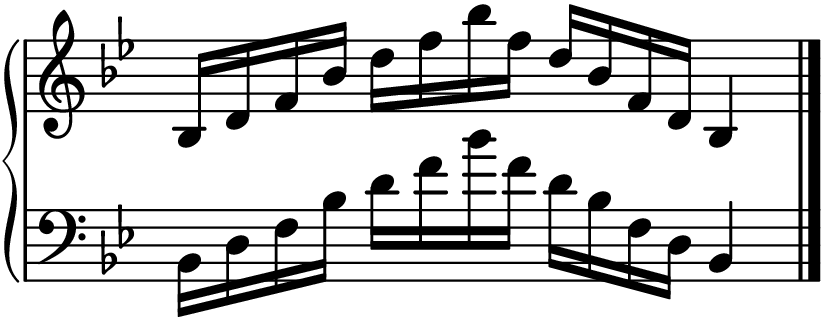
E flat major arpeggio (two octaves)
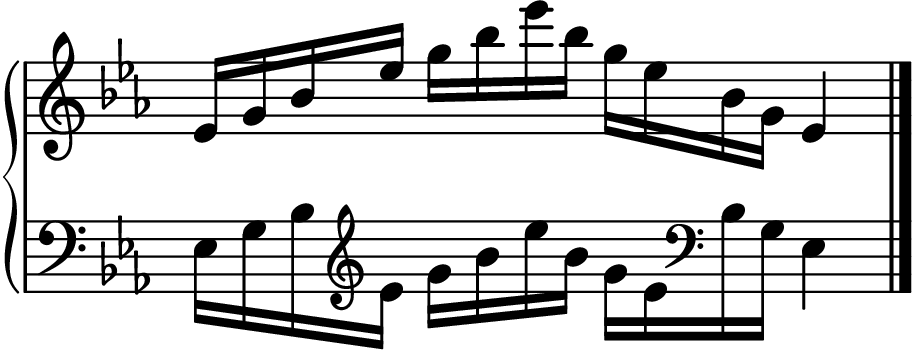
B minor arpeggio (two octaves)
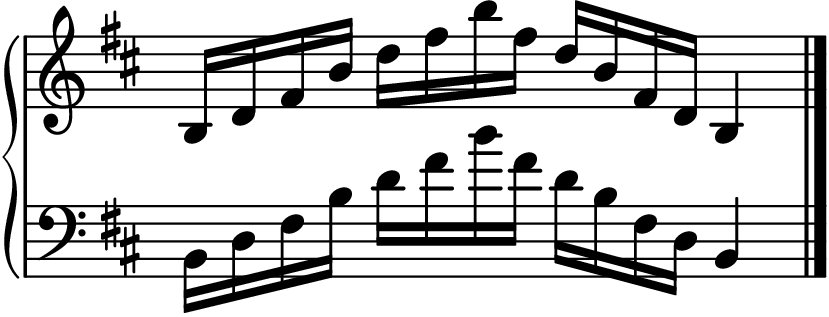
C minor arpeggio (two octaves)
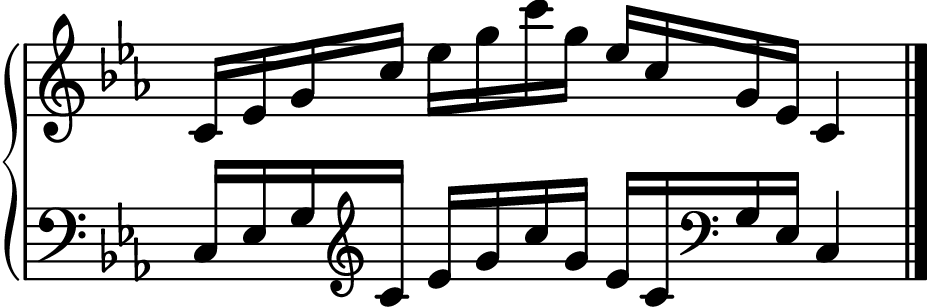
7. Grade 4
Grade 4 reaches the remotest keys on the keyboard: B, F sharp and A flat majors with F sharp and F minors, hands separately. The chromatic scale is now two octaves, hands together, and a minor key joins the contrary-motion list for the first time.
Scales (similar motion)
| Requirement | Range | How |
|---|---|---|
| B flat, E flat majors | 2 octaves | hands together |
| B, C minors (harmonic or melodic, at candidate's choice) | 2 octaves | hands together |
| B, F sharp, A flat majors | 2 octaves | hands separately |
| F sharp, F minors (harmonic or melodic, at candidate's choice) | 2 octaves | hands separately |
B flat major (two octaves)
E flat major (two octaves)
B minor, harmonic (two octaves)
B minor, melodic (two octaves)
C minor, harmonic (two octaves)
C minor, melodic (two octaves)
B major (two octaves)

F sharp major (two octaves)

A flat major (two octaves)

F sharp minor, harmonic (two octaves)
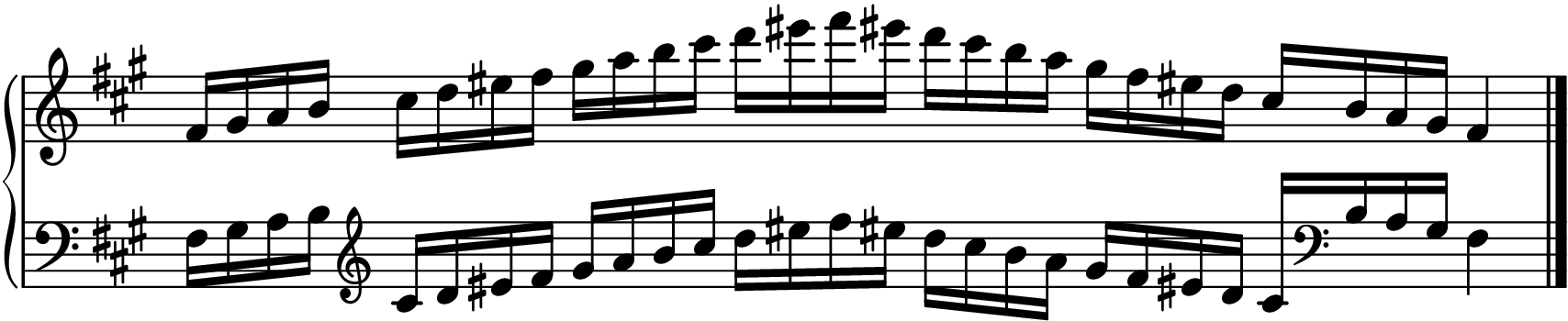
F sharp minor, melodic (two octaves)
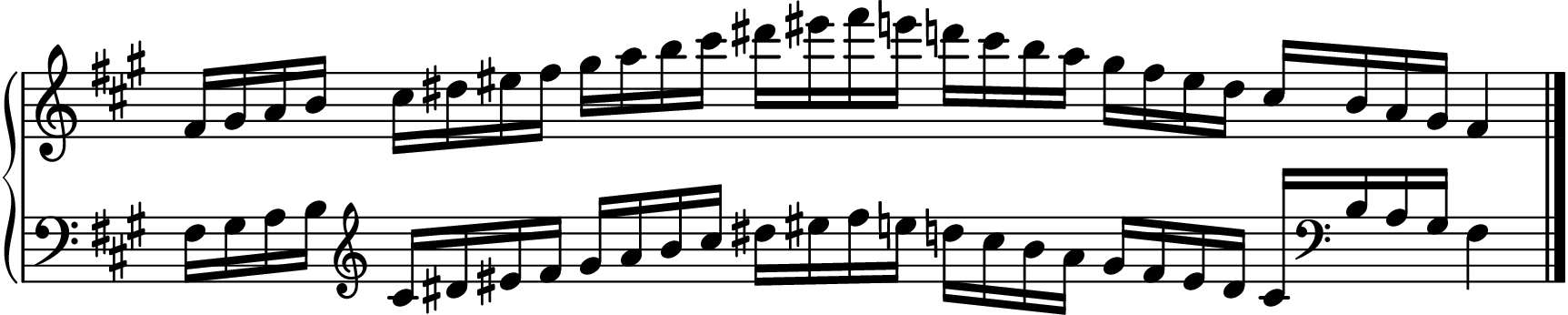
F minor, harmonic (two octaves)
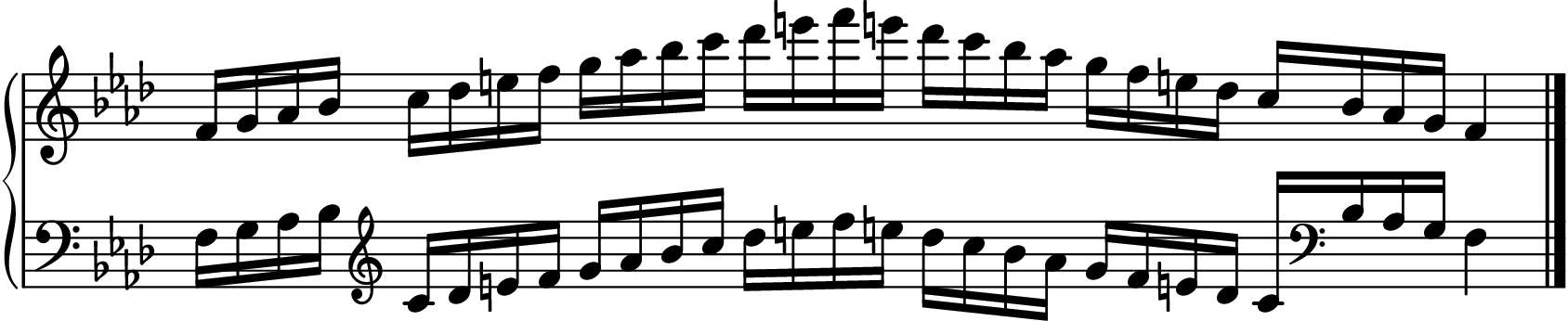
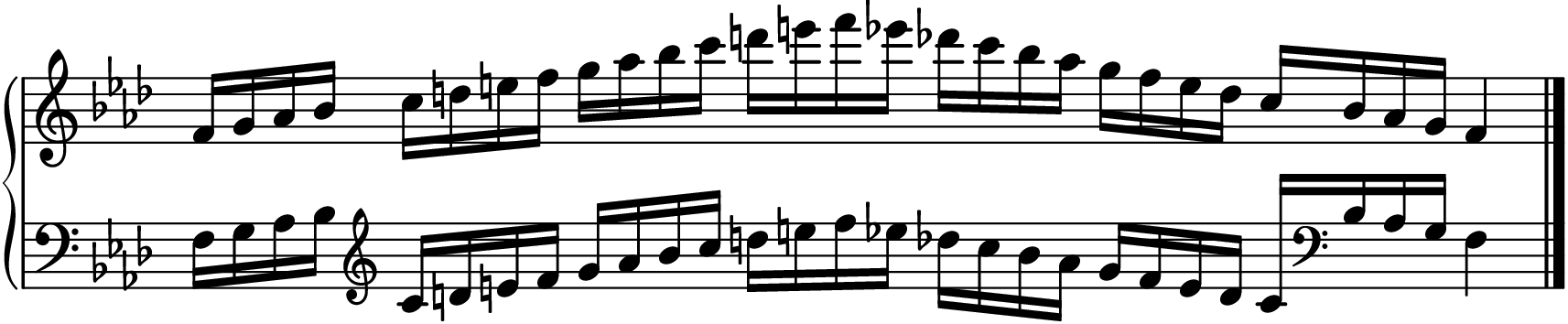
F minor, melodic (two octaves)
Contrary-motion scales
| Requirement | Range | How |
|---|---|---|
| E flat major, C harmonic minor | 2 octaves | hands starting on the tonic (unison) |
E flat major, contrary motion (two octaves)
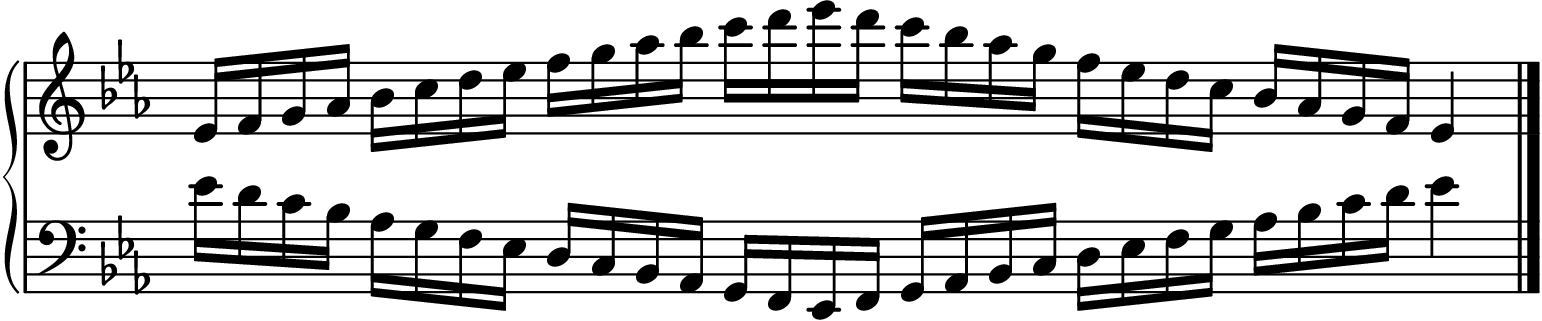
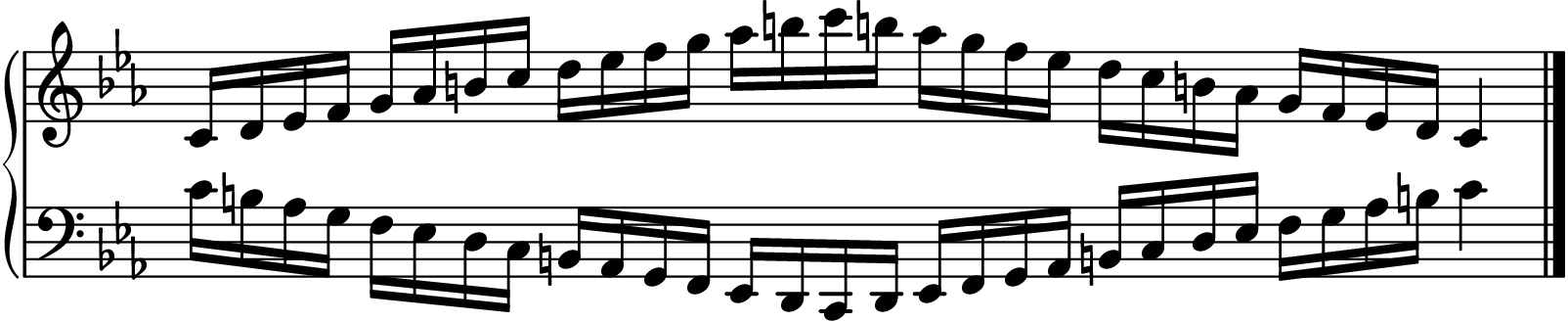
C harmonic minor, contrary motion (two octaves)
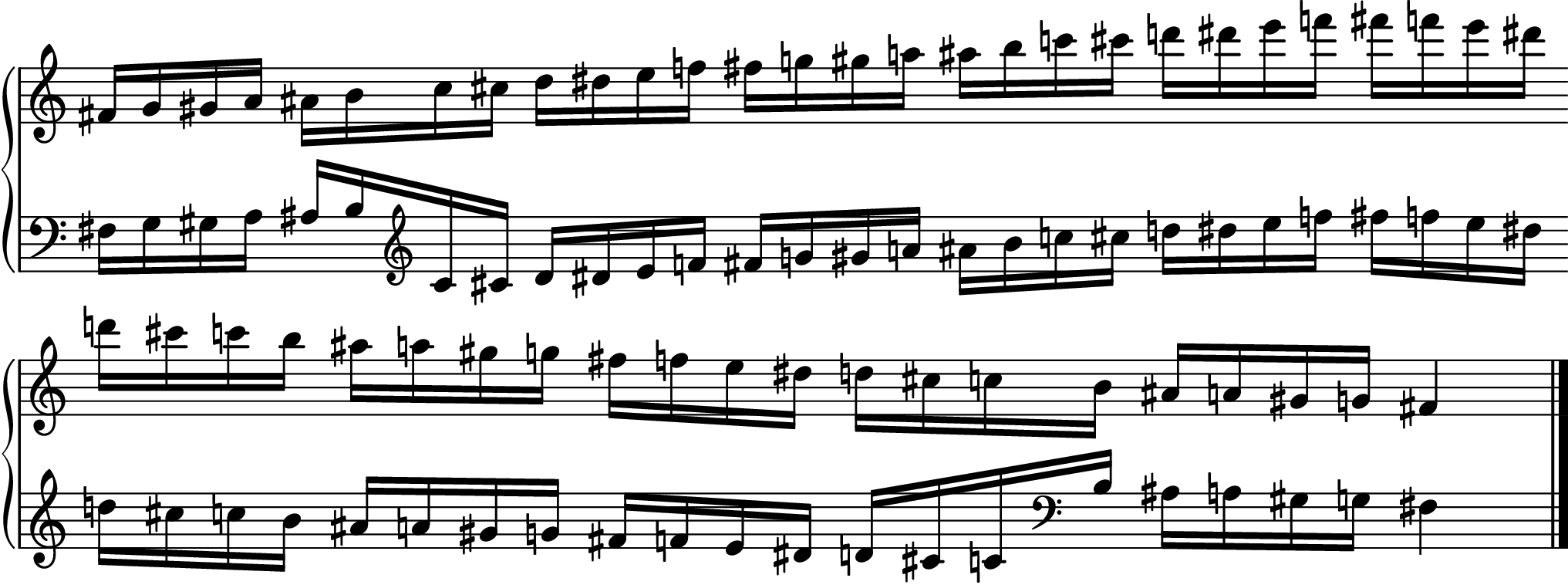
Chromatic scale (similar motion)
| Requirement | Range | How |
|---|---|---|
| starting on F sharp | 2 octaves | hands together |
Chromatic scale starting on F sharp (two octaves)
Arpeggios
| Requirement | Range | How |
|---|---|---|
| B flat, E flat majors; B, C minors | 2 octaves | hands together |
| B, F sharp, A flat majors; F sharp, F minors | 2 octaves | hands separately |
B flat major arpeggio (two octaves)
E flat major arpeggio (two octaves)
B minor arpeggio (two octaves)
C minor arpeggio (two octaves)
B major arpeggio (two octaves)
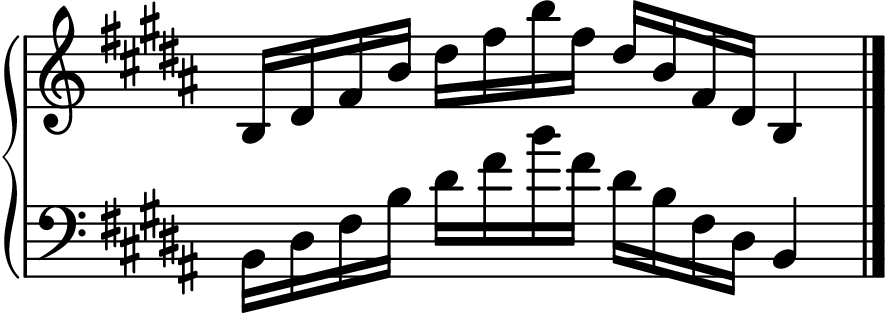
F sharp major arpeggio (two octaves)
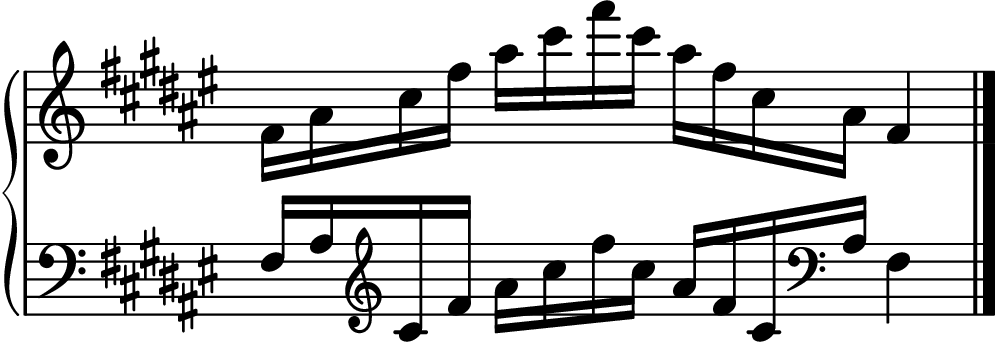
A flat major arpeggio (two octaves)
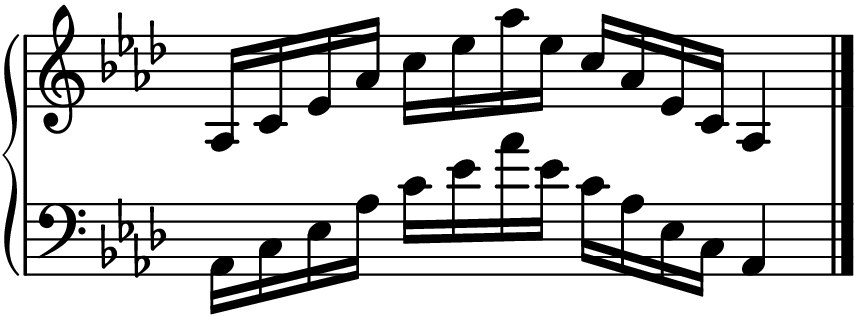
F sharp minor arpeggio (two octaves)
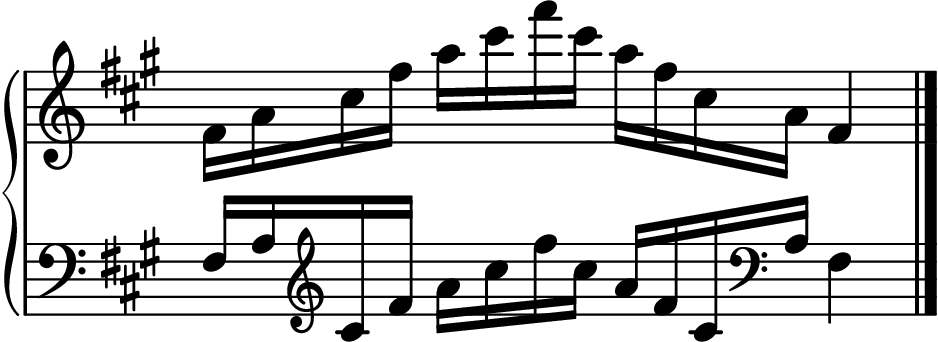
F minor arpeggio (two octaves)
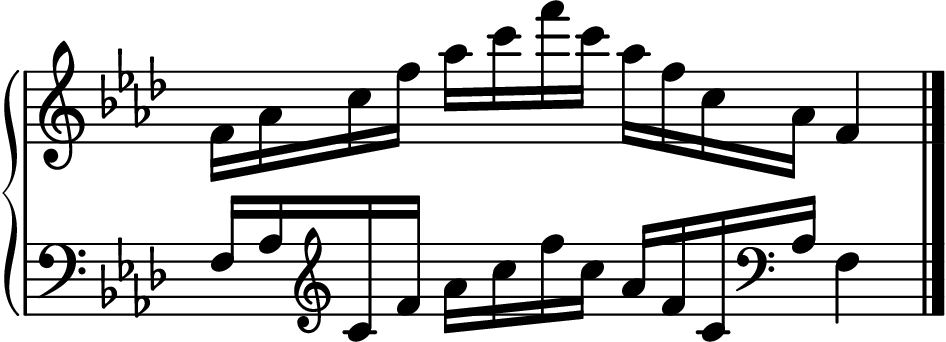
8. Grade 5
Grade 5 is the last of the two-octave grades and the widest: five majors and five minors hands together, reaching as far round the key circle as B, F sharp and D flat. Staccato arrives, on A flat major and F minor hands separately, and so does the diminished 7th, starting on B. The chromatic contrary-motion scale now starts with the hands a major 3rd apart.
Scales (similar motion)
| Requirement | Range | How |
|---|---|---|
| A, E, B, F sharp, D flat majors | 2 octaves | legato; hands together |
| F sharp, C sharp, G sharp, E flat, B flat minors (harmonic or melodic, at candidate's choice) | 2 octaves | legato; hands together |
A major (two octaves)
E major (two octaves)

B major (two octaves)
F sharp major (two octaves)
D flat major (two octaves)

F sharp minor, harmonic (two octaves)
F sharp minor, melodic (two octaves)
C sharp minor, harmonic (two octaves)
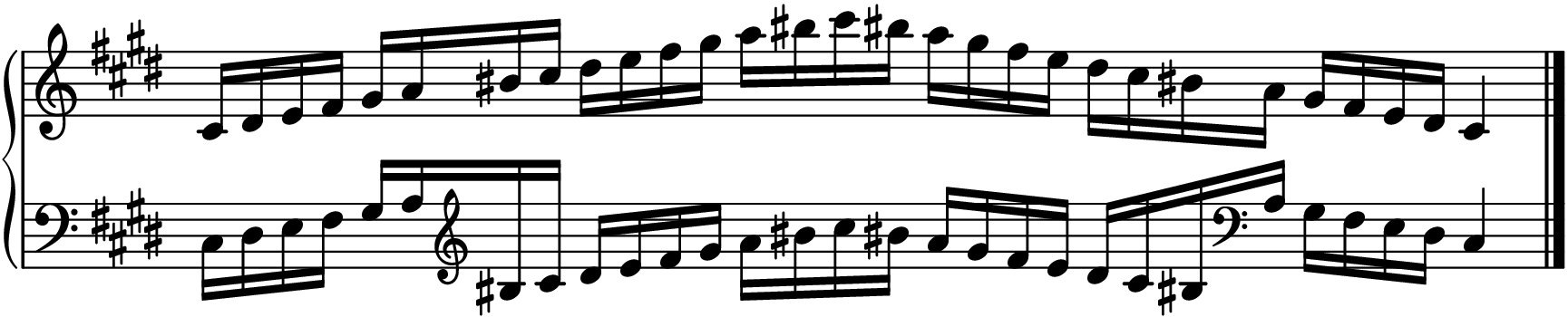
C sharp minor, melodic (two octaves)
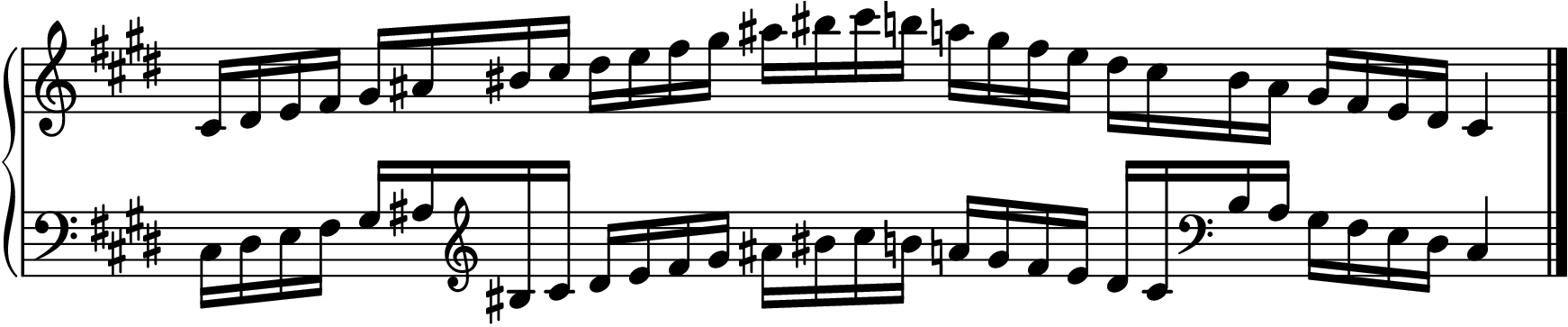
G sharp minor, harmonic (two octaves)

G sharp minor, melodic (two octaves)

E flat minor, harmonic (two octaves)
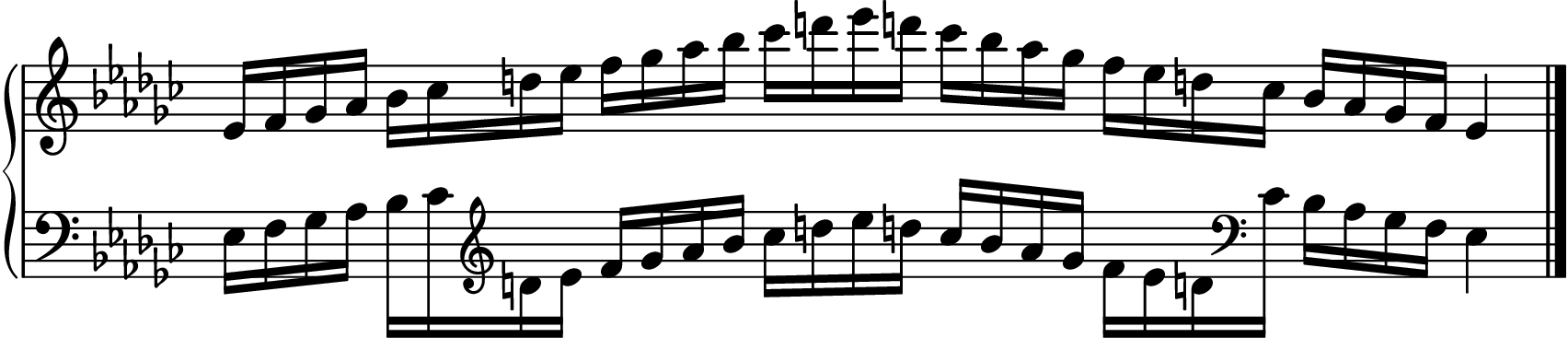
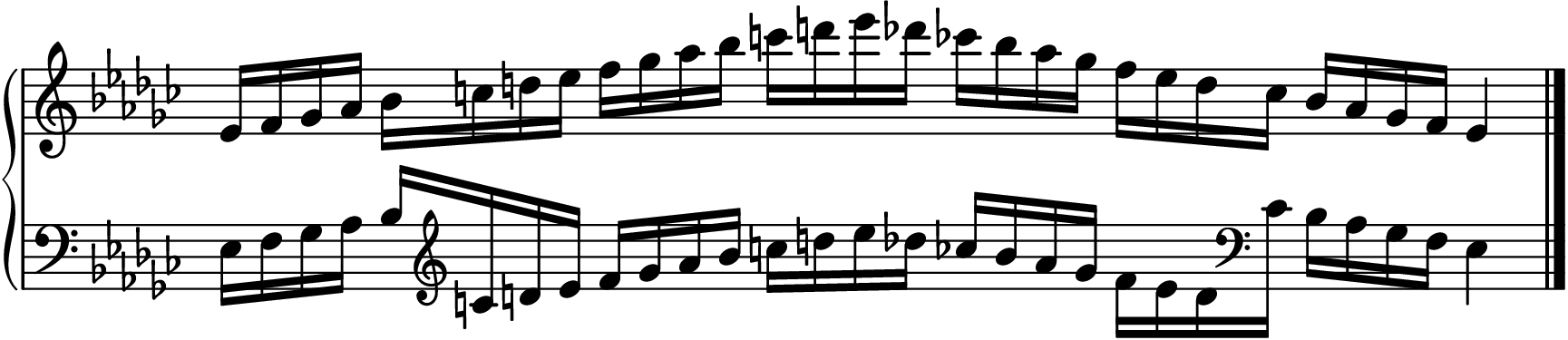
E flat minor, melodic (two octaves)
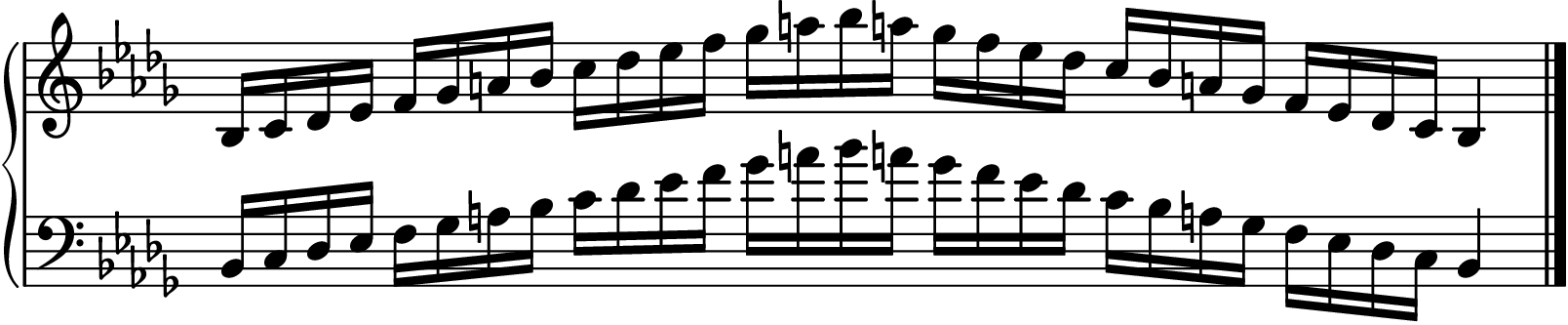
B flat minor, harmonic (two octaves)
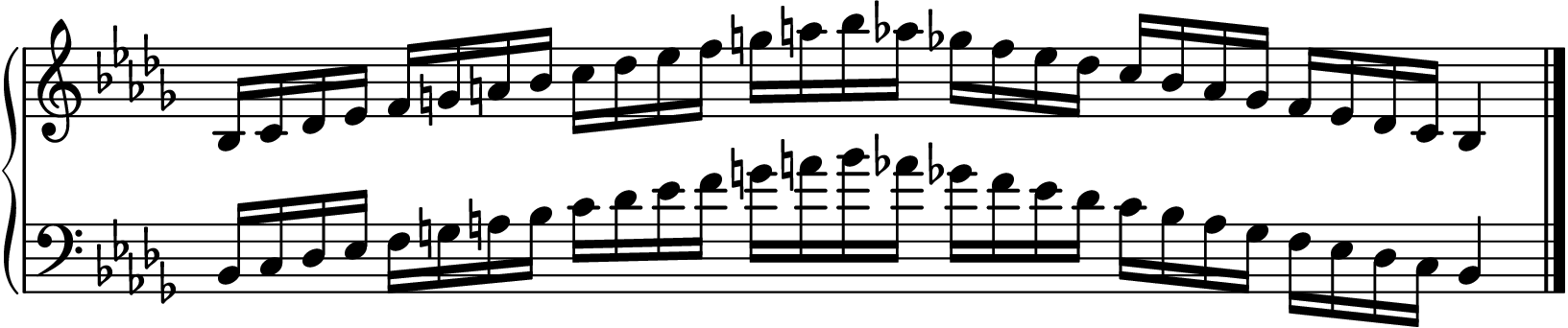
B flat minor, melodic (two octaves)
Staccato scales
| Requirement | Range | How |
|---|---|---|
| A flat major | 2 octaves | staccato; hands separately |
| F minor (harmonic or melodic, at candidate's choice) | 2 octaves | staccato; hands separately |
A flat major, staccato (two octaves)

F minor, harmonic, staccato (two octaves)
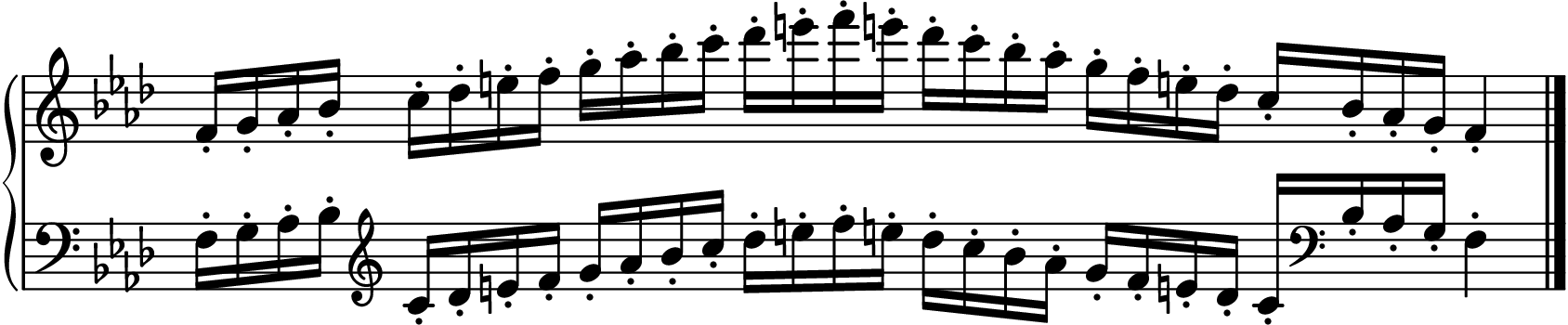
F minor, melodic, staccato (two octaves)
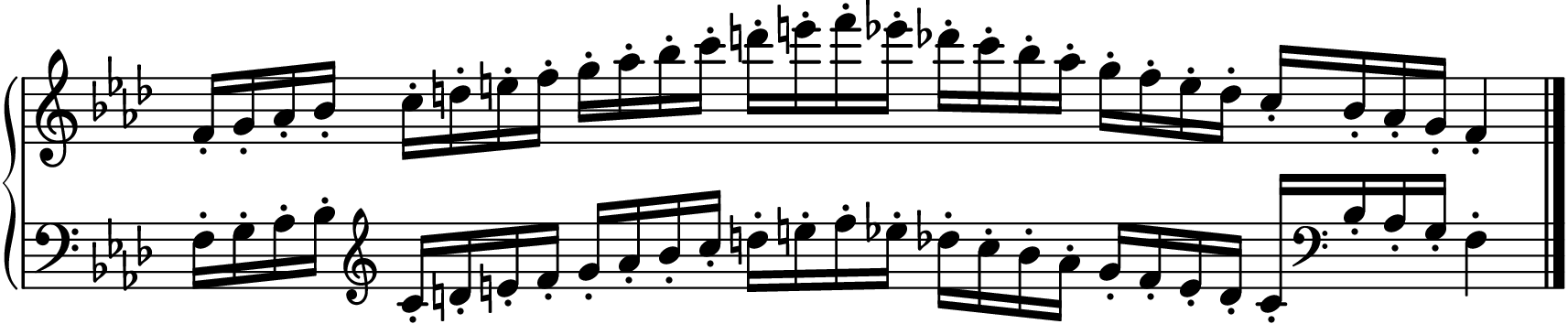
Contrary-motion scales
| Requirement | Range | How |
|---|---|---|
| D flat major, C sharp harmonic minor | 2 octaves | legato; hands starting on the tonic (unison) |
D flat major, contrary motion (two octaves)
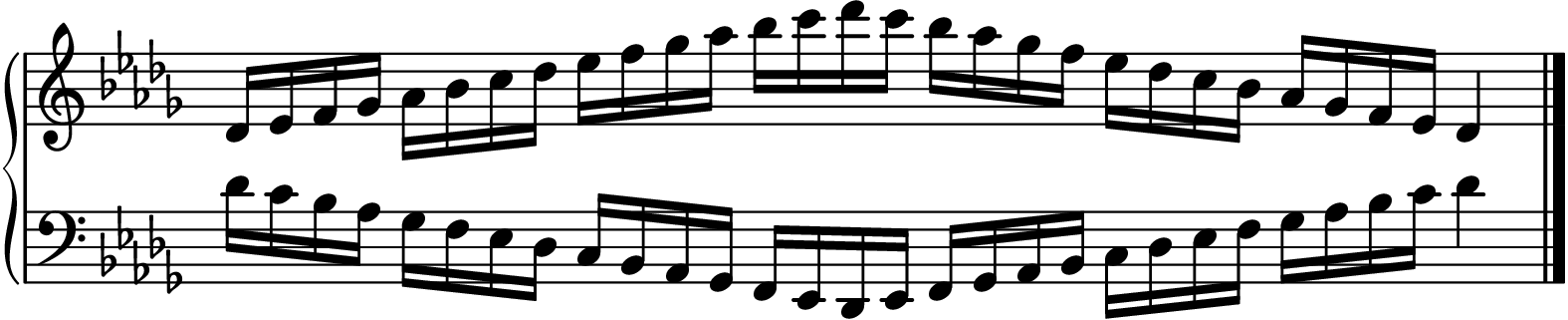
C sharp harmonic minor, contrary motion (two octaves)

Chromatic contrary-motion scale
| Requirement | Range | How |
|---|---|---|
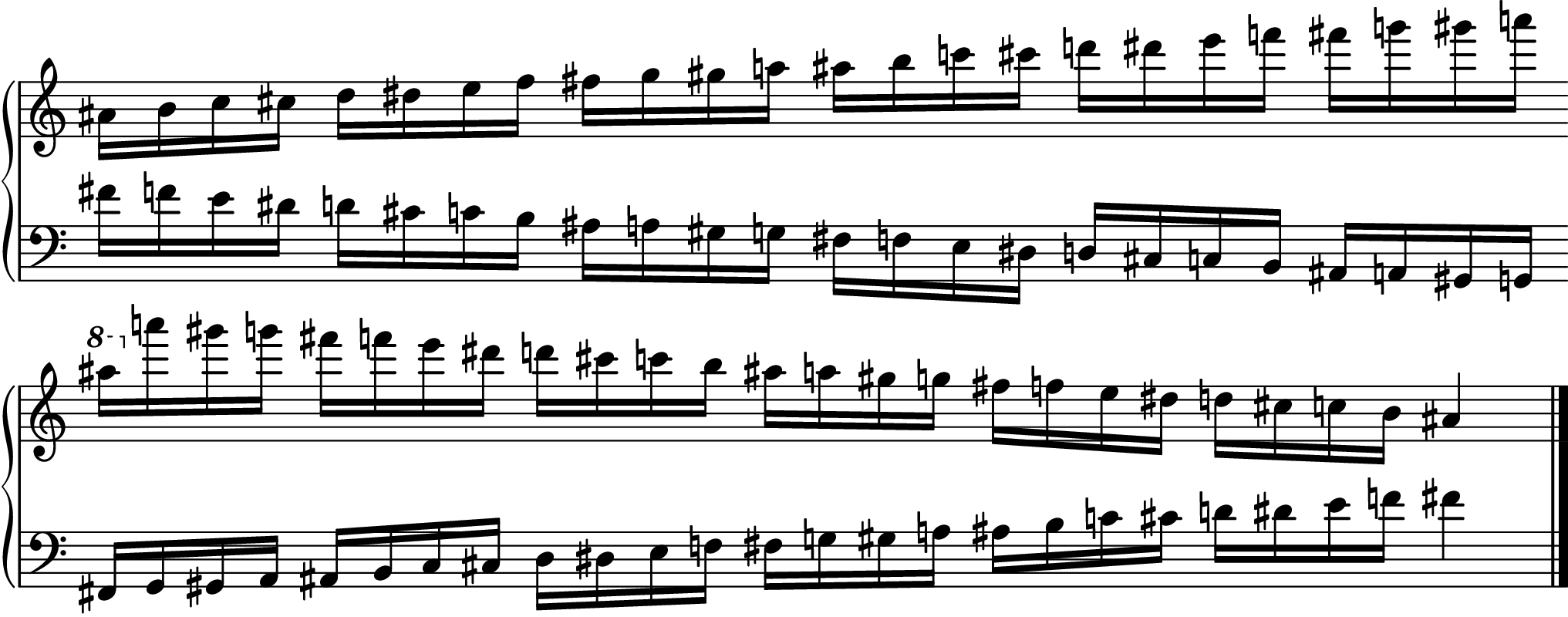
| starting on F sharp (LH) and A sharp (RH) | 2 octaves | legato; hands starting a major 3rd apart |
Chromatic contrary-motion scale, left hand on F sharp, right hand on A sharp (two octaves)
Arpeggios
| Requirement | Range | How |
|---|---|---|
| A, E, B, F sharp, A flat, D flat majors | 2 octaves | legato; hands together |
| F sharp, C sharp, G sharp, E flat, F, B flat minors | 2 octaves | legato; hands together |
A major arpeggio (two octaves)
E major arpeggio (two octaves)
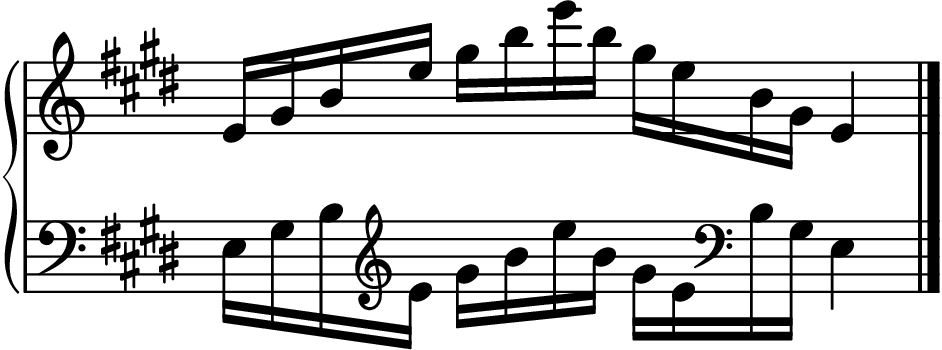
B major arpeggio (two octaves)
F sharp major arpeggio (two octaves)
A flat major arpeggio (two octaves)
D flat major arpeggio (two octaves)
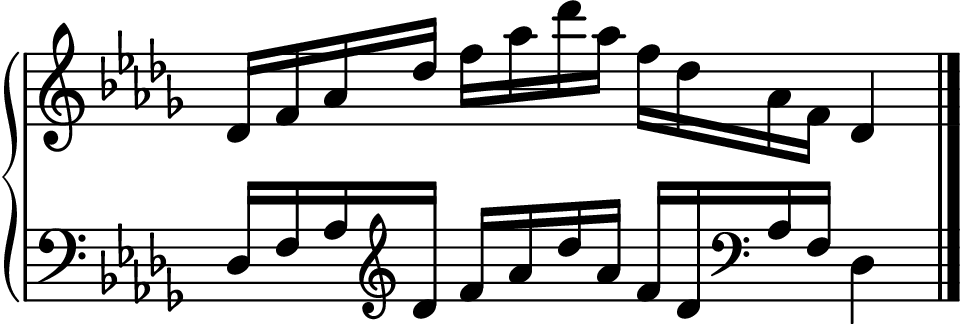
F sharp minor arpeggio (two octaves)
C sharp minor arpeggio (two octaves)
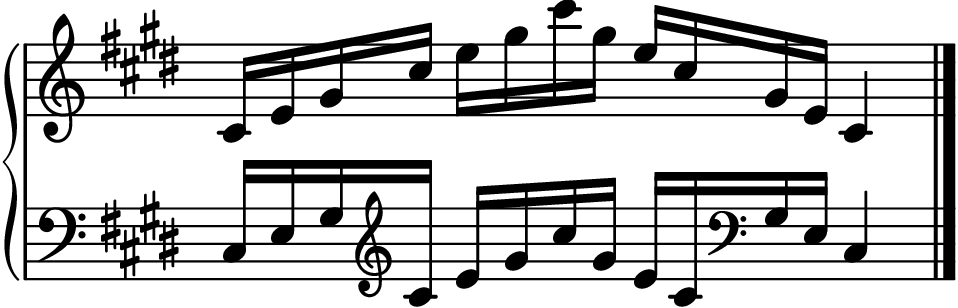
G sharp minor arpeggio (two octaves)
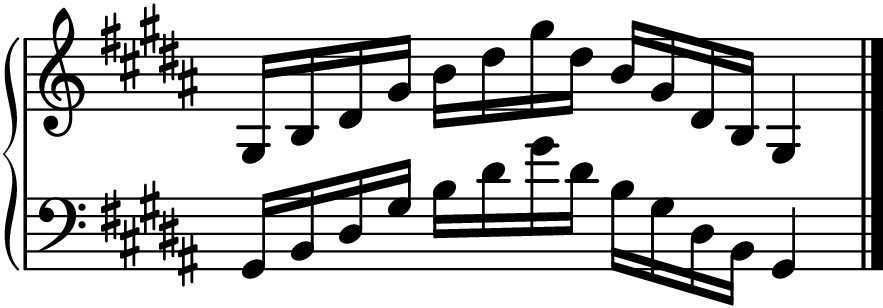
E flat minor arpeggio (two octaves)
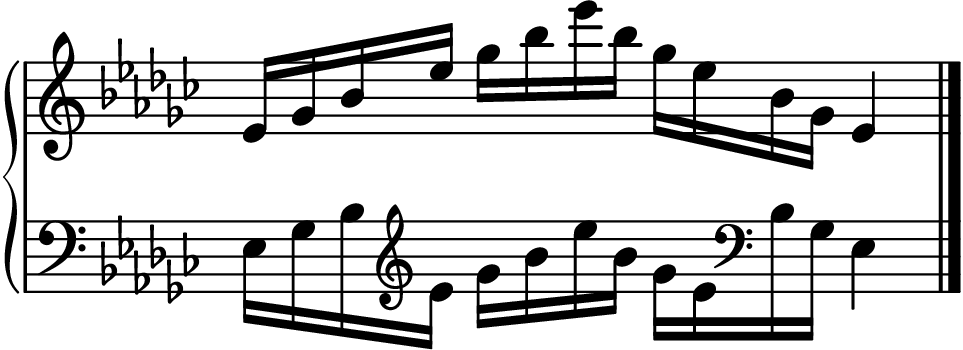
F minor arpeggio (two octaves)
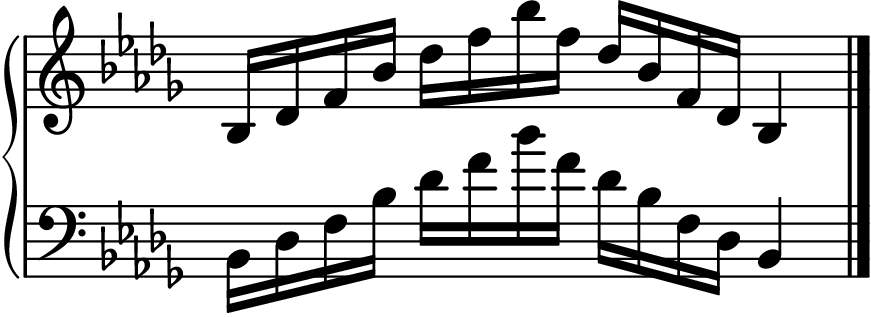
B flat minor arpeggio (two octaves)
Diminished 7th
| Requirement | Range | How |
|---|---|---|
| starting on B | 2 octaves | legato; hands separately |
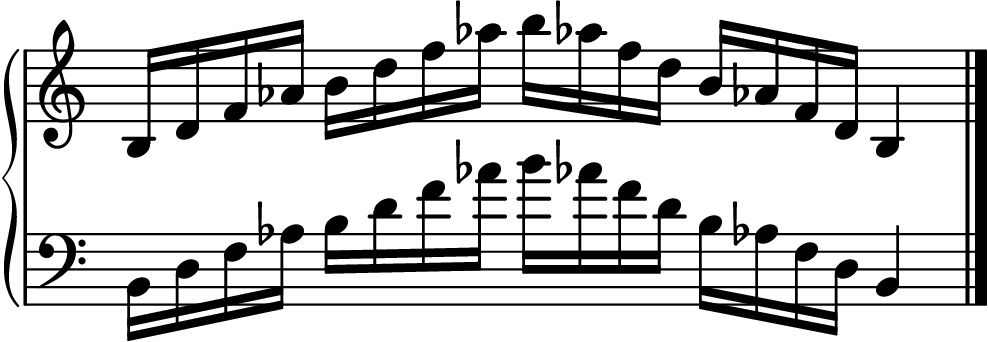
Diminished 7th starting on B (two octaves)
9. Grade 6
Grade 6 doubles the range: similar-motion scales, chromatics, arpeggios and the new dominant 7ths all run to four octaves, hands together. Both minor forms must be ready, because the examiner now chooses harmonic or melodic, and also chooses legato or staccato for the scales and chromatics.
Scales (similar motion)
| Requirement | Range | How |
|---|---|---|
| D, F, A flat, B majors | 4 octaves | legato or staccato, at examiner's choice; hands together |
| D, F, G sharp, B minors (harmonic and melodic) | 4 octaves | legato or staccato, at examiner's choice; hands together |
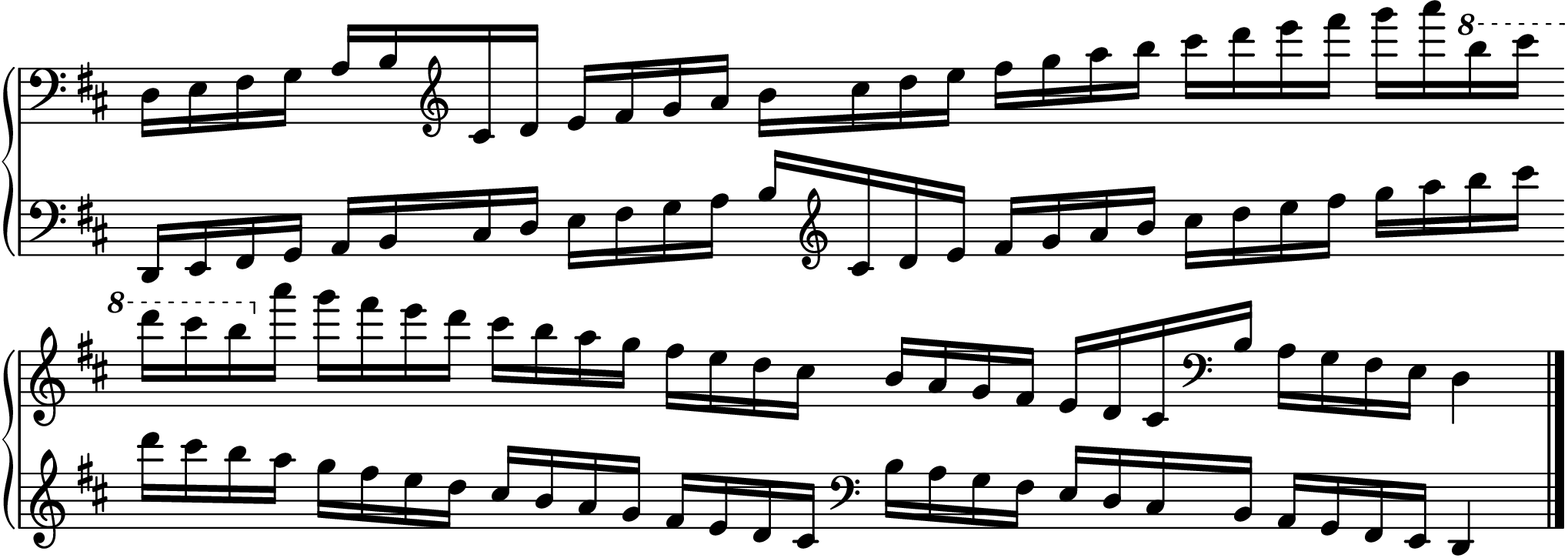
D major (four octaves)
F major (four octaves)
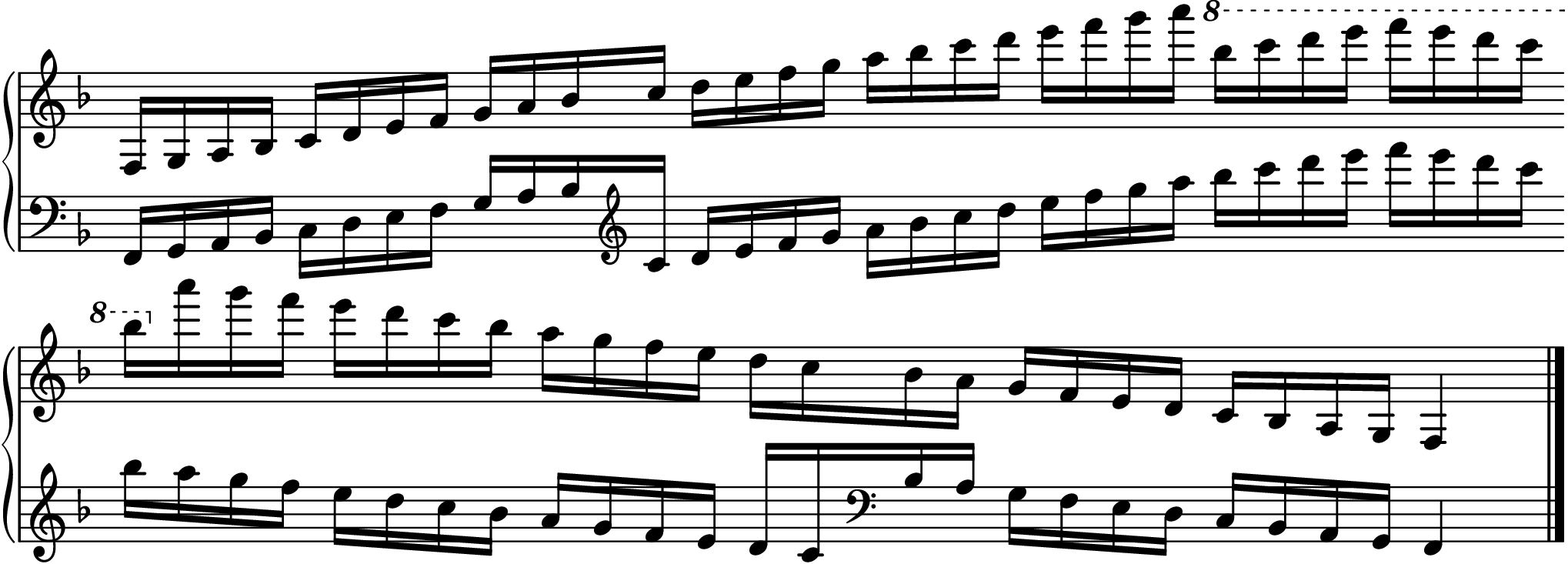
A flat major (four octaves)
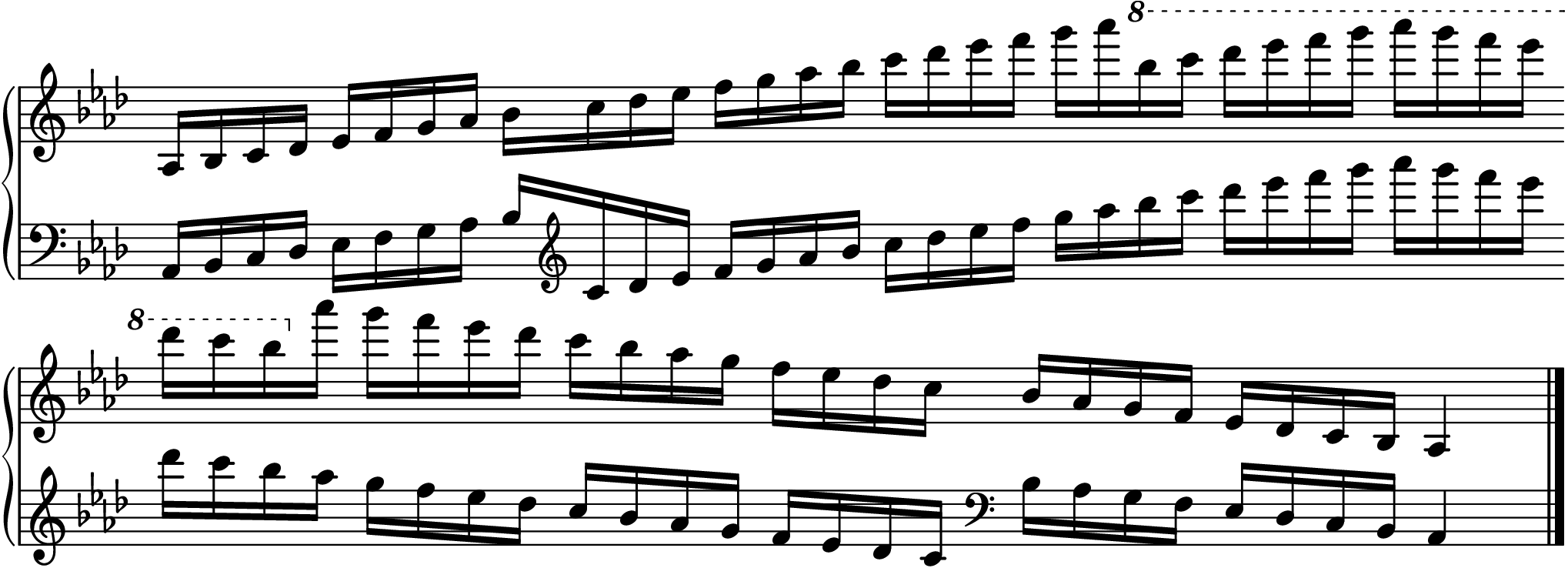
B major (four octaves)
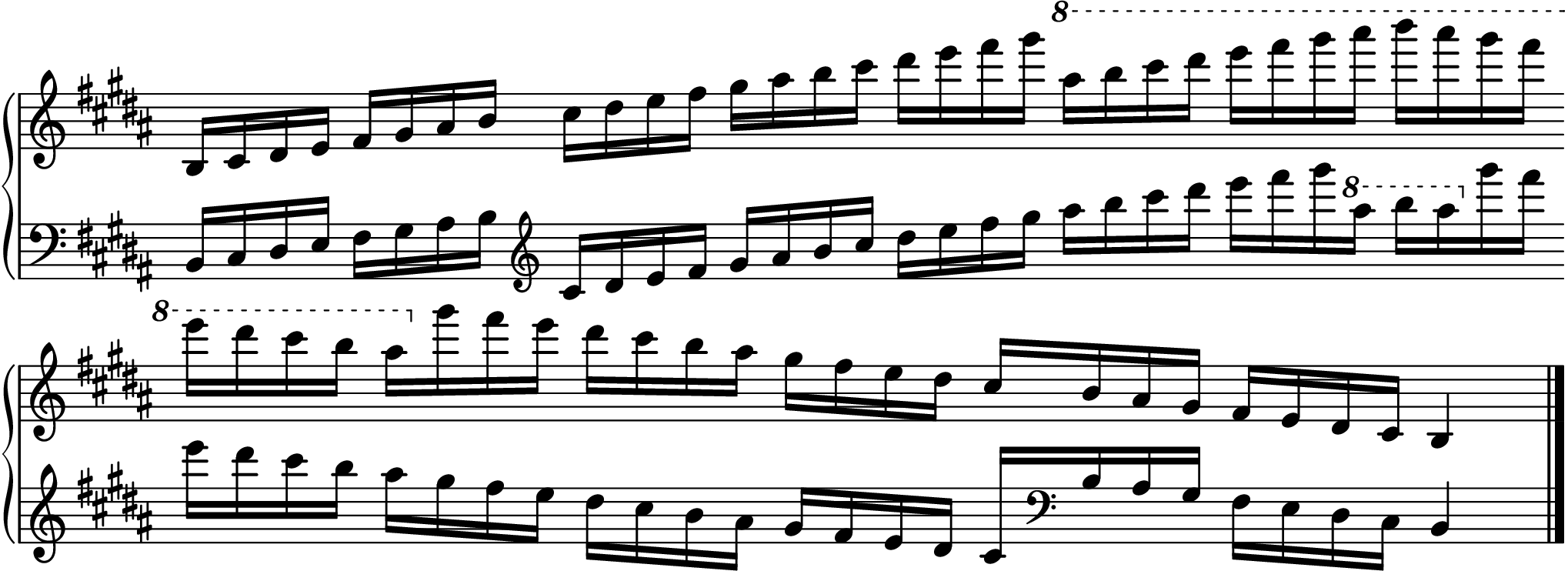
D minor, harmonic (four octaves)
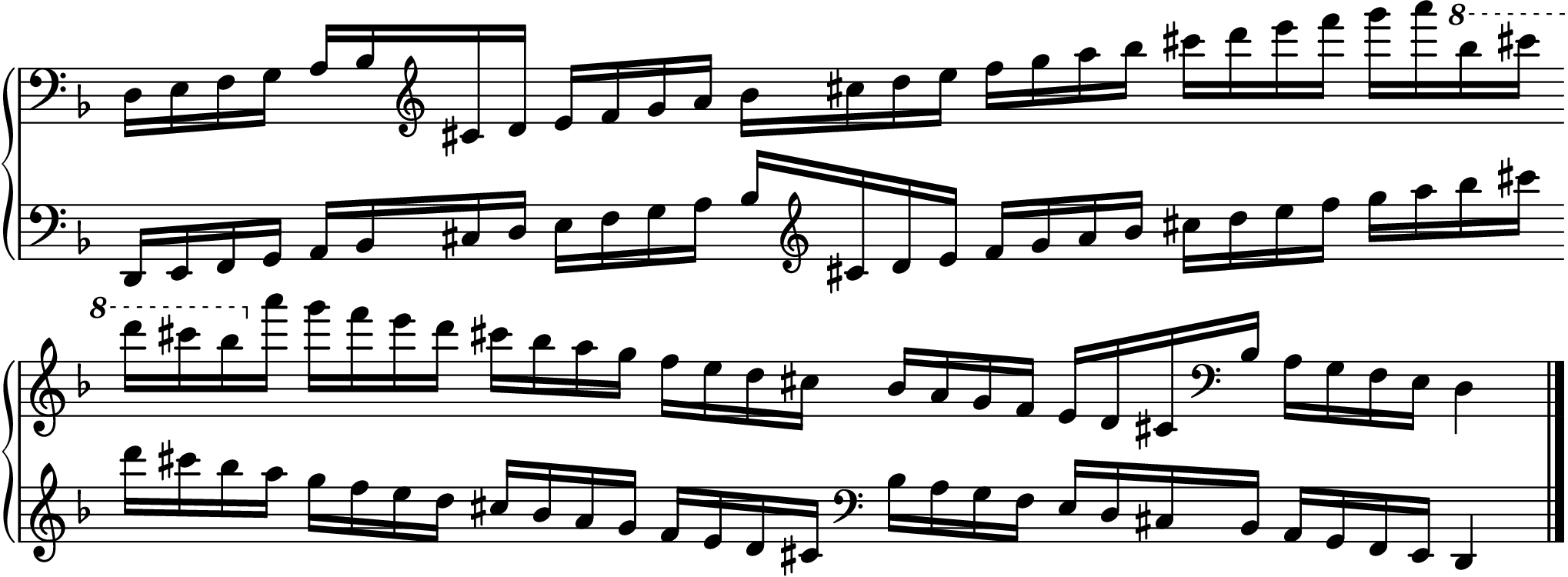
D minor, melodic (four octaves)
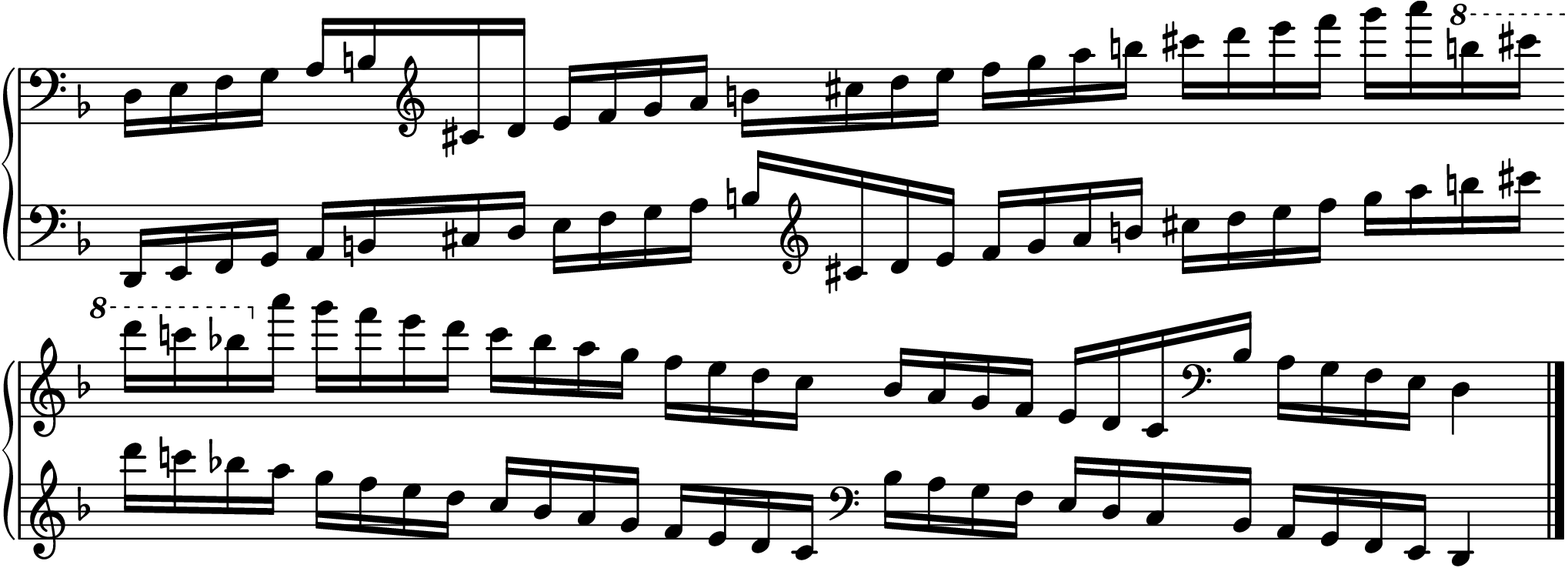
F minor, harmonic (four octaves)
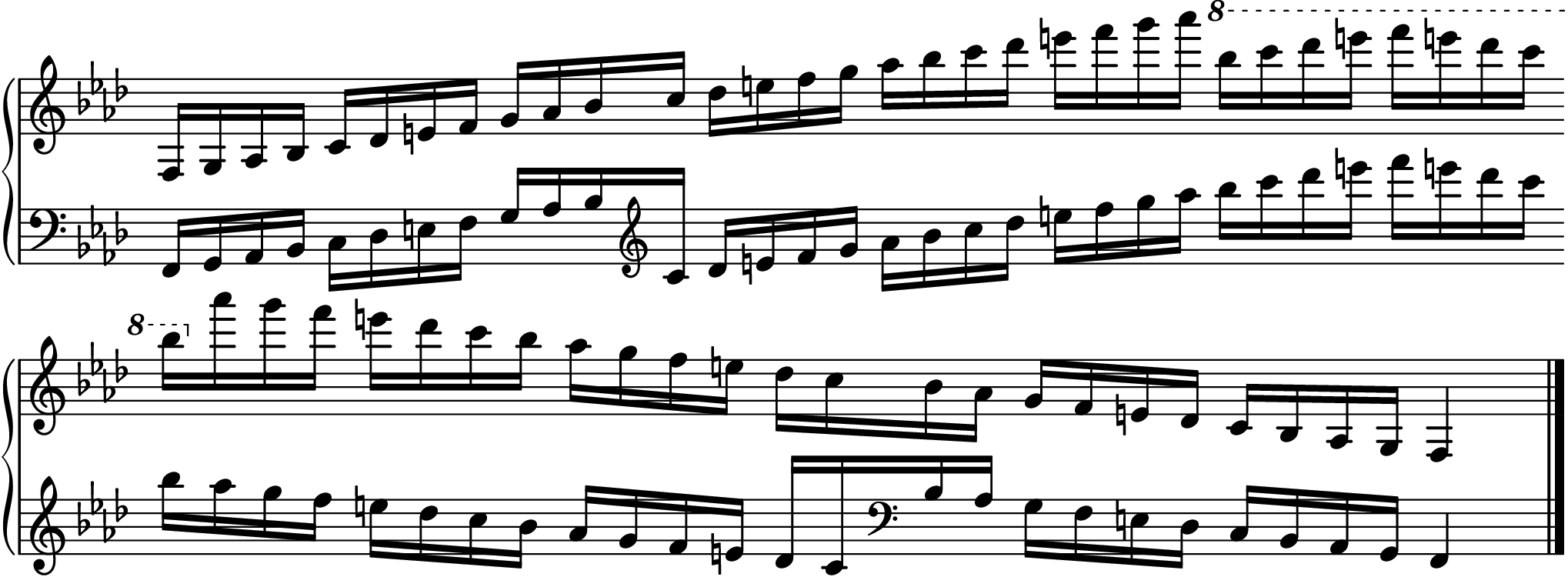
F minor, melodic (four octaves)
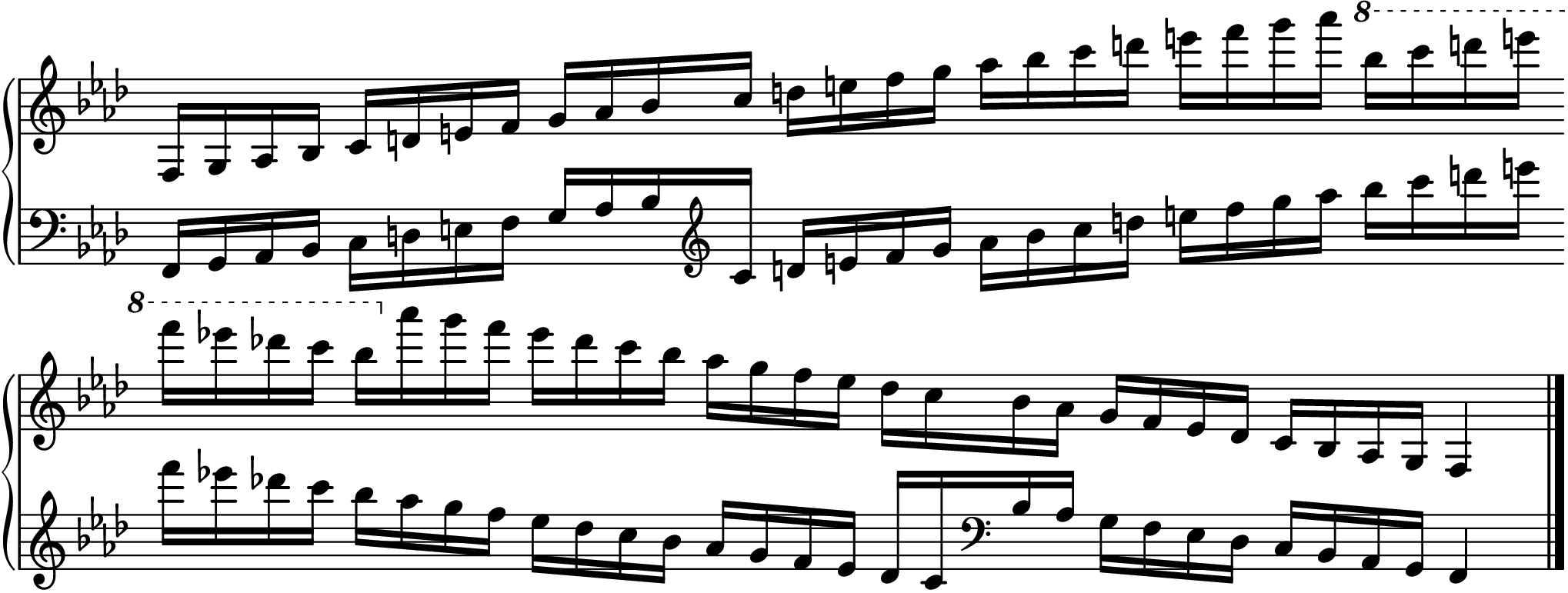
G sharp minor, harmonic (four octaves)
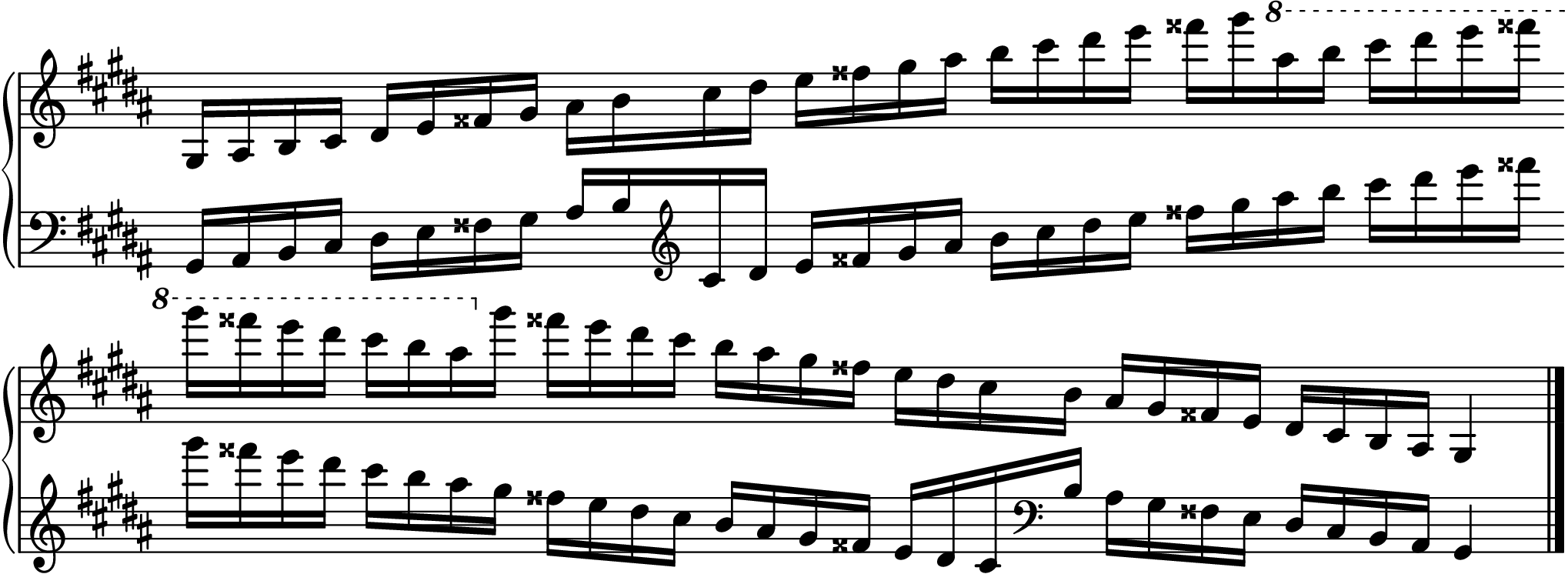
G sharp minor, melodic (four octaves)
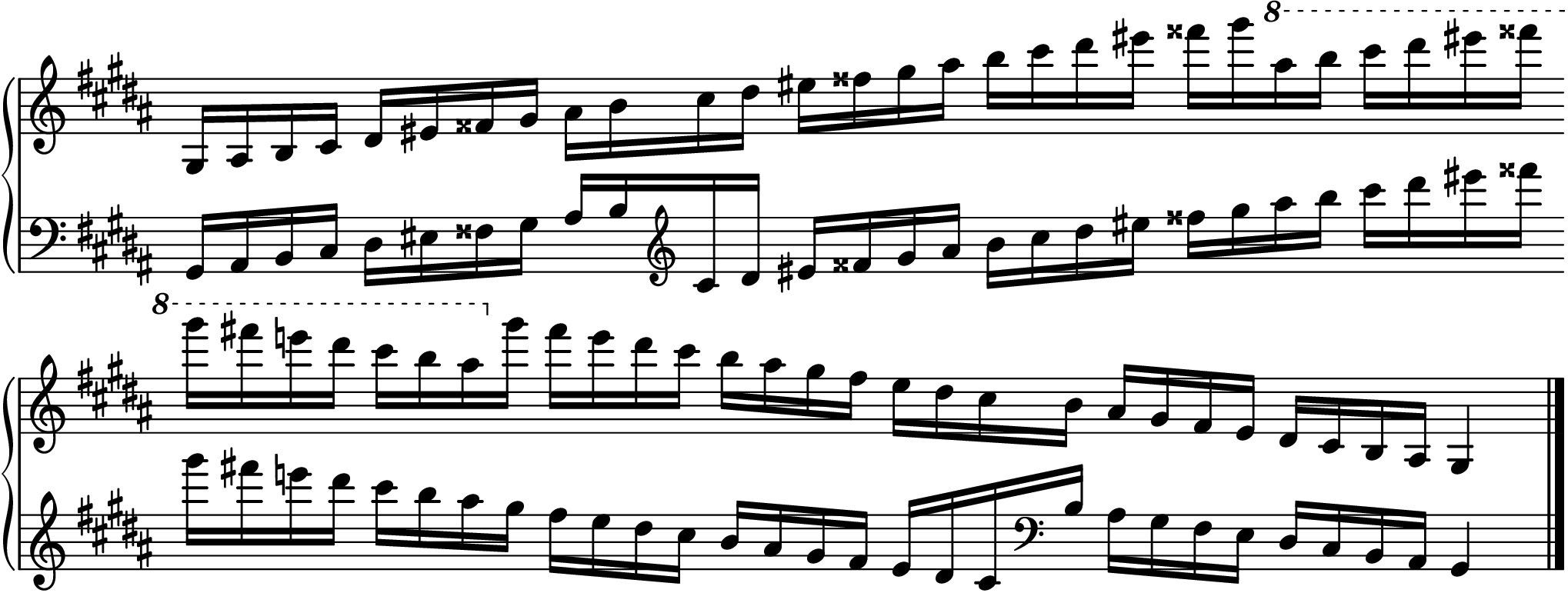
B minor, harmonic (four octaves)
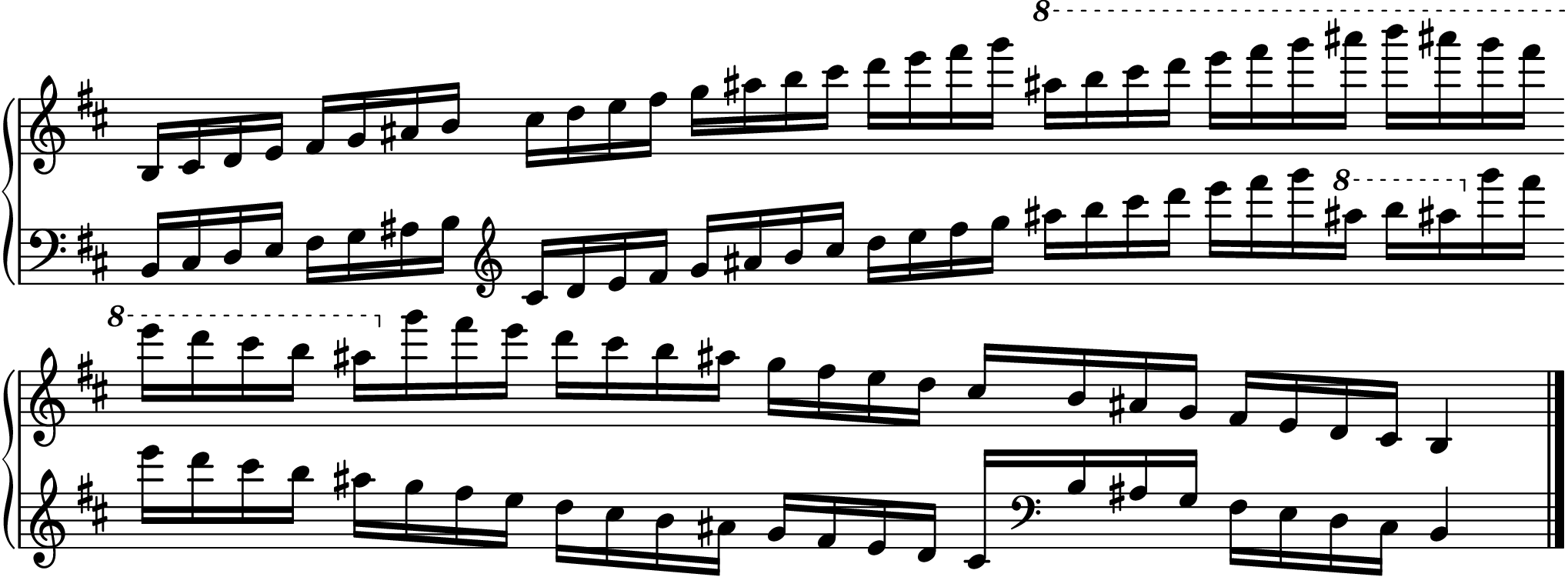
B minor, melodic (four octaves)
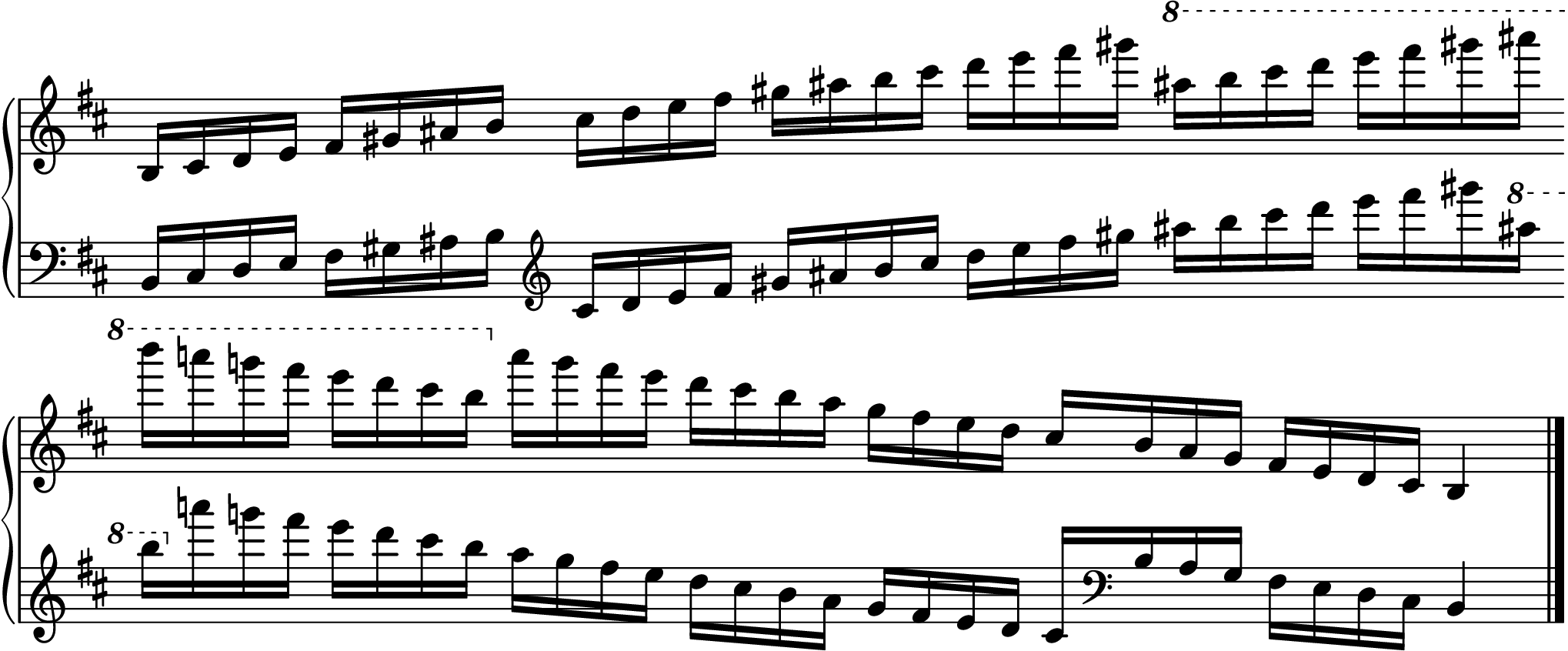
Contrary-motion scales
| Requirement | Range | How |
|---|---|---|
| D, F, A flat, B majors | 2 octaves | legato; hands starting on the tonic (unison) |
| D, F, G sharp, B harmonic minors | 2 octaves | legato; hands starting on the tonic (unison) |
D major, contrary motion (two octaves)
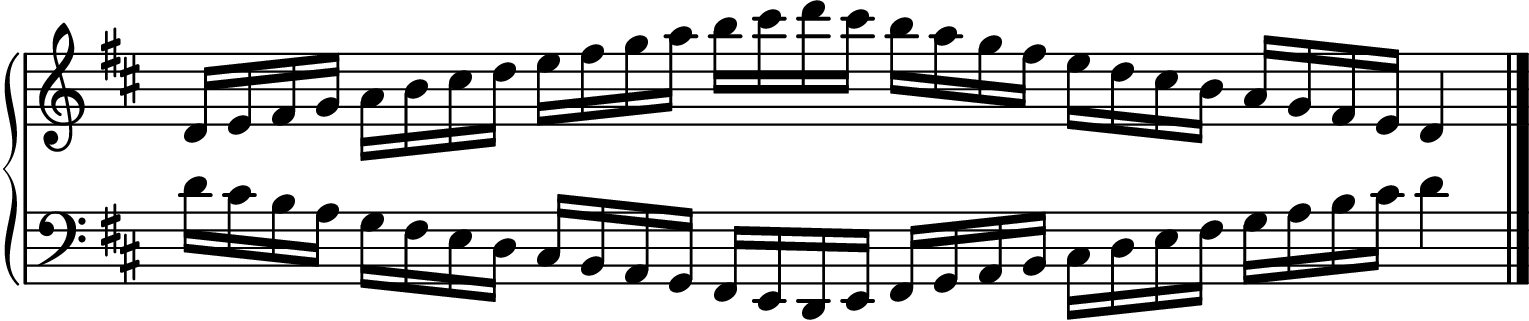
F major, contrary motion (two octaves)
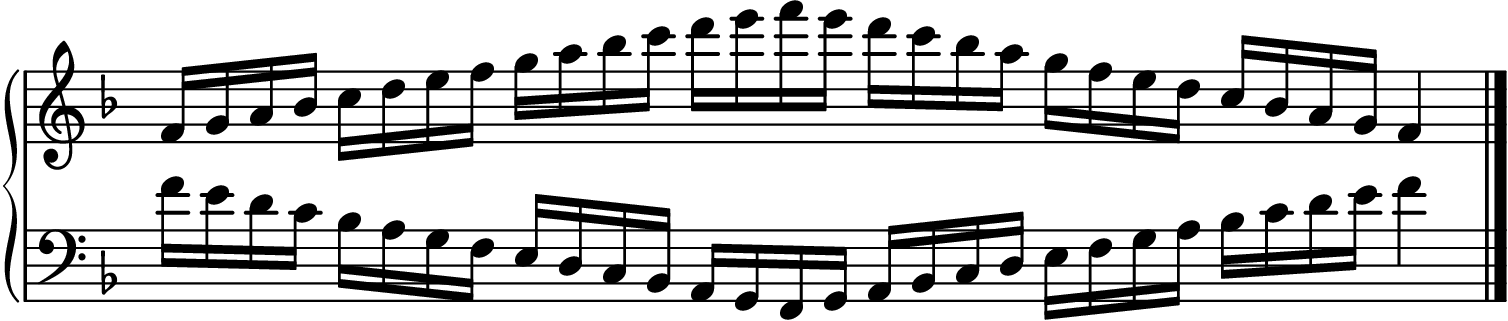
A flat major, contrary motion (two octaves)
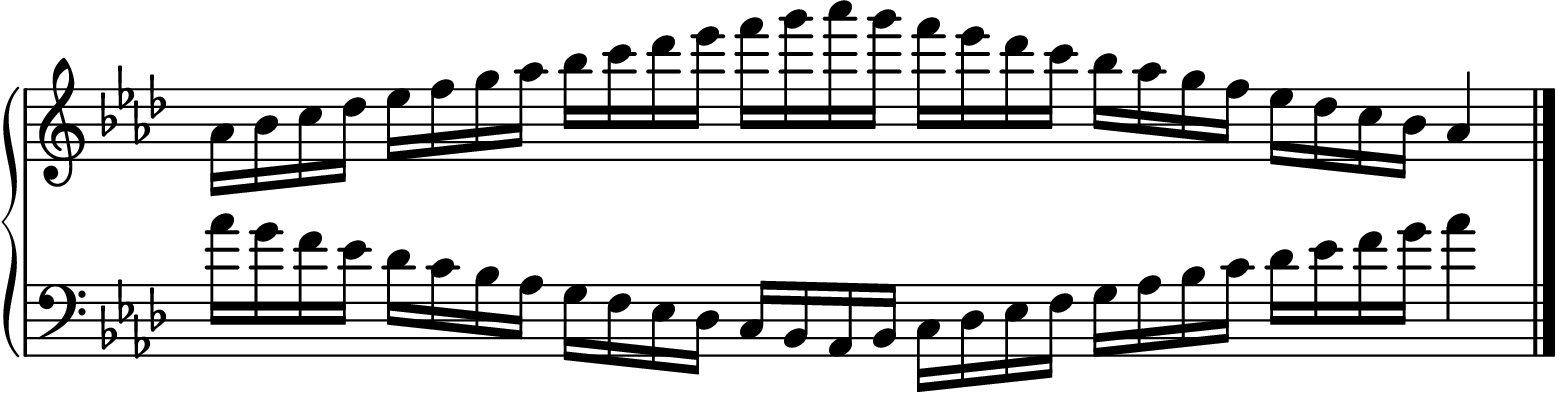
B major, contrary motion (two octaves)
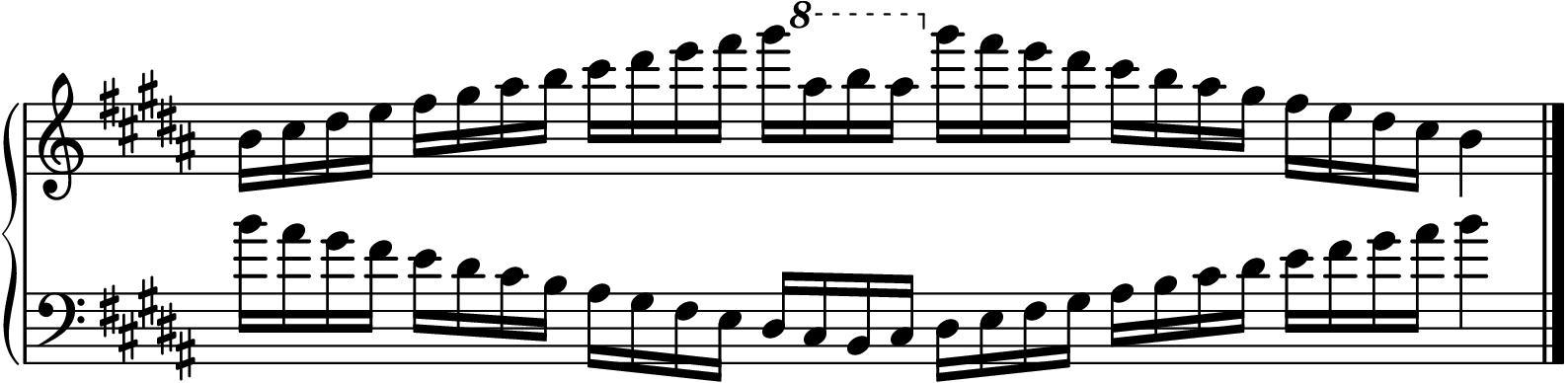
D harmonic minor, contrary motion (two octaves)
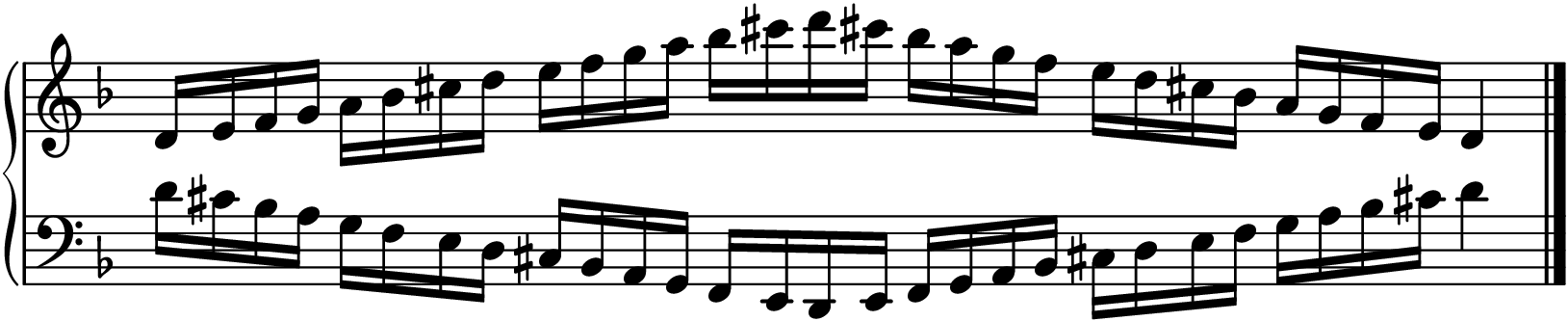
F harmonic minor, contrary motion (two octaves)
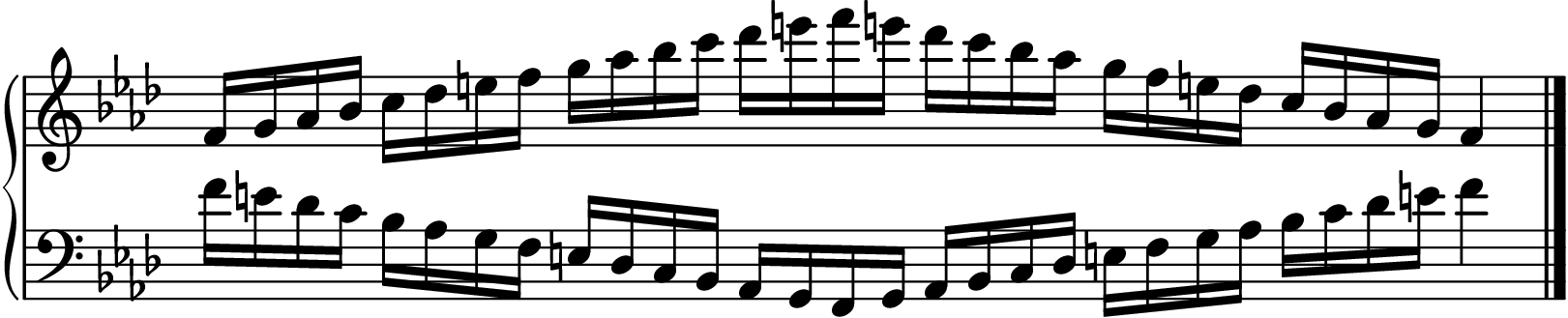
G sharp harmonic minor, contrary motion (two octaves)
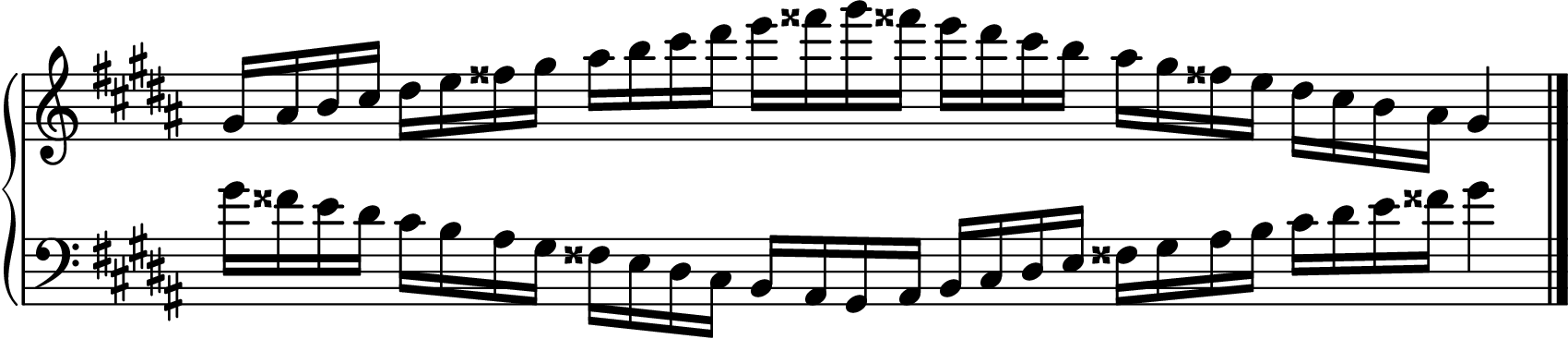
B harmonic minor, contrary motion (two octaves)
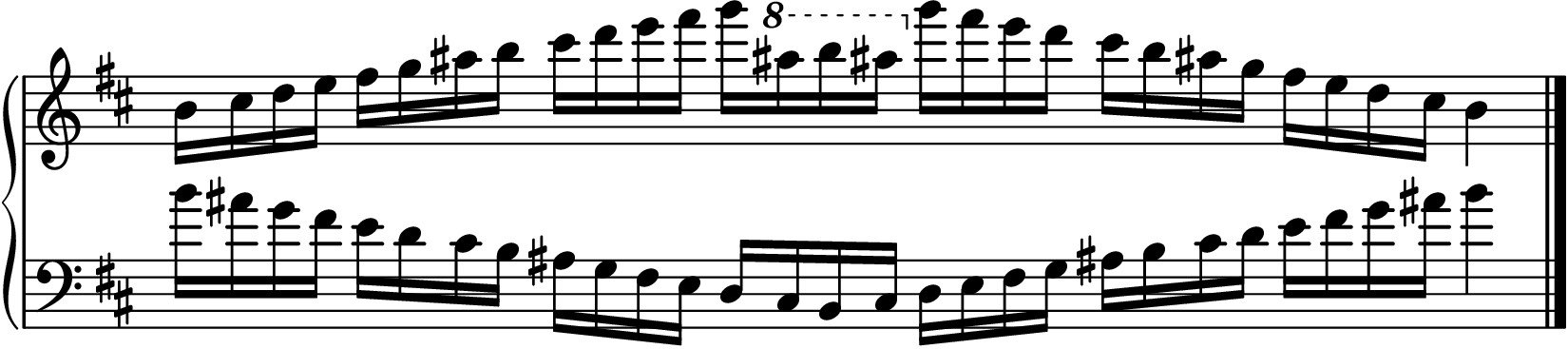
Chromatic scales (similar motion)
| Requirement | Range | How |
|---|---|---|
| starting on G sharp; starting on B | 4 octaves | legato or staccato, at examiner's choice; hands together |
Chromatic scale starting on G sharp (four octaves)
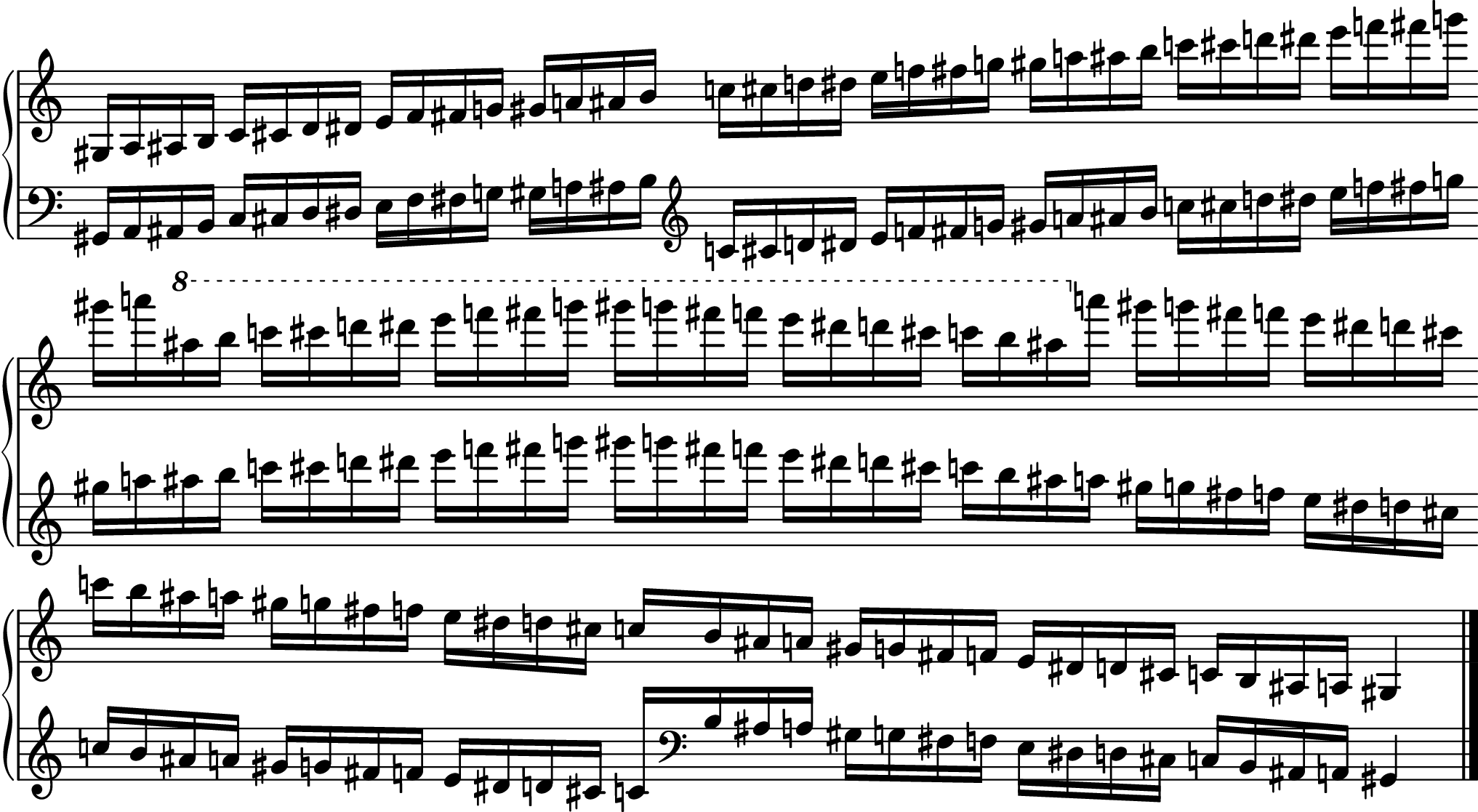
Chromatic scale starting on B (four octaves)
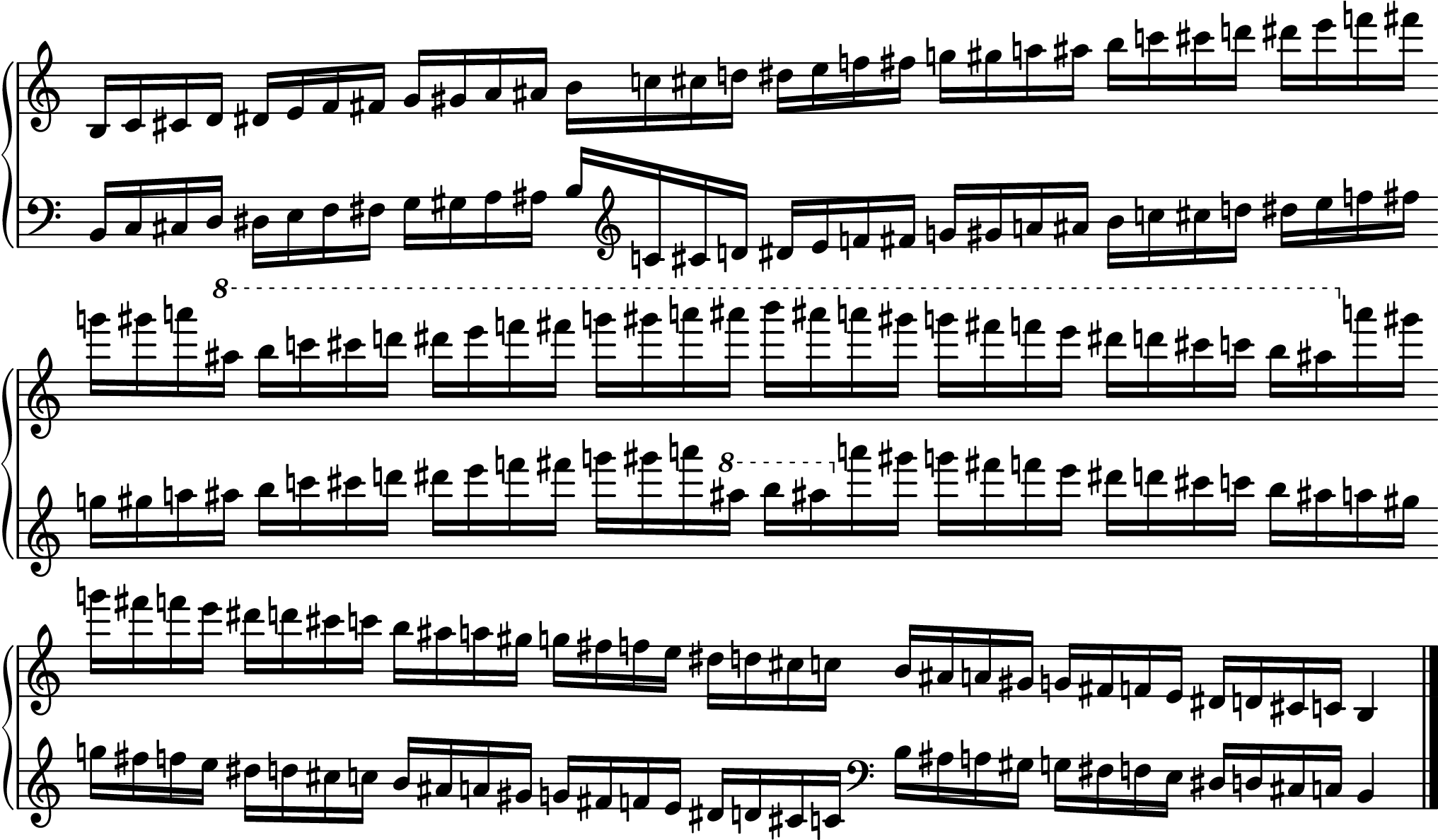
Arpeggios
| Requirement | Range | How |
|---|---|---|
| D, F, A flat, B majors; D, F, G sharp, B minors | 4 octaves | legato; hands together (root position) |
D major arpeggio (four octaves)
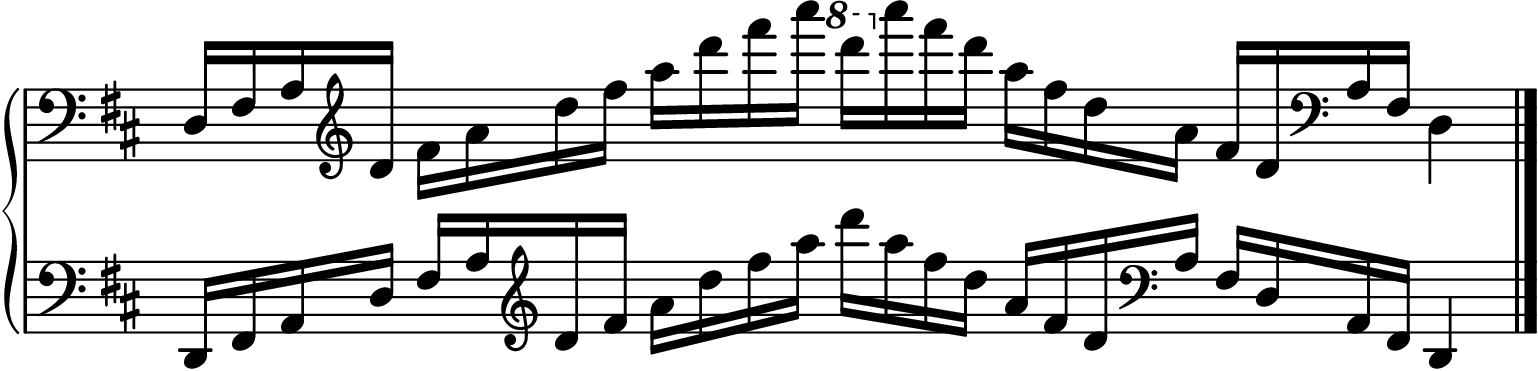
F major arpeggio (four octaves)
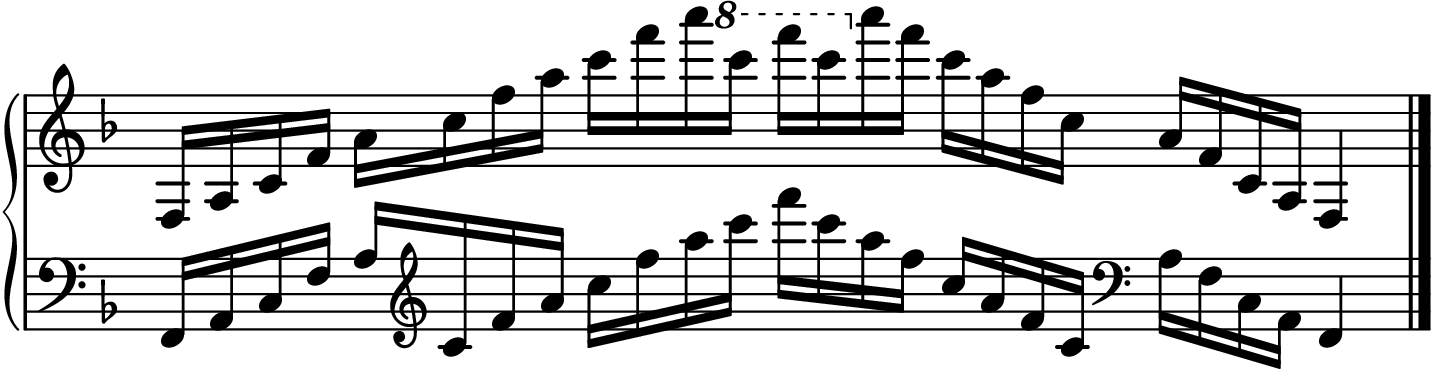
A flat major arpeggio (four octaves)
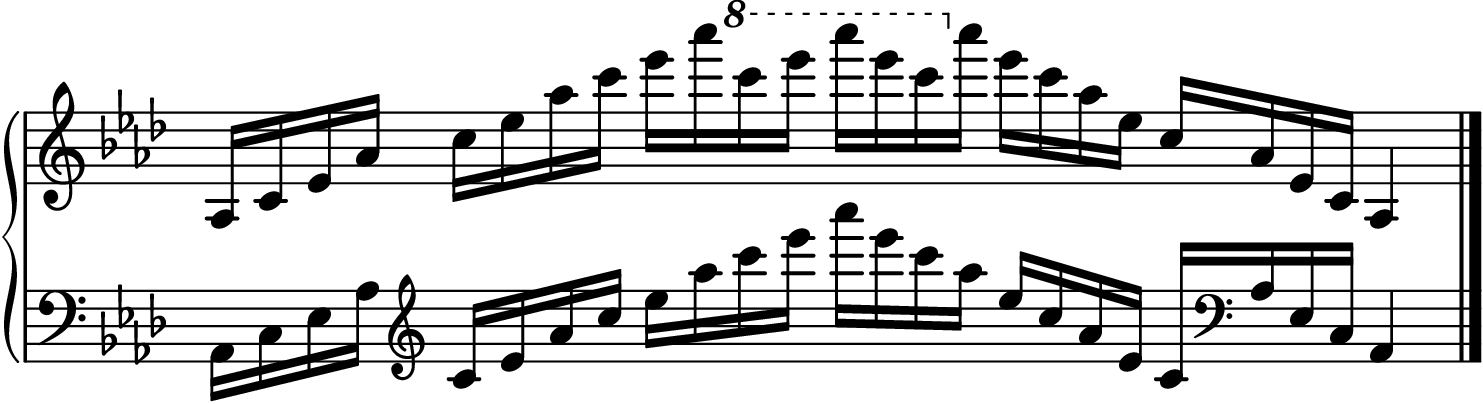
B major arpeggio (four octaves)
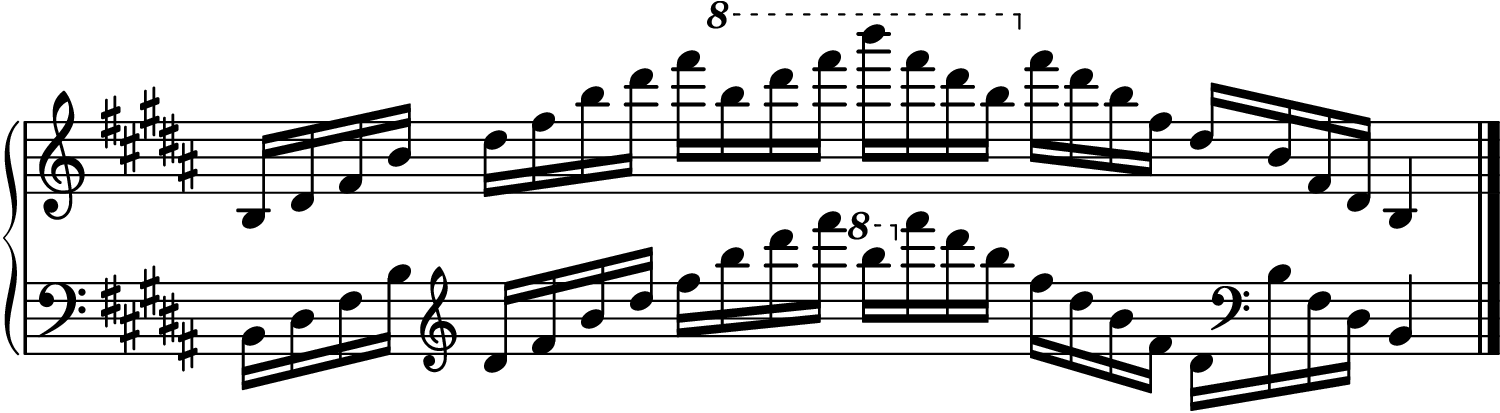
D minor arpeggio (four octaves)
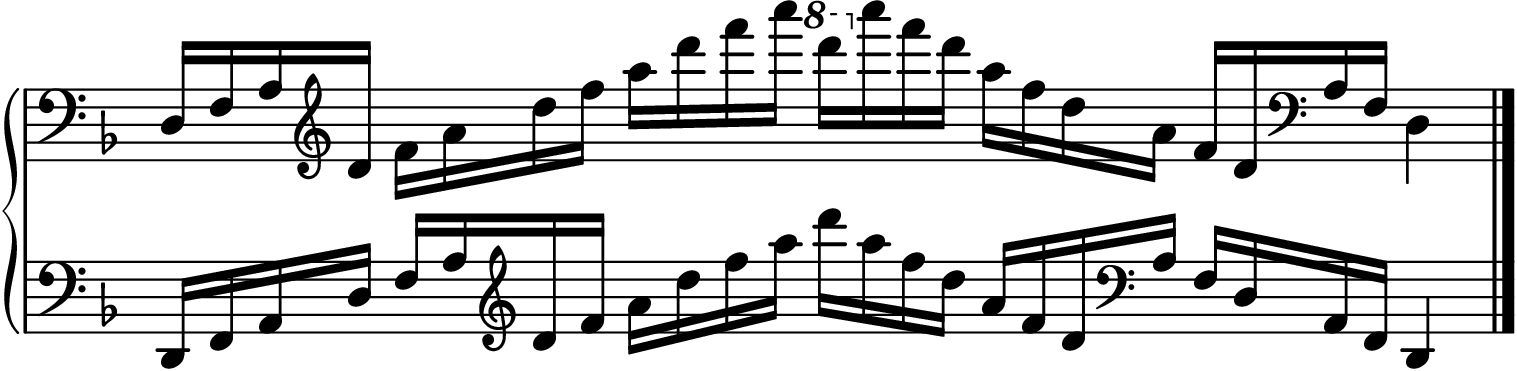
F minor arpeggio (four octaves)
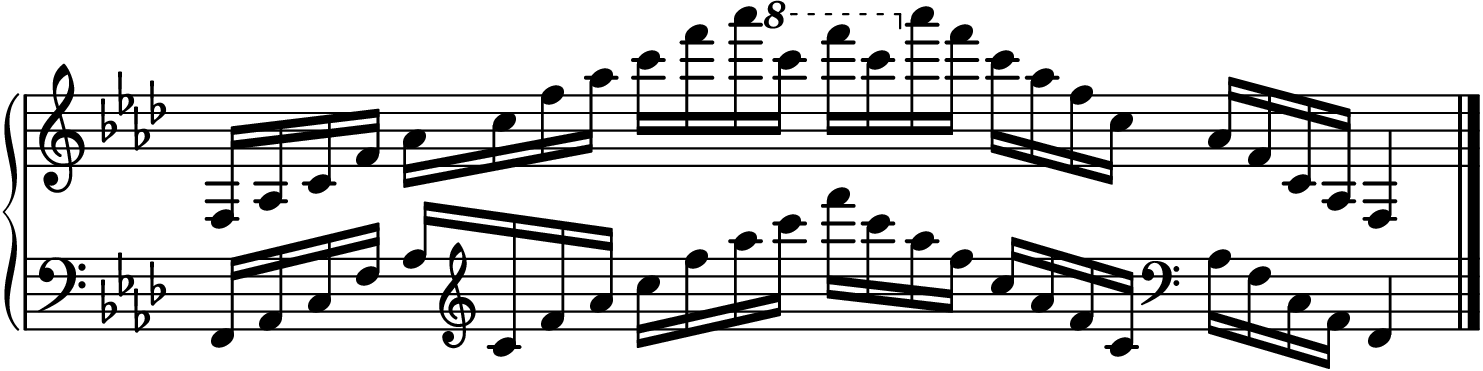
G sharp minor arpeggio (four octaves)
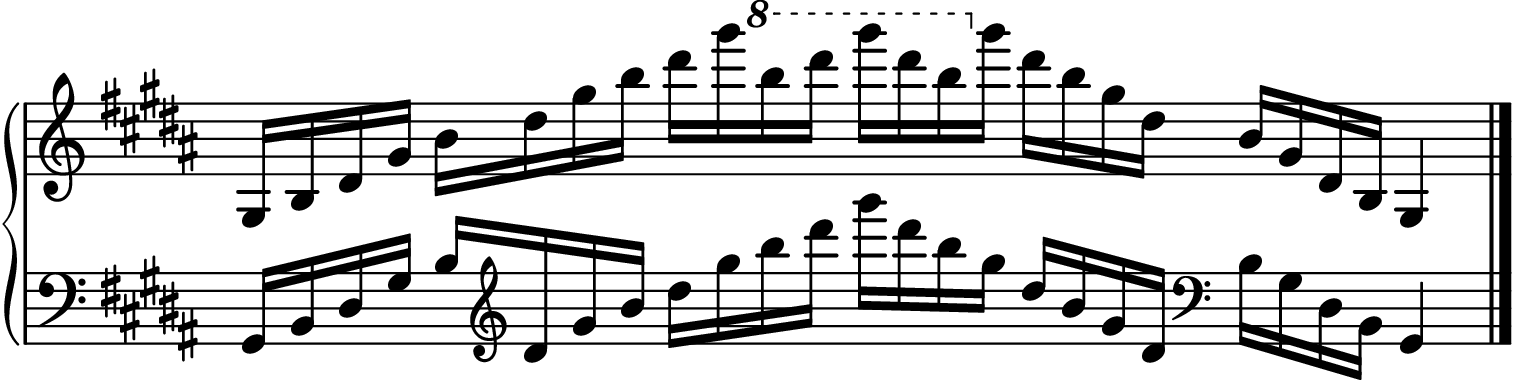
B minor arpeggio (four octaves)
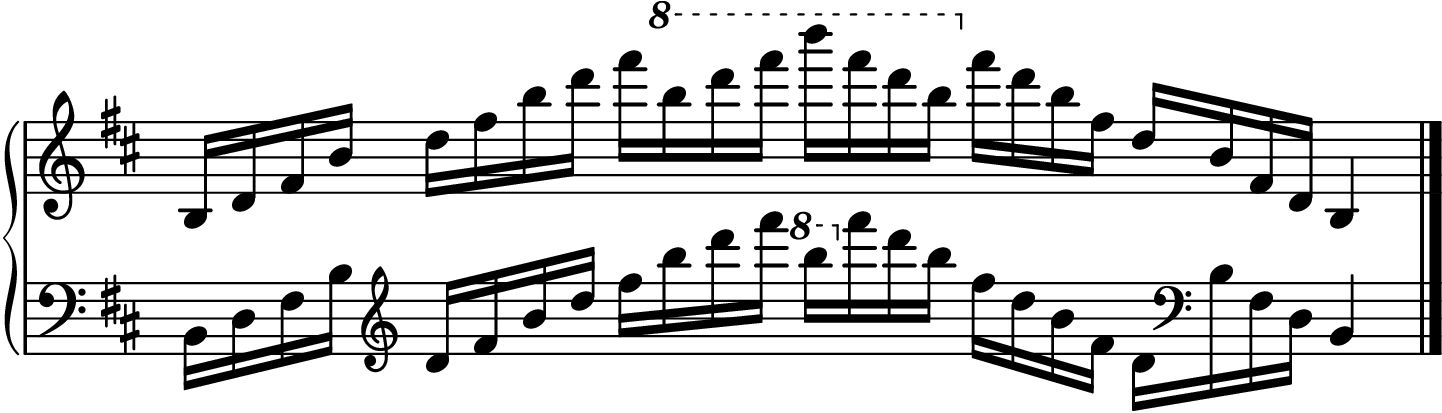
Dominant sevenths (resolving on the tonic)
| Requirement | Range | How |
|---|---|---|
| in the keys of D, F, A flat and B | 4 octaves | legato; hands together |
Dominant 7th in the key of D (four octaves)
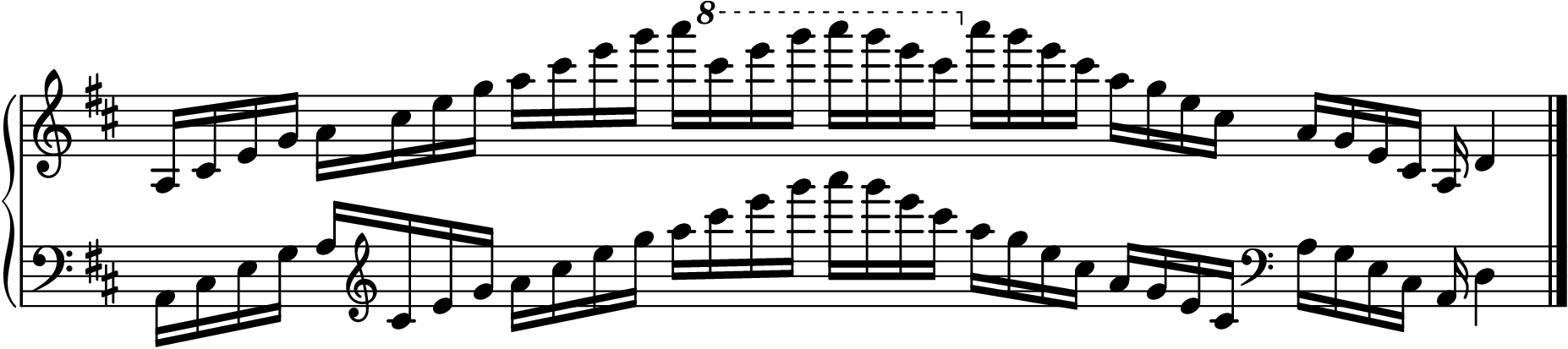
Dominant 7th in the key of F (four octaves)

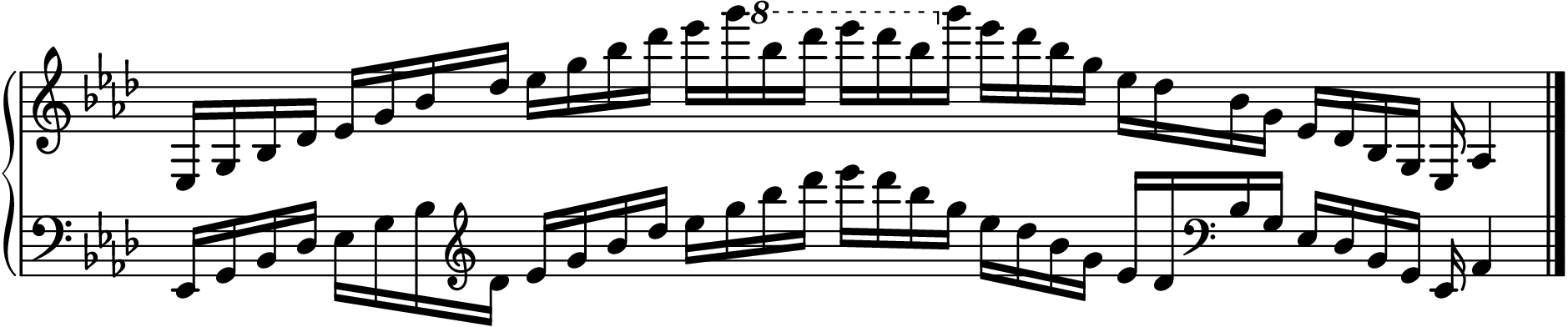
Dominant 7th in the key of A flat (four octaves)
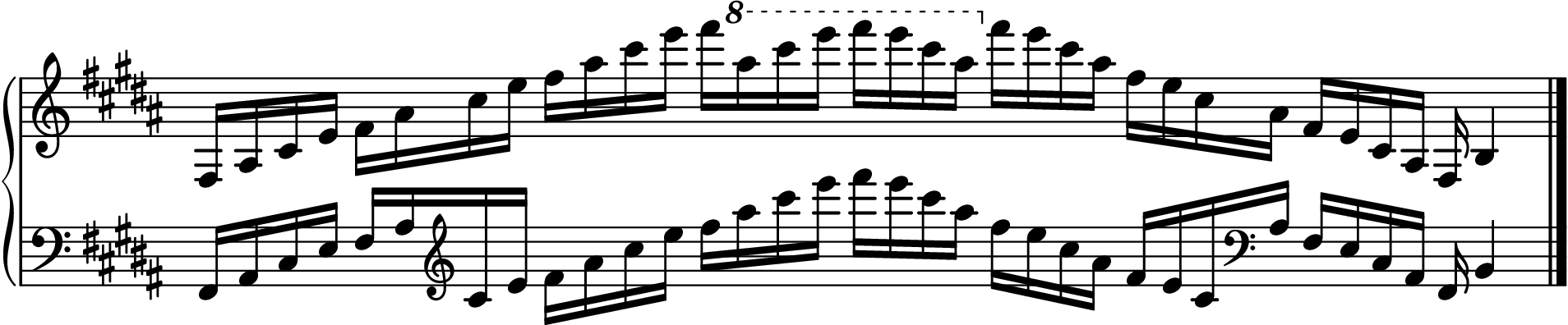
Dominant 7th in the key of B (four octaves)
Diminished sevenths
| Requirement | Range | How |
|---|---|---|
| starting on G sharp; starting on B | 4 octaves | legato; hands together |
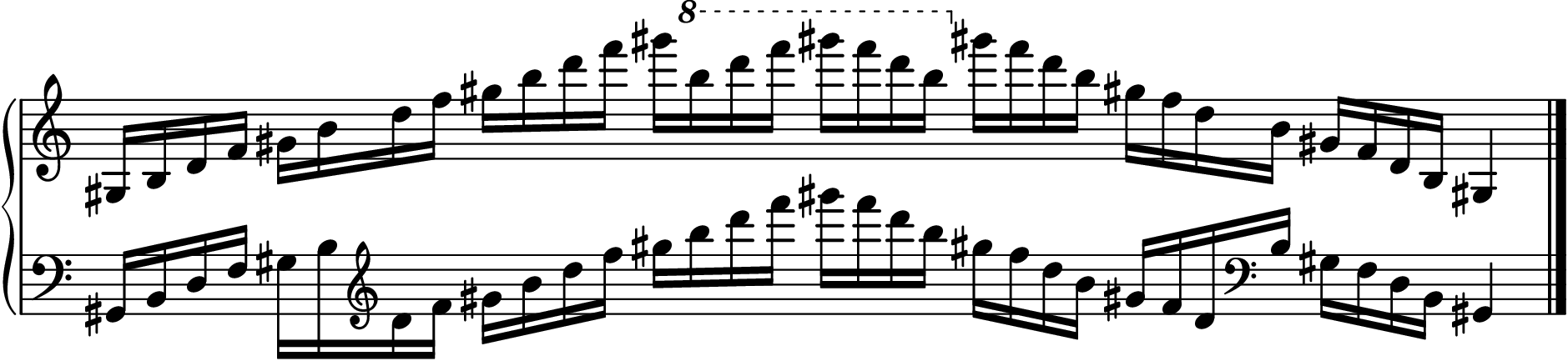
Diminished 7th starting on G sharp (four octaves)
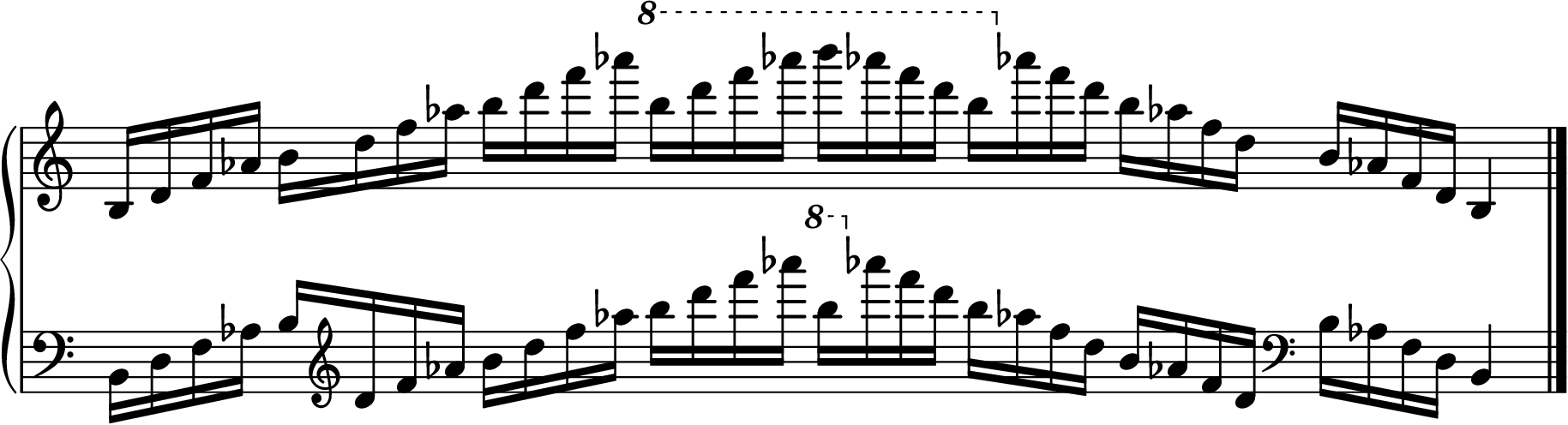
Diminished 7th starting on B (four octaves)
10. Grade 7
Grade 7 keeps the four-octave frame and adds two new textures: scales with the hands a 3rd apart, and the scale in 3rds, where one hand plays both notes of each 3rd. Arpeggios are asked in first inversion only, and the chromatic contrary-motion scale starts with the hands a minor 3rd apart.
Scales (similar motion)
| Requirement | Range | How |
|---|---|---|
| D flat, E, G, B flat majors | 4 octaves | legato or staccato, at examiner's choice; hands together |
| C sharp, E, G, B flat minors (harmonic and melodic) | 4 octaves | legato or staccato, at examiner's choice; hands together |
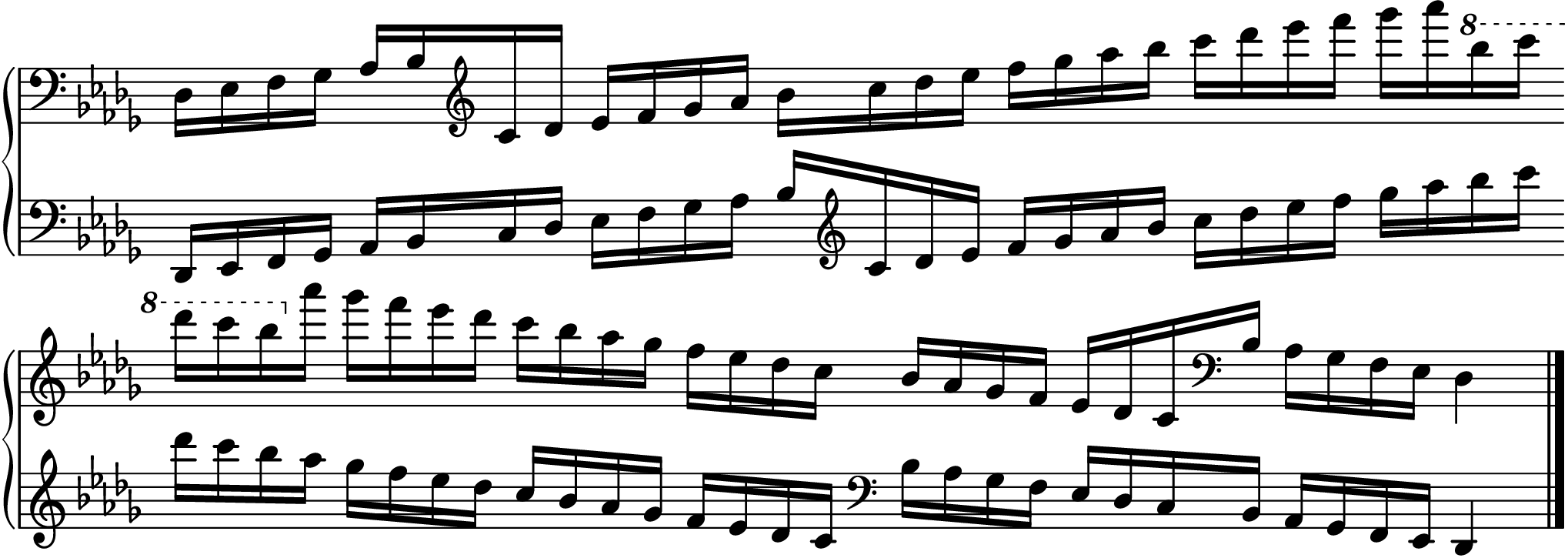
D flat major (four octaves)
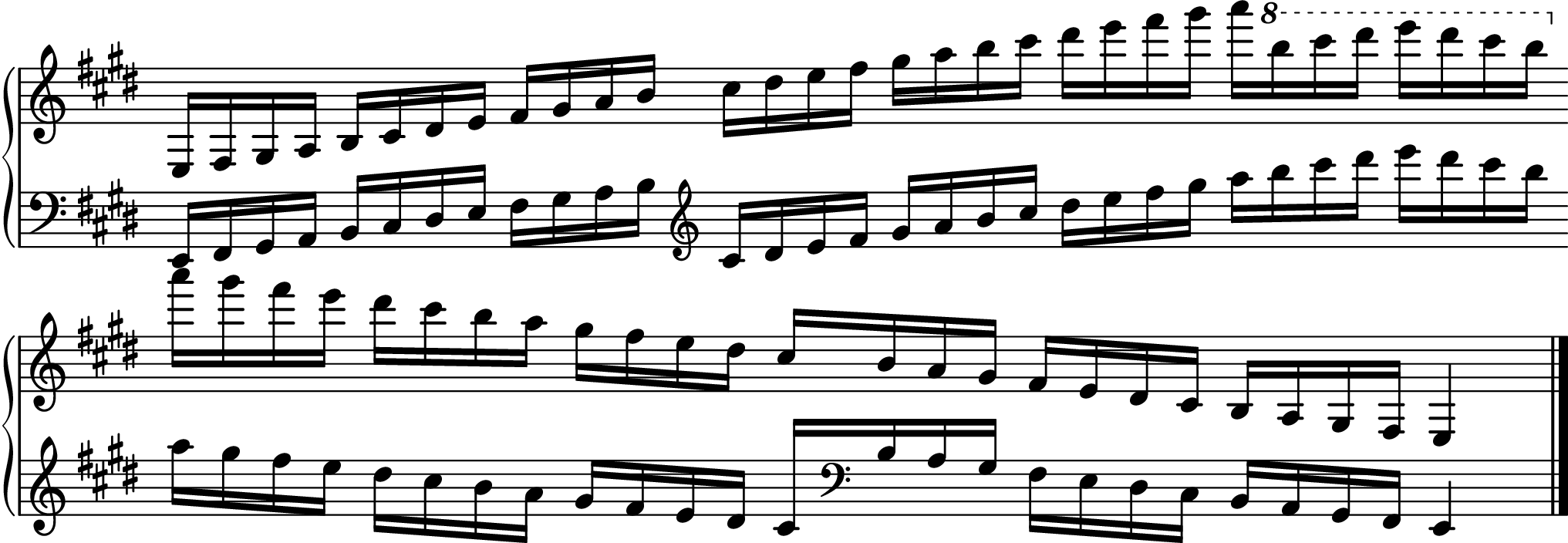
E major (four octaves)
G major (four octaves)
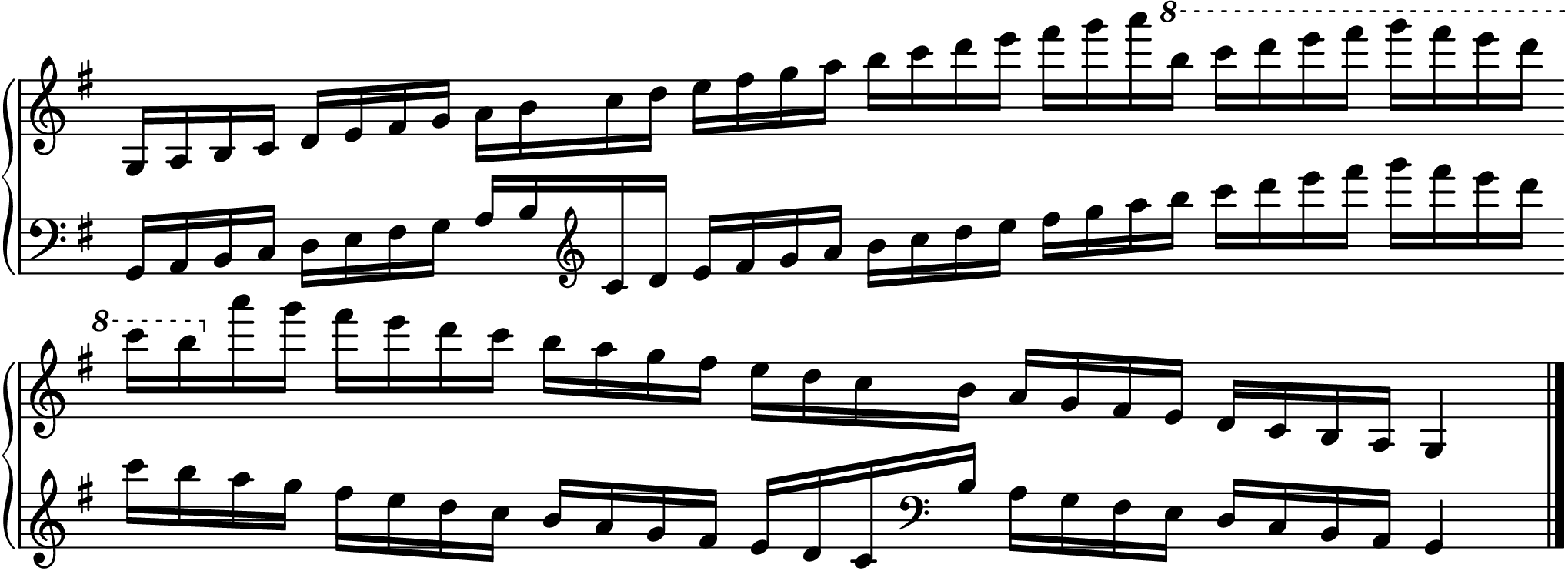
B flat major (four octaves)
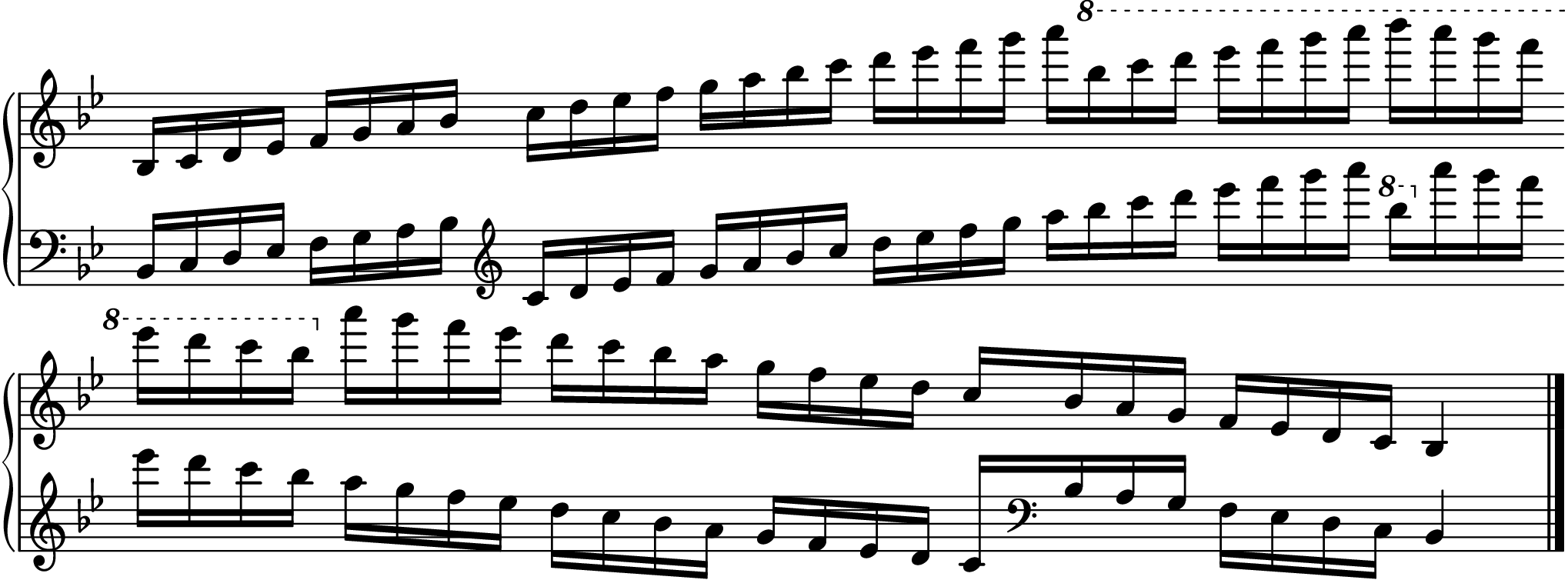
C sharp minor, harmonic (four octaves)
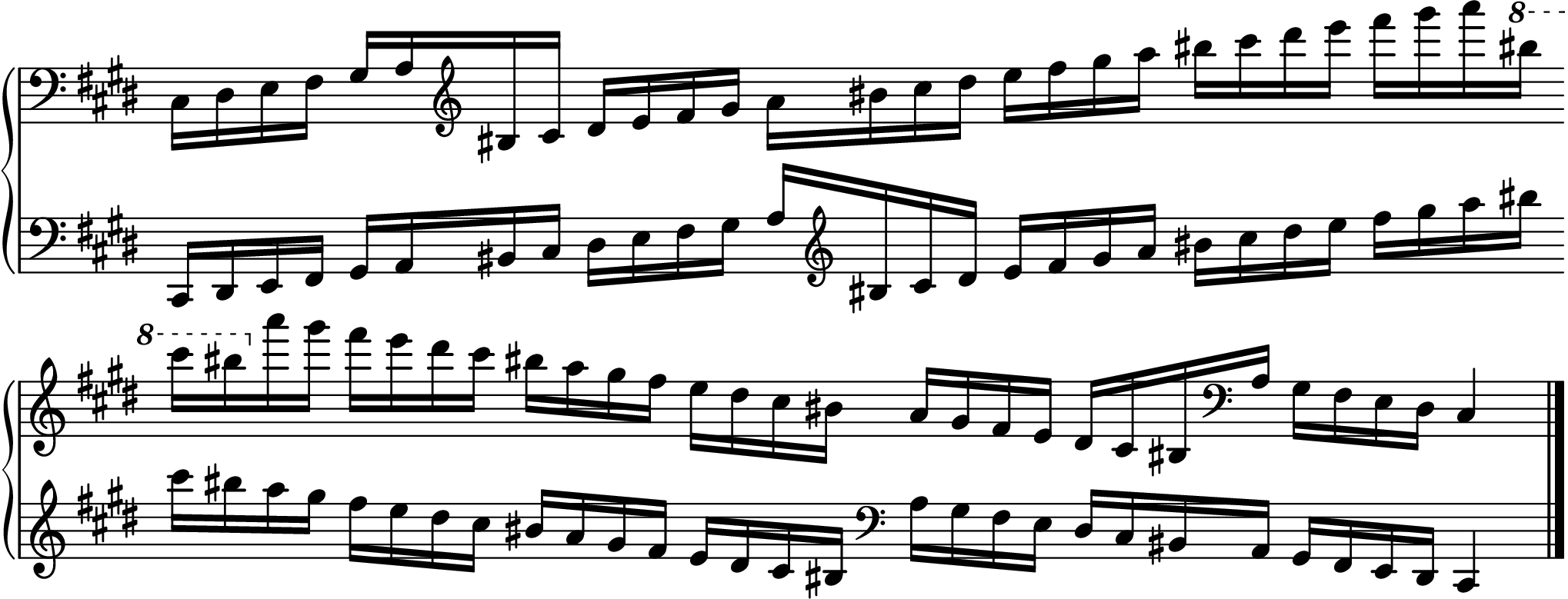
C sharp minor, melodic (four octaves)
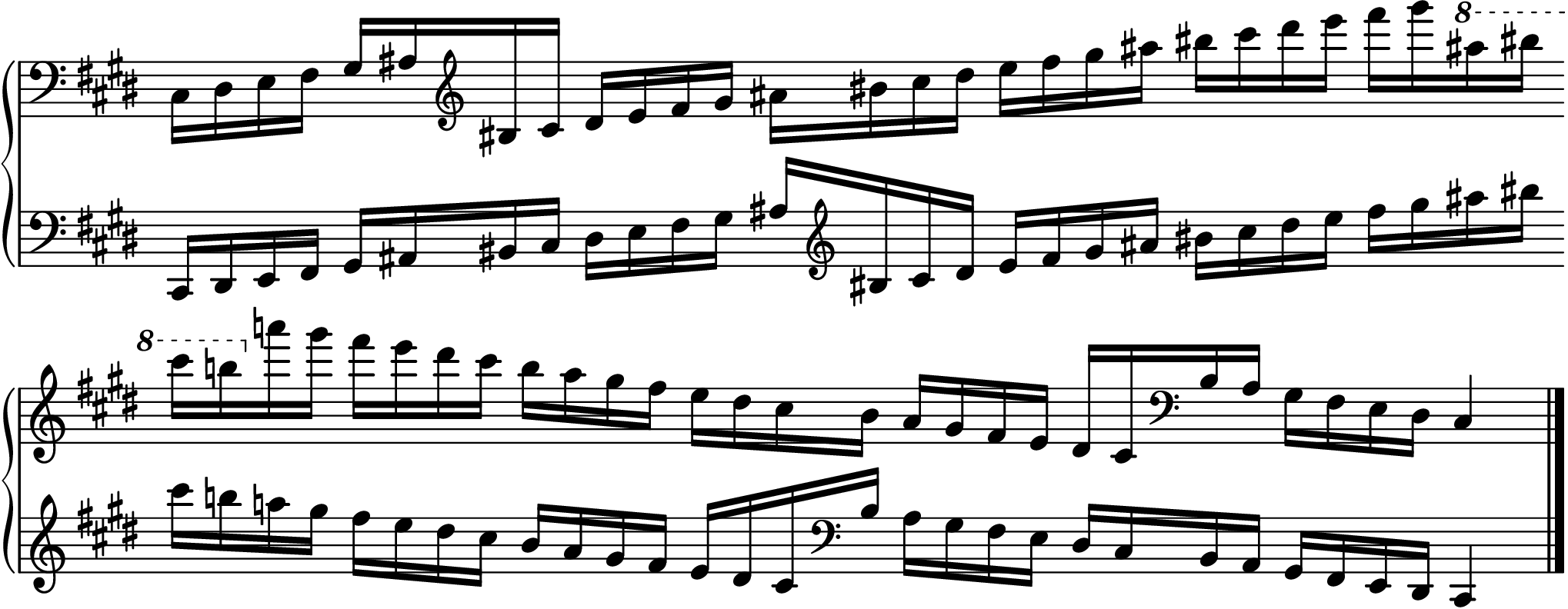
E minor, harmonic (four octaves)
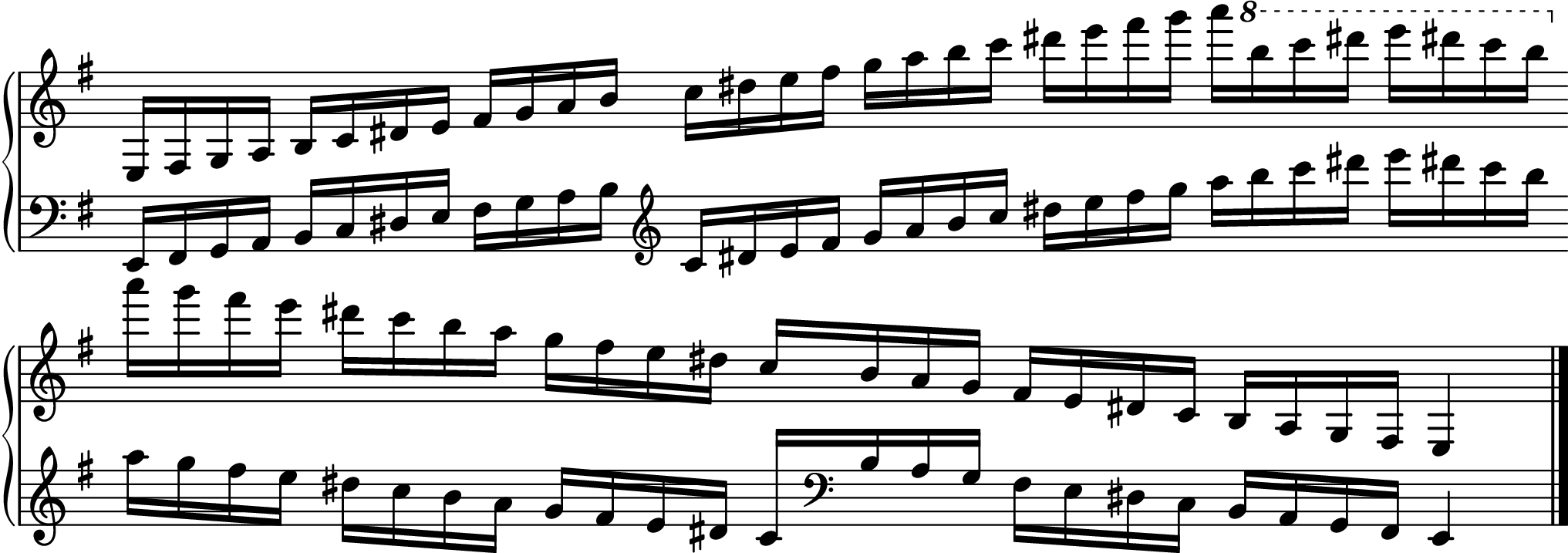
E minor, melodic (four octaves)
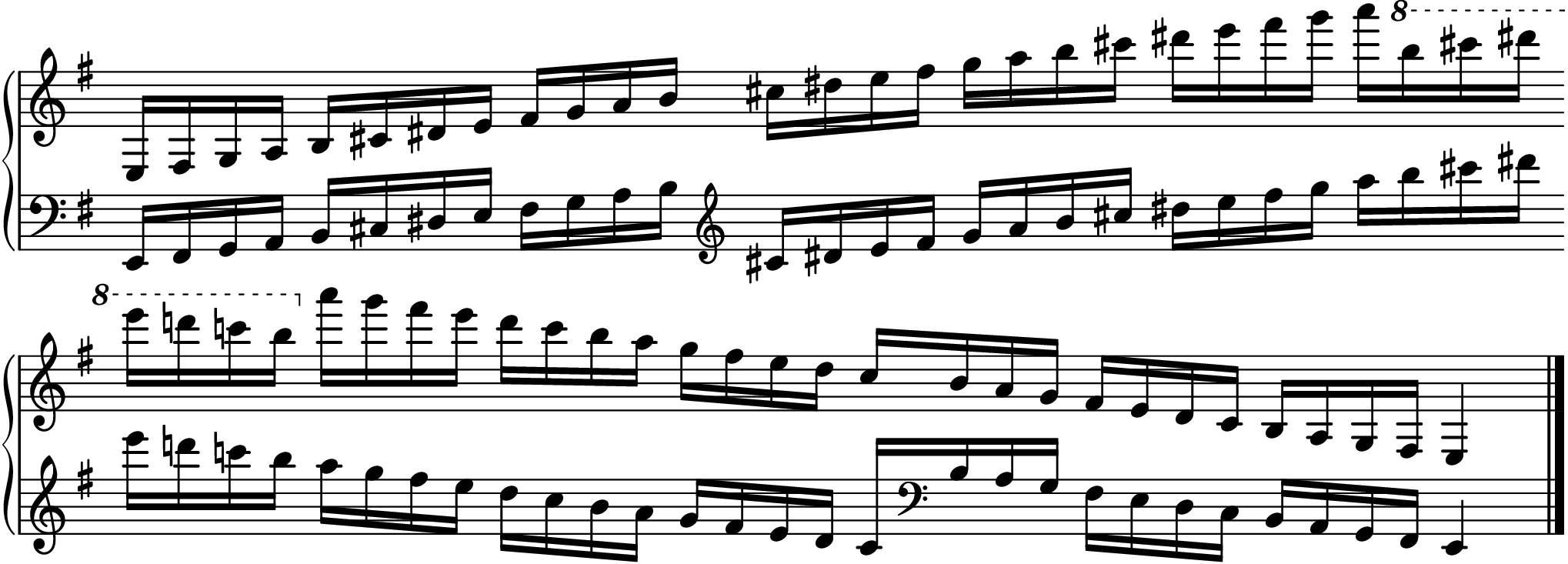
G minor, harmonic (four octaves)
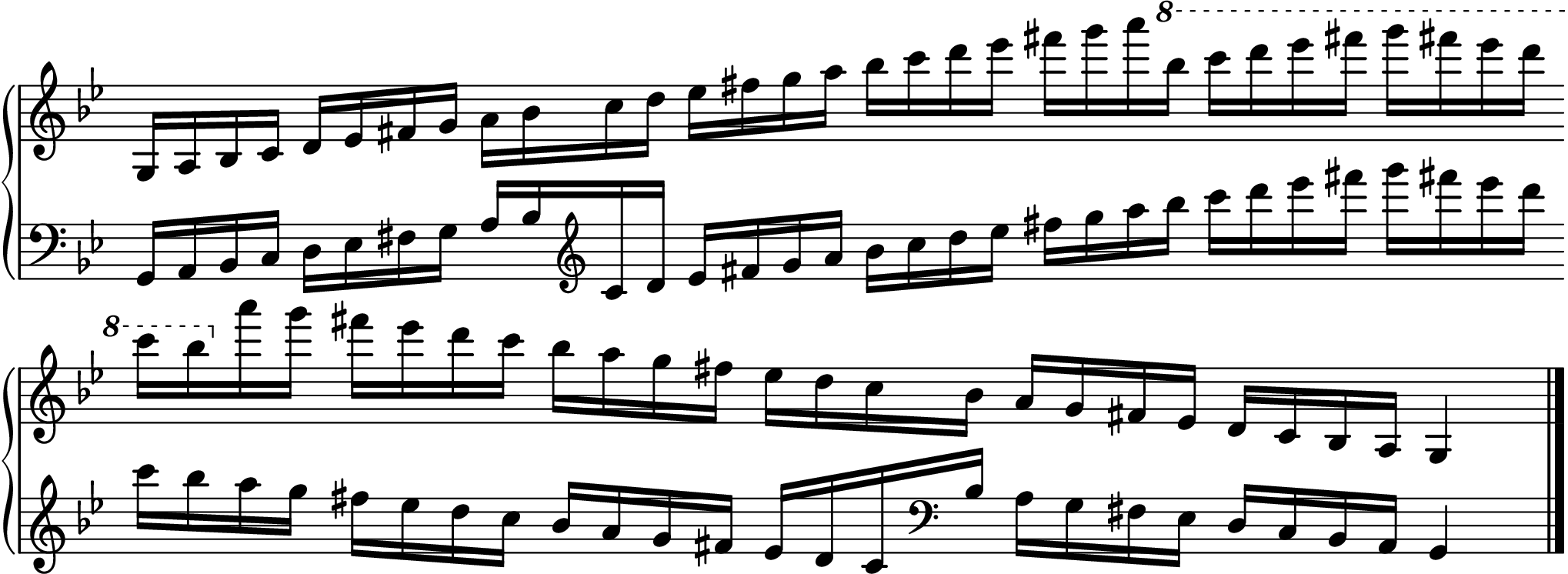
G minor, melodic (four octaves)
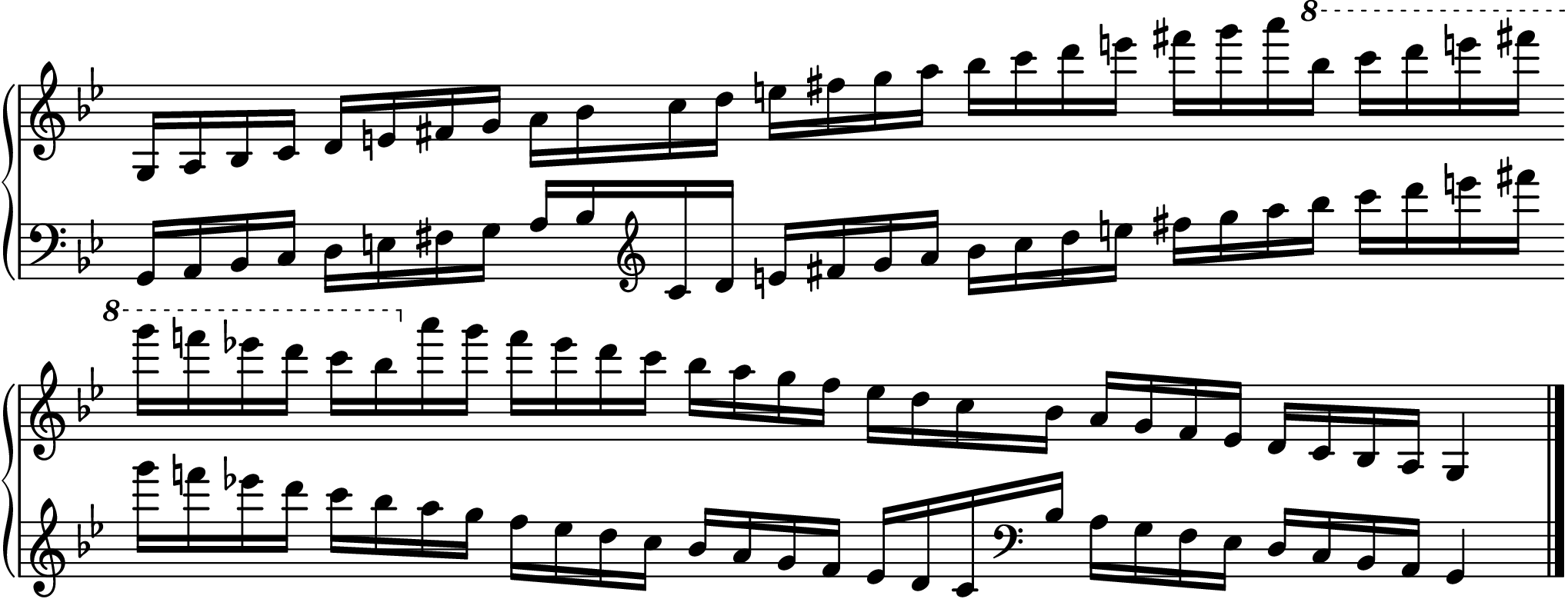
B flat minor, harmonic (four octaves)
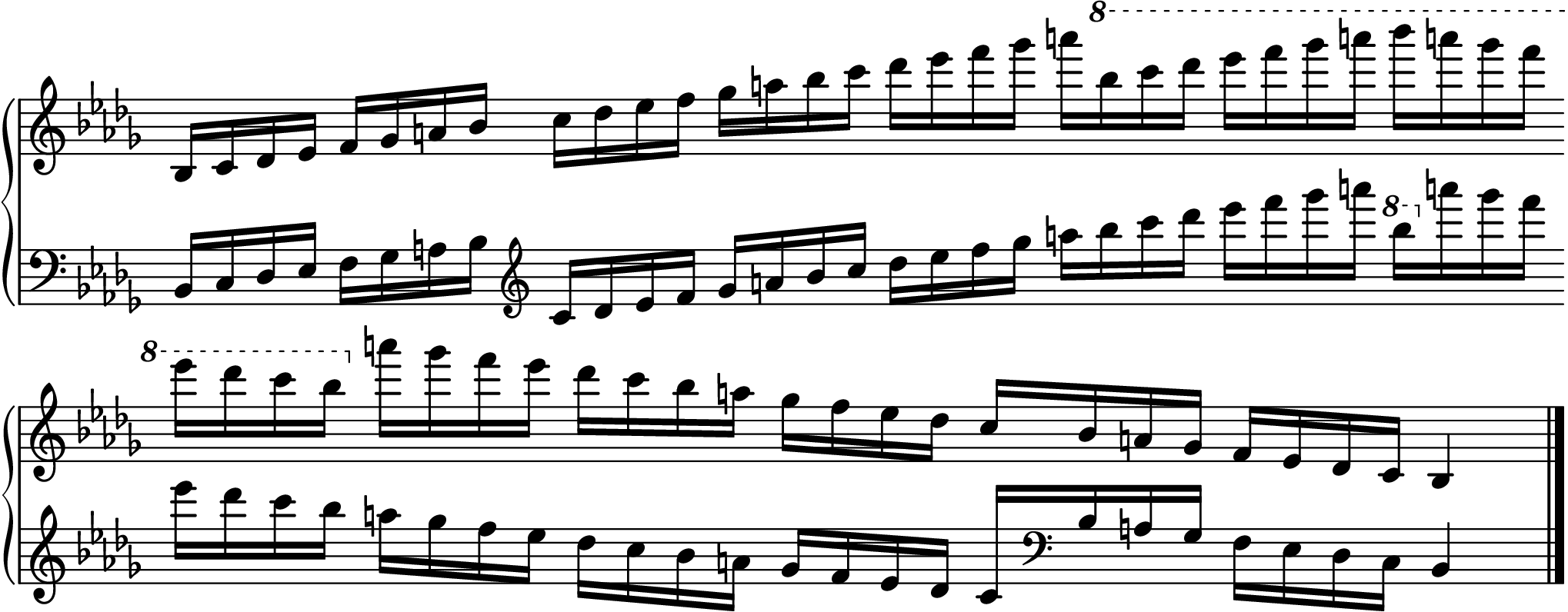
B flat minor, melodic (four octaves)
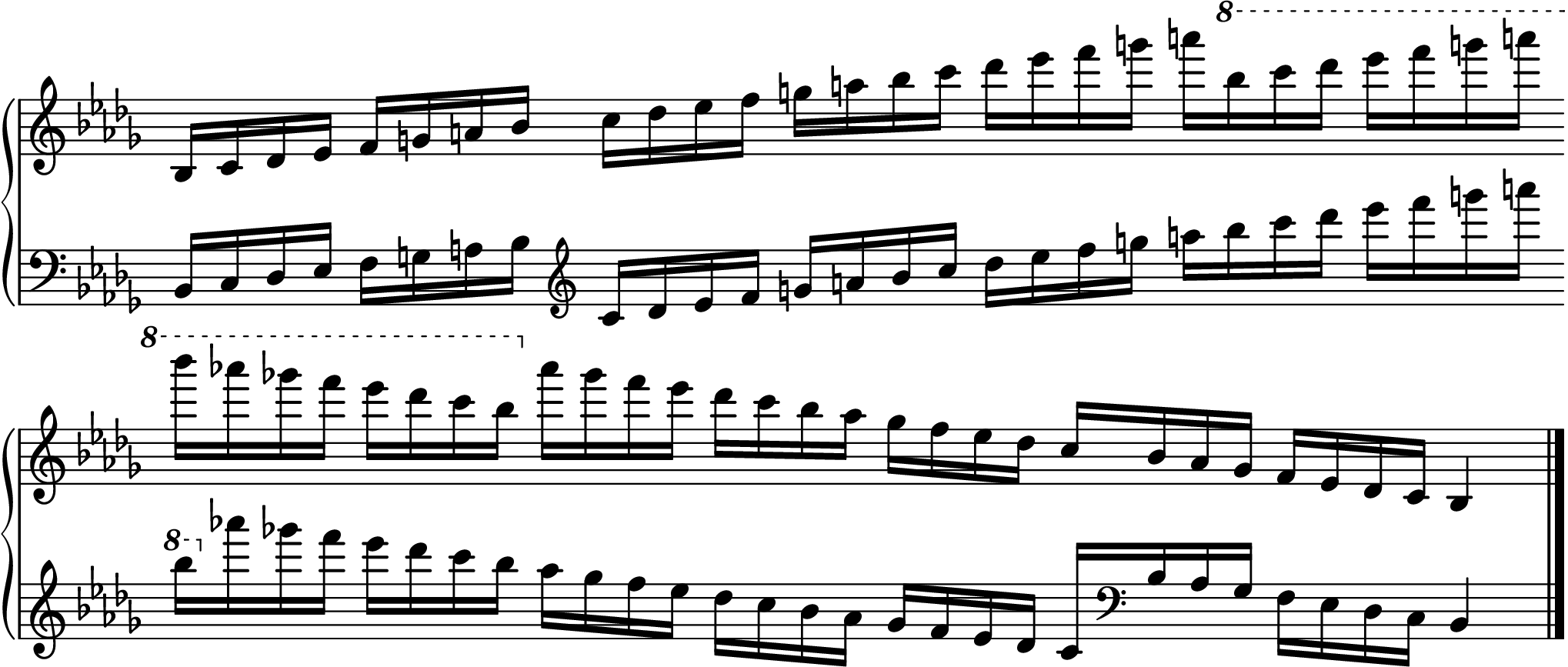
Scales a 3rd apart
| Requirement | Range | How |
|---|---|---|
| D flat, E, G, B flat majors | 4 octaves | legato or staccato, at examiner's choice; hands together |
| C sharp, E, G, B flat harmonic minors | 4 octaves | legato or staccato, at examiner's choice; hands together |
D flat major, hands a 3rd apart (four octaves)
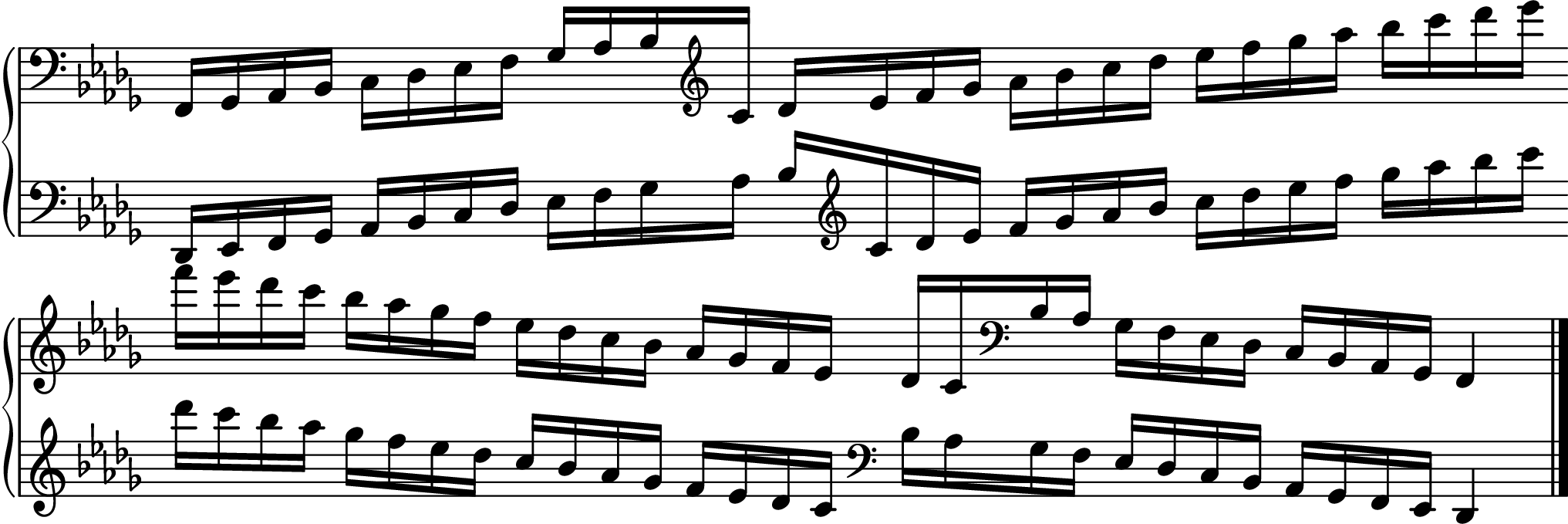
E major, hands a 3rd apart (four octaves)
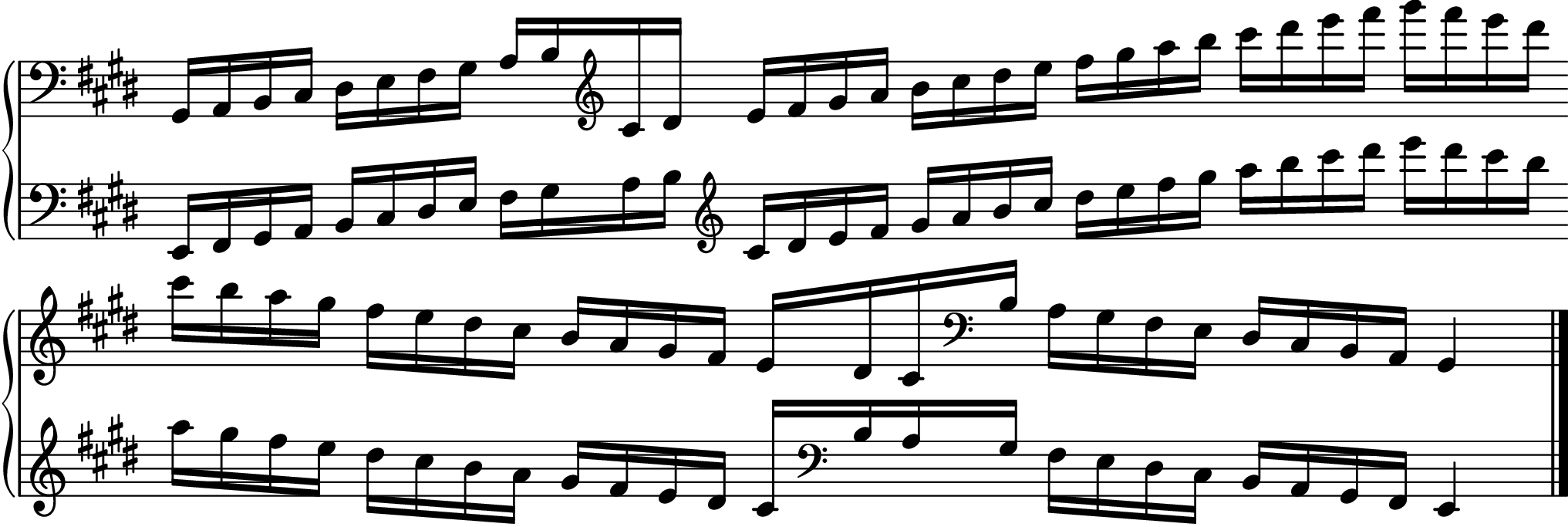
G major, hands a 3rd apart (four octaves)
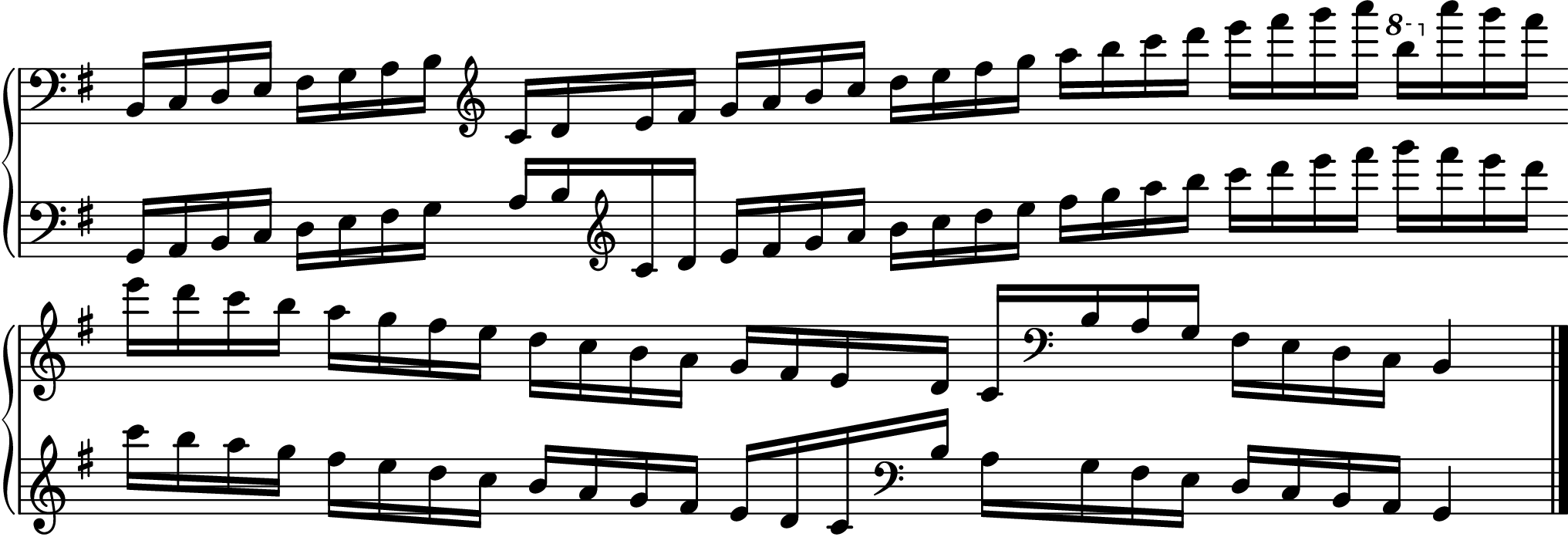
B flat major, hands a 3rd apart (four octaves)
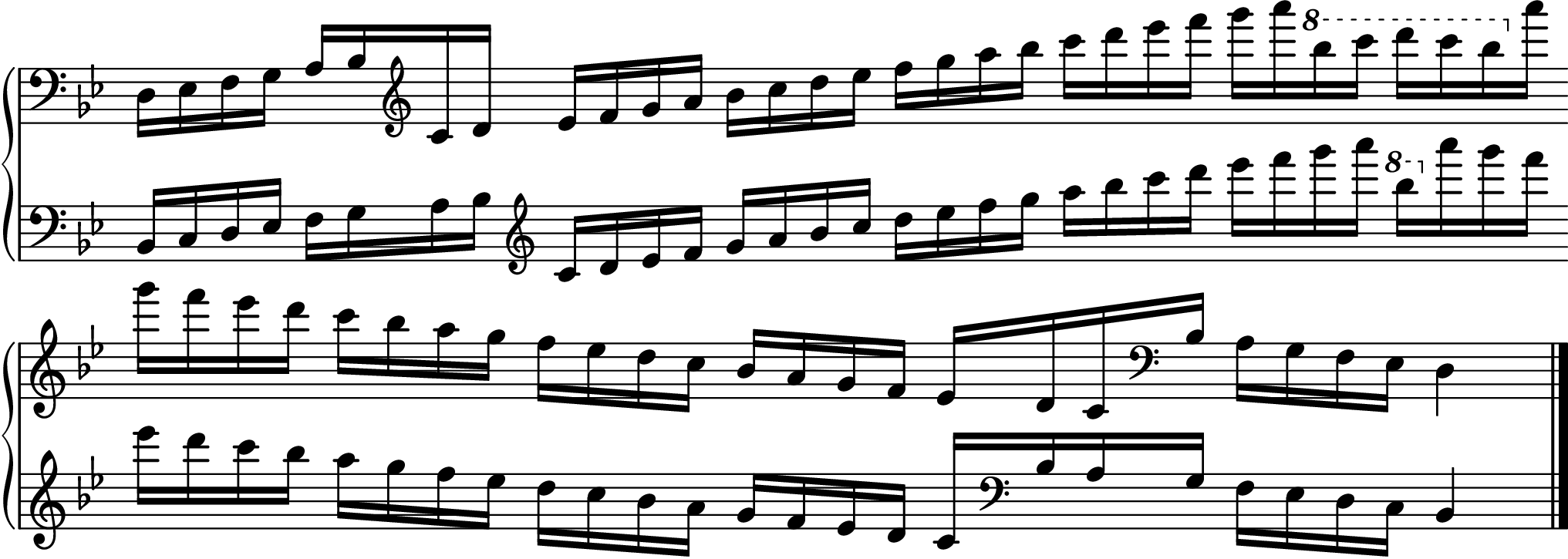
C sharp harmonic minor, hands a 3rd apart (four octaves)
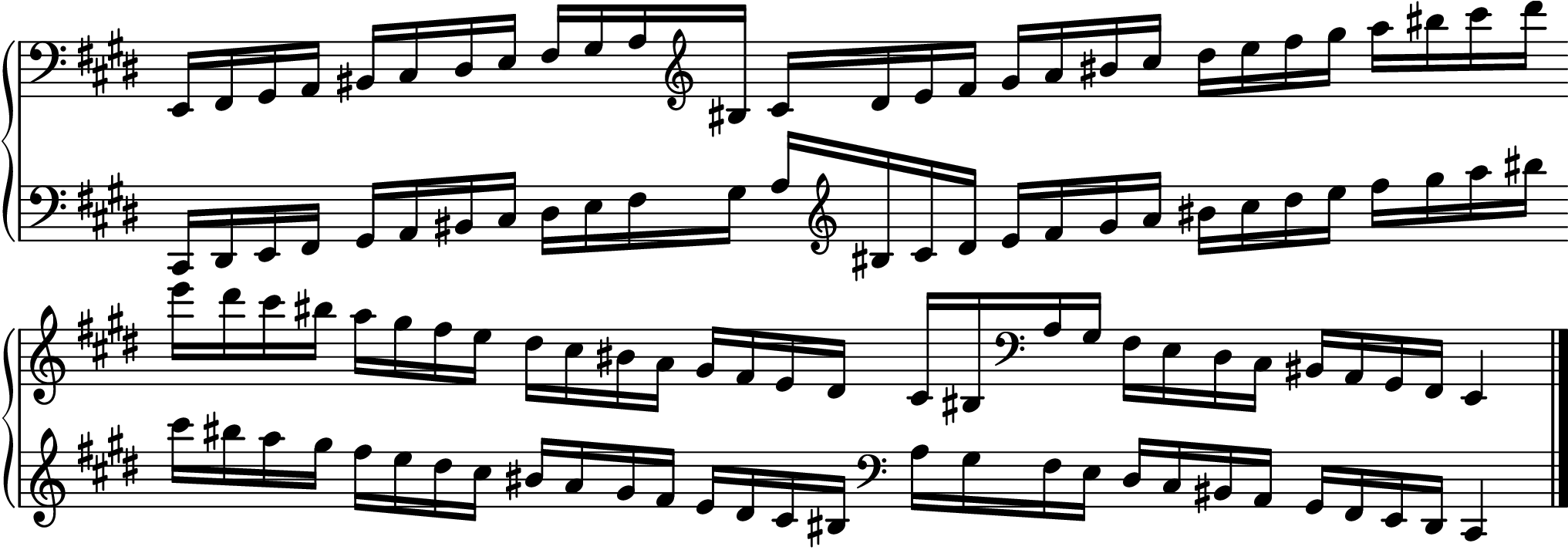
E harmonic minor, hands a 3rd apart (four octaves)
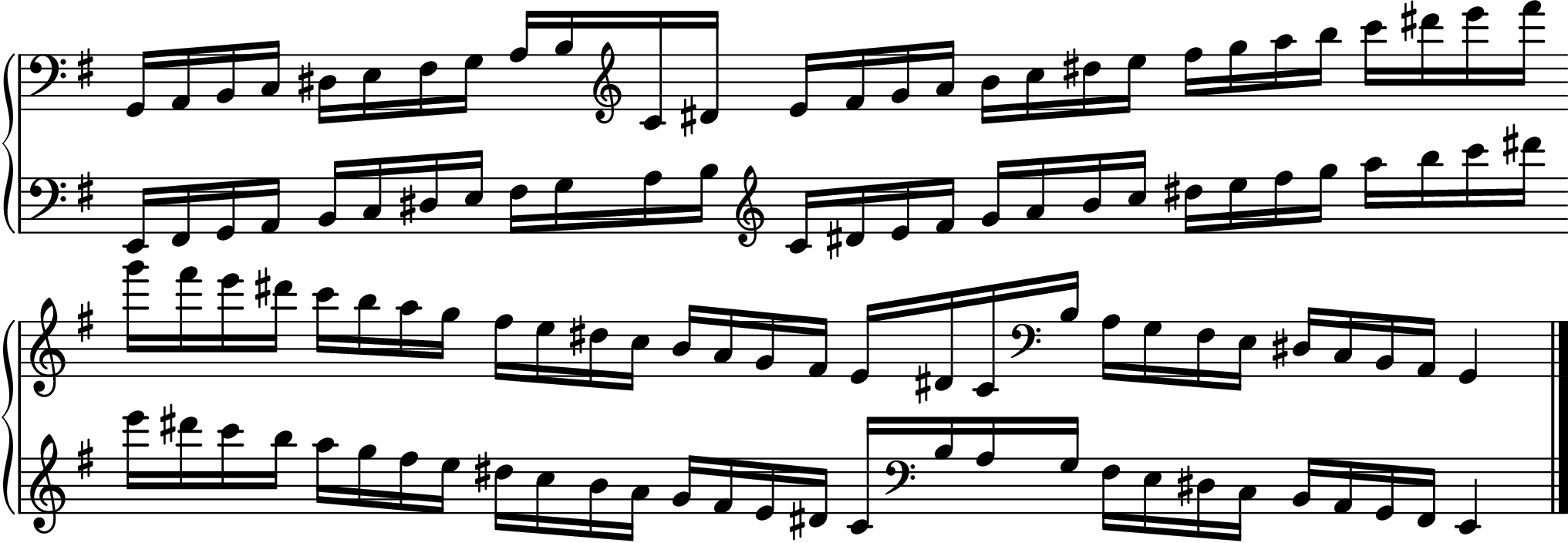
G harmonic minor, hands a 3rd apart (four octaves)
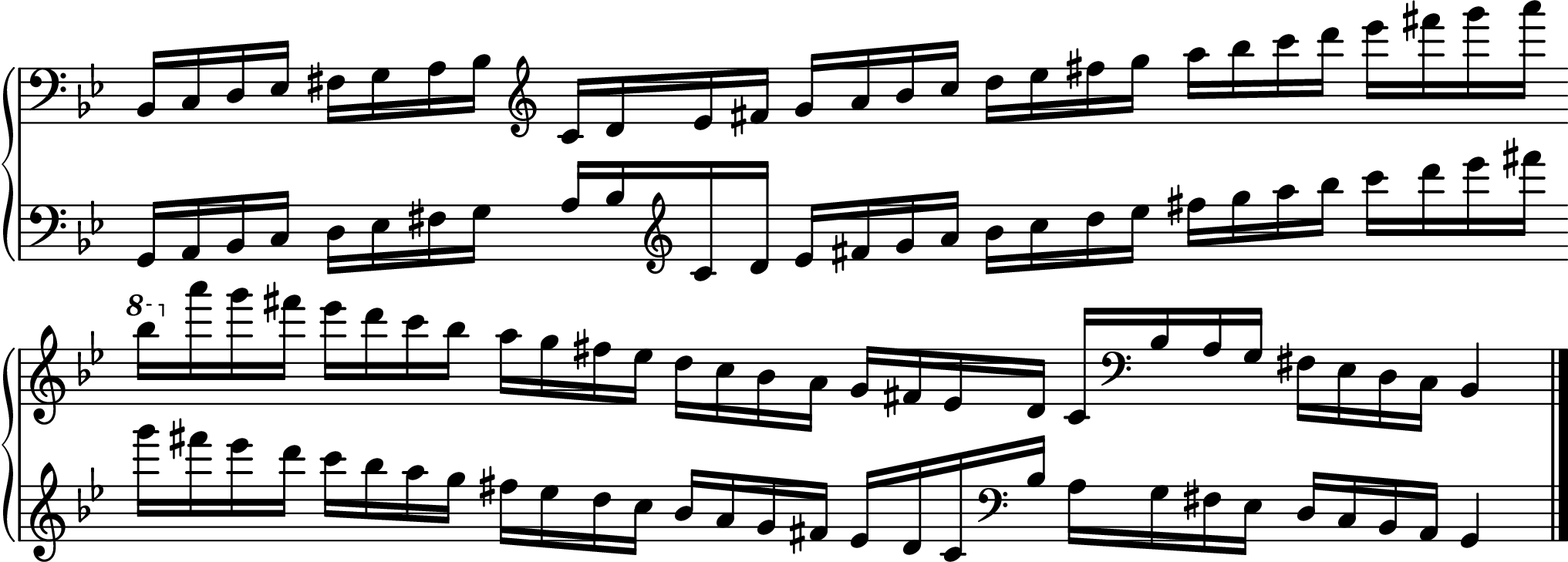
B flat harmonic minor, hands a 3rd apart (four octaves)
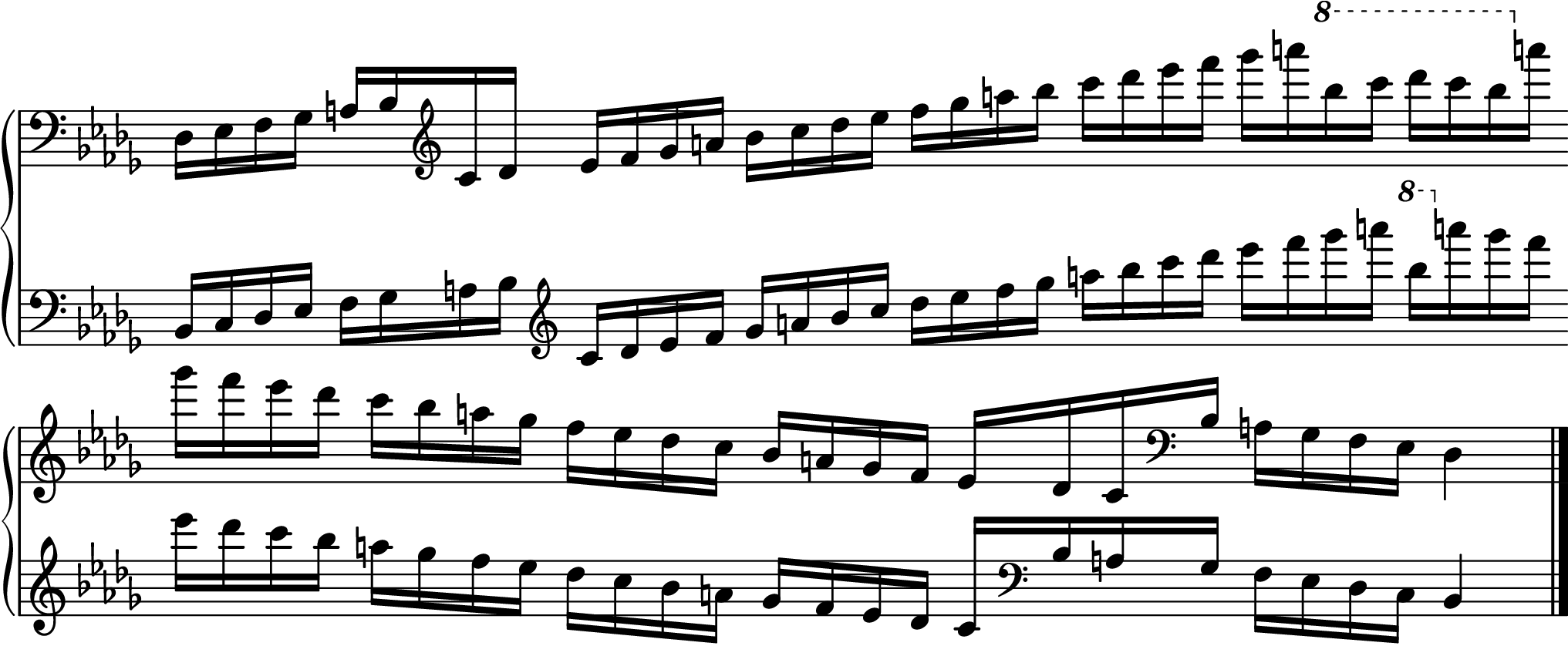
Contrary-motion scales
| Requirement | Range | How |
|---|---|---|
| D flat, E, G, B flat majors | 2 octaves | legato or staccato, at examiner's choice; hands starting on the tonic (unison) |
| C sharp, E, G, B flat harmonic minors | 2 octaves | legato or staccato, at examiner's choice; hands starting on the tonic (unison) |
D flat major, contrary motion (two octaves)
E major, contrary motion (two octaves)
G major, contrary motion (two octaves)
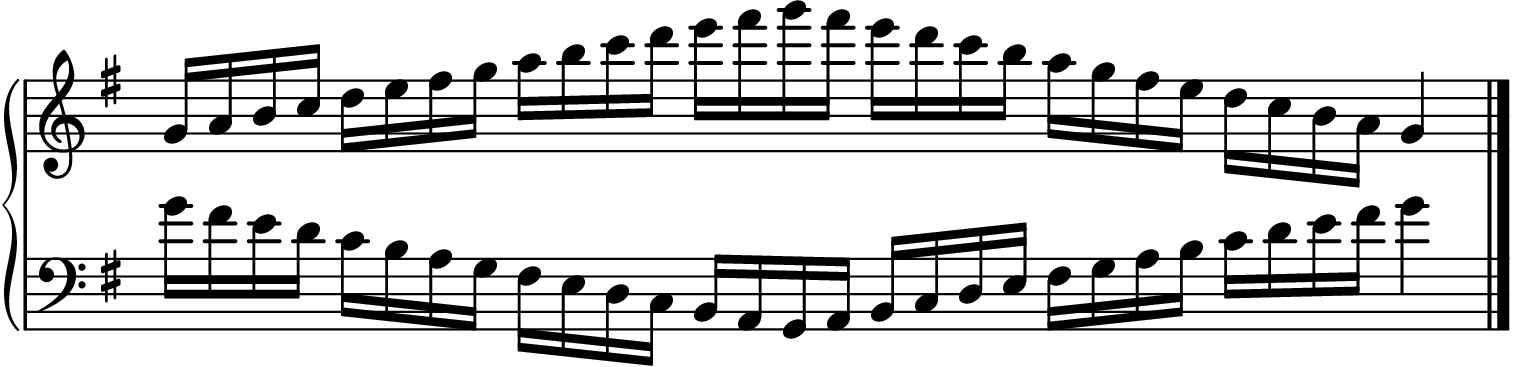
B flat major, contrary motion (two octaves)
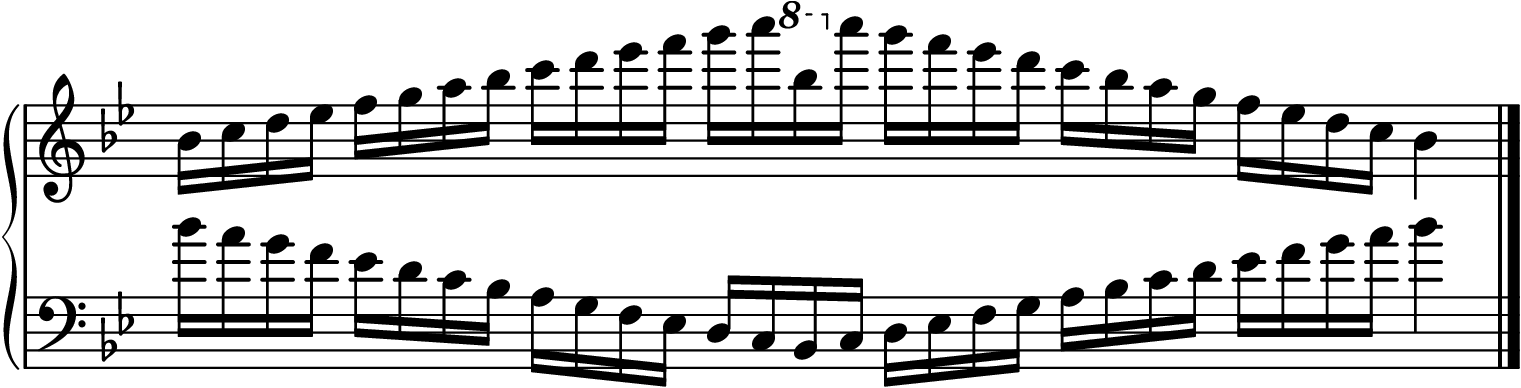
C sharp harmonic minor, contrary motion (two octaves)
E harmonic minor, contrary motion (two octaves)
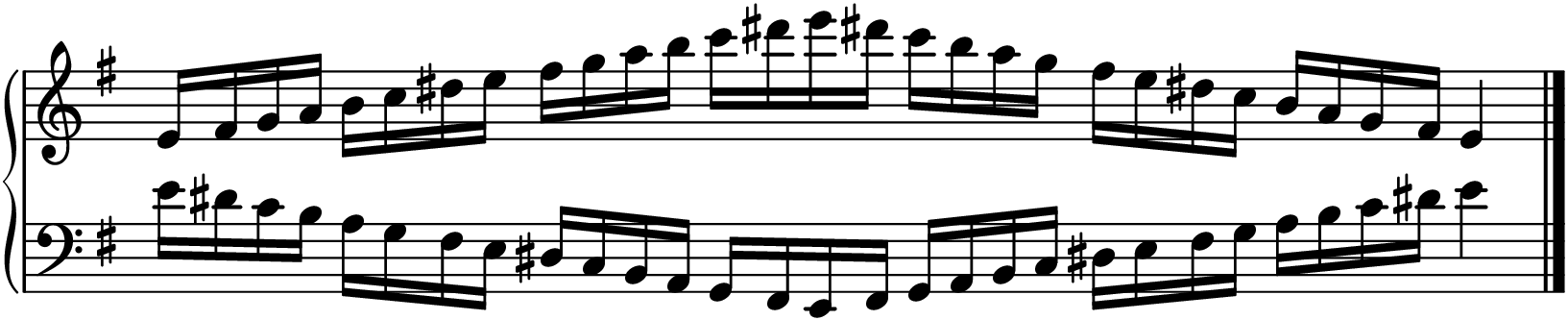
G harmonic minor, contrary motion (two octaves)
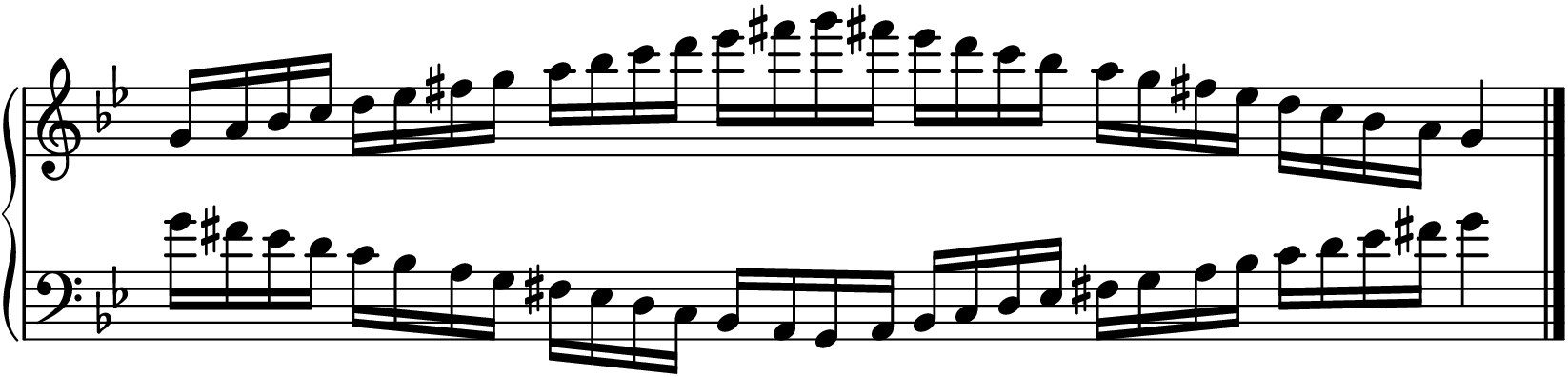
B flat harmonic minor, contrary motion (two octaves)
Legato scale in 3rds
| Requirement | Range | How |
|---|---|---|
| G major | 2 octaves | legato; hands separately |
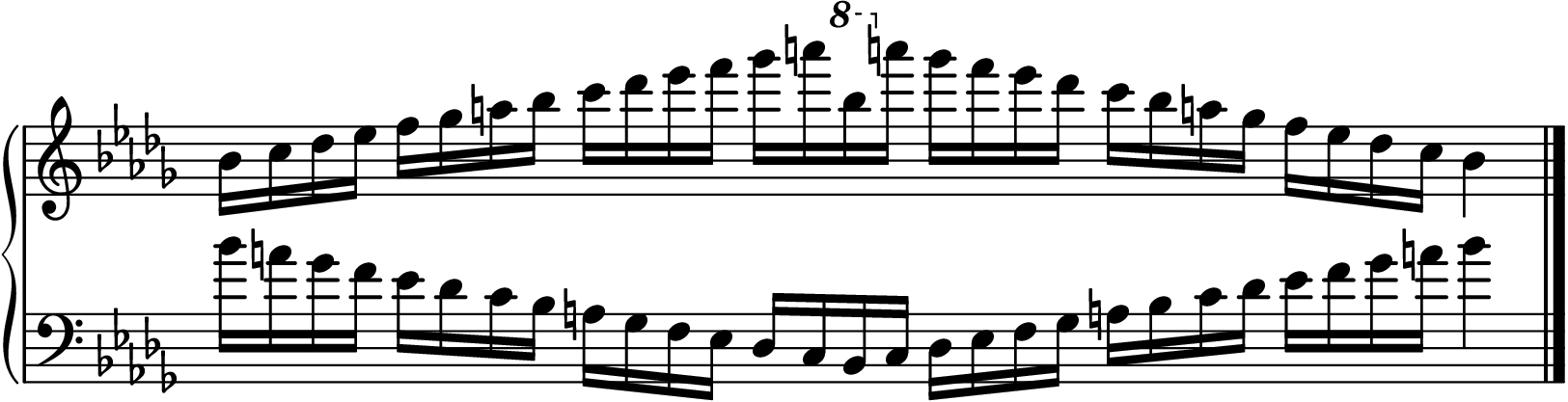
G major in 3rds, legato (two octaves)
Staccato scale in 3rds
| Requirement | Range | How |
|---|---|---|
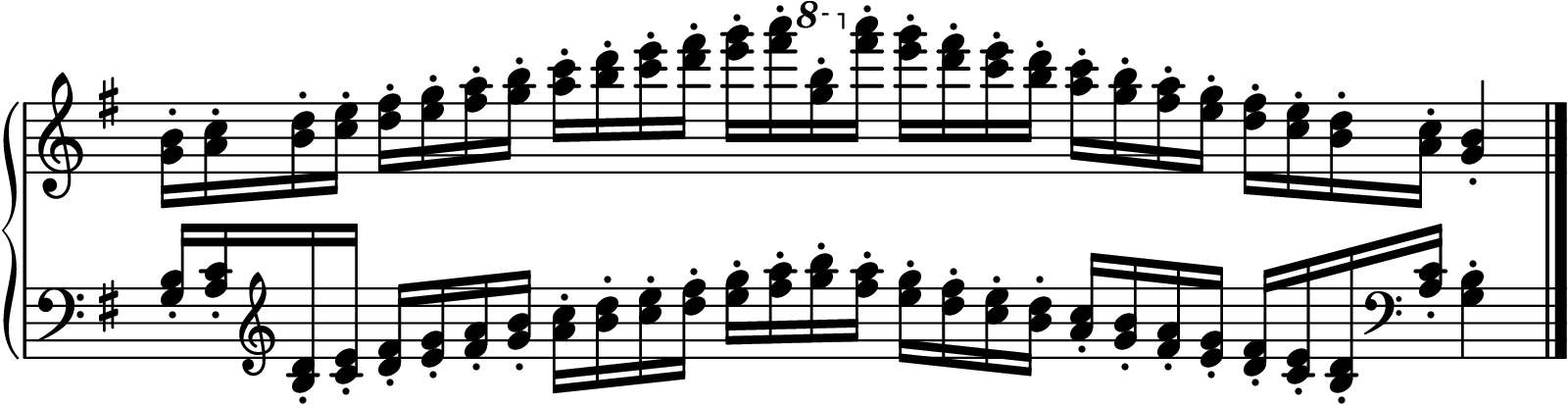
| G major | 2 octaves | staccato; hands separately |
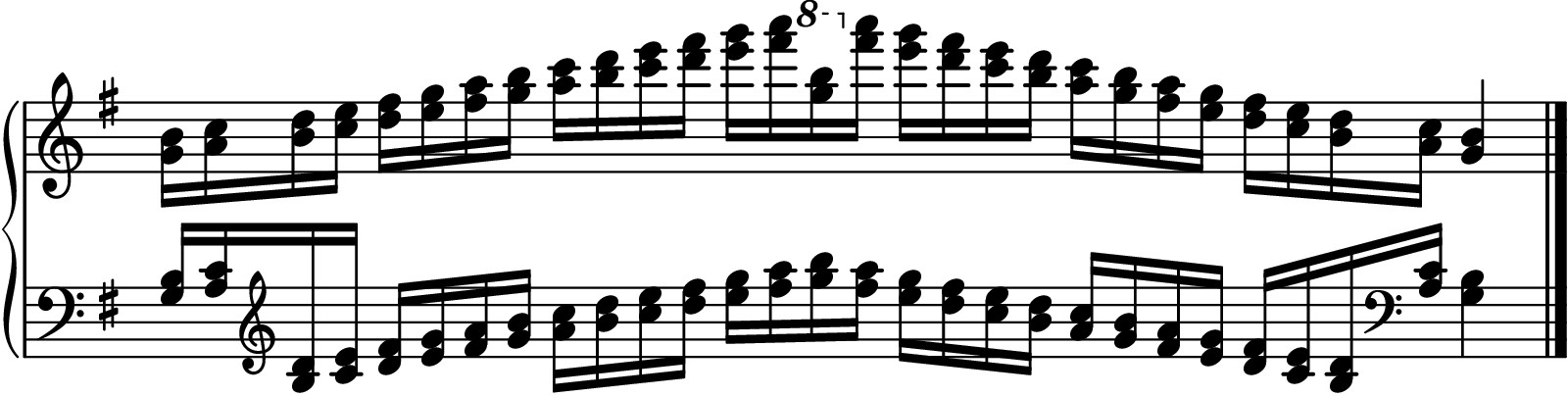
G major in 3rds, staccato (two octaves)
Chromatic contrary-motion scale
| Requirement | Range | How |
|---|---|---|
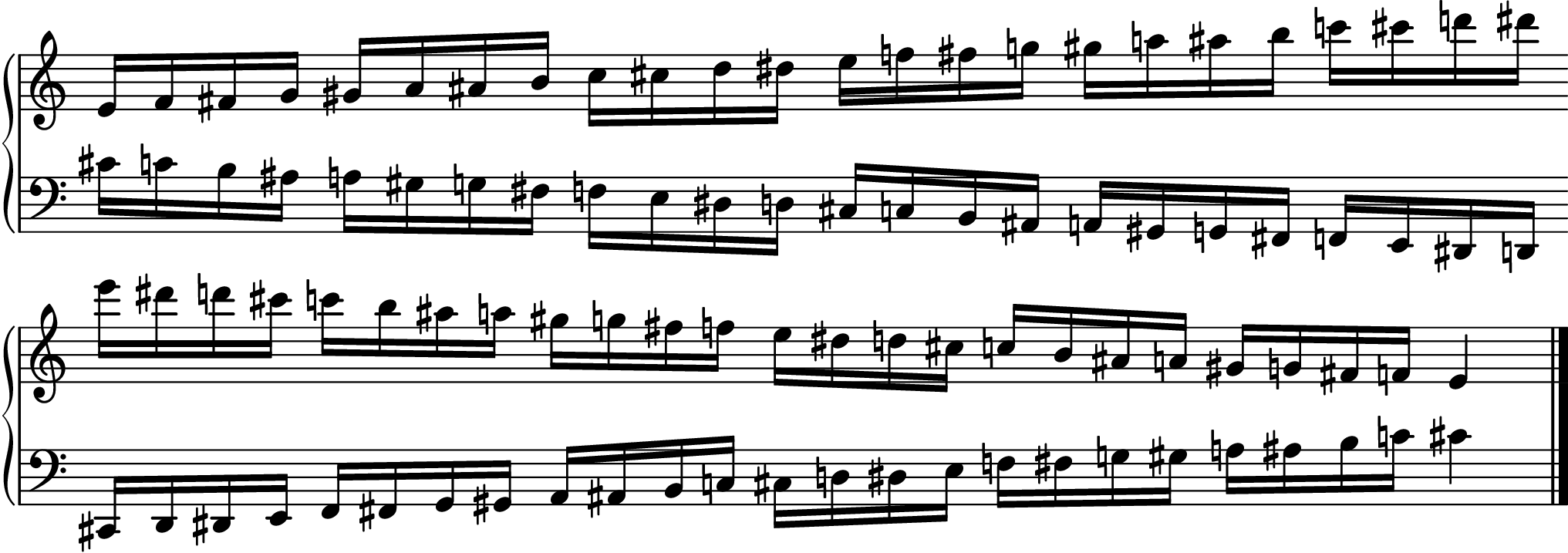
| starting on C sharp (LH) and E (RH) | 2 octaves | legato or staccato, at examiner's choice; hands starting a minor 3rd apart |
Chromatic contrary-motion scale, left hand on C sharp, right hand on E (two octaves)
Arpeggios
| Requirement | Range | How |
|---|---|---|
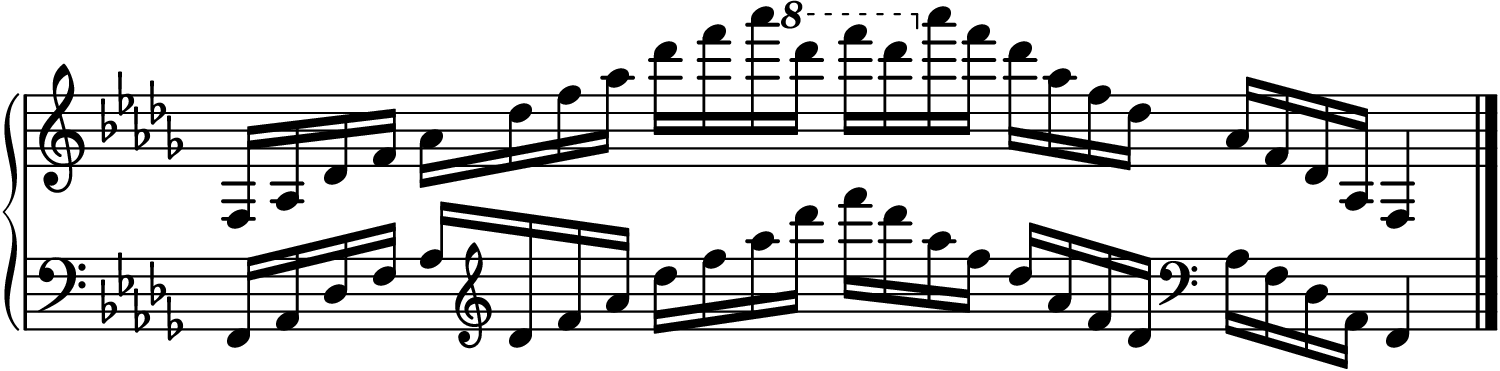
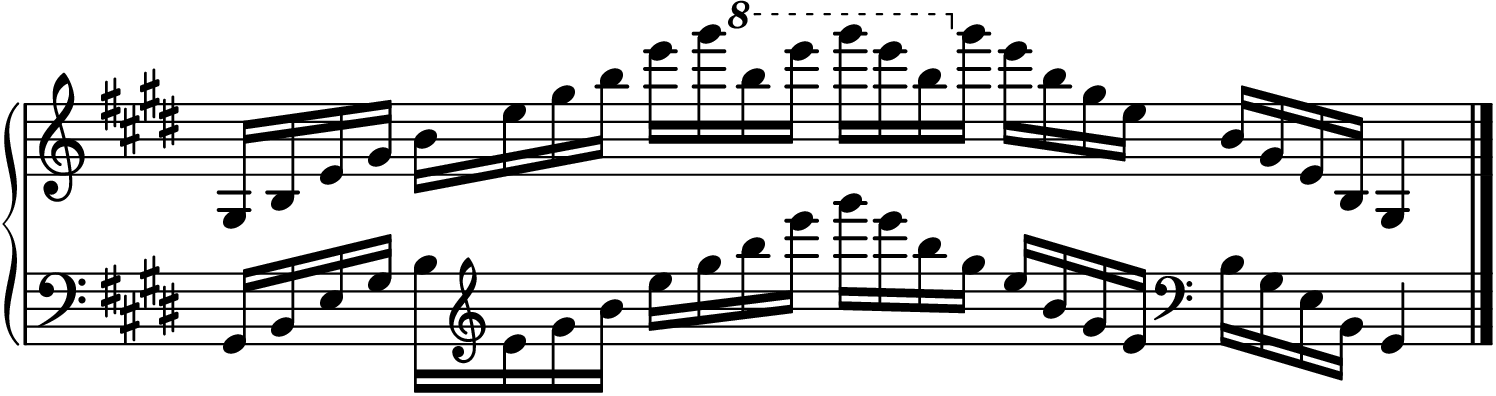
| D flat, E, G, B flat majors; C sharp, E, G, B flat minors | 4 octaves | legato; hands together; first inversion only |
D flat major arpeggio, first inversion (four octaves)
E major arpeggio, first inversion (four octaves)
G major arpeggio, first inversion (four octaves)
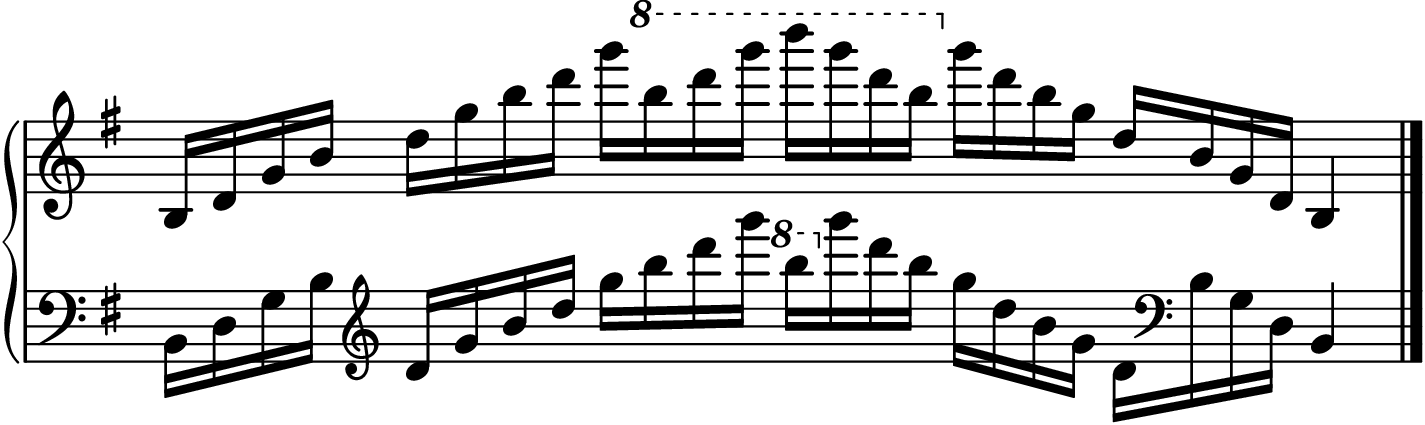
B flat major arpeggio, first inversion (four octaves)
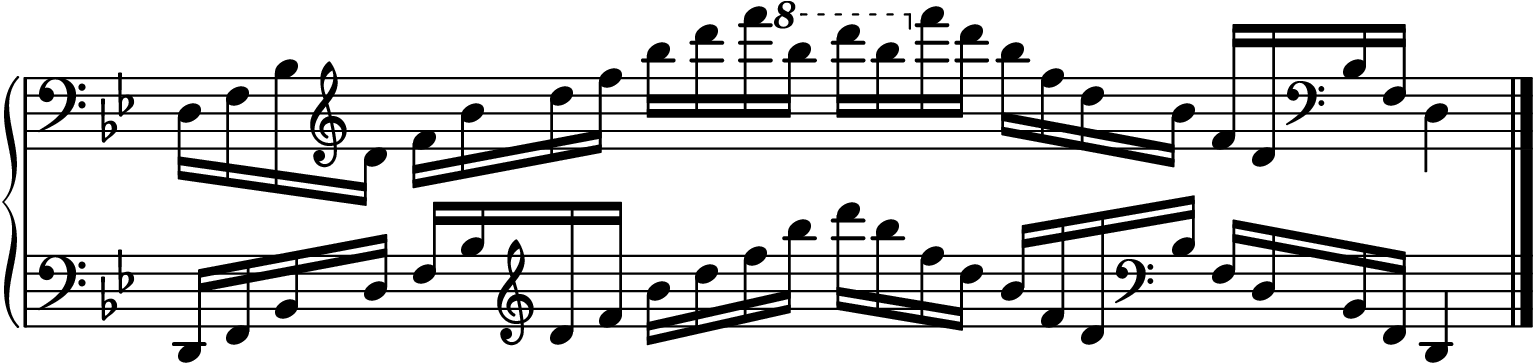
C sharp minor arpeggio, first inversion (four octaves)
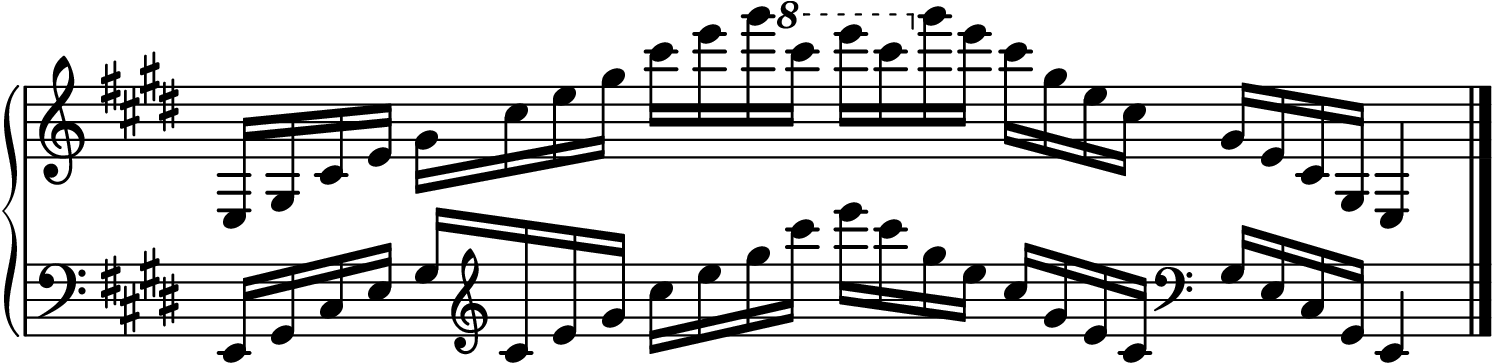
E minor arpeggio, first inversion (four octaves)
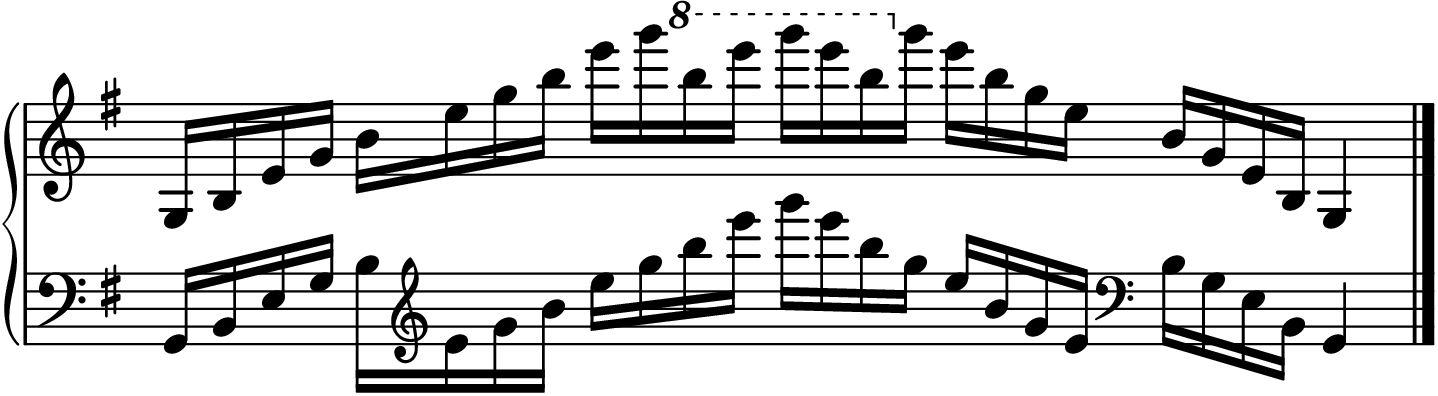
G minor arpeggio, first inversion (four octaves)
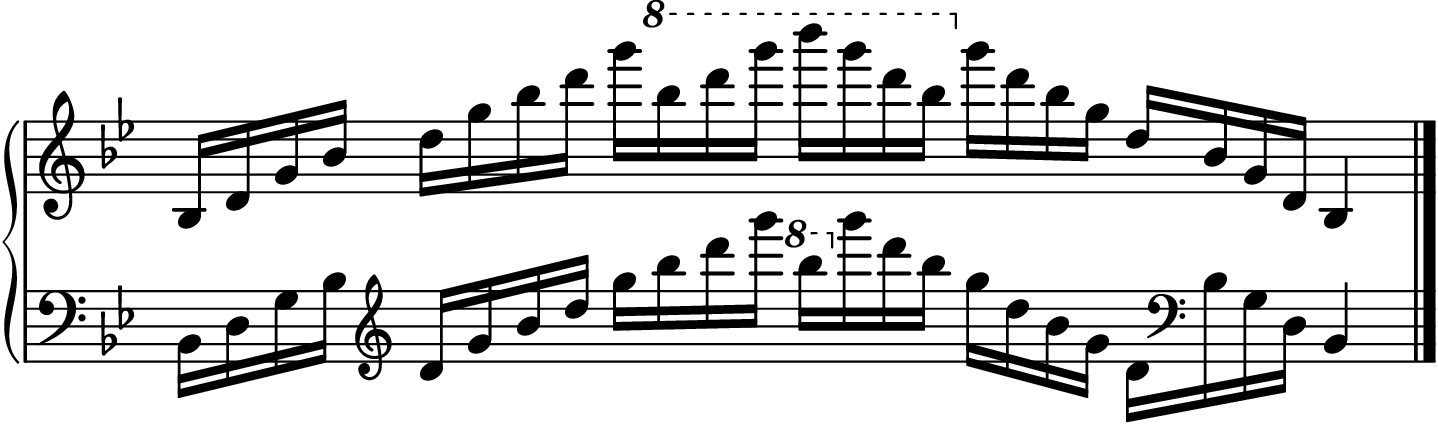
B flat minor arpeggio, first inversion (four octaves)
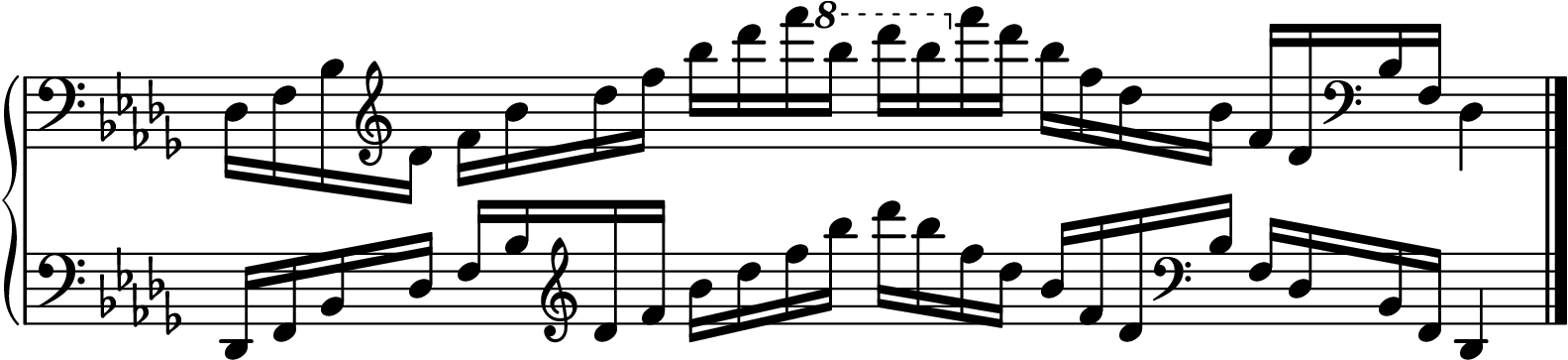
Dominant sevenths (resolving on the tonic)
| Requirement | Range | How |
|---|---|---|
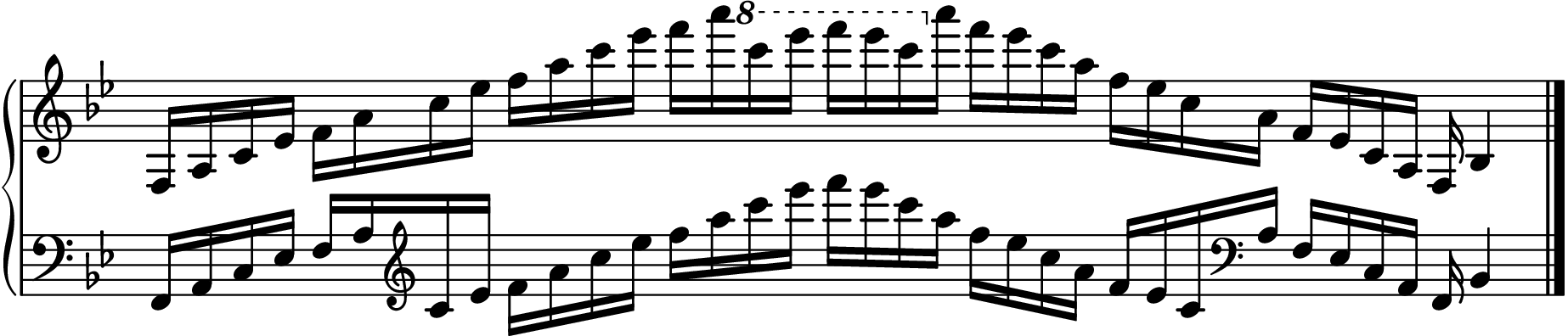
| in the keys of D flat, E, G and B flat | 4 octaves | legato; hands together |
Dominant 7th in the key of D flat (four octaves)
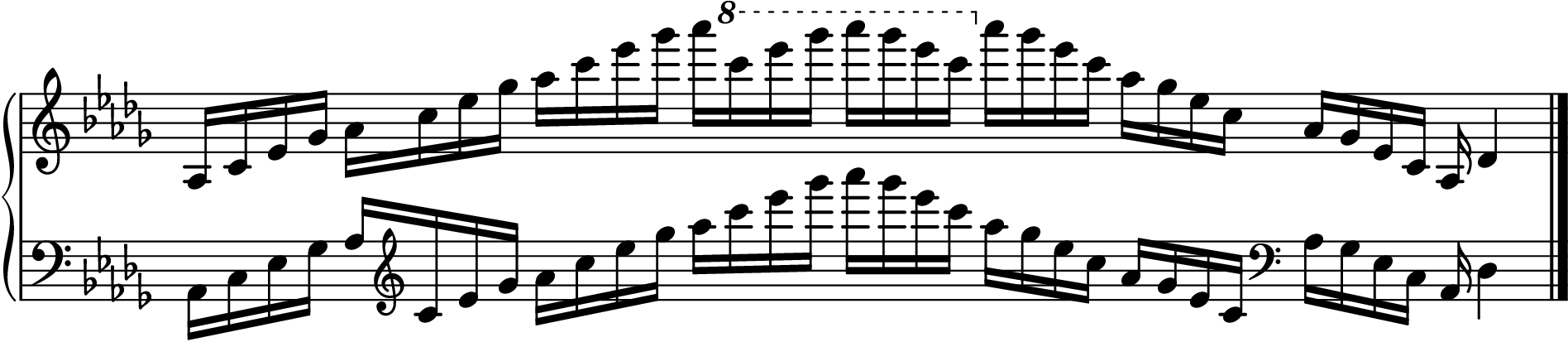
Dominant 7th in the key of E (four octaves)
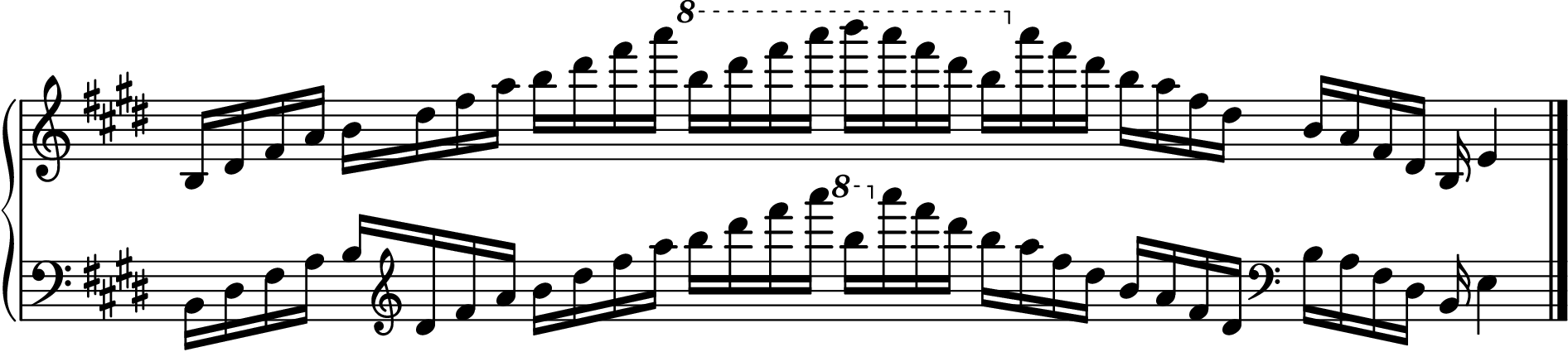
Dominant 7th in the key of G (four octaves)

Dominant 7th in the key of B flat (four octaves)
Diminished sevenths
| Requirement | Range | How |
|---|---|---|
| starting on B flat; starting on E | 4 octaves | legato; hands together |
Diminished 7th starting on B flat (four octaves)
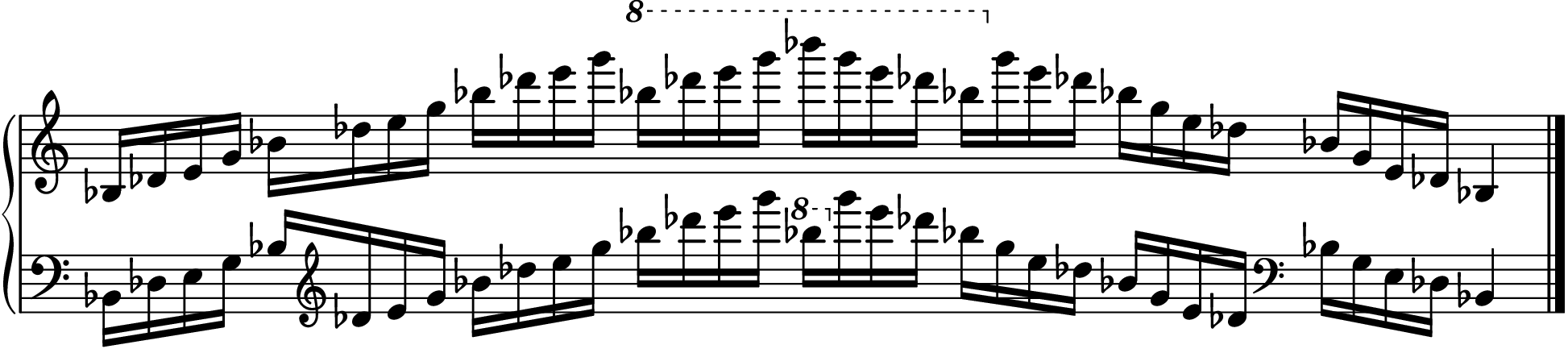
Diminished 7th starting on E (four octaves)
11. Grade 8
Grade 8 gathers everything. The keys are C, E flat, F sharp and A, major and minor: four tonics a minor 3rd apart, dividing the octave evenly. The hands move a 6th apart, the scale in 3rds is joined by a staccato scale in 6ths, the whole-tone scale appears, arpeggios go to second inversion, and the chromatic scale runs four octaves with the hands a major 6th apart.
Scales (similar motion)
| Requirement | Range | How |
|---|---|---|
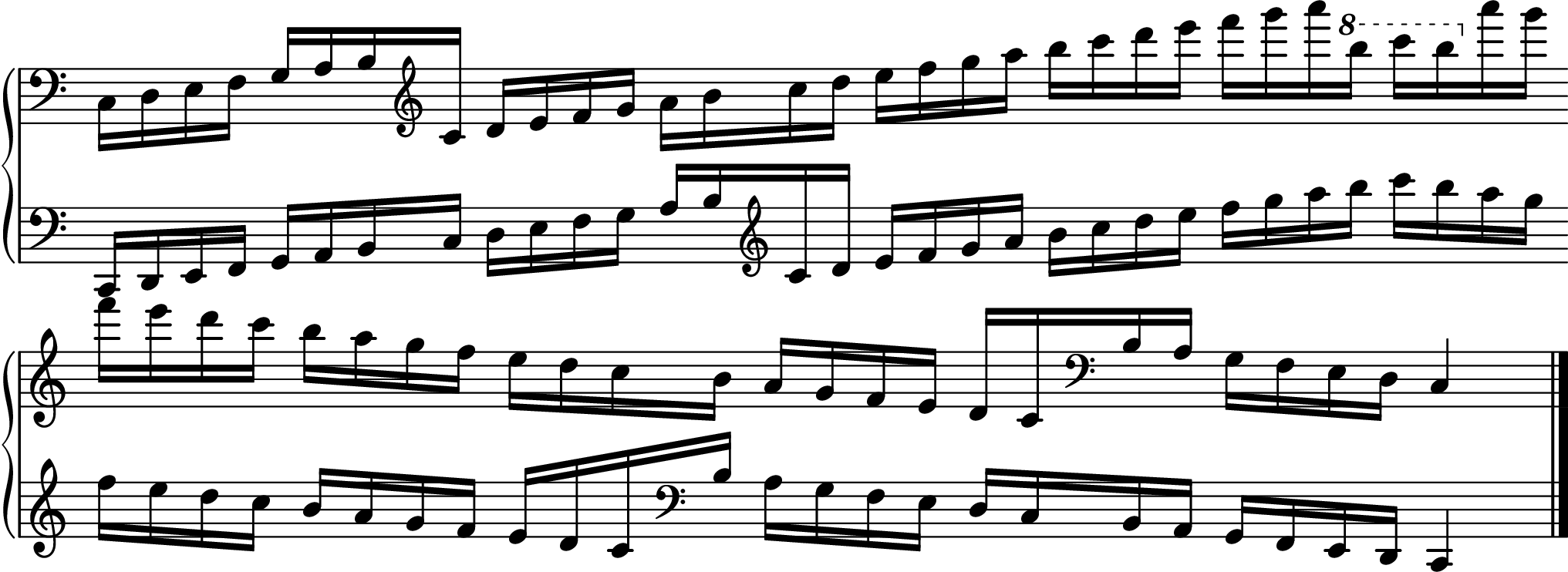
| C, E flat, F sharp, A majors | 4 octaves | legato or staccato, at examiner's choice; hands together |
| C, E flat, F sharp, A minors (harmonic and melodic) | 4 octaves | legato or staccato, at examiner's choice; hands together |
C major (four octaves)
E flat major (four octaves)
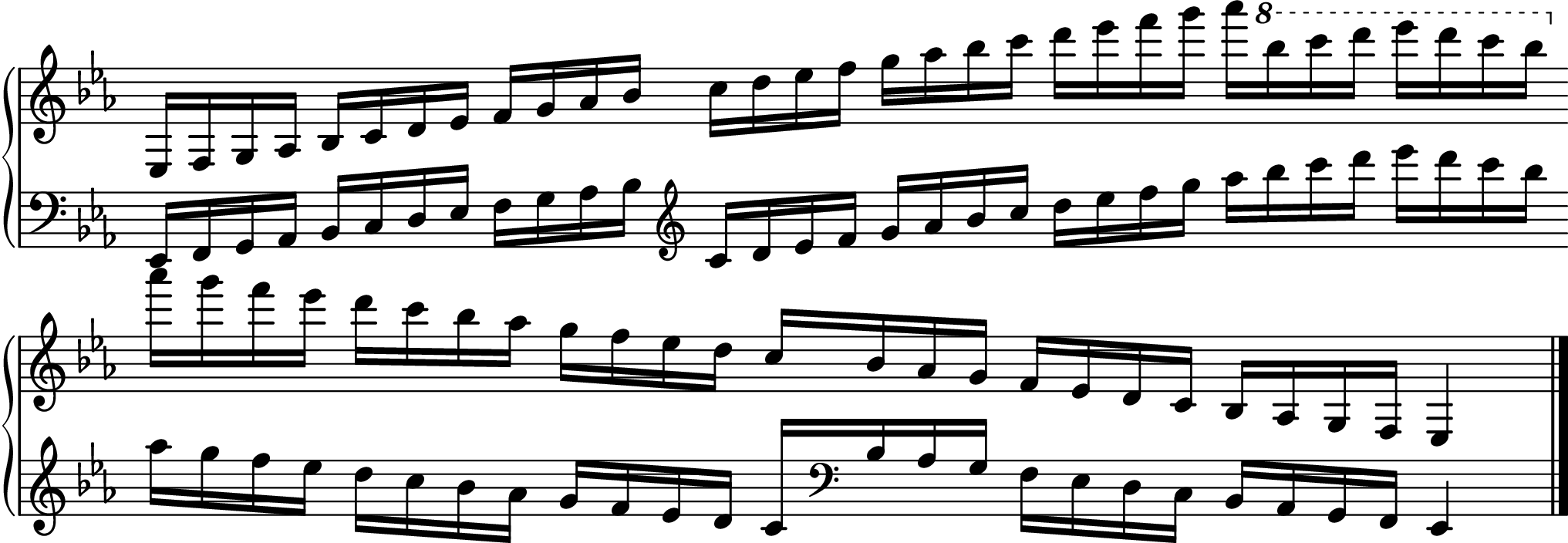
F sharp major (four octaves)
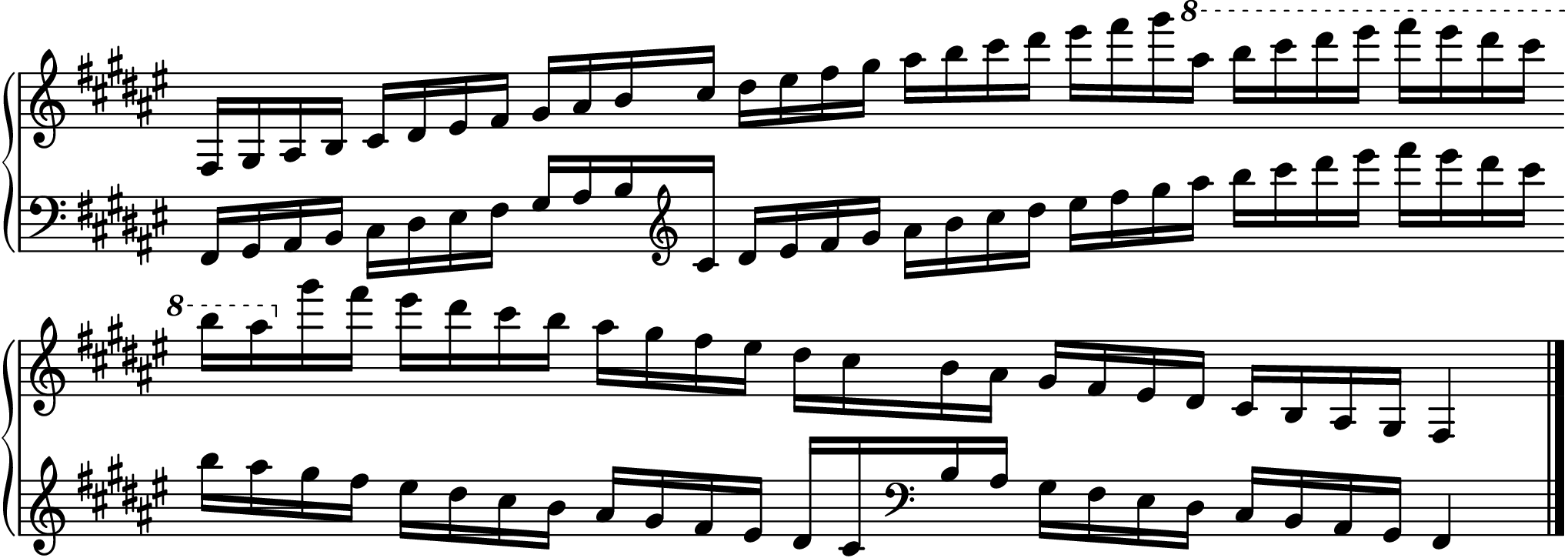
A major (four octaves)
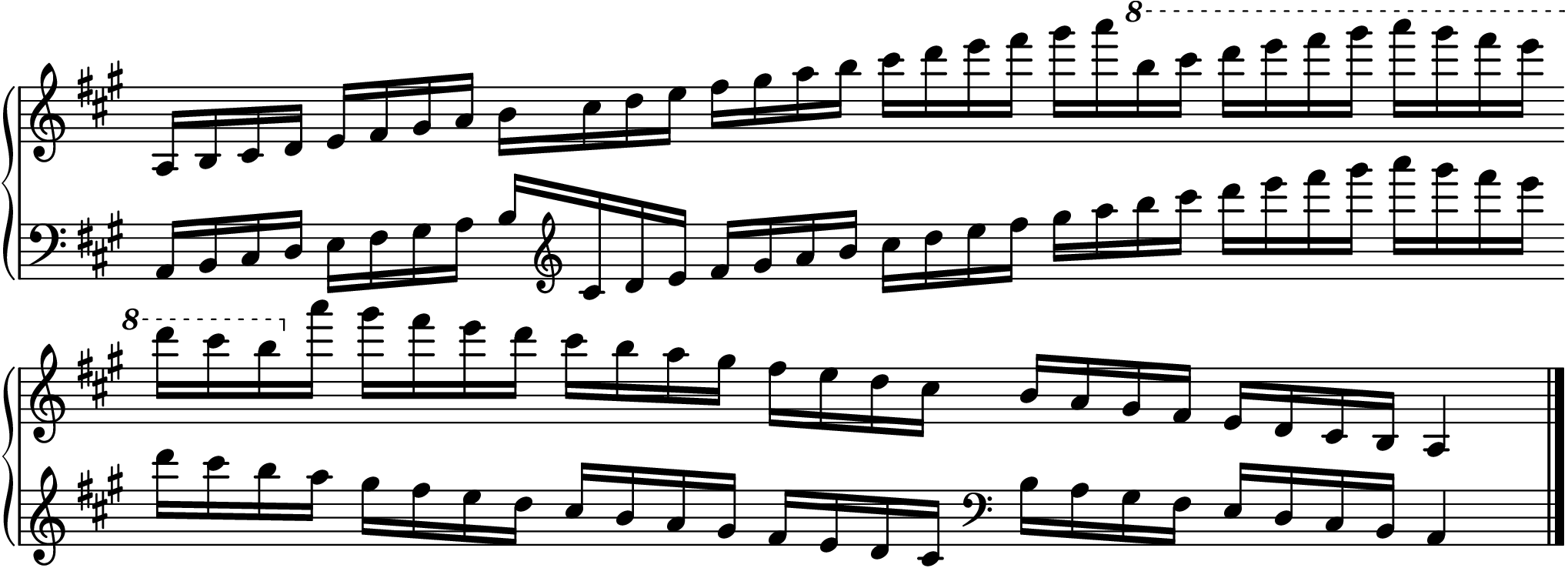
C minor, harmonic (four octaves)
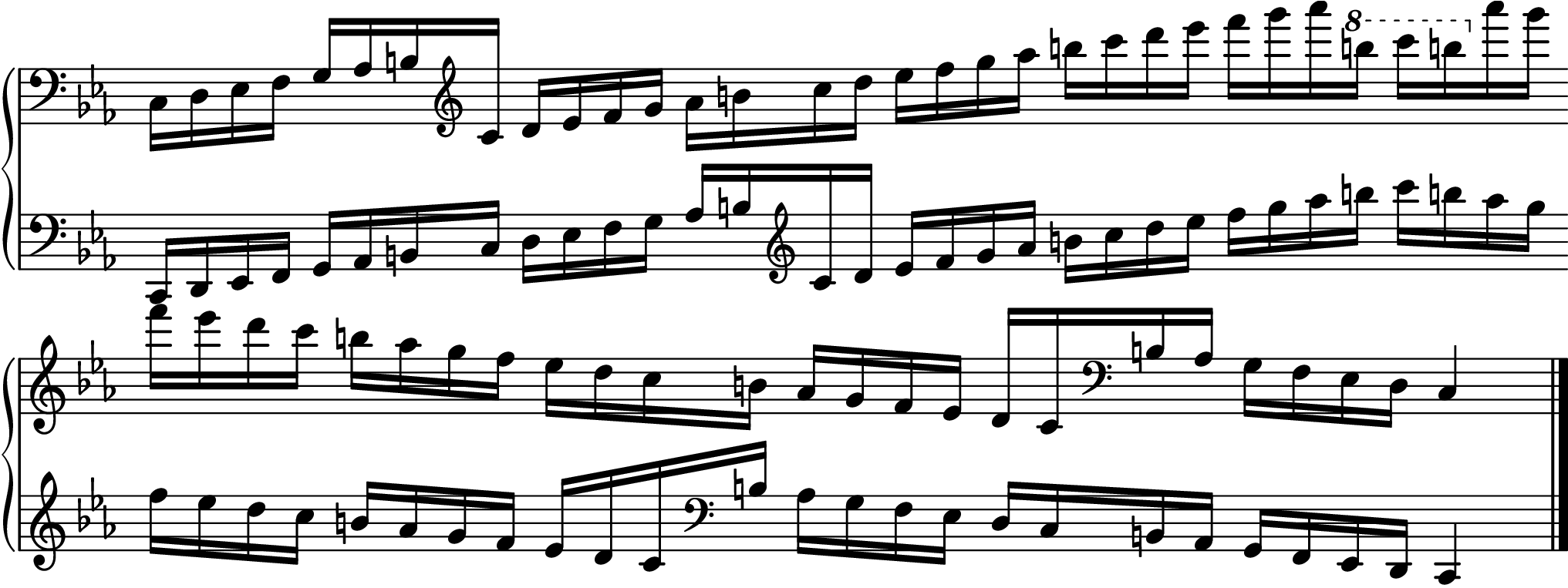
C minor, melodic (four octaves)
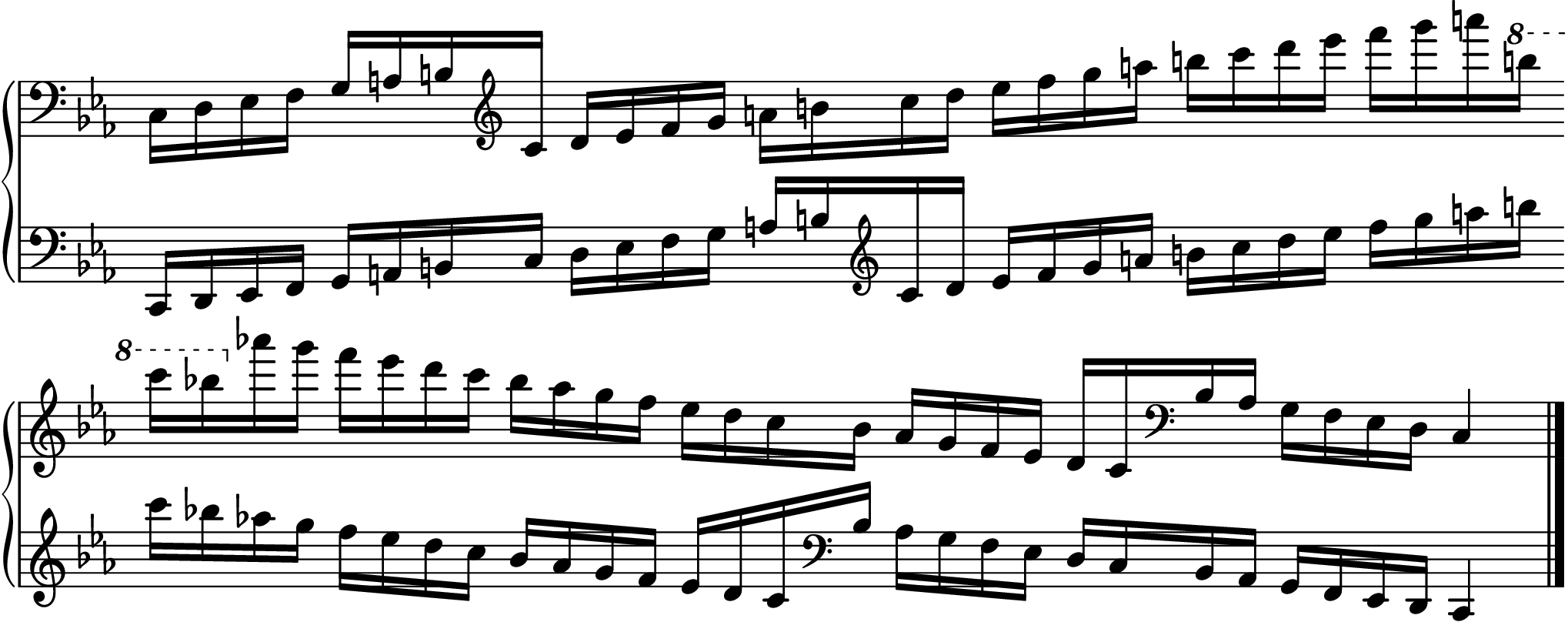
E flat minor, harmonic (four octaves)
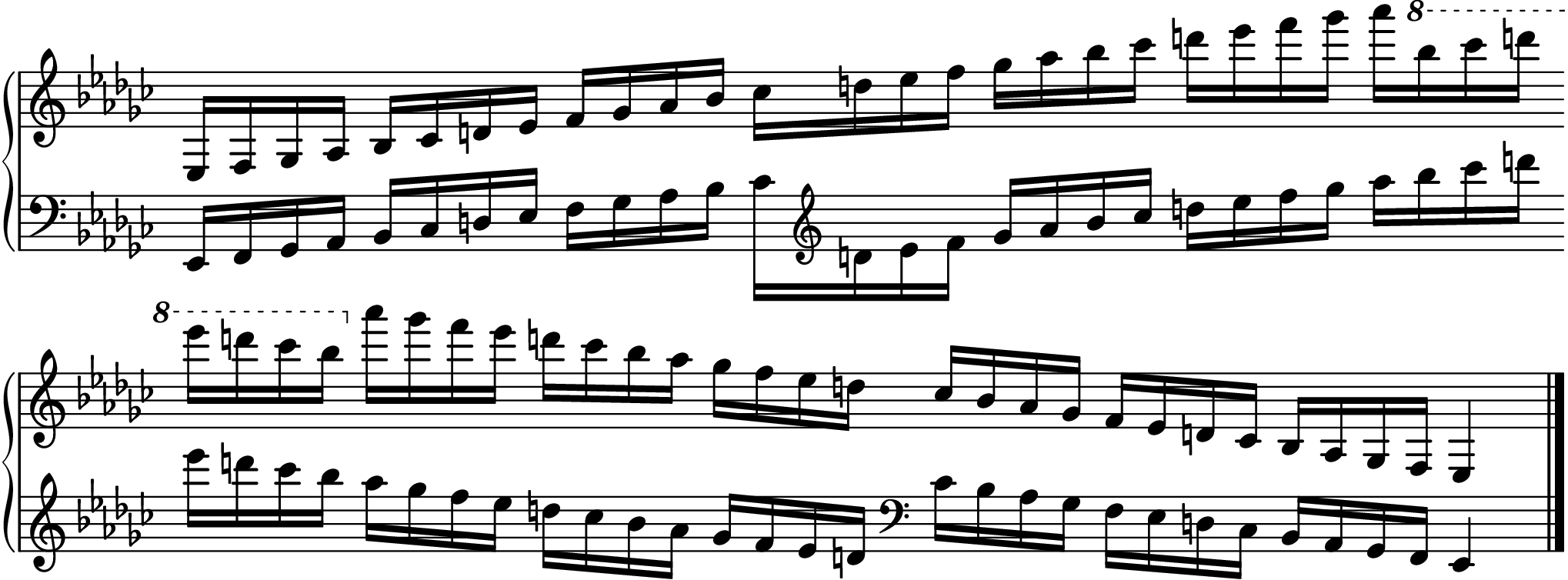
E flat minor, melodic (four octaves)
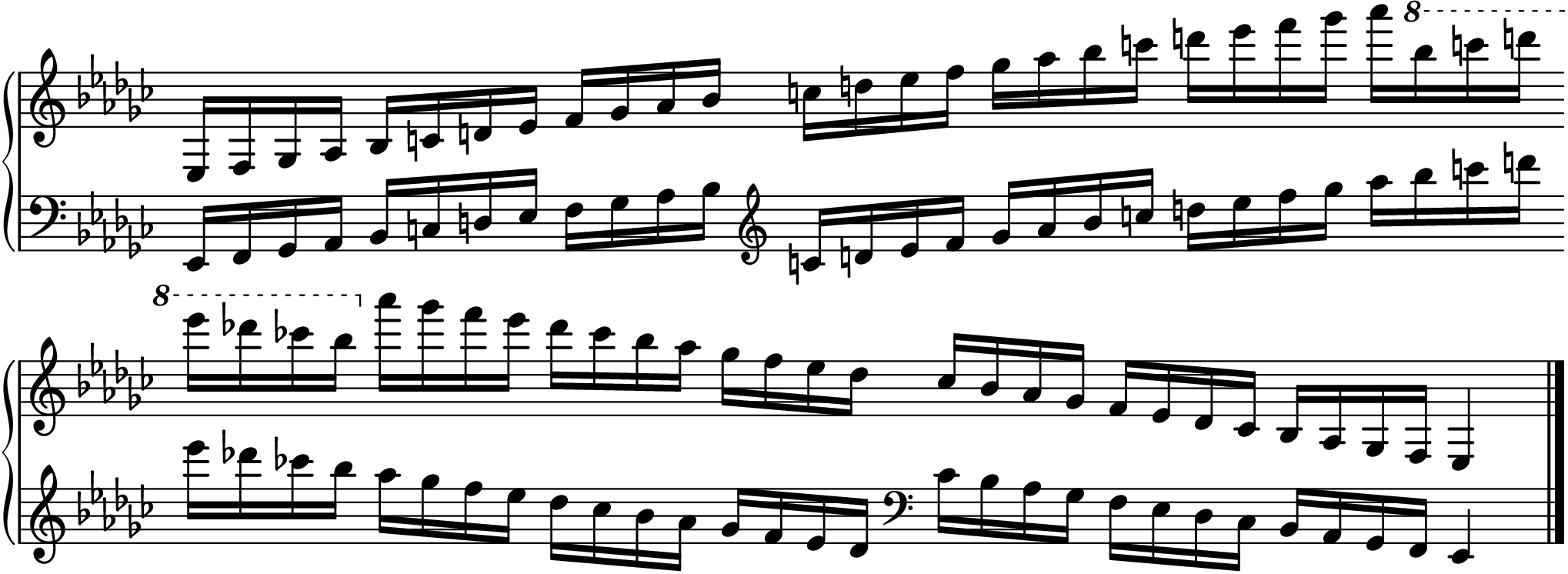
F sharp minor, harmonic (four octaves)
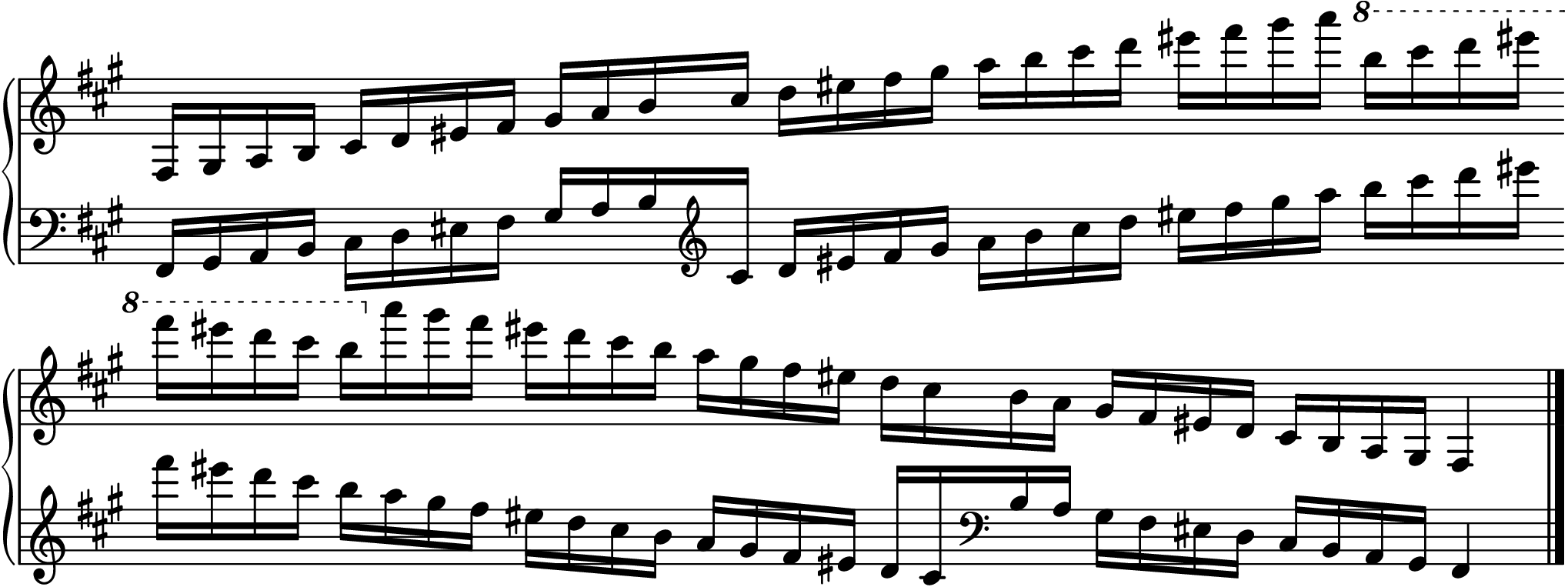
F sharp minor, melodic (four octaves)
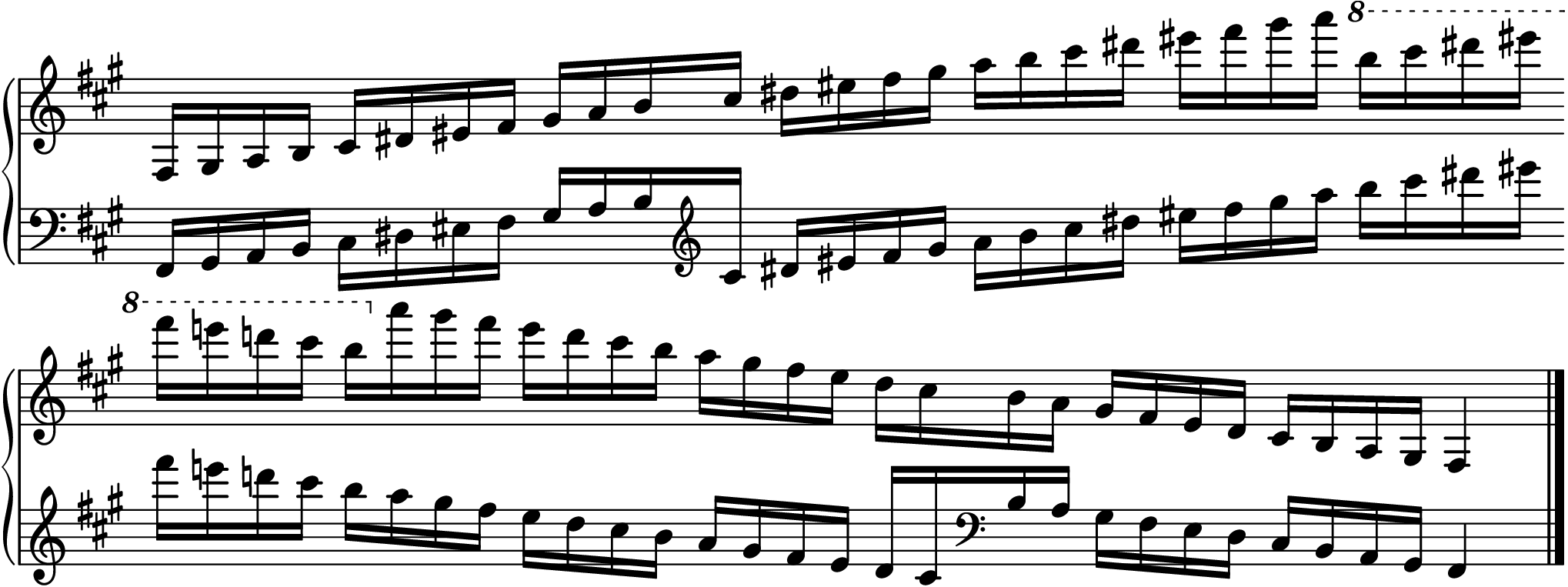
A minor, harmonic (four octaves)
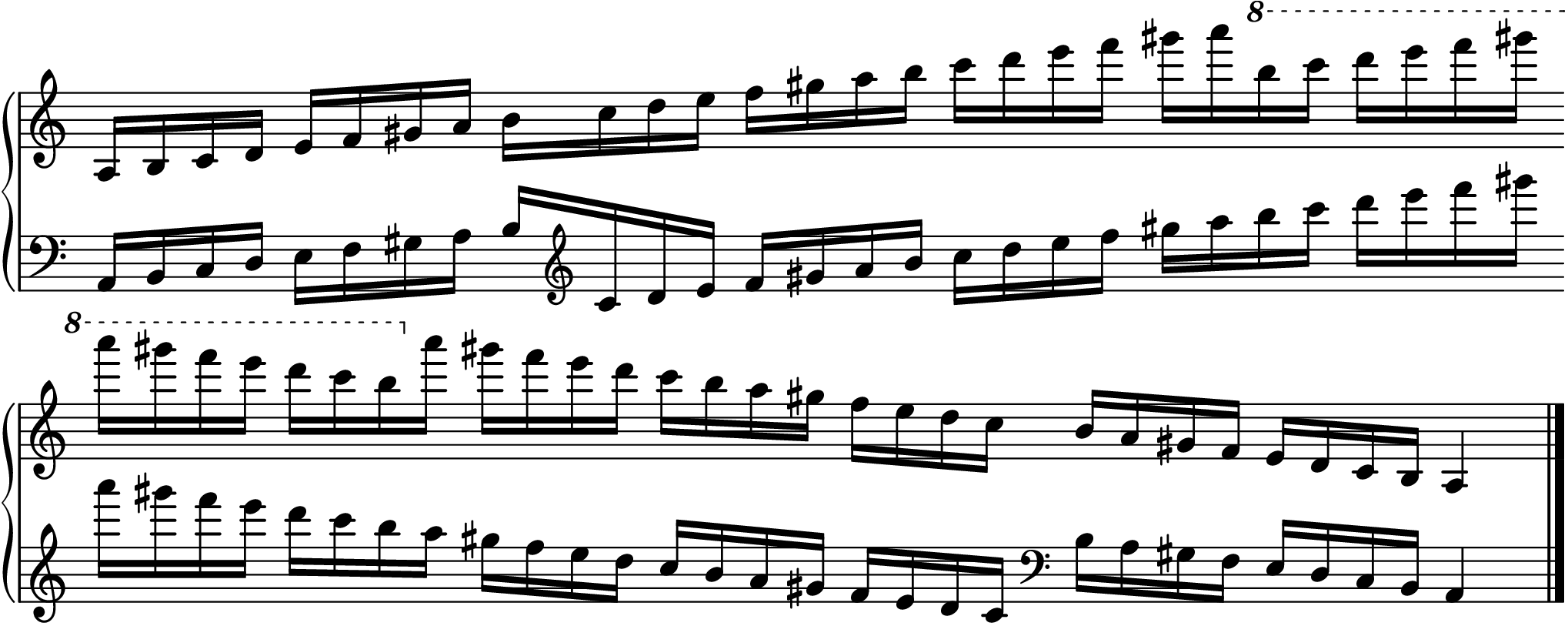
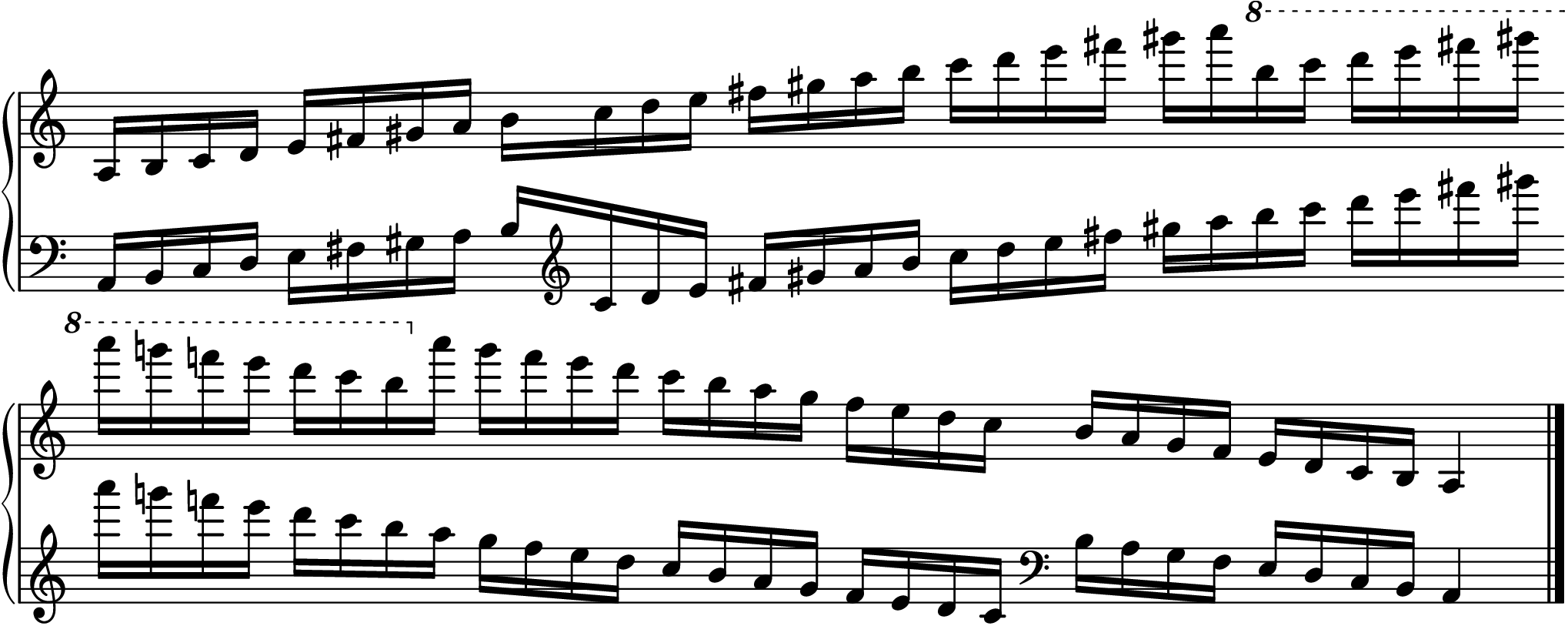
A minor, melodic (four octaves)
Scales a 6th apart
| Requirement | Range | How |
|---|---|---|
| C, E flat, F sharp, A majors | 4 octaves | legato or staccato, at examiner's choice; hands together |
| C, E flat, F sharp, A harmonic minors | 4 octaves | legato or staccato, at examiner's choice; hands together |
C major, hands a 6th apart (four octaves)
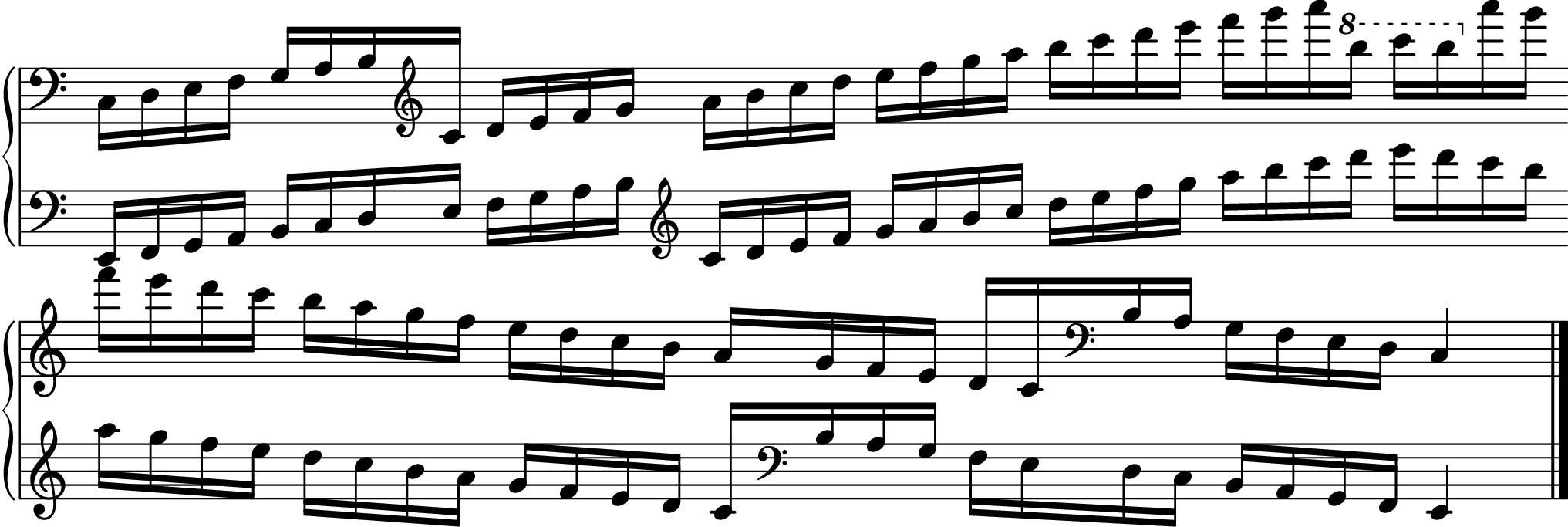
E flat major, hands a 6th apart (four octaves)
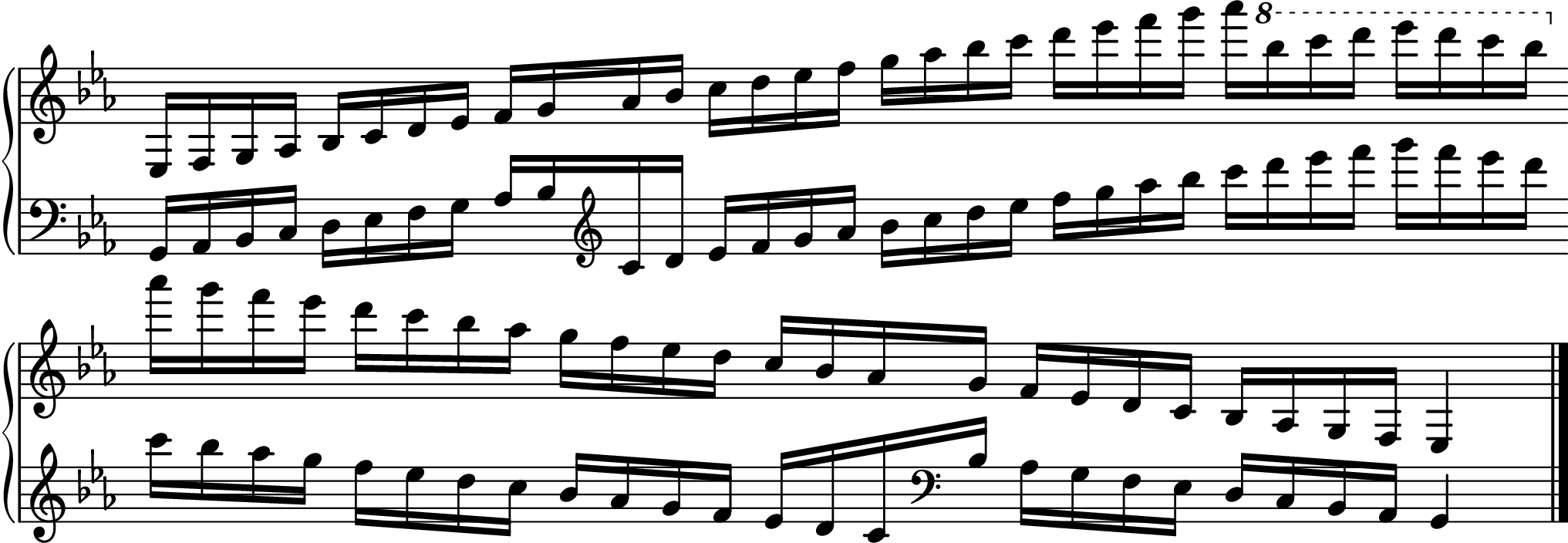
F sharp major, hands a 6th apart (four octaves)
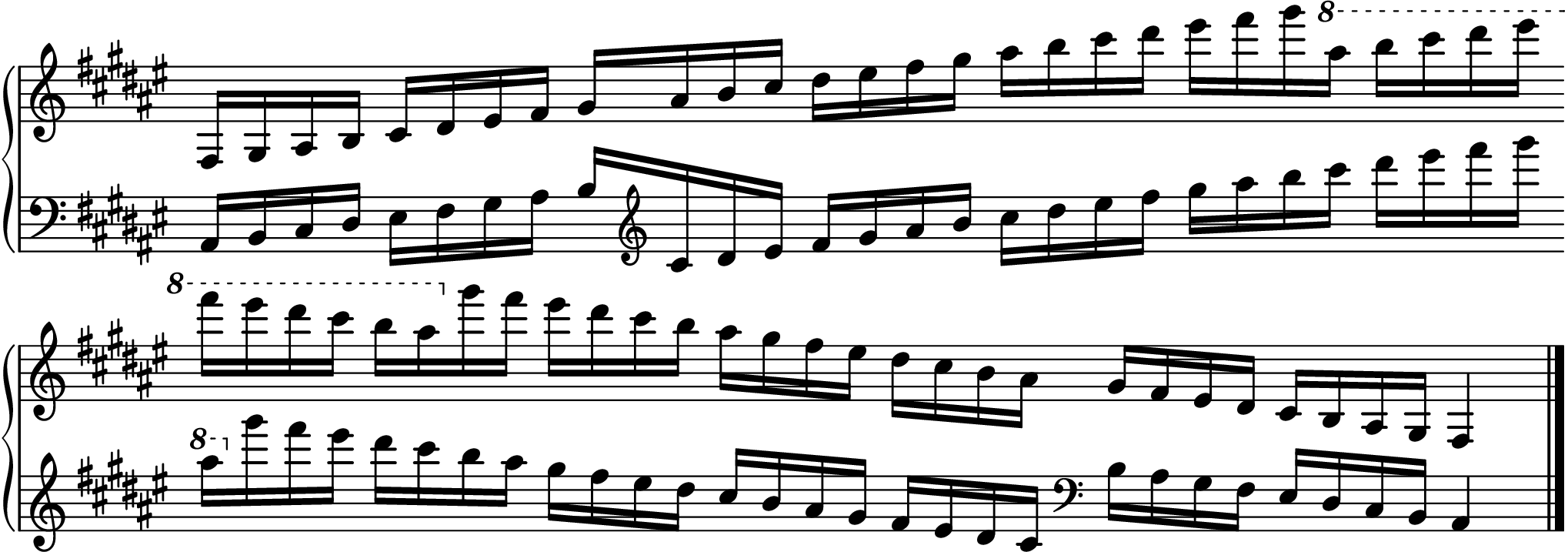
A major, hands a 6th apart (four octaves)
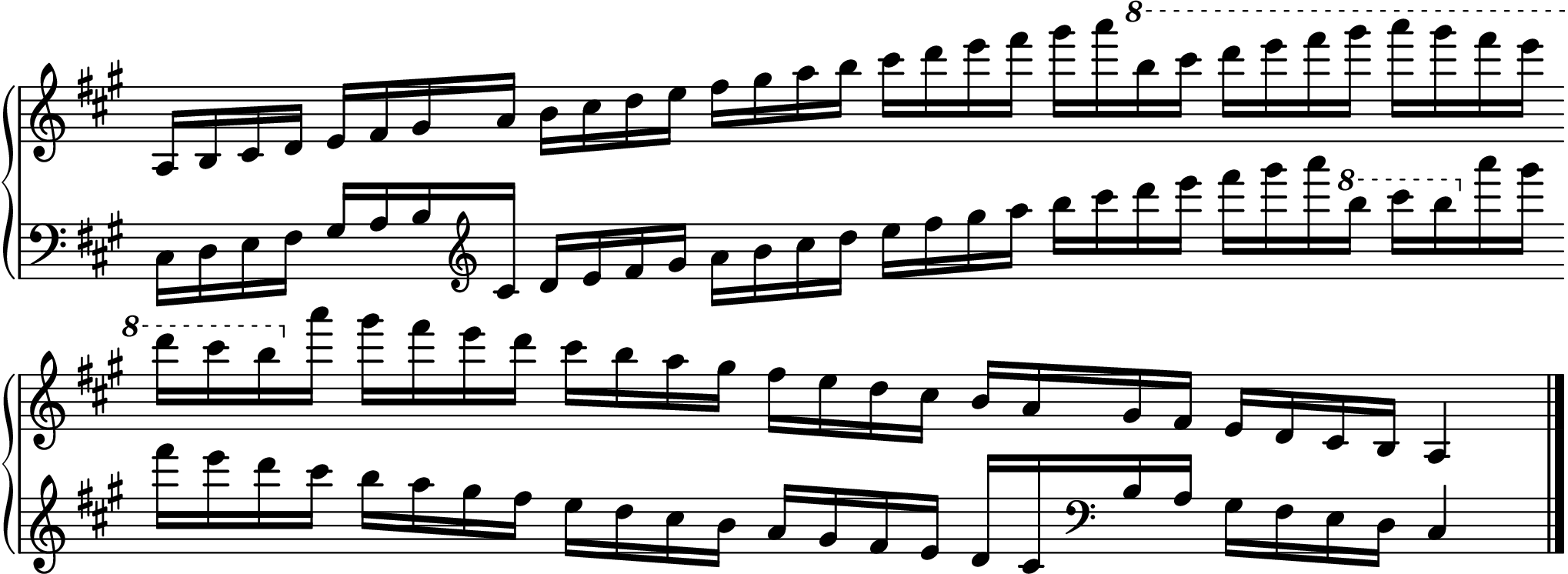
C harmonic minor, hands a 6th apart (four octaves)
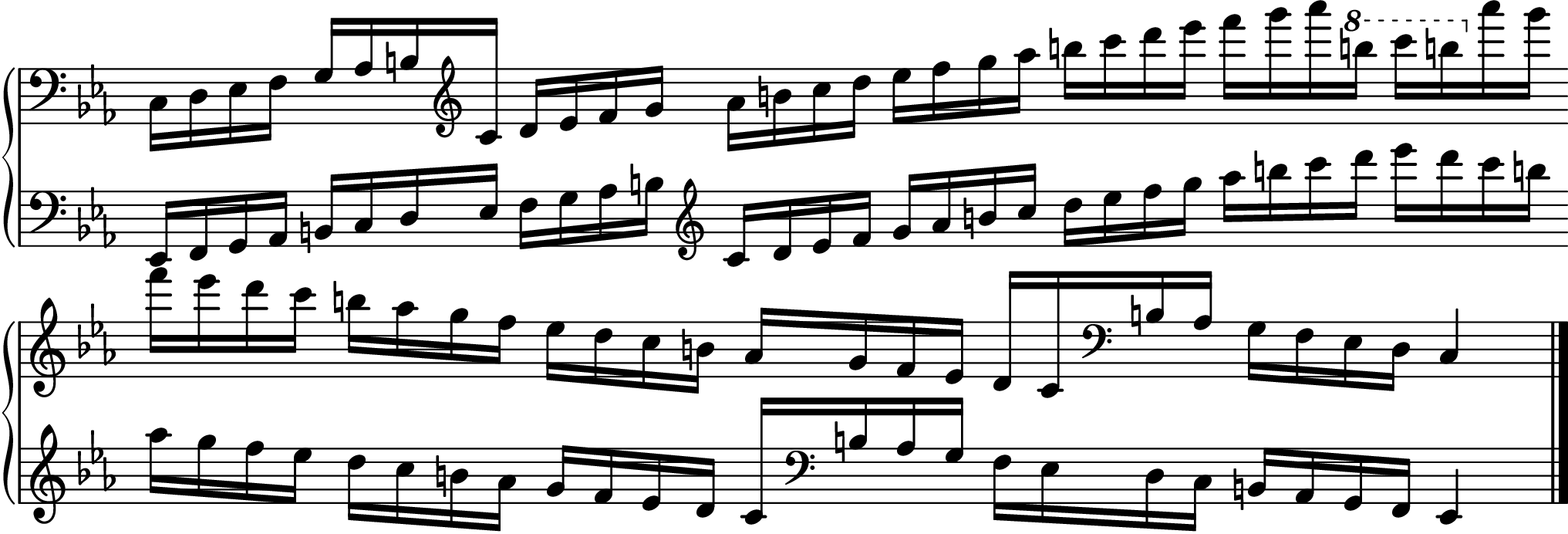
E flat harmonic minor, hands a 6th apart (four octaves)
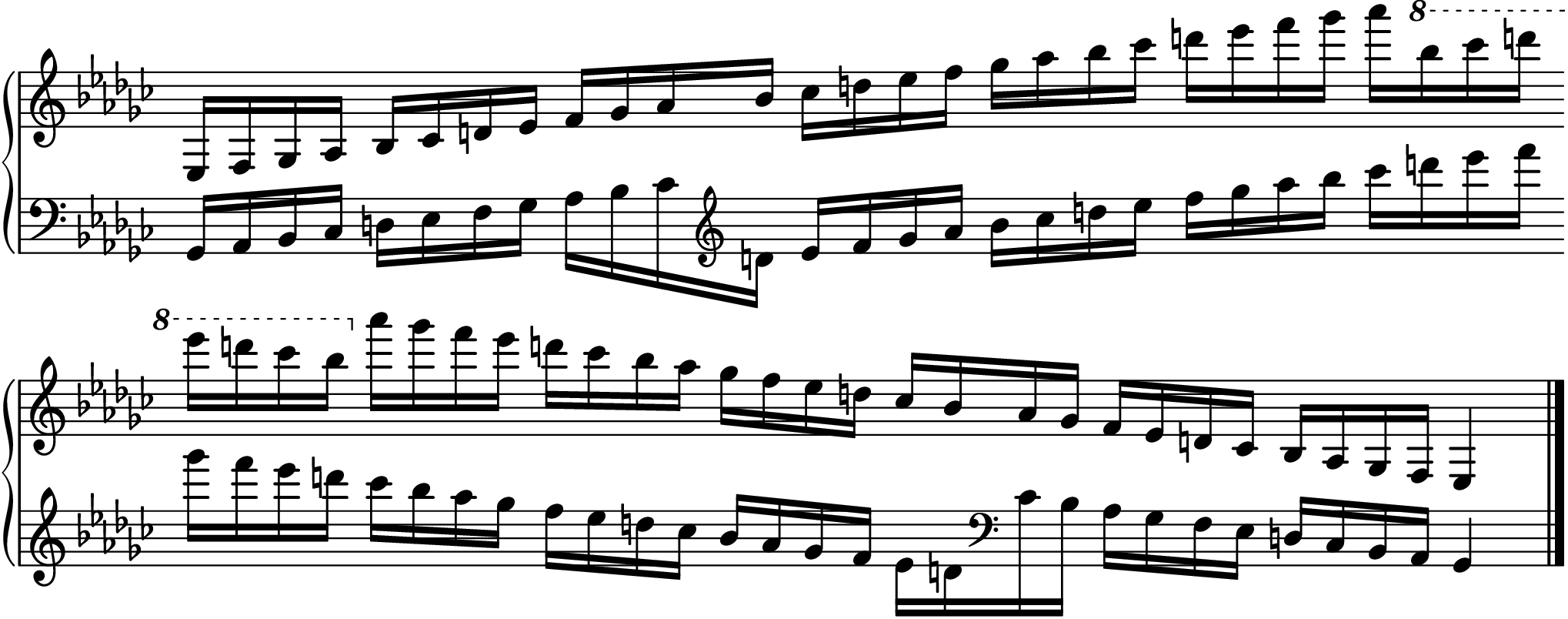
F sharp harmonic minor, hands a 6th apart (four octaves)
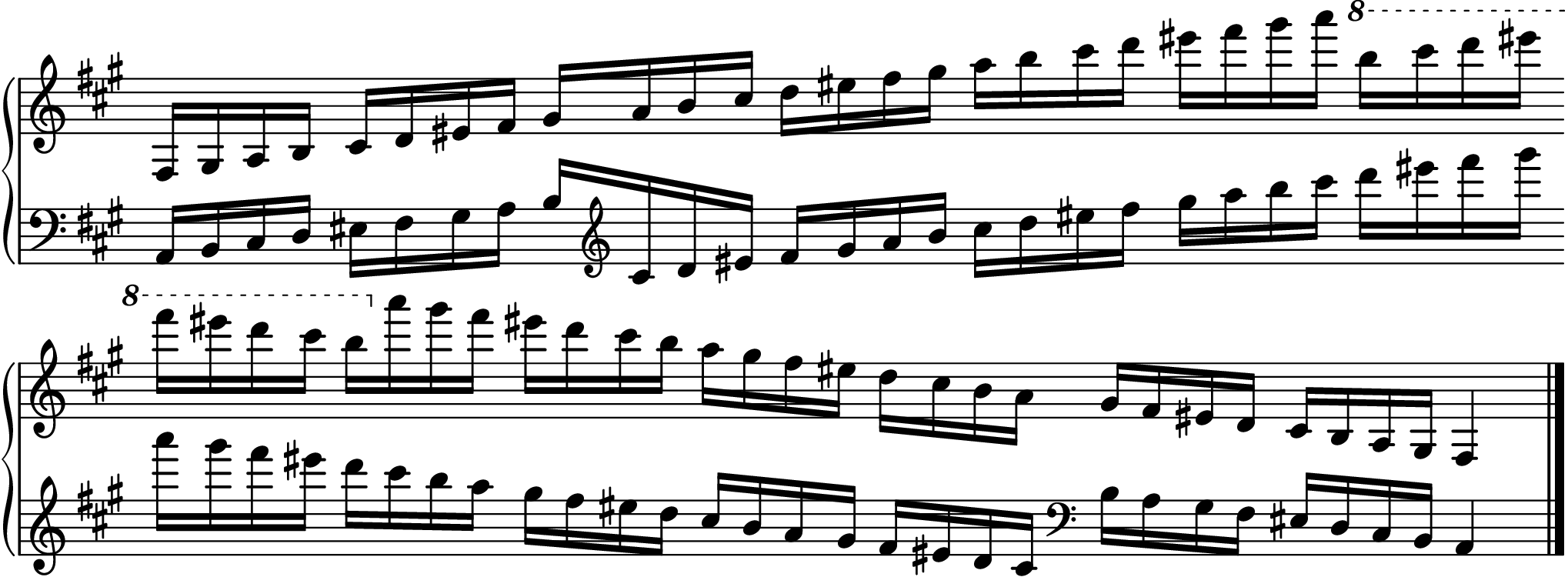
A harmonic minor, hands a 6th apart (four octaves)
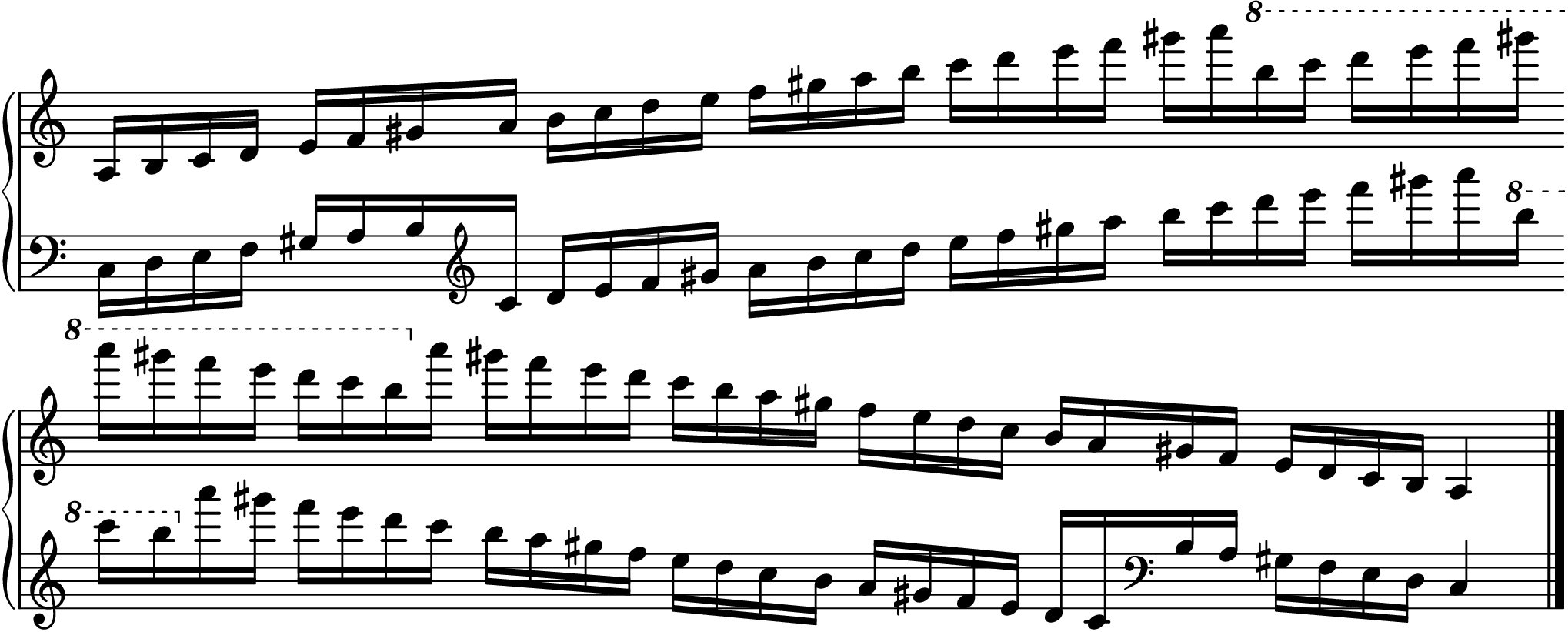
Contrary-motion scales
| Requirement | Range | How |
|---|---|---|
| C, E flat, F sharp, A majors | 2 octaves | legato or staccato, at examiner's choice; hands starting on the tonic (unison) |
| C, E flat, F sharp, A harmonic minors | 2 octaves | legato or staccato, at examiner's choice; hands starting on the tonic (unison) |
C major, contrary motion (two octaves)
E flat major, contrary motion (two octaves)
F sharp major, contrary motion (two octaves)

A major, contrary motion (two octaves)
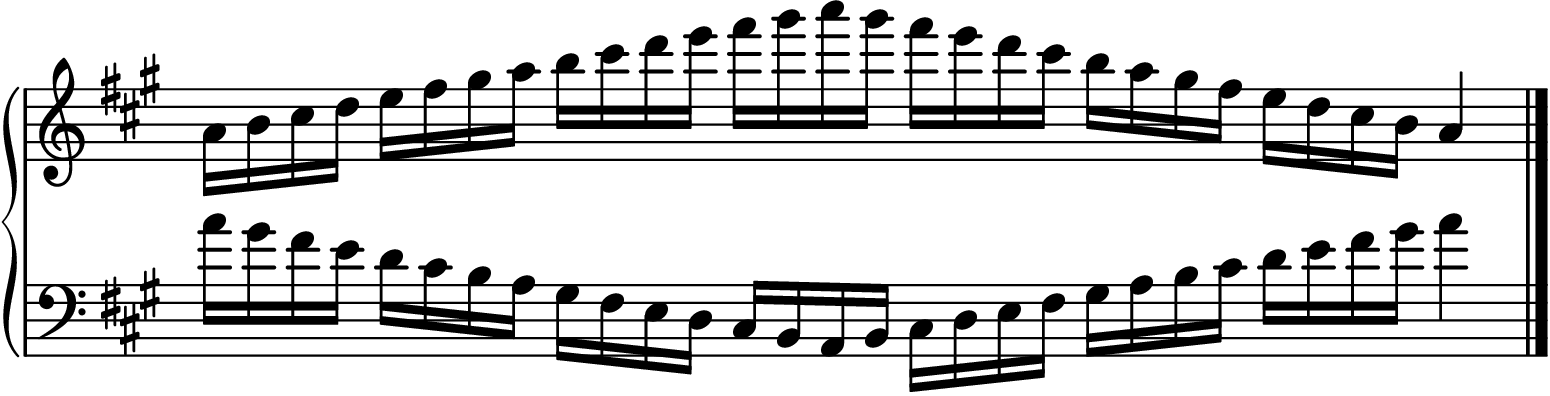
C harmonic minor, contrary motion (two octaves)
E flat harmonic minor, contrary motion (two octaves)

F sharp harmonic minor, contrary motion (two octaves)

A harmonic minor, contrary motion (two octaves)
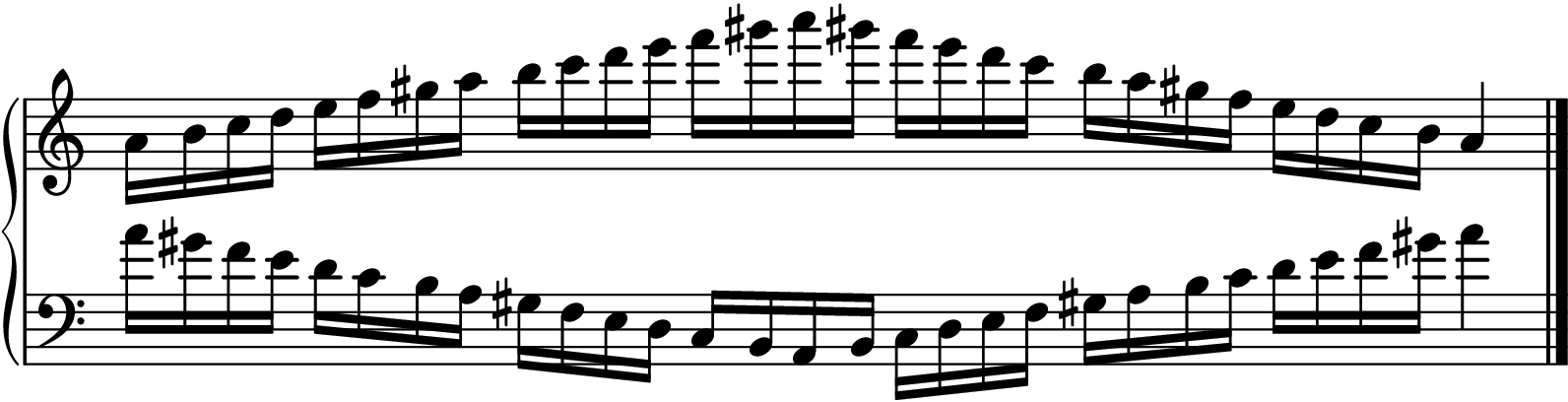
Legato scale in 3rds
| Requirement | Range | How |
|---|---|---|
| E flat major | 2 octaves | legato; hands separately |
E flat major in 3rds, legato (two octaves)
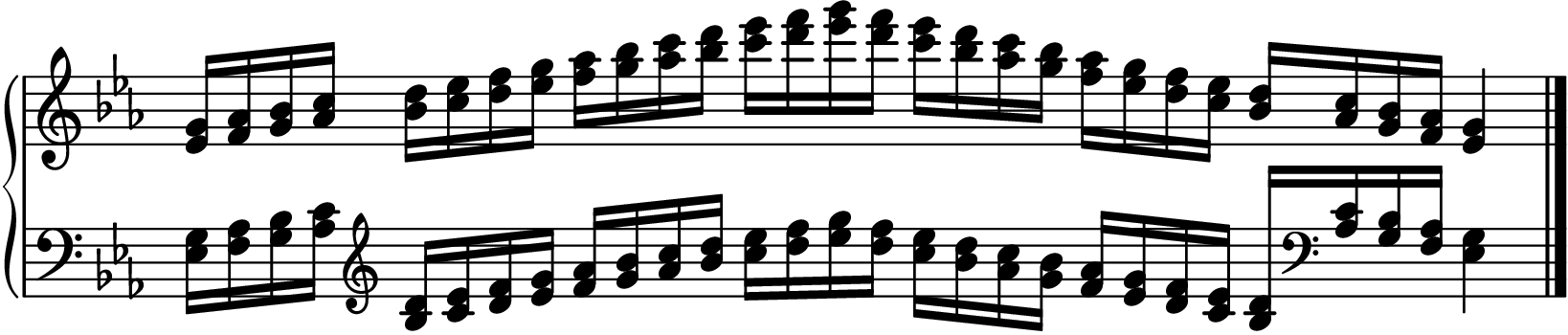
Staccato scale in 6ths
| Requirement | Range | How |
|---|---|---|
| C major | 2 octaves | staccato; hands separately |
C major in 6ths, staccato (two octaves)
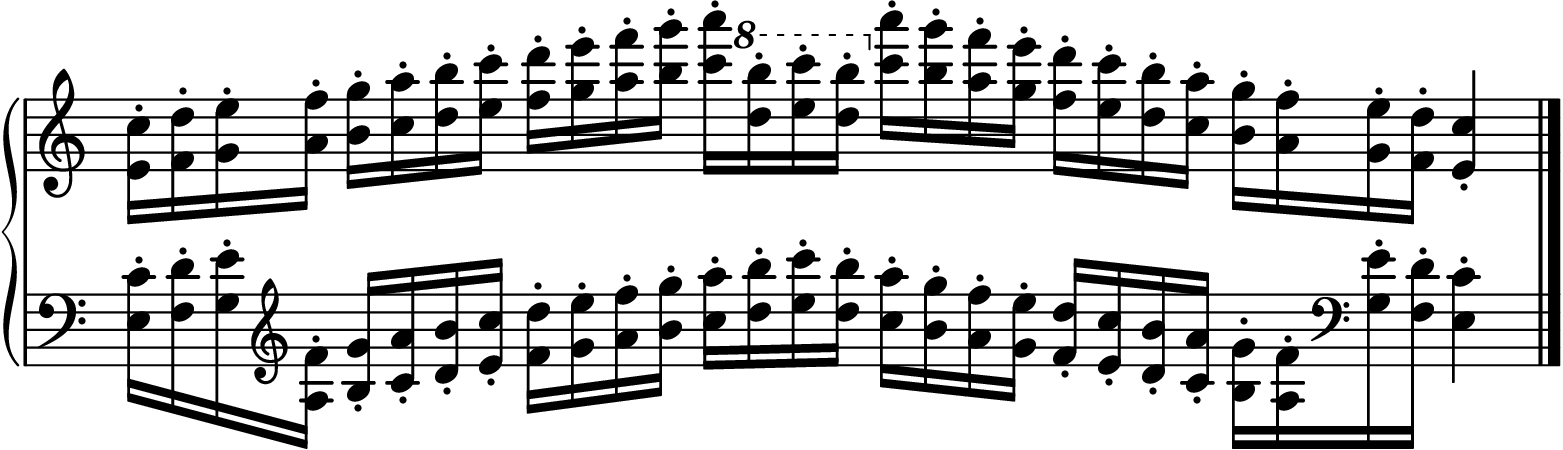
Chromatic scale a major 6th apart
| Requirement | Range | How |
|---|---|---|
| starting on E flat (LH) and C (RH) | 4 octaves | legato or staccato, at examiner's choice; hands together |
Chromatic scale a major 6th apart, left hand on E flat, right hand on C (four octaves)
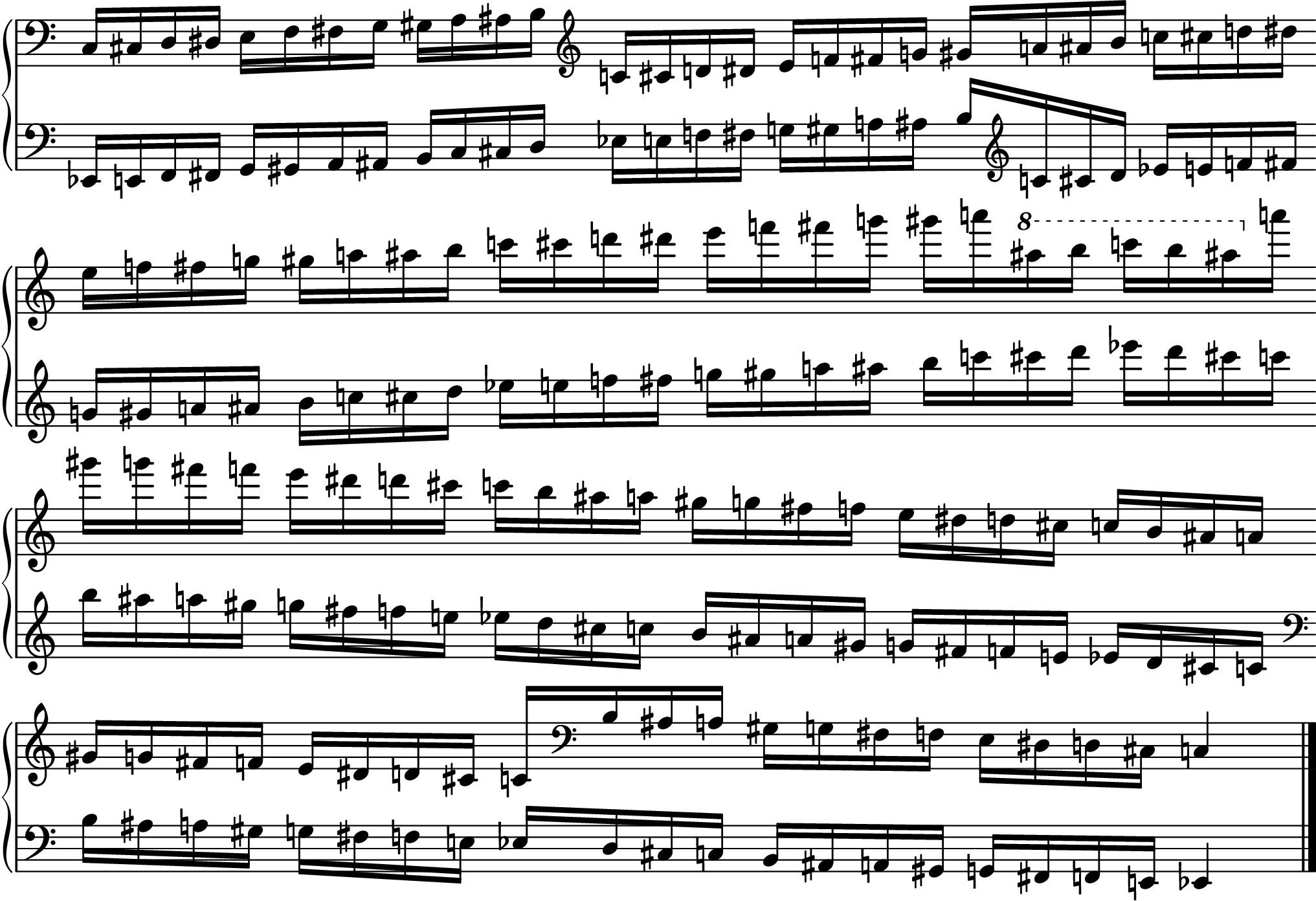
Whole-tone scales (similar motion)
| Requirement | Range | How |
|---|---|---|
| starting on E flat; starting on C | 4 octaves | legato or staccato, at examiner's choice; hands together |
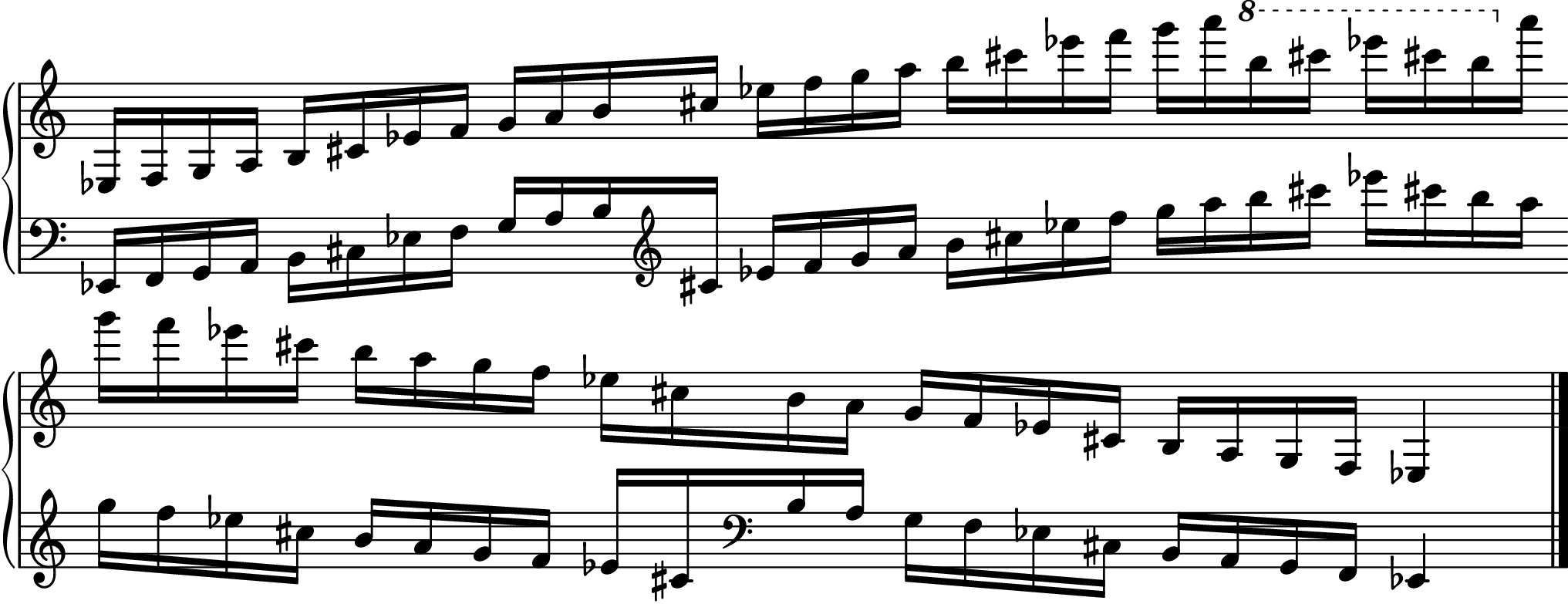
Whole-tone scale starting on E flat (four octaves)
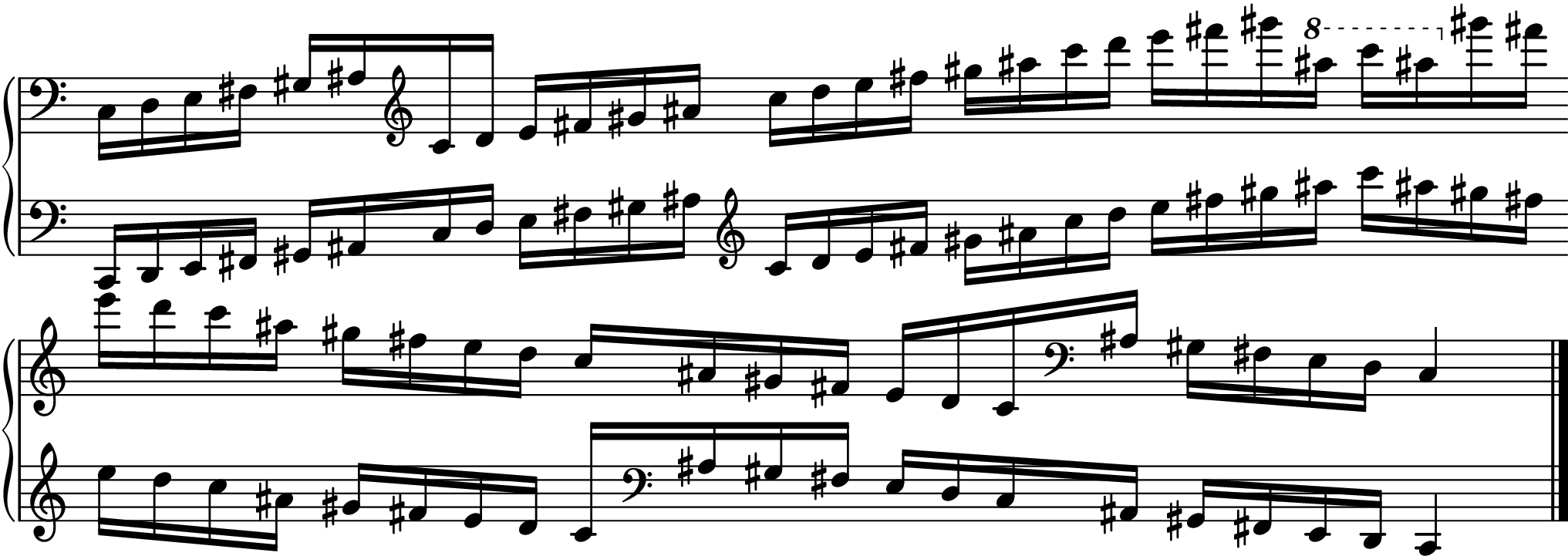
Whole-tone scale starting on C (four octaves)
Arpeggios
| Requirement | Range | How |
|---|---|---|
| C, E flat, F sharp, A majors; C, E flat, F sharp, A minors | 4 octaves | legato; hands together; second inversion only |
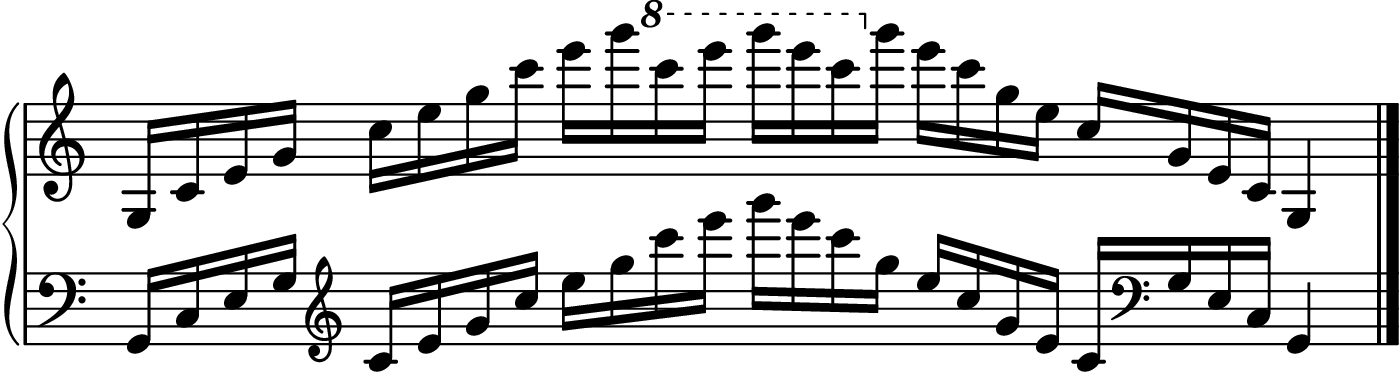
C major arpeggio, second inversion (four octaves)
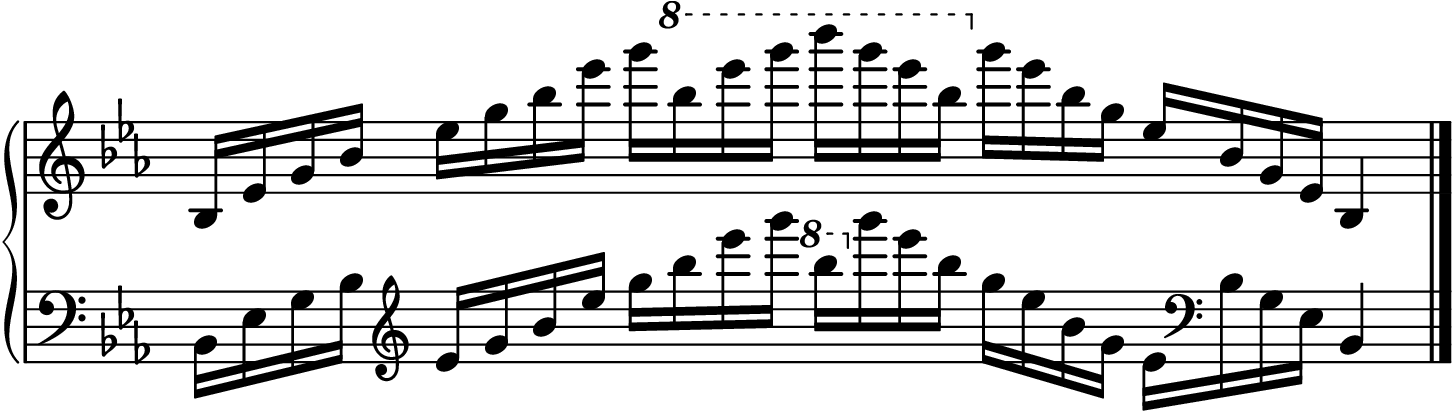
E flat major arpeggio, second inversion (four octaves)
F sharp major arpeggio, second inversion (four octaves)
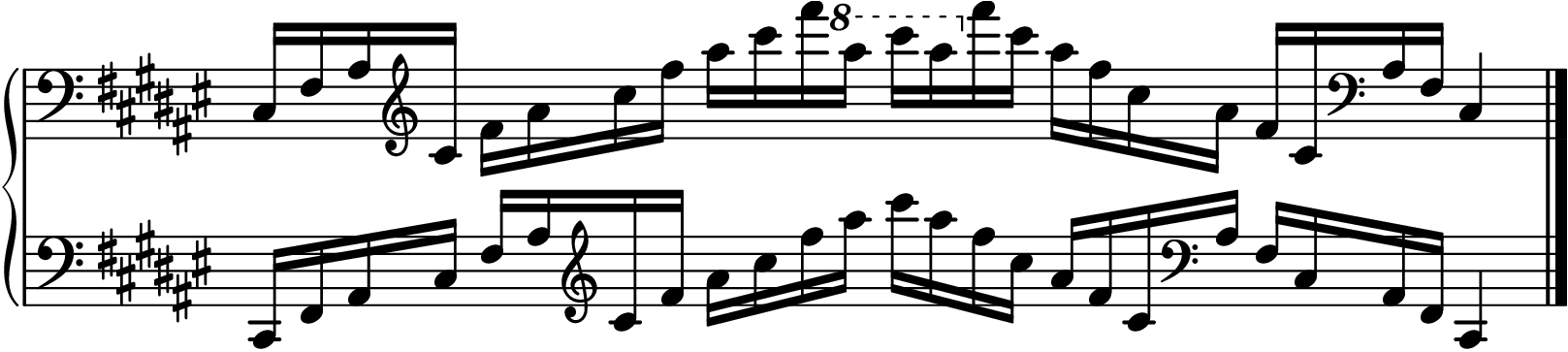
A major arpeggio, second inversion (four octaves)
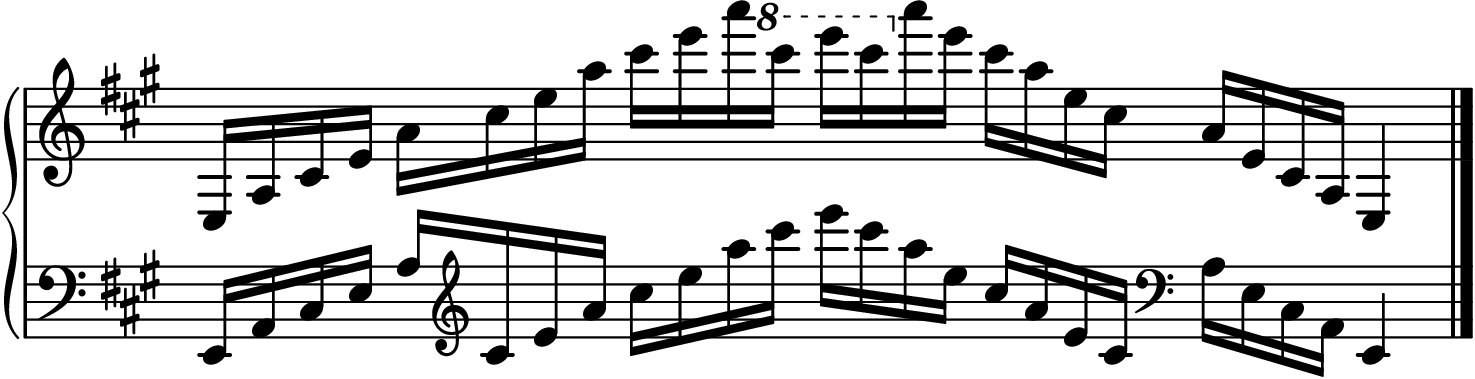
C minor arpeggio, second inversion (four octaves)
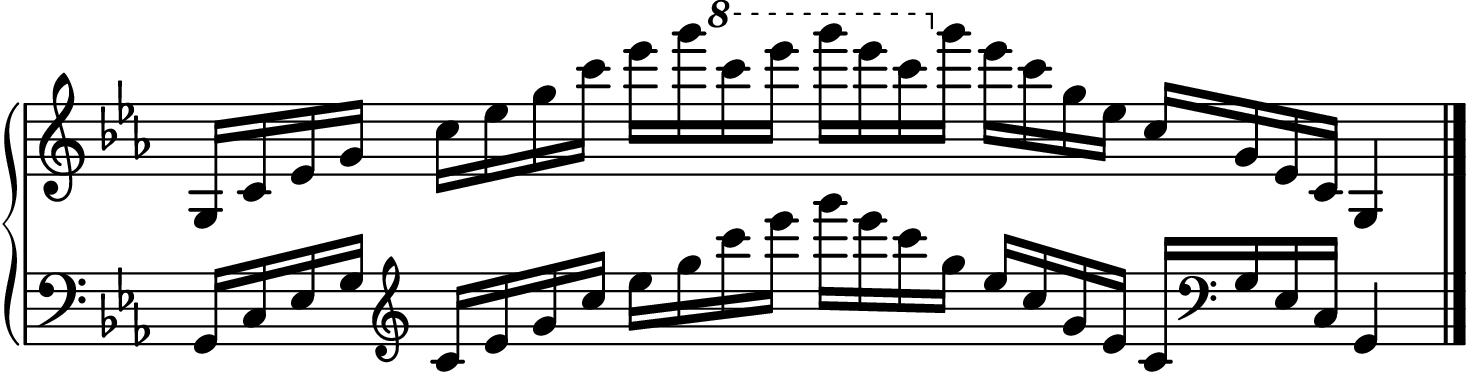
E flat minor arpeggio, second inversion (four octaves)
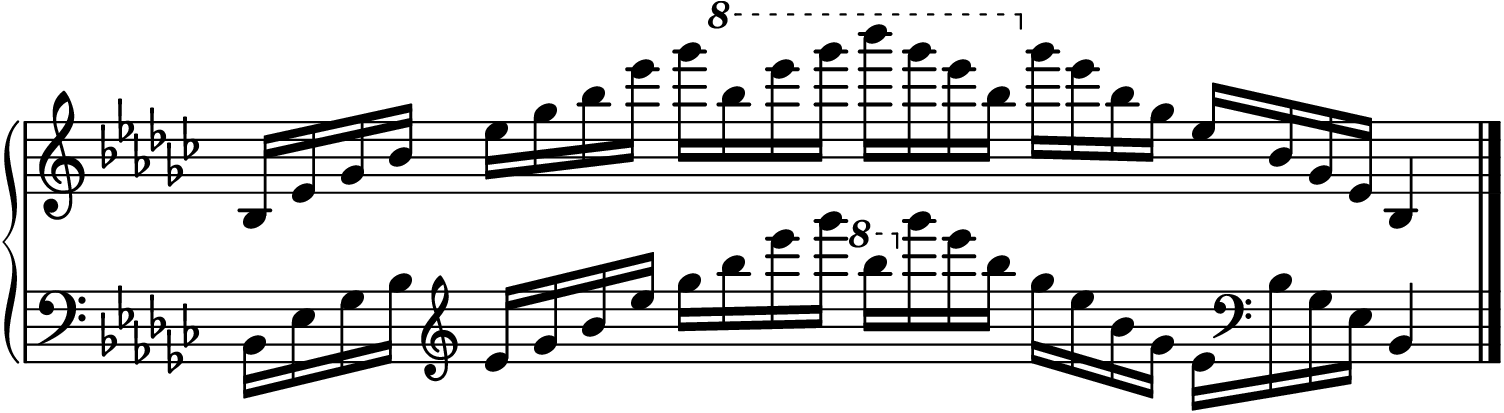
F sharp minor arpeggio, second inversion (four octaves)
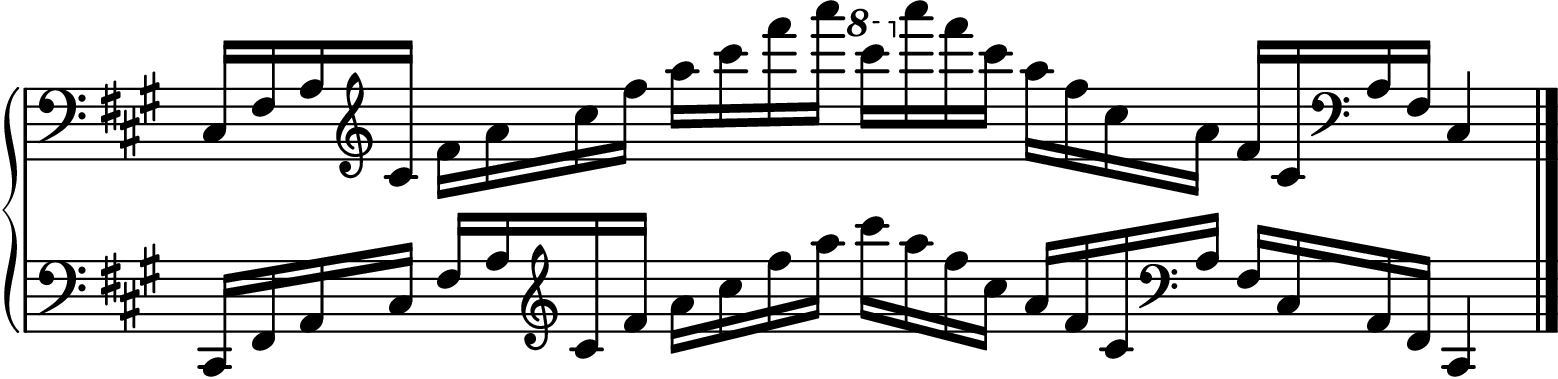
A minor arpeggio, second inversion (four octaves)
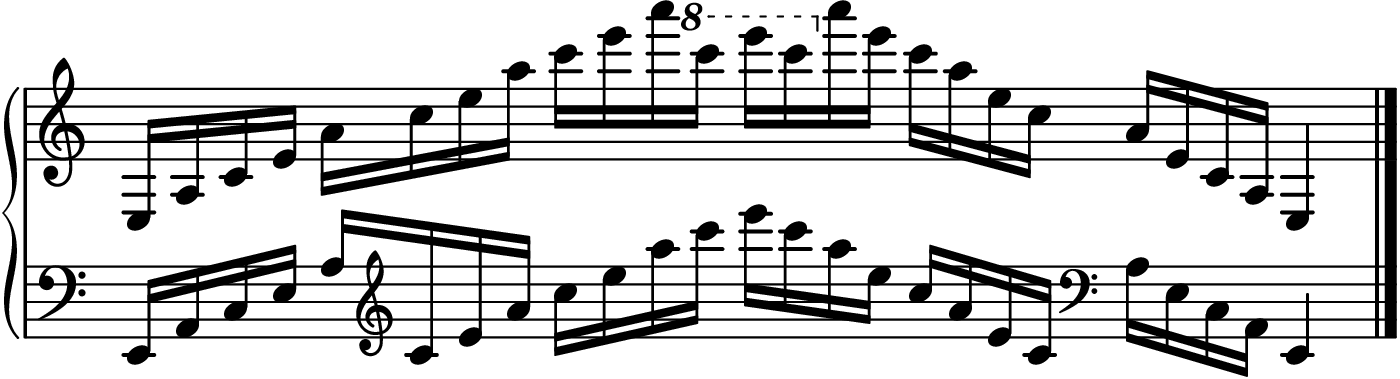
Dominant sevenths (resolving on the tonic)
| Requirement | Range | How |
|---|---|---|
| in the keys of C, E flat, F sharp and A | 4 octaves | legato; hands together |
Dominant 7th in the key of C (four octaves)
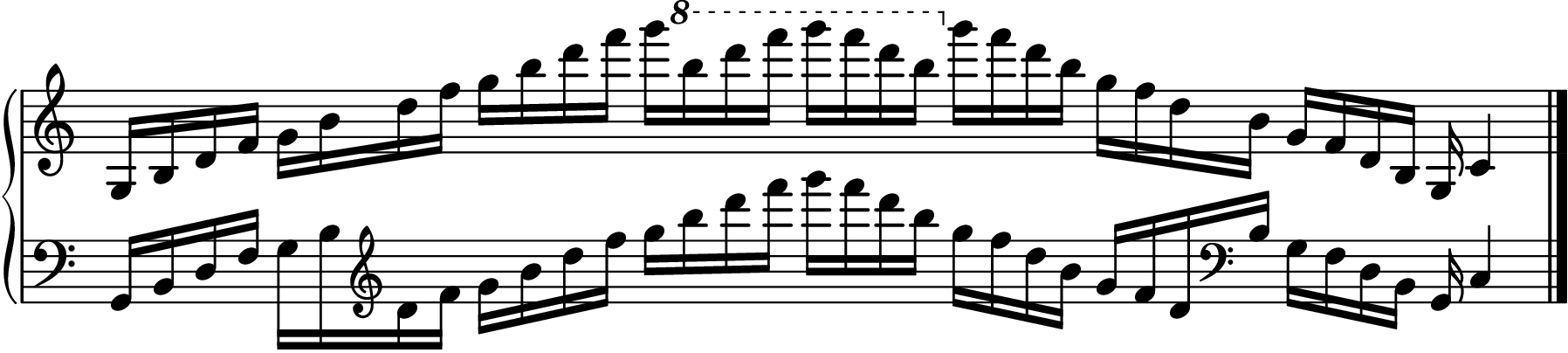
Dominant 7th in the key of E flat (four octaves)
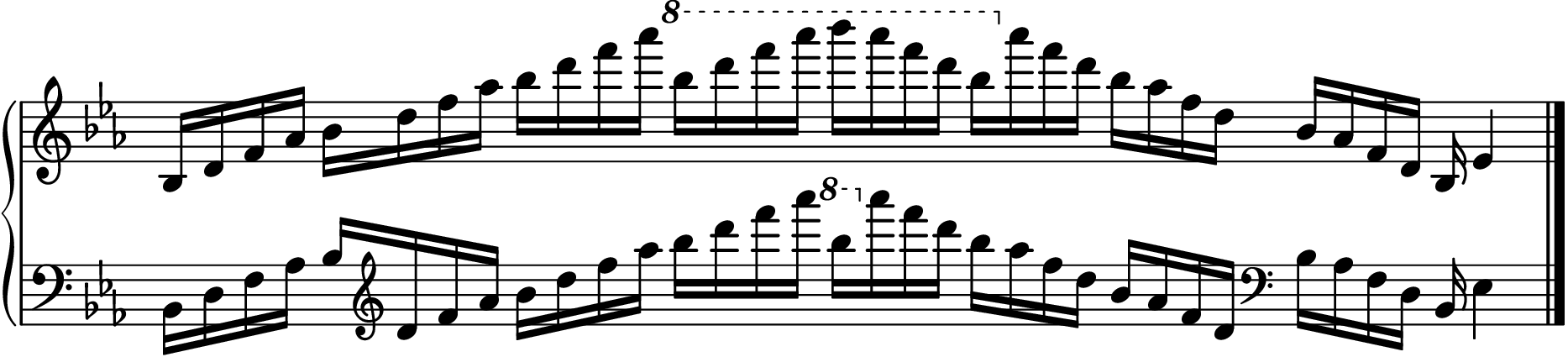
Dominant 7th in the key of F sharp (four octaves)

Dominant 7th in the key of A (four octaves)
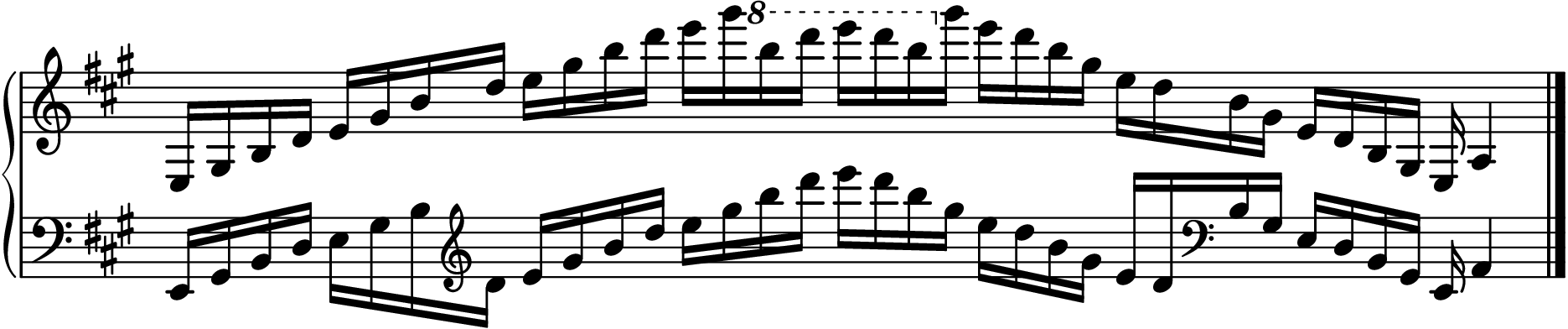
Diminished sevenths
| Requirement | Range | How |
|---|---|---|
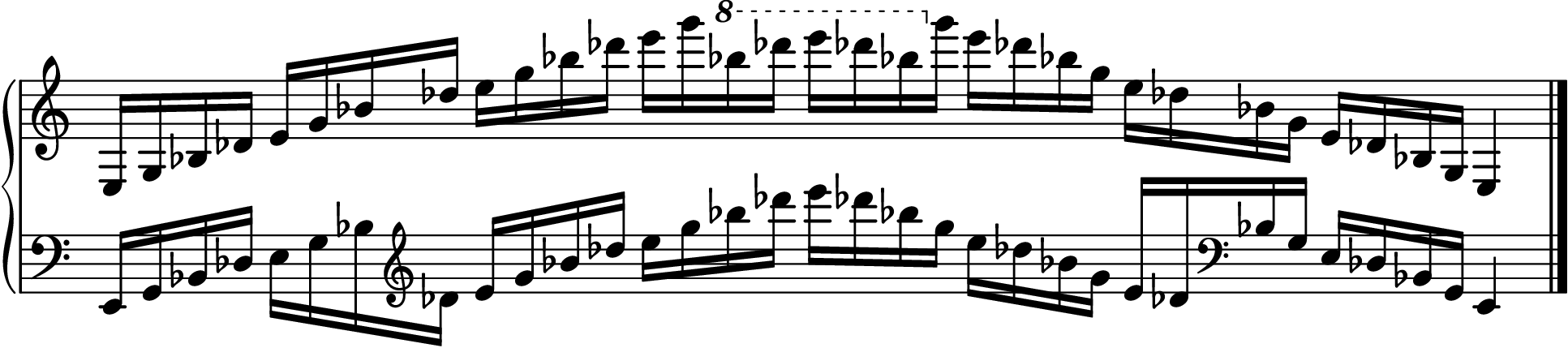
| starting on E flat; starting on C | 4 octaves | legato; hands together |
Diminished 7th starting on E flat (four octaves)
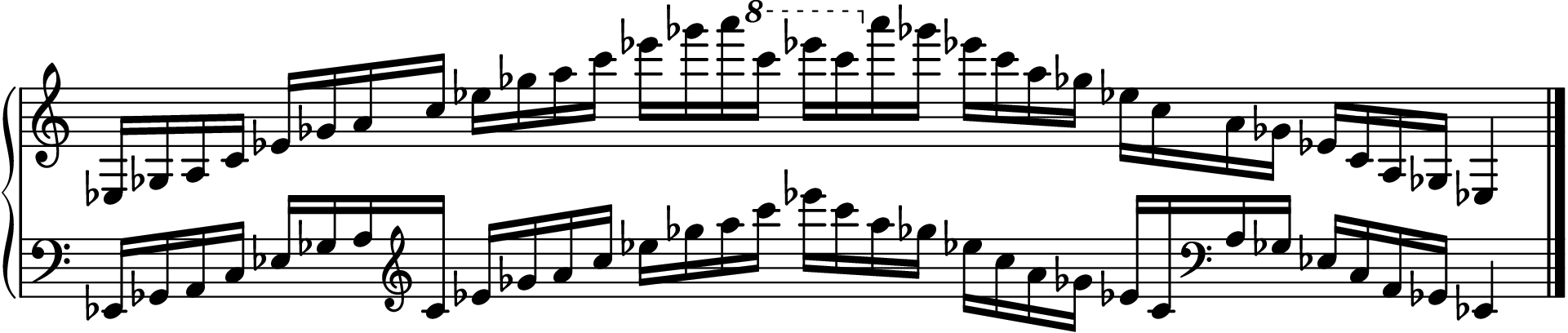
Diminished 7th starting on C (four octaves)

12. Practising the scales
The syllabus tells you what to play. How to get it reliable is a shorter story than most scale books make it, and it comes down to a few habits.
Start hands separately and slowly, even for hands-together requirements. The hands learn their geography at different rates, and gluing them together too early means practising hesitation. When each hand runs cleanly from memory, put them together at half the speed you can manage separately, and only then push the speed back up.
Practise the turns, not the runs. Almost every stumble in a scale happens where the thumb passes under or the hand passes over. Isolate the four notes around each turn and loop them until the join is inaudible, then reassemble the scale around the repaired joints. Ten minutes on turns beats an hour of top-to-bottom repetition.
Keep the notes even before you make them fast. The guide speeds in chapter 1 are targets for the exam, not for the first month. A metronome on the beat, four notes per click at whatever click is honest, exposes unevenness that full speed hides.
Vary the rhythm to sharpen the evenness. Playing a scale in long-short dotted pairs and then short-long reversed pairs forces every finger to take its turn carrying the beat. When the plain even version returns it feels effortless by comparison.
For staccato requirements, keep the movement small and from the wrist and let the fingers stay close to the keys. Staccato scales are about crispness rather than height, and a light wrist survives four octaves where a bouncing arm tires.
Contrary motion rewards symmetry: both thumbs and both third fingers often move at the same moment, which is why many candidates find it easier than it looks. Notice the mirror and use it.
In the chromatic scale nearly everyone uses some version of third finger on the black keys, thumb on the whites, adjusting where two white keys are adjacent. Whatever fingering you settle on, keep it identical every time; the chromatic scale is pure pattern, and a stable pattern is what makes it fast.
Arpeggios and 7ths are about the arm as much as the fingers. Let the elbow lead the hand up the keyboard so the thumb arrives over its note instead of stretching for it. The wider the spacing, the more the movement comes from the arm.
Finally, practise being asked. In the exam the requirements arrive one at a time in the examiner's order, majors before minors, with the key and hand named. Have someone call requirements at random from the tables in this guide, or shuffle them yourself, and play what is called from memory. The exam rewards retrieval, not recitation.
13. The syllabus at a glance
The tables below track the similar-motion scale keys through the grades. A key appears at the grade where it is first asked in that form and is carried forward by the requirement lists of later grades in different combinations, so read these as a map of first meetings rather than a cumulative list.
Major keys, similar motion
| Grade | Hands together | Hands separately |
|---|---|---|
| 1 | C (one octave) | G, F |
| 2 | G, F | D, A |
| 3 | D, A | B flat, E flat |
| 4 | B flat, E flat | B, F sharp, A flat |
| 5 | A, E, B, F sharp, D flat | A flat (staccato) |
| 6 | D, F, A flat, B (four octaves) | |
| 7 | D flat, E, G, B flat (four octaves) | |
| 8 | C, E flat, F sharp, A (four octaves) |
Minor keys, similar motion
| Grade | Hands together | Hands separately | Forms |
|---|---|---|---|
| 1 | A, D | natural, harmonic or melodic | |
| 2 | A, D | E, G | natural, harmonic or melodic |
| 3 | E, G | B, C | harmonic or melodic |
| 4 | B, C | F sharp, F | harmonic or melodic |
| 5 | F sharp, C sharp, G sharp, E flat, B flat | F (staccato) | harmonic or melodic |
| 6 | D, F, G sharp, B (four octaves) | harmonic and melodic | |
| 7 | C sharp, E, G, B flat (four octaves) | harmonic and melodic | |
| 8 | C, E flat, F sharp, A (four octaves) | harmonic and melodic |
What each grade adds
| Grade | New at this grade |
|---|---|
| 1 | Scales, contrary motion and arpeggios; hands together for C major only |
| 2 | Chromatic scale (hands separately) |
| 3 | Hands-together arpeggios; chromatic contrary motion |
| 4 | Chromatic scale hands together; minor key in contrary motion |
| 5 | Staccato scales; diminished 7th; chromatic contrary motion a 3rd apart |
| 6 | Four-octave range; dominant 7ths; both minor forms; examiner's choice of articulation |
| 7 | Scales a 3rd apart; scales in 3rds; first-inversion arpeggios |
| 8 | Scales a 6th apart; scale in 6ths; whole-tone scales; second-inversion arpeggios; chromatic a major 6th apart |
About this guide
The requirement lists, ranges, hand instructions and guide speeds in this document are transcribed from the ABRSM Piano Practical Grades syllabus for 2025 and 2026, whose scale and arpeggio requirements are unchanged since the 2021 revision. The official qualification specification remains the authority; if this guide and the syllabus ever disagree, the syllabus wins. The engravings were generated with LilyPond from the same data as the tables, and follow the notation conventions set out in chapter 2.
Naming follows British convention throughout: crotchet and minim for the note values, semiquaver for the running notes, stave for the five lines, and sharpened or flattened where a note is raised or lowered.