Every degree, every chord, in all 15 major and all 15 minor keys
A complete reference: the technical name of every scale degree, the triad and seventh chord built on it, and the Roman numeral that labels it, worked out for all 30 notated keys, with the theory needed to use the tables.
Introduction
Somewhere in every theory student's week there is a question like "what is the submediant of D flat major?", and two honest ways to answer it: derive it or look it up. Derivation is the nobler skill, and the opening chapters teach it properly. This book exists for all the other times, when the deadline is now and the answer just needs to be right. Every degree, every triad, every seventh chord and every numeral, in each of the thirty notated keys, is worked out once and printed in full.
The tables deserve a word of trust. They were not typed by hand: a small spelling engine generated every row and mechanical checks verified the lot, because thirty keys of seven degrees is precisely the territory where hand-copied accidentals drift. When the table says the leading note of G sharp minor is F double sharp, it is.
Use the book in both directions. Forwards, a chapter at a time, it is a course in the two labelling systems and what they reveal about how keys work. Backwards, from the index of keys, it is a desk reference built for interruption: find the key, read the row, return to work. Neither use spoils the other.
The companions divide the wider subject: Roman Numeral Analysis teaches the analytical method these labels serve, Musical Harmony explains why the chords behave as they do, and Musical Modes extends the degree thinking beyond major and minor.
How to use this guide
Two labelling systems run through the whole of tonal theory. The technical names (tonic, supertonic, mediant, subdominant, dominant, submediant, leading note) name the individual notes of a scale by their position and their pull. Roman numerals name the chords built on those notes, and encode the chord's quality in the way the numeral is written. Both are relative to the key, so a single label describes the same thing in all 30 keys.
This document exists to answer questions of the form "what is the submediant of D flat major?" or "what chord is vii° in G sharp minor?" without arithmetic. Chapters 1 and 2 explain the two systems. Chapters 3 to 6 apply them to every key, first as summary grids and then key by key in full. Chapters 7 to 10 cover the material that makes the tables usable: how keys relate, what the numerals do in a progression, the chromatic chords that sit outside the seven diatonic ones, and the modes.
Sections 11 and 12 are for revision. Nothing here assumes you can read staff notation, though it helps.
Companion documents in this collection go further in particular directions. Roman Numeral Analysis covers analytical method, non-chord tones and modulation. Musical Harmony covers the acoustics and voice leading behind the chords. ABRSM Music Theory Grades 1 to 5 covers the graded syllabus that introduces this material, technical names at Grade 4 and diatonic triads at Grade 5.
A note on notation in this document
Accidentals use the printed symbols: ♯ sharp, ♭ flat, ♮ natural, 𝄪 double sharp, ♭♭ double flat. Notes of a chord or scale are separated by commas, so the tonic triad of C major is written C, E, G.
Roman numeral figures that are stacked vertically in printed scores are written on one line here, so a first-inversion dominant seventh appears as V6/5 rather than as a 6 above a 5. The meaning is identical.
Theory texts often print a caret above a numeral to mean "scale degree", so that degree 5 appears as 5 with a hat. This document writes it out as "degree 5" instead.
Chord progressions are joined with hyphens: ii-V-I.
The diagrams are written in Mermaid. In the Word version they appear as pictures. In the markdown version the diagram source is left in place inside a fenced code block, which GitHub, VS Code and most markdown viewers render as a picture on sight, and which stays readable as text anywhere else.
1. The technical names of the scale degrees
1.1 The seven names
Every degree of a major or minor scale has a name that describes its position relative to the tonic. The names work in every key, so learning them once covers all 30.
| Degree | Technical name | Position relative to the tonic |
|---|---|---|
| 1 | Tonic | the key note itself, the note the scale is named after |
| 2 | Supertonic | one step above the tonic |
| 3 | Mediant | a third above the tonic, midway between tonic and dominant |
| 4 | Subdominant | a fifth below the tonic |
| 5 | Dominant | a fifth above the tonic |
| 6 | Submediant | a third below the tonic, midway between tonic and subdominant |
| 7 | Leading note | a semitone below the tonic, pulling up to it |
| 8 | Tonic | the tonic again, an octave higher |
The eighth degree is not a separate name. It is the tonic returning.
The same seven names, read upward as a scale in C major:
%%{init: {'theme':'neutral'}}%%
flowchart LR
  d1["1 Tonic<br/>C"] --- d2["2 Supertonic<br/>D"] --- d3["3 Mediant<br/>E"] --- d4["4 Subdominant<br/>F"] --- d5["5 Dominant<br/>G"] --- d6["6 Submediant<br/>A"] --- d7["7 Leading note<br/>B"] --- d8["8 Tonic<br/>C"]
  classDef tonic fill:#dce8f5,stroke:#3b5f8a,stroke-width:2px
  class d1,d8 tonic

1.2 Where the names come from
The naming scheme is built outward from the tonic in both directions, which is the part most people never get told and the part that makes it stick.
Count a fifth up from the tonic and you land on the dominant. Count the same fifth down and you land on the subdominant. The prefix sub means "the mirror image below", not "the one underneath in the scale". In C major, G is a fifth above C and F is a fifth below it, so G is the dominant and F is the subdominant. That F is also the fourth degree when the scale is written upward, which is why the subdominant is degree 4.
The same mirror produces the other pair. A third up from the tonic is the mediant, so called because it sits in the middle of the tonic-to-dominant fifth. A third down is the submediant, in the middle of the tonic-to-subdominant fifth going downward. In C major, E is the mediant and A is the submediant.
Drawn out from the tonic, the scheme is symmetrical. The two matching pairs sit the same distance either side of the centre:
%%{init: {'theme':'neutral'}}%%
flowchart TB
  subgraph fifthpair["The fifth mirror"]
    direction LR
    SD["Subdominant<br/>degree 4<br/>F"] -- "a 5th below" --- T1(("Tonic<br/>C")) -- "a 5th above" --- D["Dominant<br/>degree 5<br/>G"]
  end
  subgraph thirdpair["The third mirror"]
    direction LR
    SM["Submediant<br/>degree 6<br/>A"] -- "a 3rd below" --- T2(("Tonic<br/>C")) -- "a 3rd above" --- M["Mediant<br/>degree 3<br/>E"]
  end
  fifthpair ~~~ thirdpair
  classDef fifths fill:#dce8f5,stroke:#3b5f8a,stroke-width:2px
  classDef thirds fill:#f5ecdc,stroke:#8a6a3b,stroke-width:2px
  classDef home fill:#e6e6e6,stroke:#444,stroke-width:2px
  class SD,D fifths
  class SM,M thirds
  class T1,T2 home
Each row is one mirror, with the tonic at the centre and the same interval measured out in both directions. Notice that the notes below the tonic are written as degrees 4 and 6, because a scale is written upward: F sits a fifth below C, and it is also the fourth note up from C.
That leaves two names that describe themselves. The supertonic is the note immediately above the tonic. The leading note is the note immediately below it, close enough to be pulled upward into it.
%%{init: {'theme':'neutral'}}%%
flowchart LR
  LN["Leading note<br/>degree 7<br/>B"] -- "a semitone below" --- T2(("Tonic<br/>C"))
  T2 -- "a step above" --- ST["Supertonic<br/>degree 2<br/>D"]
  classDef home fill:#e6e6e6,stroke:#444,stroke-width:2px
  class T2 home
The mirror also explains why the dominant is the most important degree after the tonic. It is the note a perfect fifth above, the strongest consonance in the harmonic series after the octave, and the chord built on it defines the key more sharply than any other.
1.3 The leading note and the subtonic
Degree 7 has two names, and which one applies depends on the distance to the tonic, not on the degree number.
A leading note sits a semitone below the tonic. That semitone is what gives it the pull. Every major scale has one, and so do the harmonic and melodic forms of the minor scale, which raise degree 7 specifically to create it.
A subtonic sits a whole tone below the tonic. The natural minor scale has one, because its seventh degree is not raised. So does the Mixolydian mode, and so does a great deal of folk and rock music. A subtonic does not lead anywhere with any urgency, which is exactly why composers reach for it when they want a relaxed or modal sound.
In A minor the two are different notes. G is the subtonic and G♯ is the leading note. Both are correct labels for degree 7. The accidental in the score decides which one is present.
%%{init: {'theme':'neutral'}}%%
flowchart LR
  G["G<br/>subtonic"] -- "a whole tone, no urgency" --> A(("A<br/>tonic"))
  GS["G♯<br/>leading note"] -- "a semitone, strong pull" --> A
  classDef home fill:#e6e6e6,stroke:#444,stroke-width:2px
  classDef pull fill:#dce8f5,stroke:#3b5f8a,stroke-width:2px
  class A home
  class GS pull
American theory texts write "leading tone" where British and ABRSM texts write "leading note". The terms are interchangeable.
1.4 Other names for the same degrees
The technical names are one of several systems that all number the same seven positions.
| Degree | Technical name | Movable-do solfège (major) | Common alternative |
|---|---|---|---|
| 1 | Tonic | do | keynote, final |
| 2 | Supertonic | re | second degree |
| 3 | Mediant | mi | third degree |
| 4 | Subdominant | fa | fourth degree |
| 5 | Dominant | so | fifth degree |
| 6 | Submediant | la | sixth degree, superdominant |
| 7 | Leading note | ti | leading tone, seventh degree, subtonic when unraised |
In minor keys, solfège is handled two ways. La-based minor starts the minor scale on la, so A minor reads la, ti, do, re, mi, fa, so. Do-based minor keeps do on the tonic and flattens the syllables that need it, so A minor reads do, re, me, fa, so, le, te. Neither changes the technical names, which stay the same in both.
The word superdominant for degree 6 turns up in older textbooks. It is the same note as the submediant.
1.5 What each degree tends to do
The names describe position. In practice each degree also has a habitual behaviour, and knowing it explains a lot of what the Roman numerals do later.
| Degree | Tendency | Why |
|---|---|---|
| 1 Tonic | stable, a resting point | the note the key is built on |
| 2 Supertonic | unstable, falls to 1 or rises to 3 | a step from stability in either direction |
| 3 Mediant | fairly stable, colours the key | it is the note that makes the key major or minor |
| 4 Subdominant | falls to 3 | a semitone above 3 in major, and the upper note of the dominant seventh's tritone |
| 5 Dominant | stable, second only to the tonic | strong consonance with the tonic |
| 6 Submediant | falls to 5 | a step above a stable note |
| 7 Leading note | rises to 8 | only a semitone away, and the lower note of the tritone |
Where the unstable degrees go, in C major:
%%{init: {'theme':'neutral'}}%%
flowchart LR
  n7["7 leading note<br/>B"] -- "up a semitone" --> n8["8 tonic<br/>C"]
  n4["4 subdominant<br/>F"] -- "down a semitone" --> n3["3 mediant<br/>E"]
  n6["6 submediant<br/>A"] -- "down a tone" --> n5["5 dominant<br/>G"]
  n2["2 supertonic<br/>D"] -- "down a tone" --> n1["1 tonic<br/>C"]
  classDef rest fill:#dce8f5,stroke:#3b5f8a,stroke-width:2px
  class n8,n3,n5,n1 rest
The two strongest pulls, 7 rising to 8 and 4 falling to 3, are the two notes of the tritone inside the dominant seventh chord. Resolving them both at once is what makes a perfect cadence sound final.
%%{init: {'theme':'neutral'}}%%
flowchart LR
  V["V7 in C major<br/>G, B, D, F"] --> B7["B, the leading note<br/>lower note of the tritone"] -- "up a semitone" --> C1["C"]
  V --> F4["F, the subdominant<br/>upper note of the tritone"] -- "down a semitone" --> E3["E"]
  C1 --- I["together they land on I<br/>C, E, G"]
  E3 --- I
  classDef goal fill:#dce8f5,stroke:#3b5f8a,stroke-width:2px
  class I goal
1.6 Working out a technical name quickly
Write out the scale, number the notes, and read off the name. If you would rather not write the scale, two facts get you most of the way. The dominant is a fifth above the tonic, and the subdominant is a fifth below, which you can also find as the note a tone below the dominant. From there, the mediant is a third above the tonic and the submediant a third below.
The errors worth guarding against are the two sub names. Subdominant is degree 4 and submediant is degree 6. If you find yourself thinking that subdominant means "the degree below the dominant", check it: that would be degree 4 in a scale, which happens to be right, but the reasoning fails for the submediant, where the degree below the mediant is 2, not 6. Use the mirror instead.
2. The Roman numeral system
2.1 Case and quality
A Roman numeral labels a chord by the degree its root sits on. The case of the numeral tells you the quality of the chord, and a small symbol handles the two qualities that case alone cannot cover.
| Written | Quality | Example in C major |
|---|---|---|
| UPPER CASE, I II III IV V VI VII | major triad | V is G, B, D |
| lower case, i ii iii iv v vi vii | minor triad | ii is D, F, A |
| lower case with a small circle, vii° | diminished triad | vii° is B, D, F |
| upper case with a plus, III+ | augmented triad | III+ is C, E, G♯ in A minor |
So the letters give the degree, the case gives major or minor, and the added symbol marks diminished or augmented. This is the case-sensitive convention used in most modern textbooks and throughout this collection.
An older convention writes every numeral in upper case and relies on added symbols alone for quality, so that ii appears as II with a separate marking. ABRSM examination papers up to Grade 5 also tend to use capitals throughout and expect the quality to be understood from the key. Both conventions describe the same chords. If you meet a capital II in a major key, read it as the supertonic chord and let the context tell you it is minor.
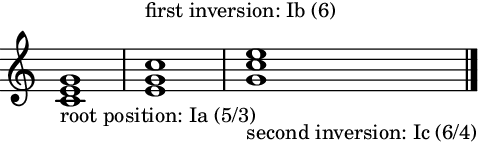
2.2 Inversions
Which note is in the bass determines the inversion, and Roman numeral analysis borrows the figured bass numbers to show it. The figures count intervals above the bass.
| Position | Bass note | Full figures | Written as | ABRSM letter |
|---|---|---|---|---|
| Root position | root | 5/3 | V | Va |
| First inversion | third | 6/3 | V6 | Vb |
| Second inversion | fifth | 6/4 | V6/4 | Vc |
The chord is the same three notes throughout. Only the bass changes, and the figure records which note landed there:
%%{init: {'theme':'neutral'}}%%
flowchart LR
  CH["Tonic triad of C major<br/>C, E, G"]
  CH -- "C in the bass" --> R["I<br/>root position"]
  CH -- "E in the bass" --> F1["I6<br/>first inversion"]
  CH -- "G in the bass" --> S1["I6/4<br/>second inversion"]
  classDef chord fill:#e6e6e6,stroke:#444,stroke-width:2px
  class CH chord
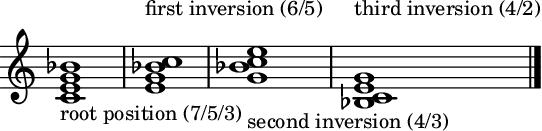
Seventh chords have four notes and therefore three inversions.
| Position | Bass note | Full figures | Written as | ABRSM letter |
|---|---|---|---|---|
| Root position | root | 7/5/3 | V7 | V7a |
| First inversion | third | 6/5/3 | V6/5 | V7b |
| Second inversion | fifth | 6/4/3 | V4/3 | V7c |
| Third inversion | seventh | 6/4/2 | V4/2 | V7d |
The abbreviations follow from the full stacks. A root position triad is 5/3, so standard that the figures are dropped. First inversion 6/3 shortens to 6. Second inversion 6/4 keeps both numbers because it needs flagging. For sevenths the sequence 7, 6/5, 4/3, 4/2 descends as the bass climbs from root to seventh.
The two systems are interchangeable. This document uses the figures, and gives the letters here because ABRSM papers use them.
2.3 Sevenths and larger chords
Adding another third on top of a triad gives a seventh chord. The numeral keeps its case from the triad and gains a figure for the seventh.
| Seventh quality | Built from | Numeral form | Example |
|---|---|---|---|
| Major 7th | major triad plus major 7th | IMaj7, IVMaj7 | C, E, G, B |
| Dominant 7th | major triad plus minor 7th | V7 | G, B, D, F |
| Minor 7th | minor triad plus minor 7th | ii7, iii7, vi7 | D, F, A, C |
| Half-diminished 7th | diminished triad plus minor 7th | viiø7 | B, D, F, A |
| Diminished 7th | diminished triad plus diminished 7th | vii°7 | G♯, B, D, F |
| Minor-major 7th | minor triad plus major 7th | iMaj7 | A, C, E, G♯ |
| Augmented major 7th | augmented triad plus major 7th | III+Maj7 | C, E, G♯, B |
Ninths, elevenths and thirteenths extend the same idea and are written V9, V11, V13. They appear in the tables of this document only where the diatonic seventh already covers them.
2.4 Accidentals in front of a numeral
A flat or sharp before a numeral alters the root of the chord relative to the major scale of the key. So ♭VII in C major is a major triad on B♭, and ♯iv° in C major is a diminished triad on F♯. The accidental never refers to the third or fifth of the chord.
This matters when reading minor keys, and it is a common source of confusion. Inside a minor key the numerals are counted against the minor scale, so the mediant chord is III with no flat sign, even though its root is three semitones above the tonic. A ♭III appears only when the music is in a major key and has borrowed that chord from the parallel minor. The same applies to VI and VII in minor against ♭VI and ♭VII in major.
2.5 Reading a numeral aloud
A complete numeral has up to four parts, in this order: an optional accidental, the numeral itself with its case, an optional quality symbol, and an optional inversion figure.
- V6/5 is "dominant seventh, first inversion".
- ii°6 is "diminished supertonic, first inversion".
- ♭VI is "flattened submediant", a major triad.
- vii°7 is "diminished leading note seventh", a diminished seventh chord.
- III+ is "augmented mediant".
3. The major scale
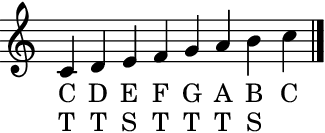
3.1 Pattern and degrees
Every major scale uses the same sequence of tones and semitones from the tonic:
tone, tone, semitone, tone, tone, tone, semitone
%%{init: {'theme':'neutral'}}%%
flowchart LR
  p1["1"] -- tone --> p2["2"] -- tone --> p3["3"] -- semitone --> p4["4"] -- tone --> p5["5"] -- tone --> p6["6"] -- tone --> p7["7"] -- semitone --> p8["8"]
  classDef half fill:#dce8f5,stroke:#3b5f8a,stroke-width:2px
  class p3,p4,p7,p8 half
The two semitones fall between degrees 3 and 4 and between degrees 7 and 8, shaded above. The second of those is what supplies the leading note, and it is the reason every major scale has one.
Because the pattern is fixed, so are the technical names. Degree 5 is the dominant in every major key without exception, and the same holds for the rest.
3.2 The diatonic triads
Build a triad on each degree using only notes of the key, and the qualities always fall in the same order. C major as the model:
| Degree | Technical name | Numeral | Triad in C | Quality |
|---|---|---|---|---|
| 1 | Tonic | I | C, E, G | major |
| 2 | Supertonic | ii | D, F, A | minor |
| 3 | Mediant | iii | E, G, B | minor |
| 4 | Subdominant | IV | F, A, C | major |
| 5 | Dominant | V | G, B, D | major |
| 6 | Submediant | vi | A, C, E | minor |
| 7 | Leading note | vii° | B, D, F | diminished |
The pattern to memorise is I ii iii IV V vi vii°: major, minor, minor, major, major, minor, diminished. Three major triads (I, IV, V), three minor (ii, iii, vi), one diminished (vii°).
I, IV and V are the primary triads. Between them their notes cover all seven degrees of the scale, which is why simple melodies can be harmonised with those three chords alone. ii, iii and vi are the secondary triads, and vii° stands apart because its diminished fifth makes it unstable in root position.

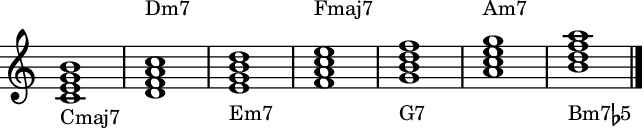
3.3 The diatonic sevenths
| Degree | Numeral | Seventh in C | Quality |
|---|---|---|---|
| 1 | IMaj7 | C, E, G, B | major 7th |
| 2 | ii7 | D, F, A, C | minor 7th |
| 3 | iii7 | E, G, B, D | minor 7th |
| 4 | IVMaj7 | F, A, C, E | major 7th |
| 5 | V7 | G, B, D, F | dominant 7th |
| 6 | vi7 | A, C, E, G | minor 7th |
| 7 | viiø7 | B, D, F, A | half-diminished 7th |
Only one degree of the major scale produces a dominant seventh, and that is degree 5. That uniqueness is what lets a single chord identify a key: hearing G, B, D, F tells you the tonic is probably C.
3.4 All 15 major scales
There are 15 major keys rather than 12 because three of them can be written two ways. B major and C♭ major sound identical on a keyboard but are notated differently, and the same is true of F♯ with G♭ and C♯ with D♭. Keys are counted here by how they are written.
| Key | Key signature | Scale (ascending, tonic to tonic) | Relative minor |
|---|---|---|---|
| C major | no sharps or flats | C, D, E, F, G, A, B, C | A minor |
| G major | 1 sharp (F) | G, A, B, C, D, E, F♯, G | E minor |
| D major | 2 sharps (F, C) | D, E, F♯, G, A, B, C♯, D | B minor |
| A major | 3 sharps (F, C, G) | A, B, C♯, D, E, F♯, G♯, A | F♯ minor |
| E major | 4 sharps (F, C, G, D) | E, F♯, G♯, A, B, C♯, D♯, E | C♯ minor |
| B major | 5 sharps (F, C, G, D, A) | B, C♯, D♯, E, F♯, G♯, A♯, B | G♯ minor |
| F♯ major | 6 sharps (F, C, G, D, A, E) | F♯, G♯, A♯, B, C♯, D♯, E♯, F♯ | D♯ minor |
| C♯ major | 7 sharps (F, C, G, D, A, E, B) | C♯, D♯, E♯, F♯, G♯, A♯, B♯, C♯ | A♯ minor |
| F major | 1 flat (B) | F, G, A, B♭, C, D, E, F | D minor |
| B♭ major | 2 flats (B, E) | B♭, C, D, E♭, F, G, A, B♭ | G minor |
| E♭ major | 3 flats (B, E, A) | E♭, F, G, A♭, B♭, C, D, E♭ | C minor |
| A♭ major | 4 flats (B, E, A, D) | A♭, B♭, C, D♭, E♭, F, G, A♭ | F minor |
| D♭ major | 5 flats (B, E, A, D, G) | D♭, E♭, F, G♭, A♭, B♭, C, D♭ | B♭ minor |
| G♭ major | 6 flats (B, E, A, D, G, C) | G♭, A♭, B♭, C♭, D♭, E♭, F, G♭ | E♭ minor |
| C♭ major | 7 flats (B, E, A, D, G, C, F) | C♭, D♭, E♭, F♭, G♭, A♭, B♭, C♭ | A♭ minor |
3.5 The technical names in every major key
Read down the left column to the key, then across to the degree you want.
| Key | 1 Tonic | 2 Supertonic | 3 Mediant | 4 Subdominant | 5 Dominant | 6 Submediant | 7 Leading note |
|---|---|---|---|---|---|---|---|
| C major | C | D | E | F | G | A | B |
| G major | G | A | B | C | D | E | F♯ |
| D major | D | E | F♯ | G | A | B | C♯ |
| A major | A | B | C♯ | D | E | F♯ | G♯ |
| E major | E | F♯ | G♯ | A | B | C♯ | D♯ |
| B major | B | C♯ | D♯ | E | F♯ | G♯ | A♯ |
| F♯ major | F♯ | G♯ | A♯ | B | C♯ | D♯ | E♯ |
| C♯ major | C♯ | D♯ | E♯ | F♯ | G♯ | A♯ | B♯ |
| F major | F | G | A | B♭ | C | D | E |
| B♭ major | B♭ | C | D | E♭ | F | G | A |
| E♭ major | E♭ | F | G | A♭ | B♭ | C | D |
| A♭ major | A♭ | B♭ | C | D♭ | E♭ | F | G |
| D♭ major | D♭ | E♭ | F | G♭ | A♭ | B♭ | C |
| G♭ major | G♭ | A♭ | B♭ | C♭ | D♭ | E♭ | F |
| C♭ major | C♭ | D♭ | E♭ | F♭ | G♭ | A♭ | B♭ |
3.6 The chord on every degree, key by key
Triads first, given as chord symbols so that the root and quality can be read at a glance.
| Key | I | ii | iii | IV | V | vi | vii° |
|---|---|---|---|---|---|---|---|
| C major | C | Dm | Em | F | G | Am | Bdim |
| G major | G | Am | Bm | C | D | Em | F♯dim |
| D major | D | Em | F♯m | G | A | Bm | C♯dim |
| A major | A | Bm | C♯m | D | E | F♯m | G♯dim |
| E major | E | F♯m | G♯m | A | B | C♯m | D♯dim |
| B major | B | C♯m | D♯m | E | F♯ | G♯m | A♯dim |
| F♯ major | F♯ | G♯m | A♯m | B | C♯ | D♯m | E♯dim |
| C♯ major | C♯ | D♯m | E♯m | F♯ | G♯ | A♯m | B♯dim |
| F major | F | Gm | Am | B♭ | C | Dm | Edim |
| B♭ major | B♭ | Cm | Dm | E♭ | F | Gm | Adim |
| E♭ major | E♭ | Fm | Gm | A♭ | B♭ | Cm | Ddim |
| A♭ major | A♭ | B♭m | Cm | D♭ | E♭ | Fm | Gdim |
| D♭ major | D♭ | E♭m | Fm | G♭ | A♭ | B♭m | Cdim |
| G♭ major | G♭ | A♭m | B♭m | C♭ | D♭ | E♭m | Fdim |
| C♭ major | C♭ | D♭m | E♭m | F♭ | G♭ | A♭m | B♭dim |
The same degrees as seventh chords.
| Key | IMaj7 | ii7 | iii7 | IVMaj7 | V7 | vi7 | viiø7 |
|---|---|---|---|---|---|---|---|
| C major | Cmaj7 | Dm7 | Em7 | Fmaj7 | G7 | Am7 | Bm7♭5 |
| G major | Gmaj7 | Am7 | Bm7 | Cmaj7 | D7 | Em7 | F♯m7♭5 |
| D major | Dmaj7 | Em7 | F♯m7 | Gmaj7 | A7 | Bm7 | C♯m7♭5 |
| A major | Amaj7 | Bm7 | C♯m7 | Dmaj7 | E7 | F♯m7 | G♯m7♭5 |
| E major | Emaj7 | F♯m7 | G♯m7 | Amaj7 | B7 | C♯m7 | D♯m7♭5 |
| B major | Bmaj7 | C♯m7 | D♯m7 | Emaj7 | F♯7 | G♯m7 | A♯m7♭5 |
| F♯ major | F♯maj7 | G♯m7 | A♯m7 | Bmaj7 | C♯7 | D♯m7 | E♯m7♭5 |
| C♯ major | C♯maj7 | D♯m7 | E♯m7 | F♯maj7 | G♯7 | A♯m7 | B♯m7♭5 |
| F major | Fmaj7 | Gm7 | Am7 | B♭maj7 | C7 | Dm7 | Em7♭5 |
| B♭ major | B♭maj7 | Cm7 | Dm7 | E♭maj7 | F7 | Gm7 | Am7♭5 |
| E♭ major | E♭maj7 | Fm7 | Gm7 | A♭maj7 | B♭7 | Cm7 | Dm7♭5 |
| A♭ major | A♭maj7 | B♭m7 | Cm7 | D♭maj7 | E♭7 | Fm7 | Gm7♭5 |
| D♭ major | D♭maj7 | E♭m7 | Fm7 | G♭maj7 | A♭7 | B♭m7 | Cm7♭5 |
| G♭ major | G♭maj7 | A♭m7 | B♭m7 | C♭maj7 | D♭7 | E♭m7 | Fm7♭5 |
| C♭ major | C♭maj7 | D♭m7 | E♭m7 | F♭maj7 | G♭7 | A♭m7 | B♭m7♭5 |
4. Every major key in full
Each key below gives the scale, the technical name of every degree, and the triad and seventh chord built on that degree with its Roman numeral.
C major
Key signature: no sharps or flats. Relative minor: A minor. Parallel minor: C minor.
C major: C, D, E, F, G, A, B, C
| Degree | Technical name | Note | Triad | Numeral | Seventh chord | Numeral |
|---|---|---|---|---|---|---|
| 1 | Tonic | C | C, E, G | I | C, E, G, B | IMaj7 |
| 2 | Supertonic | D | D, F, A | ii | D, F, A, C | ii7 |
| 3 | Mediant | E | E, G, B | iii | E, G, B, D | iii7 |
| 4 | Subdominant | F | F, A, C | IV | F, A, C, E | IVMaj7 |
| 5 | Dominant | G | G, B, D | V | G, B, D, F | V7 |
| 6 | Submediant | A | A, C, E | vi | A, C, E, G | vi7 |
| 7 | Leading note | B | B, D, F | vii° | B, D, F, A | viiø7 |
G major
Key signature: 1 sharp (F). Relative minor: E minor. Parallel minor: G minor.
G major: G, A, B, C, D, E, F♯, G
| Degree | Technical name | Note | Triad | Numeral | Seventh chord | Numeral |
|---|---|---|---|---|---|---|
| 1 | Tonic | G | G, B, D | I | G, B, D, F♯ | IMaj7 |
| 2 | Supertonic | A | A, C, E | ii | A, C, E, G | ii7 |
| 3 | Mediant | B | B, D, F♯ | iii | B, D, F♯, A | iii7 |
| 4 | Subdominant | C | C, E, G | IV | C, E, G, B | IVMaj7 |
| 5 | Dominant | D | D, F♯, A | V | D, F♯, A, C | V7 |
| 6 | Submediant | E | E, G, B | vi | E, G, B, D | vi7 |
| 7 | Leading note | F♯ | F♯, A, C | vii° | F♯, A, C, E | viiø7 |
D major
Key signature: 2 sharps (F, C). Relative minor: B minor. Parallel minor: D minor.
D major: D, E, F♯, G, A, B, C♯, D
| Degree | Technical name | Note | Triad | Numeral | Seventh chord | Numeral |
|---|---|---|---|---|---|---|
| 1 | Tonic | D | D, F♯, A | I | D, F♯, A, C♯ | IMaj7 |
| 2 | Supertonic | E | E, G, B | ii | E, G, B, D | ii7 |
| 3 | Mediant | F♯ | F♯, A, C♯ | iii | F♯, A, C♯, E | iii7 |
| 4 | Subdominant | G | G, B, D | IV | G, B, D, F♯ | IVMaj7 |
| 5 | Dominant | A | A, C♯, E | V | A, C♯, E, G | V7 |
| 6 | Submediant | B | B, D, F♯ | vi | B, D, F♯, A | vi7 |
| 7 | Leading note | C♯ | C♯, E, G | vii° | C♯, E, G, B | viiø7 |
A major
Key signature: 3 sharps (F, C, G). Relative minor: F♯ minor. Parallel minor: A minor.
A major: A, B, C♯, D, E, F♯, G♯, A
| Degree | Technical name | Note | Triad | Numeral | Seventh chord | Numeral |
|---|---|---|---|---|---|---|
| 1 | Tonic | A | A, C♯, E | I | A, C♯, E, G♯ | IMaj7 |
| 2 | Supertonic | B | B, D, F♯ | ii | B, D, F♯, A | ii7 |
| 3 | Mediant | C♯ | C♯, E, G♯ | iii | C♯, E, G♯, B | iii7 |
| 4 | Subdominant | D | D, F♯, A | IV | D, F♯, A, C♯ | IVMaj7 |
| 5 | Dominant | E | E, G♯, B | V | E, G♯, B, D | V7 |
| 6 | Submediant | F♯ | F♯, A, C♯ | vi | F♯, A, C♯, E | vi7 |
| 7 | Leading note | G♯ | G♯, B, D | vii° | G♯, B, D, F♯ | viiø7 |
E major
Key signature: 4 sharps (F, C, G, D). Relative minor: C♯ minor. Parallel minor: E minor.
E major: E, F♯, G♯, A, B, C♯, D♯, E
| Degree | Technical name | Note | Triad | Numeral | Seventh chord | Numeral |
|---|---|---|---|---|---|---|
| 1 | Tonic | E | E, G♯, B | I | E, G♯, B, D♯ | IMaj7 |
| 2 | Supertonic | F♯ | F♯, A, C♯ | ii | F♯, A, C♯, E | ii7 |
| 3 | Mediant | G♯ | G♯, B, D♯ | iii | G♯, B, D♯, F♯ | iii7 |
| 4 | Subdominant | A | A, C♯, E | IV | A, C♯, E, G♯ | IVMaj7 |
| 5 | Dominant | B | B, D♯, F♯ | V | B, D♯, F♯, A | V7 |
| 6 | Submediant | C♯ | C♯, E, G♯ | vi | C♯, E, G♯, B | vi7 |
| 7 | Leading note | D♯ | D♯, F♯, A | vii° | D♯, F♯, A, C♯ | viiø7 |
B major
Key signature: 5 sharps (F, C, G, D, A). Relative minor: G♯ minor. Parallel minor: B minor.
B major: B, C♯, D♯, E, F♯, G♯, A♯, B
| Degree | Technical name | Note | Triad | Numeral | Seventh chord | Numeral |
|---|---|---|---|---|---|---|
| 1 | Tonic | B | B, D♯, F♯ | I | B, D♯, F♯, A♯ | IMaj7 |
| 2 | Supertonic | C♯ | C♯, E, G♯ | ii | C♯, E, G♯, B | ii7 |
| 3 | Mediant | D♯ | D♯, F♯, A♯ | iii | D♯, F♯, A♯, C♯ | iii7 |
| 4 | Subdominant | E | E, G♯, B | IV | E, G♯, B, D♯ | IVMaj7 |
| 5 | Dominant | F♯ | F♯, A♯, C♯ | V | F♯, A♯, C♯, E | V7 |
| 6 | Submediant | G♯ | G♯, B, D♯ | vi | G♯, B, D♯, F♯ | vi7 |
| 7 | Leading note | A♯ | A♯, C♯, E | vii° | A♯, C♯, E, G♯ | viiø7 |
F♯ major
Key signature: 6 sharps (F, C, G, D, A, E). Relative minor: D♯ minor. Parallel minor: F♯ minor.
F♯ major: F♯, G♯, A♯, B, C♯, D♯, E♯, F♯
| Degree | Technical name | Note | Triad | Numeral | Seventh chord | Numeral |
|---|---|---|---|---|---|---|
| 1 | Tonic | F♯ | F♯, A♯, C♯ | I | F♯, A♯, C♯, E♯ | IMaj7 |
| 2 | Supertonic | G♯ | G♯, B, D♯ | ii | G♯, B, D♯, F♯ | ii7 |
| 3 | Mediant | A♯ | A♯, C♯, E♯ | iii | A♯, C♯, E♯, G♯ | iii7 |
| 4 | Subdominant | B | B, D♯, F♯ | IV | B, D♯, F♯, A♯ | IVMaj7 |
| 5 | Dominant | C♯ | C♯, E♯, G♯ | V | C♯, E♯, G♯, B | V7 |
| 6 | Submediant | D♯ | D♯, F♯, A♯ | vi | D♯, F♯, A♯, C♯ | vi7 |
| 7 | Leading note | E♯ | E♯, G♯, B | vii° | E♯, G♯, B, D♯ | viiø7 |
C♯ major
Key signature: 7 sharps (F, C, G, D, A, E, B). Relative minor: A♯ minor. Parallel minor: C♯ minor.
C♯ major: C♯, D♯, E♯, F♯, G♯, A♯, B♯, C♯
| Degree | Technical name | Note | Triad | Numeral | Seventh chord | Numeral |
|---|---|---|---|---|---|---|
| 1 | Tonic | C♯ | C♯, E♯, G♯ | I | C♯, E♯, G♯, B♯ | IMaj7 |
| 2 | Supertonic | D♯ | D♯, F♯, A♯ | ii | D♯, F♯, A♯, C♯ | ii7 |
| 3 | Mediant | E♯ | E♯, G♯, B♯ | iii | E♯, G♯, B♯, D♯ | iii7 |
| 4 | Subdominant | F♯ | F♯, A♯, C♯ | IV | F♯, A♯, C♯, E♯ | IVMaj7 |
| 5 | Dominant | G♯ | G♯, B♯, D♯ | V | G♯, B♯, D♯, F♯ | V7 |
| 6 | Submediant | A♯ | A♯, C♯, E♯ | vi | A♯, C♯, E♯, G♯ | vi7 |
| 7 | Leading note | B♯ | B♯, D♯, F♯ | vii° | B♯, D♯, F♯, A♯ | viiø7 |
F major
Key signature: 1 flat (B). Relative minor: D minor. Parallel minor: F minor.
F major: F, G, A, B♭, C, D, E, F
| Degree | Technical name | Note | Triad | Numeral | Seventh chord | Numeral |
|---|---|---|---|---|---|---|
| 1 | Tonic | F | F, A, C | I | F, A, C, E | IMaj7 |
| 2 | Supertonic | G | G, B♭, D | ii | G, B♭, D, F | ii7 |
| 3 | Mediant | A | A, C, E | iii | A, C, E, G | iii7 |
| 4 | Subdominant | B♭ | B♭, D, F | IV | B♭, D, F, A | IVMaj7 |
| 5 | Dominant | C | C, E, G | V | C, E, G, B♭ | V7 |
| 6 | Submediant | D | D, F, A | vi | D, F, A, C | vi7 |
| 7 | Leading note | E | E, G, B♭ | vii° | E, G, B♭, D | viiø7 |
B♭ major
Key signature: 2 flats (B, E). Relative minor: G minor. Parallel minor: B♭ minor.
B♭ major: B♭, C, D, E♭, F, G, A, B♭
| Degree | Technical name | Note | Triad | Numeral | Seventh chord | Numeral |
|---|---|---|---|---|---|---|
| 1 | Tonic | B♭ | B♭, D, F | I | B♭, D, F, A | IMaj7 |
| 2 | Supertonic | C | C, E♭, G | ii | C, E♭, G, B♭ | ii7 |
| 3 | Mediant | D | D, F, A | iii | D, F, A, C | iii7 |
| 4 | Subdominant | E♭ | E♭, G, B♭ | IV | E♭, G, B♭, D | IVMaj7 |
| 5 | Dominant | F | F, A, C | V | F, A, C, E♭ | V7 |
| 6 | Submediant | G | G, B♭, D | vi | G, B♭, D, F | vi7 |
| 7 | Leading note | A | A, C, E♭ | vii° | A, C, E♭, G | viiø7 |
E♭ major
Key signature: 3 flats (B, E, A). Relative minor: C minor. Parallel minor: E♭ minor.
E♭ major: E♭, F, G, A♭, B♭, C, D, E♭
| Degree | Technical name | Note | Triad | Numeral | Seventh chord | Numeral |
|---|---|---|---|---|---|---|
| 1 | Tonic | E♭ | E♭, G, B♭ | I | E♭, G, B♭, D | IMaj7 |
| 2 | Supertonic | F | F, A♭, C | ii | F, A♭, C, E♭ | ii7 |
| 3 | Mediant | G | G, B♭, D | iii | G, B♭, D, F | iii7 |
| 4 | Subdominant | A♭ | A♭, C, E♭ | IV | A♭, C, E♭, G | IVMaj7 |
| 5 | Dominant | B♭ | B♭, D, F | V | B♭, D, F, A♭ | V7 |
| 6 | Submediant | C | C, E♭, G | vi | C, E♭, G, B♭ | vi7 |
| 7 | Leading note | D | D, F, A♭ | vii° | D, F, A♭, C | viiø7 |
A♭ major
Key signature: 4 flats (B, E, A, D). Relative minor: F minor. Parallel minor: A♭ minor.
A♭ major: A♭, B♭, C, D♭, E♭, F, G, A♭
| Degree | Technical name | Note | Triad | Numeral | Seventh chord | Numeral |
|---|---|---|---|---|---|---|
| 1 | Tonic | A♭ | A♭, C, E♭ | I | A♭, C, E♭, G | IMaj7 |
| 2 | Supertonic | B♭ | B♭, D♭, F | ii | B♭, D♭, F, A♭ | ii7 |
| 3 | Mediant | C | C, E♭, G | iii | C, E♭, G, B♭ | iii7 |
| 4 | Subdominant | D♭ | D♭, F, A♭ | IV | D♭, F, A♭, C | IVMaj7 |
| 5 | Dominant | E♭ | E♭, G, B♭ | V | E♭, G, B♭, D♭ | V7 |
| 6 | Submediant | F | F, A♭, C | vi | F, A♭, C, E♭ | vi7 |
| 7 | Leading note | G | G, B♭, D♭ | vii° | G, B♭, D♭, F | viiø7 |
D♭ major
Key signature: 5 flats (B, E, A, D, G). Relative minor: B♭ minor. Parallel minor: D♭ minor.
D♭ major: D♭, E♭, F, G♭, A♭, B♭, C, D♭
| Degree | Technical name | Note | Triad | Numeral | Seventh chord | Numeral |
|---|---|---|---|---|---|---|
| 1 | Tonic | D♭ | D♭, F, A♭ | I | D♭, F, A♭, C | IMaj7 |
| 2 | Supertonic | E♭ | E♭, G♭, B♭ | ii | E♭, G♭, B♭, D♭ | ii7 |
| 3 | Mediant | F | F, A♭, C | iii | F, A♭, C, E♭ | iii7 |
| 4 | Subdominant | G♭ | G♭, B♭, D♭ | IV | G♭, B♭, D♭, F | IVMaj7 |
| 5 | Dominant | A♭ | A♭, C, E♭ | V | A♭, C, E♭, G♭ | V7 |
| 6 | Submediant | B♭ | B♭, D♭, F | vi | B♭, D♭, F, A♭ | vi7 |
| 7 | Leading note | C | C, E♭, G♭ | vii° | C, E♭, G♭, B♭ | viiø7 |
G♭ major
Key signature: 6 flats (B, E, A, D, G, C). Relative minor: E♭ minor. Parallel minor: G♭ minor.
G♭ major: G♭, A♭, B♭, C♭, D♭, E♭, F, G♭
| Degree | Technical name | Note | Triad | Numeral | Seventh chord | Numeral |
|---|---|---|---|---|---|---|
| 1 | Tonic | G♭ | G♭, B♭, D♭ | I | G♭, B♭, D♭, F | IMaj7 |
| 2 | Supertonic | A♭ | A♭, C♭, E♭ | ii | A♭, C♭, E♭, G♭ | ii7 |
| 3 | Mediant | B♭ | B♭, D♭, F | iii | B♭, D♭, F, A♭ | iii7 |
| 4 | Subdominant | C♭ | C♭, E♭, G♭ | IV | C♭, E♭, G♭, B♭ | IVMaj7 |
| 5 | Dominant | D♭ | D♭, F, A♭ | V | D♭, F, A♭, C♭ | V7 |
| 6 | Submediant | E♭ | E♭, G♭, B♭ | vi | E♭, G♭, B♭, D♭ | vi7 |
| 7 | Leading note | F | F, A♭, C♭ | vii° | F, A♭, C♭, E♭ | viiø7 |
C♭ major
Key signature: 7 flats (B, E, A, D, G, C, F). Relative minor: A♭ minor. Parallel minor: C♭ minor.
C♭ major: C♭, D♭, E♭, F♭, G♭, A♭, B♭, C♭
| Degree | Technical name | Note | Triad | Numeral | Seventh chord | Numeral |
|---|---|---|---|---|---|---|
| 1 | Tonic | C♭ | C♭, E♭, G♭ | I | C♭, E♭, G♭, B♭ | IMaj7 |
| 2 | Supertonic | D♭ | D♭, F♭, A♭ | ii | D♭, F♭, A♭, C♭ | ii7 |
| 3 | Mediant | E♭ | E♭, G♭, B♭ | iii | E♭, G♭, B♭, D♭ | iii7 |
| 4 | Subdominant | F♭ | F♭, A♭, C♭ | IV | F♭, A♭, C♭, E♭ | IVMaj7 |
| 5 | Dominant | G♭ | G♭, B♭, D♭ | V | G♭, B♭, D♭, F♭ | V7 |
| 6 | Submediant | A♭ | A♭, C♭, E♭ | vi | A♭, C♭, E♭, G♭ | vi7 |
| 7 | Leading note | B♭ | B♭, D♭, F♭ | vii° | B♭, D♭, F♭, A♭ | viiø7 |
5. The minor scales
5.1 Three forms, one key
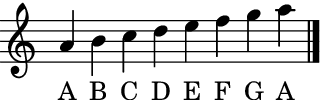
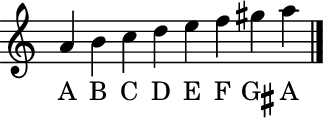
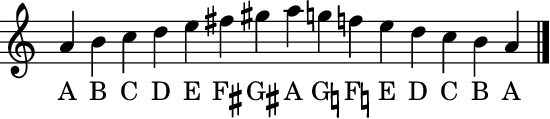
A major key has one scale. A minor key has three, and they differ only in degrees 6 and 7.
Natural minor follows the key signature exactly and alters nothing:
tone, semitone, tone, tone, semitone, tone, tone
Its seventh degree is a whole tone below the tonic, so it has a subtonic rather than a leading note.
Harmonic minor raises degree 7 by a semitone to create a leading note. The raise leaves a gap of three semitones between degrees 6 and 7, an augmented second, which is the interval that gives the scale its distinctive sound and makes it awkward to sing.
Melodic minor deals with that gap by raising degree 6 as well while ascending, then lowering both back on the way down. So the descending form of the melodic minor is the natural minor written backwards. The traditional explanation is that the raised degrees exist to lead upward to the tonic, and are not needed when the line is moving away from it.
The three forms as a chain of alterations, in A minor:
%%{init: {'theme':'neutral'}}%%
flowchart TB
  N["Natural minor<br/>degrees 6 and 7 exactly as the key signature<br/>A B C D E F G"]
  H["Harmonic minor<br/>degree 7 raised, giving a leading note<br/>A B C D E F G♯"]
  M["Melodic minor ascending<br/>degrees 6 and 7 both raised<br/>A B C D E F♯ G♯"]
  N -- "raise 7 to build a leading note for chord V" --> H
  H -- "raise 6 as well, to close the augmented 2nd between 6 and 7" --> M
  M -- "descending, both revert to the key signature" --> N
  classDef chords fill:#dce8f5,stroke:#3b5f8a,stroke-width:2px
  class H chords
In practice the harmonic form is the one that governs chord construction, because it supplies the raised leading note that chord V needs. The melodic form mostly explains melody notes that would otherwise look like accidents. This is why the per-key tables in chapter 6 give the harmonic minor chords in full and list only the chords that change in the other two forms.
5.2 The technical names in a minor key
The names are the same seven, with one qualification on degree 7.
| Degree | Technical name in a minor key |
|---|---|
| 1 | Tonic |
| 2 | Supertonic |
| 3 | Mediant |
| 4 | Subdominant |
| 5 | Dominant |
| 6 | Submediant |
| 7 | Subtonic in the natural form, leading note in the harmonic and melodic forms |
Degree 6 keeps the name submediant in all three forms. When the melodic minor raises it, the note is still the submediant, just raised.
5.3 Triads and sevenths of the harmonic minor
A minor is the model, with G♯ as the raised leading note.
| Degree | Technical name | Numeral | Triad | Quality |
|---|---|---|---|---|
| 1 | Tonic | i | A, C, E | minor |
| 2 | Supertonic | ii° | B, D, F | diminished |
| 3 | Mediant | III+ | C, E, G♯ | augmented |
| 4 | Subdominant | iv | D, F, A | minor |
| 5 | Dominant | V | E, G♯, B | major |
| 6 | Submediant | VI | F, A, C | major |
| 7 | Leading note | vii° | G♯, B, D | diminished |
Chord V is the reason the harmonic minor exists. Without the raised seventh the dominant triad would be E, G, B, a minor chord with no leading note and very little pull toward the tonic. Raising G to G♯ turns it major and restores the semitone that drives a cadence.
Two chords in this list need a word of warning about how often they actually appear. The augmented III+ is a theoretical product of stacking thirds on the harmonic minor, and composers use the plain major III from the natural minor far more often. The tonic seventh iMaj7 (A, C, E, G♯) is likewise a strict stack rather than common practice; the usual tonic seventh in a minor key is i7 with the natural seventh, A, C, E, G. The per-key tables give the strict harmonic-minor stack because that is what the scale produces, and the "where the other two forms differ" table under each key shows the alternative.
| Degree | Numeral | Seventh in A minor | Quality |
|---|---|---|---|
| 1 | iMaj7 | A, C, E, G♯ | minor-major 7th |
| 2 | iiø7 | B, D, F, A | half-diminished 7th |
| 3 | III+Maj7 | C, E, G♯, B | augmented major 7th |
| 4 | iv7 | D, F, A, C | minor 7th |
| 5 | V7 | E, G♯, B, D | dominant 7th |
| 6 | VIMaj7 | F, A, C, E | major 7th |
| 7 | vii°7 | G♯, B, D, F | diminished 7th |
The two that earn their keep are V7, the same dominant seventh a major key has, and vii°7, a stack of three minor thirds that is available in minor keys and not in major ones. The half-diminished iiø7 is a favourite chord before the dominant.

5.4 What changes in the other two forms
| Chord | Harmonic minor | Natural minor | Melodic minor ascending |
|---|---|---|---|
| on degree 3 | III+ augmented | III major | III+ augmented |
| on degree 4 | iv minor | iv minor | IV major |
| on degree 5 | V major | v minor | V major |
| on degree 6 | VI major | VI major | vi° diminished |
| on degree 7 | vii° diminished | VII major | vii° diminished |
A minor v or a major VII in the score is a signal that the composer chose the unraised seventh. Both are common in folk music, in Renaissance and modal writing, and in nineteenth-century music reaching for a modal colour. A IV major in a minor key, likewise, usually means a melodic minor sixth is present in the melody.
5.5 All 15 minor scales
The 15 minor keys pair off with the 15 majors as relatives, sharing a key signature. A♯ minor and B♭ minor are the same sounds written differently, as are D♯ with E♭ and G♯ with A♭.
Natural form:
| Key | Key signature | Natural form (ascending) | Relative major |
|---|---|---|---|
| A minor | no sharps or flats | A, B, C, D, E, F, G, A | C major |
| E minor | 1 sharp (F) | E, F♯, G, A, B, C, D, E | G major |
| B minor | 2 sharps (F, C) | B, C♯, D, E, F♯, G, A, B | D major |
| F♯ minor | 3 sharps (F, C, G) | F♯, G♯, A, B, C♯, D, E, F♯ | A major |
| C♯ minor | 4 sharps (F, C, G, D) | C♯, D♯, E, F♯, G♯, A, B, C♯ | E major |
| G♯ minor | 5 sharps (F, C, G, D, A) | G♯, A♯, B, C♯, D♯, E, F♯, G♯ | B major |
| D♯ minor | 6 sharps (F, C, G, D, A, E) | D♯, E♯, F♯, G♯, A♯, B, C♯, D♯ | F♯ major |
| A♯ minor | 7 sharps (F, C, G, D, A, E, B) | A♯, B♯, C♯, D♯, E♯, F♯, G♯, A♯ | C♯ major |
| D minor | 1 flat (B) | D, E, F, G, A, B♭, C, D | F major |
| G minor | 2 flats (B, E) | G, A, B♭, C, D, E♭, F, G | B♭ major |
| C minor | 3 flats (B, E, A) | C, D, E♭, F, G, A♭, B♭, C | E♭ major |
| F minor | 4 flats (B, E, A, D) | F, G, A♭, B♭, C, D♭, E♭, F | A♭ major |
| B♭ minor | 5 flats (B, E, A, D, G) | B♭, C, D♭, E♭, F, G♭, A♭, B♭ | D♭ major |
| E♭ minor | 6 flats (B, E, A, D, G, C) | E♭, F, G♭, A♭, B♭, C♭, D♭, E♭ | G♭ major |
| A♭ minor | 7 flats (B, E, A, D, G, C, F) | A♭, B♭, C♭, D♭, E♭, F♭, G♭, A♭ | C♭ major |
Harmonic form, with the raised leading note:
| Key | Key signature | Harmonic form (ascending) | Relative major |
|---|---|---|---|
| A minor | no sharps or flats | A, B, C, D, E, F, G♯, A | C major |
| E minor | 1 sharp (F) | E, F♯, G, A, B, C, D♯, E | G major |
| B minor | 2 sharps (F, C) | B, C♯, D, E, F♯, G, A♯, B | D major |
| F♯ minor | 3 sharps (F, C, G) | F♯, G♯, A, B, C♯, D, E♯, F♯ | A major |
| C♯ minor | 4 sharps (F, C, G, D) | C♯, D♯, E, F♯, G♯, A, B♯, C♯ | E major |
| G♯ minor | 5 sharps (F, C, G, D, A) | G♯, A♯, B, C♯, D♯, E, F𝄪, G♯ | B major |
| D♯ minor | 6 sharps (F, C, G, D, A, E) | D♯, E♯, F♯, G♯, A♯, B, C𝄪, D♯ | F♯ major |
| A♯ minor | 7 sharps (F, C, G, D, A, E, B) | A♯, B♯, C♯, D♯, E♯, F♯, G𝄪, A♯ | C♯ major |
| D minor | 1 flat (B) | D, E, F, G, A, B♭, C♯, D | F major |
| G minor | 2 flats (B, E) | G, A, B♭, C, D, E♭, F♯, G | B♭ major |
| C minor | 3 flats (B, E, A) | C, D, E♭, F, G, A♭, B, C | E♭ major |
| F minor | 4 flats (B, E, A, D) | F, G, A♭, B♭, C, D♭, E, F | A♭ major |
| B♭ minor | 5 flats (B, E, A, D, G) | B♭, C, D♭, E♭, F, G♭, A, B♭ | D♭ major |
| E♭ minor | 6 flats (B, E, A, D, G, C) | E♭, F, G♭, A♭, B♭, C♭, D, E♭ | G♭ major |
| A♭ minor | 7 flats (B, E, A, D, G, C, F) | A♭, B♭, C♭, D♭, E♭, F♭, G, A♭ | C♭ major |
Melodic form ascending, with degrees 6 and 7 both raised. Descending, each of these reverts to the natural form.
| Key | Key signature | Melodic ascending form (ascending) | Relative major |
|---|---|---|---|
| A minor | no sharps or flats | A, B, C, D, E, F♯, G♯, A | C major |
| E minor | 1 sharp (F) | E, F♯, G, A, B, C♯, D♯, E | G major |
| B minor | 2 sharps (F, C) | B, C♯, D, E, F♯, G♯, A♯, B | D major |
| F♯ minor | 3 sharps (F, C, G) | F♯, G♯, A, B, C♯, D♯, E♯, F♯ | A major |
| C♯ minor | 4 sharps (F, C, G, D) | C♯, D♯, E, F♯, G♯, A♯, B♯, C♯ | E major |
| G♯ minor | 5 sharps (F, C, G, D, A) | G♯, A♯, B, C♯, D♯, E♯, F𝄪, G♯ | B major |
| D♯ minor | 6 sharps (F, C, G, D, A, E) | D♯, E♯, F♯, G♯, A♯, B♯, C𝄪, D♯ | F♯ major |
| A♯ minor | 7 sharps (F, C, G, D, A, E, B) | A♯, B♯, C♯, D♯, E♯, F𝄪, G𝄪, A♯ | C♯ major |
| D minor | 1 flat (B) | D, E, F, G, A, B, C♯, D | F major |
| G minor | 2 flats (B, E) | G, A, B♭, C, D, E, F♯, G | B♭ major |
| C minor | 3 flats (B, E, A) | C, D, E♭, F, G, A, B, C | E♭ major |
| F minor | 4 flats (B, E, A, D) | F, G, A♭, B♭, C, D, E, F | A♭ major |
| B♭ minor | 5 flats (B, E, A, D, G) | B♭, C, D♭, E♭, F, G, A, B♭ | D♭ major |
| E♭ minor | 6 flats (B, E, A, D, G, C) | E♭, F, G♭, A♭, B♭, C, D, E♭ | G♭ major |
| A♭ minor | 7 flats (B, E, A, D, G, C, F) | A♭, B♭, C♭, D♭, E♭, F, G, A♭ | C♭ major |
5.6 The technical names in every minor key
Degrees 1 to 6 are the same in all three forms except degree 6 in the melodic ascending form, which is raised. Degree 7 is given here in its harmonic and melodic form, the leading note, with the natural form's subtonic in brackets.
| Key | 1 Tonic | 2 Supertonic | 3 Mediant | 4 Subdominant | 5 Dominant | 6 Submediant | 7 Leading note |
|---|---|---|---|---|---|---|---|
| A minor | A | B | C | D | E | F | G♯ (subtonic G) |
| E minor | E | F♯ | G | A | B | C | D♯ (subtonic D) |
| B minor | B | C♯ | D | E | F♯ | G | A♯ (subtonic A) |
| F♯ minor | F♯ | G♯ | A | B | C♯ | D | E♯ (subtonic E) |
| C♯ minor | C♯ | D♯ | E | F♯ | G♯ | A | B♯ (subtonic B) |
| G♯ minor | G♯ | A♯ | B | C♯ | D♯ | E | F𝄪 (subtonic F♯) |
| D♯ minor | D♯ | E♯ | F♯ | G♯ | A♯ | B | C𝄪 (subtonic C♯) |
| A♯ minor | A♯ | B♯ | C♯ | D♯ | E♯ | F♯ | G𝄪 (subtonic G♯) |
| D minor | D | E | F | G | A | B♭ | C♯ (subtonic C) |
| G minor | G | A | B♭ | C | D | E♭ | F♯ (subtonic F) |
| C minor | C | D | E♭ | F | G | A♭ | B (subtonic B♭) |
| F minor | F | G | A♭ | B♭ | C | D♭ | E (subtonic E♭) |
| B♭ minor | B♭ | C | D♭ | E♭ | F | G♭ | A (subtonic A♭) |
| E♭ minor | E♭ | F | G♭ | A♭ | B♭ | C♭ | D (subtonic D♭) |
| A♭ minor | A♭ | B♭ | C♭ | D♭ | E♭ | F♭ | G (subtonic G♭) |
5.7 The chord on every degree, key by key
Triads of the harmonic minor, the default for tonal harmony:
| Key | i | ii° | III+ | iv | V | VI | vii° |
|---|---|---|---|---|---|---|---|
| A minor | Am | Bdim | Caug | Dm | E | F | G♯dim |
| E minor | Em | F♯dim | Gaug | Am | B | C | D♯dim |
| B minor | Bm | C♯dim | Daug | Em | F♯ | G | A♯dim |
| F♯ minor | F♯m | G♯dim | Aaug | Bm | C♯ | D | E♯dim |
| C♯ minor | C♯m | D♯dim | Eaug | F♯m | G♯ | A | B♯dim |
| G♯ minor | G♯m | A♯dim | Baug | C♯m | D♯ | E | F𝄪dim |
| D♯ minor | D♯m | E♯dim | F♯aug | G♯m | A♯ | B | C𝄪dim |
| A♯ minor | A♯m | B♯dim | C♯aug | D♯m | E♯ | F♯ | G𝄪dim |
| D minor | Dm | Edim | Faug | Gm | A | B♭ | C♯dim |
| G minor | Gm | Adim | B♭aug | Cm | D | E♭ | F♯dim |
| C minor | Cm | Ddim | E♭aug | Fm | G | A♭ | Bdim |
| F minor | Fm | Gdim | A♭aug | B♭m | C | D♭ | Edim |
| B♭ minor | B♭m | Cdim | D♭aug | E♭m | F | G♭ | Adim |
| E♭ minor | E♭m | Fdim | G♭aug | A♭m | B♭ | C♭ | Ddim |
| A♭ minor | A♭m | B♭dim | C♭aug | D♭m | E♭ | F♭ | Gdim |
Sevenths of the harmonic minor:
| Key | iMaj7 | iiø7 | III+Maj7 | iv7 | V7 | VIMaj7 | vii°7 |
|---|---|---|---|---|---|---|---|
| A minor | Am(maj7) | Bm7♭5 | Cmaj7♯5 | Dm7 | E7 | Fmaj7 | G♯dim7 |
| E minor | Em(maj7) | F♯m7♭5 | Gmaj7♯5 | Am7 | B7 | Cmaj7 | D♯dim7 |
| B minor | Bm(maj7) | C♯m7♭5 | Dmaj7♯5 | Em7 | F♯7 | Gmaj7 | A♯dim7 |
| F♯ minor | F♯m(maj7) | G♯m7♭5 | Amaj7♯5 | Bm7 | C♯7 | Dmaj7 | E♯dim7 |
| C♯ minor | C♯m(maj7) | D♯m7♭5 | Emaj7♯5 | F♯m7 | G♯7 | Amaj7 | B♯dim7 |
| G♯ minor | G♯m(maj7) | A♯m7♭5 | Bmaj7♯5 | C♯m7 | D♯7 | Emaj7 | F𝄪dim7 |
| D♯ minor | D♯m(maj7) | E♯m7♭5 | F♯maj7♯5 | G♯m7 | A♯7 | Bmaj7 | C𝄪dim7 |
| A♯ minor | A♯m(maj7) | B♯m7♭5 | C♯maj7♯5 | D♯m7 | E♯7 | F♯maj7 | G𝄪dim7 |
| D minor | Dm(maj7) | Em7♭5 | Fmaj7♯5 | Gm7 | A7 | B♭maj7 | C♯dim7 |
| G minor | Gm(maj7) | Am7♭5 | B♭maj7♯5 | Cm7 | D7 | E♭maj7 | F♯dim7 |
| C minor | Cm(maj7) | Dm7♭5 | E♭maj7♯5 | Fm7 | G7 | A♭maj7 | Bdim7 |
| F minor | Fm(maj7) | Gm7♭5 | A♭maj7♯5 | B♭m7 | C7 | D♭maj7 | Edim7 |
| B♭ minor | B♭m(maj7) | Cm7♭5 | D♭maj7♯5 | E♭m7 | F7 | G♭maj7 | Adim7 |
| E♭ minor | E♭m(maj7) | Fm7♭5 | G♭maj7♯5 | A♭m7 | B♭7 | C♭maj7 | Ddim7 |
| A♭ minor | A♭m(maj7) | B♭m7♭5 | C♭maj7♯5 | D♭m7 | E♭7 | F♭maj7 | Gdim7 |
Triads of the natural minor, for modal and folk contexts:
| Key | i | ii° | III | iv | v | VI | VII |
|---|---|---|---|---|---|---|---|
| A minor | Am | Bdim | C | Dm | Em | F | G |
| E minor | Em | F♯dim | G | Am | Bm | C | D |
| B minor | Bm | C♯dim | D | Em | F♯m | G | A |
| F♯ minor | F♯m | G♯dim | A | Bm | C♯m | D | E |
| C♯ minor | C♯m | D♯dim | E | F♯m | G♯m | A | B |
| G♯ minor | G♯m | A♯dim | B | C♯m | D♯m | E | F♯ |
| D♯ minor | D♯m | E♯dim | F♯ | G♯m | A♯m | B | C♯ |
| A♯ minor | A♯m | B♯dim | C♯ | D♯m | E♯m | F♯ | G♯ |
| D minor | Dm | Edim | F | Gm | Am | B♭ | C |
| G minor | Gm | Adim | B♭ | Cm | Dm | E♭ | F |
| C minor | Cm | Ddim | E♭ | Fm | Gm | A♭ | B♭ |
| F minor | Fm | Gdim | A♭ | B♭m | Cm | D♭ | E♭ |
| B♭ minor | B♭m | Cdim | D♭ | E♭m | Fm | G♭ | A♭ |
| E♭ minor | E♭m | Fdim | G♭ | A♭m | B♭m | C♭ | D♭ |
| A♭ minor | A♭m | B♭dim | C♭ | D♭m | E♭m | F♭ | G♭ |
Triads of the melodic minor ascending:
| Key | i | ii | III+ | IV | V | vi° | vii° |
|---|---|---|---|---|---|---|---|
| A minor | Am | Bm | Caug | D | E | F♯dim | G♯dim |
| E minor | Em | F♯m | Gaug | A | B | C♯dim | D♯dim |
| B minor | Bm | C♯m | Daug | E | F♯ | G♯dim | A♯dim |
| F♯ minor | F♯m | G♯m | Aaug | B | C♯ | D♯dim | E♯dim |
| C♯ minor | C♯m | D♯m | Eaug | F♯ | G♯ | A♯dim | B♯dim |
| G♯ minor | G♯m | A♯m | Baug | C♯ | D♯ | E♯dim | F𝄪dim |
| D♯ minor | D♯m | E♯m | F♯aug | G♯ | A♯ | B♯dim | C𝄪dim |
| A♯ minor | A♯m | B♯m | C♯aug | D♯ | E♯ | F𝄪dim | G𝄪dim |
| D minor | Dm | Em | Faug | G | A | Bdim | C♯dim |
| G minor | Gm | Am | B♭aug | C | D | Edim | F♯dim |
| C minor | Cm | Dm | E♭aug | F | G | Adim | Bdim |
| F minor | Fm | Gm | A♭aug | B♭ | C | Ddim | Edim |
| B♭ minor | B♭m | Cm | D♭aug | E♭ | F | Gdim | Adim |
| E♭ minor | E♭m | Fm | G♭aug | A♭ | B♭ | Cdim | Ddim |
| A♭ minor | A♭m | B♭m | C♭aug | D♭ | E♭ | Fdim | Gdim |
6. Every minor key in full
Each key gives the four scale forms, the technical name of every degree with its note in each form, the harmonic-minor triads and sevenths with their numerals, and the chords that differ in the natural and melodic forms.
A minor
Key signature: no sharps or flats. Relative major: C major. Parallel major: A major.
Natural: A, B, C, D, E, F, G, A
Harmonic: A, B, C, D, E, F, G♯, A
Melodic ascending: A, B, C, D, E, F♯, G♯, A
Melodic descending: A, G, F, E, D, C, B, A
| Degree | Technical name | Natural | Harmonic | Melodic ascending |
|---|---|---|---|---|
| 1 | Tonic | A | A | A |
| 2 | Supertonic | B | B | B |
| 3 | Mediant | C | C | C |
| 4 | Subdominant | D | D | D |
| 5 | Dominant | E | E | E |
| 6 | Submediant | F | F | F♯ |
| 7 | Subtonic (natural) / Leading note (harmonic, melodic) | G | G♯ | G♯ |
Chords of the harmonic minor, the default for tonal harmony:
| Degree | Technical name | Triad | Numeral | Seventh chord | Numeral |
|---|---|---|---|---|---|
| 1 | Tonic | A, C, E | i | A, C, E, G♯ | iMaj7 |
| 2 | Supertonic | B, D, F | ii° | B, D, F, A | iiø7 |
| 3 | Mediant | C, E, G♯ | III+ | C, E, G♯, B | III+Maj7 |
| 4 | Subdominant | D, F, A | iv | D, F, A, C | iv7 |
| 5 | Dominant | E, G♯, B | V | E, G♯, B, D | V7 |
| 6 | Submediant | F, A, C | VI | F, A, C, E | VIMaj7 |
| 7 | Leading note | G♯, B, D | vii° | G♯, B, D, F | vii°7 |
Where the other two forms differ:
| Degree | Harmonic minor | Natural minor | Melodic ascending |
|---|---|---|---|
| 2 | B, D, F (ii°) | same | B, D, F♯ (ii) |
| 3 | C, E, G♯ (III+) | C, E, G (III) | same |
| 4 | D, F, A (iv) | same | D, F♯, A (IV) |
| 5 | E, G♯, B (V) | E, G, B (v) | same |
| 6 | F, A, C (VI) | same | F♯, A, C (vi°) |
| 7 | G♯, B, D (vii°) | G, B, D (VII) | same |
E minor
Key signature: 1 sharp (F). Relative major: G major. Parallel major: E major.
Natural: E, F♯, G, A, B, C, D, E
Harmonic: E, F♯, G, A, B, C, D♯, E
Melodic ascending: E, F♯, G, A, B, C♯, D♯, E
Melodic descending: E, D, C, B, A, G, F♯, E
| Degree | Technical name | Natural | Harmonic | Melodic ascending |
|---|---|---|---|---|
| 1 | Tonic | E | E | E |
| 2 | Supertonic | F♯ | F♯ | F♯ |
| 3 | Mediant | G | G | G |
| 4 | Subdominant | A | A | A |
| 5 | Dominant | B | B | B |
| 6 | Submediant | C | C | C♯ |
| 7 | Subtonic (natural) / Leading note (harmonic, melodic) | D | D♯ | D♯ |
Chords of the harmonic minor, the default for tonal harmony:
| Degree | Technical name | Triad | Numeral | Seventh chord | Numeral |
|---|---|---|---|---|---|
| 1 | Tonic | E, G, B | i | E, G, B, D♯ | iMaj7 |
| 2 | Supertonic | F♯, A, C | ii° | F♯, A, C, E | iiø7 |
| 3 | Mediant | G, B, D♯ | III+ | G, B, D♯, F♯ | III+Maj7 |
| 4 | Subdominant | A, C, E | iv | A, C, E, G | iv7 |
| 5 | Dominant | B, D♯, F♯ | V | B, D♯, F♯, A | V7 |
| 6 | Submediant | C, E, G | VI | C, E, G, B | VIMaj7 |
| 7 | Leading note | D♯, F♯, A | vii° | D♯, F♯, A, C | vii°7 |
Where the other two forms differ:
| Degree | Harmonic minor | Natural minor | Melodic ascending |
|---|---|---|---|
| 2 | F♯, A, C (ii°) | same | F♯, A, C♯ (ii) |
| 3 | G, B, D♯ (III+) | G, B, D (III) | same |
| 4 | A, C, E (iv) | same | A, C♯, E (IV) |
| 5 | B, D♯, F♯ (V) | B, D, F♯ (v) | same |
| 6 | C, E, G (VI) | same | C♯, E, G (vi°) |
| 7 | D♯, F♯, A (vii°) | D, F♯, A (VII) | same |
B minor
Key signature: 2 sharps (F, C). Relative major: D major. Parallel major: B major.
Natural: B, C♯, D, E, F♯, G, A, B
Harmonic: B, C♯, D, E, F♯, G, A♯, B
Melodic ascending: B, C♯, D, E, F♯, G♯, A♯, B
Melodic descending: B, A, G, F♯, E, D, C♯, B
| Degree | Technical name | Natural | Harmonic | Melodic ascending |
|---|---|---|---|---|
| 1 | Tonic | B | B | B |
| 2 | Supertonic | C♯ | C♯ | C♯ |
| 3 | Mediant | D | D | D |
| 4 | Subdominant | E | E | E |
| 5 | Dominant | F♯ | F♯ | F♯ |
| 6 | Submediant | G | G | G♯ |
| 7 | Subtonic (natural) / Leading note (harmonic, melodic) | A | A♯ | A♯ |
Chords of the harmonic minor, the default for tonal harmony:
| Degree | Technical name | Triad | Numeral | Seventh chord | Numeral |
|---|---|---|---|---|---|
| 1 | Tonic | B, D, F♯ | i | B, D, F♯, A♯ | iMaj7 |
| 2 | Supertonic | C♯, E, G | ii° | C♯, E, G, B | iiø7 |
| 3 | Mediant | D, F♯, A♯ | III+ | D, F♯, A♯, C♯ | III+Maj7 |
| 4 | Subdominant | E, G, B | iv | E, G, B, D | iv7 |
| 5 | Dominant | F♯, A♯, C♯ | V | F♯, A♯, C♯, E | V7 |
| 6 | Submediant | G, B, D | VI | G, B, D, F♯ | VIMaj7 |
| 7 | Leading note | A♯, C♯, E | vii° | A♯, C♯, E, G | vii°7 |
Where the other two forms differ:
| Degree | Harmonic minor | Natural minor | Melodic ascending |
|---|---|---|---|
| 2 | C♯, E, G (ii°) | same | C♯, E, G♯ (ii) |
| 3 | D, F♯, A♯ (III+) | D, F♯, A (III) | same |
| 4 | E, G, B (iv) | same | E, G♯, B (IV) |
| 5 | F♯, A♯, C♯ (V) | F♯, A, C♯ (v) | same |
| 6 | G, B, D (VI) | same | G♯, B, D (vi°) |
| 7 | A♯, C♯, E (vii°) | A, C♯, E (VII) | same |
F♯ minor
Key signature: 3 sharps (F, C, G). Relative major: A major. Parallel major: F♯ major.
Natural: F♯, G♯, A, B, C♯, D, E, F♯
Harmonic: F♯, G♯, A, B, C♯, D, E♯, F♯
Melodic ascending: F♯, G♯, A, B, C♯, D♯, E♯, F♯
Melodic descending: F♯, E, D, C♯, B, A, G♯, F♯
| Degree | Technical name | Natural | Harmonic | Melodic ascending |
|---|---|---|---|---|
| 1 | Tonic | F♯ | F♯ | F♯ |
| 2 | Supertonic | G♯ | G♯ | G♯ |
| 3 | Mediant | A | A | A |
| 4 | Subdominant | B | B | B |
| 5 | Dominant | C♯ | C♯ | C♯ |
| 6 | Submediant | D | D | D♯ |
| 7 | Subtonic (natural) / Leading note (harmonic, melodic) | E | E♯ | E♯ |
Chords of the harmonic minor, the default for tonal harmony:
| Degree | Technical name | Triad | Numeral | Seventh chord | Numeral |
|---|---|---|---|---|---|
| 1 | Tonic | F♯, A, C♯ | i | F♯, A, C♯, E♯ | iMaj7 |
| 2 | Supertonic | G♯, B, D | ii° | G♯, B, D, F♯ | iiø7 |
| 3 | Mediant | A, C♯, E♯ | III+ | A, C♯, E♯, G♯ | III+Maj7 |
| 4 | Subdominant | B, D, F♯ | iv | B, D, F♯, A | iv7 |
| 5 | Dominant | C♯, E♯, G♯ | V | C♯, E♯, G♯, B | V7 |
| 6 | Submediant | D, F♯, A | VI | D, F♯, A, C♯ | VIMaj7 |
| 7 | Leading note | E♯, G♯, B | vii° | E♯, G♯, B, D | vii°7 |
Where the other two forms differ:
| Degree | Harmonic minor | Natural minor | Melodic ascending |
|---|---|---|---|
| 2 | G♯, B, D (ii°) | same | G♯, B, D♯ (ii) |
| 3 | A, C♯, E♯ (III+) | A, C♯, E (III) | same |
| 4 | B, D, F♯ (iv) | same | B, D♯, F♯ (IV) |
| 5 | C♯, E♯, G♯ (V) | C♯, E, G♯ (v) | same |
| 6 | D, F♯, A (VI) | same | D♯, F♯, A (vi°) |
| 7 | E♯, G♯, B (vii°) | E, G♯, B (VII) | same |
C♯ minor
Key signature: 4 sharps (F, C, G, D). Relative major: E major. Parallel major: C♯ major.
Natural: C♯, D♯, E, F♯, G♯, A, B, C♯
Harmonic: C♯, D♯, E, F♯, G♯, A, B♯, C♯
Melodic ascending: C♯, D♯, E, F♯, G♯, A♯, B♯, C♯
Melodic descending: C♯, B, A, G♯, F♯, E, D♯, C♯
| Degree | Technical name | Natural | Harmonic | Melodic ascending |
|---|---|---|---|---|
| 1 | Tonic | C♯ | C♯ | C♯ |
| 2 | Supertonic | D♯ | D♯ | D♯ |
| 3 | Mediant | E | E | E |
| 4 | Subdominant | F♯ | F♯ | F♯ |
| 5 | Dominant | G♯ | G♯ | G♯ |
| 6 | Submediant | A | A | A♯ |
| 7 | Subtonic (natural) / Leading note (harmonic, melodic) | B | B♯ | B♯ |
Chords of the harmonic minor, the default for tonal harmony:
| Degree | Technical name | Triad | Numeral | Seventh chord | Numeral |
|---|---|---|---|---|---|
| 1 | Tonic | C♯, E, G♯ | i | C♯, E, G♯, B♯ | iMaj7 |
| 2 | Supertonic | D♯, F♯, A | ii° | D♯, F♯, A, C♯ | iiø7 |
| 3 | Mediant | E, G♯, B♯ | III+ | E, G♯, B♯, D♯ | III+Maj7 |
| 4 | Subdominant | F♯, A, C♯ | iv | F♯, A, C♯, E | iv7 |
| 5 | Dominant | G♯, B♯, D♯ | V | G♯, B♯, D♯, F♯ | V7 |
| 6 | Submediant | A, C♯, E | VI | A, C♯, E, G♯ | VIMaj7 |
| 7 | Leading note | B♯, D♯, F♯ | vii° | B♯, D♯, F♯, A | vii°7 |
Where the other two forms differ:
| Degree | Harmonic minor | Natural minor | Melodic ascending |
|---|---|---|---|
| 2 | D♯, F♯, A (ii°) | same | D♯, F♯, A♯ (ii) |
| 3 | E, G♯, B♯ (III+) | E, G♯, B (III) | same |
| 4 | F♯, A, C♯ (iv) | same | F♯, A♯, C♯ (IV) |
| 5 | G♯, B♯, D♯ (V) | G♯, B, D♯ (v) | same |
| 6 | A, C♯, E (VI) | same | A♯, C♯, E (vi°) |
| 7 | B♯, D♯, F♯ (vii°) | B, D♯, F♯ (VII) | same |
G♯ minor
Key signature: 5 sharps (F, C, G, D, A). Relative major: B major. Parallel major: G♯ major.
Natural: G♯, A♯, B, C♯, D♯, E, F♯, G♯
Harmonic: G♯, A♯, B, C♯, D♯, E, F𝄪, G♯
Melodic ascending: G♯, A♯, B, C♯, D♯, E♯, F𝄪, G♯
Melodic descending: G♯, F♯, E, D♯, C♯, B, A♯, G♯
| Degree | Technical name | Natural | Harmonic | Melodic ascending |
|---|---|---|---|---|
| 1 | Tonic | G♯ | G♯ | G♯ |
| 2 | Supertonic | A♯ | A♯ | A♯ |
| 3 | Mediant | B | B | B |
| 4 | Subdominant | C♯ | C♯ | C♯ |
| 5 | Dominant | D♯ | D♯ | D♯ |
| 6 | Submediant | E | E | E♯ |
| 7 | Subtonic (natural) / Leading note (harmonic, melodic) | F♯ | F𝄪 | F𝄪 |
Chords of the harmonic minor, the default for tonal harmony:
| Degree | Technical name | Triad | Numeral | Seventh chord | Numeral |
|---|---|---|---|---|---|
| 1 | Tonic | G♯, B, D♯ | i | G♯, B, D♯, F𝄪 | iMaj7 |
| 2 | Supertonic | A♯, C♯, E | ii° | A♯, C♯, E, G♯ | iiø7 |
| 3 | Mediant | B, D♯, F𝄪 | III+ | B, D♯, F𝄪, A♯ | III+Maj7 |
| 4 | Subdominant | C♯, E, G♯ | iv | C♯, E, G♯, B | iv7 |
| 5 | Dominant | D♯, F𝄪, A♯ | V | D♯, F𝄪, A♯, C♯ | V7 |
| 6 | Submediant | E, G♯, B | VI | E, G♯, B, D♯ | VIMaj7 |
| 7 | Leading note | F𝄪, A♯, C♯ | vii° | F𝄪, A♯, C♯, E | vii°7 |
Where the other two forms differ:
| Degree | Harmonic minor | Natural minor | Melodic ascending |
|---|---|---|---|
| 2 | A♯, C♯, E (ii°) | same | A♯, C♯, E♯ (ii) |
| 3 | B, D♯, F𝄪 (III+) | B, D♯, F♯ (III) | same |
| 4 | C♯, E, G♯ (iv) | same | C♯, E♯, G♯ (IV) |
| 5 | D♯, F𝄪, A♯ (V) | D♯, F♯, A♯ (v) | same |
| 6 | E, G♯, B (VI) | same | E♯, G♯, B (vi°) |
| 7 | F𝄪, A♯, C♯ (vii°) | F♯, A♯, C♯ (VII) | same |
D♯ minor
Key signature: 6 sharps (F, C, G, D, A, E). Relative major: F♯ major. Parallel major: D♯ major.
Natural: D♯, E♯, F♯, G♯, A♯, B, C♯, D♯
Harmonic: D♯, E♯, F♯, G♯, A♯, B, C𝄪, D♯
Melodic ascending: D♯, E♯, F♯, G♯, A♯, B♯, C𝄪, D♯
Melodic descending: D♯, C♯, B, A♯, G♯, F♯, E♯, D♯
| Degree | Technical name | Natural | Harmonic | Melodic ascending |
|---|---|---|---|---|
| 1 | Tonic | D♯ | D♯ | D♯ |
| 2 | Supertonic | E♯ | E♯ | E♯ |
| 3 | Mediant | F♯ | F♯ | F♯ |
| 4 | Subdominant | G♯ | G♯ | G♯ |
| 5 | Dominant | A♯ | A♯ | A♯ |
| 6 | Submediant | B | B | B♯ |
| 7 | Subtonic (natural) / Leading note (harmonic, melodic) | C♯ | C𝄪 | C𝄪 |
Chords of the harmonic minor, the default for tonal harmony:
| Degree | Technical name | Triad | Numeral | Seventh chord | Numeral |
|---|---|---|---|---|---|
| 1 | Tonic | D♯, F♯, A♯ | i | D♯, F♯, A♯, C𝄪 | iMaj7 |
| 2 | Supertonic | E♯, G♯, B | ii° | E♯, G♯, B, D♯ | iiø7 |
| 3 | Mediant | F♯, A♯, C𝄪 | III+ | F♯, A♯, C𝄪, E♯ | III+Maj7 |
| 4 | Subdominant | G♯, B, D♯ | iv | G♯, B, D♯, F♯ | iv7 |
| 5 | Dominant | A♯, C𝄪, E♯ | V | A♯, C𝄪, E♯, G♯ | V7 |
| 6 | Submediant | B, D♯, F♯ | VI | B, D♯, F♯, A♯ | VIMaj7 |
| 7 | Leading note | C𝄪, E♯, G♯ | vii° | C𝄪, E♯, G♯, B | vii°7 |
Where the other two forms differ:
| Degree | Harmonic minor | Natural minor | Melodic ascending |
|---|---|---|---|
| 2 | E♯, G♯, B (ii°) | same | E♯, G♯, B♯ (ii) |
| 3 | F♯, A♯, C𝄪 (III+) | F♯, A♯, C♯ (III) | same |
| 4 | G♯, B, D♯ (iv) | same | G♯, B♯, D♯ (IV) |
| 5 | A♯, C𝄪, E♯ (V) | A♯, C♯, E♯ (v) | same |
| 6 | B, D♯, F♯ (VI) | same | B♯, D♯, F♯ (vi°) |
| 7 | C𝄪, E♯, G♯ (vii°) | C♯, E♯, G♯ (VII) | same |
A♯ minor
Key signature: 7 sharps (F, C, G, D, A, E, B). Relative major: C♯ major. Parallel major: A♯ major.
Natural: A♯, B♯, C♯, D♯, E♯, F♯, G♯, A♯
Harmonic: A♯, B♯, C♯, D♯, E♯, F♯, G𝄪, A♯
Melodic ascending: A♯, B♯, C♯, D♯, E♯, F𝄪, G𝄪, A♯
Melodic descending: A♯, G♯, F♯, E♯, D♯, C♯, B♯, A♯
| Degree | Technical name | Natural | Harmonic | Melodic ascending |
|---|---|---|---|---|
| 1 | Tonic | A♯ | A♯ | A♯ |
| 2 | Supertonic | B♯ | B♯ | B♯ |
| 3 | Mediant | C♯ | C♯ | C♯ |
| 4 | Subdominant | D♯ | D♯ | D♯ |
| 5 | Dominant | E♯ | E♯ | E♯ |
| 6 | Submediant | F♯ | F♯ | F𝄪 |
| 7 | Subtonic (natural) / Leading note (harmonic, melodic) | G♯ | G𝄪 | G𝄪 |
Chords of the harmonic minor, the default for tonal harmony:
| Degree | Technical name | Triad | Numeral | Seventh chord | Numeral |
|---|---|---|---|---|---|
| 1 | Tonic | A♯, C♯, E♯ | i | A♯, C♯, E♯, G𝄪 | iMaj7 |
| 2 | Supertonic | B♯, D♯, F♯ | ii° | B♯, D♯, F♯, A♯ | iiø7 |
| 3 | Mediant | C♯, E♯, G𝄪 | III+ | C♯, E♯, G𝄪, B♯ | III+Maj7 |
| 4 | Subdominant | D♯, F♯, A♯ | iv | D♯, F♯, A♯, C♯ | iv7 |
| 5 | Dominant | E♯, G𝄪, B♯ | V | E♯, G𝄪, B♯, D♯ | V7 |
| 6 | Submediant | F♯, A♯, C♯ | VI | F♯, A♯, C♯, E♯ | VIMaj7 |
| 7 | Leading note | G𝄪, B♯, D♯ | vii° | G𝄪, B♯, D♯, F♯ | vii°7 |
Where the other two forms differ:
| Degree | Harmonic minor | Natural minor | Melodic ascending |
|---|---|---|---|
| 2 | B♯, D♯, F♯ (ii°) | same | B♯, D♯, F𝄪 (ii) |
| 3 | C♯, E♯, G𝄪 (III+) | C♯, E♯, G♯ (III) | same |
| 4 | D♯, F♯, A♯ (iv) | same | D♯, F𝄪, A♯ (IV) |
| 5 | E♯, G𝄪, B♯ (V) | E♯, G♯, B♯ (v) | same |
| 6 | F♯, A♯, C♯ (VI) | same | F𝄪, A♯, C♯ (vi°) |
| 7 | G𝄪, B♯, D♯ (vii°) | G♯, B♯, D♯ (VII) | same |
D minor
Key signature: 1 flat (B). Relative major: F major. Parallel major: D major.
Natural: D, E, F, G, A, B♭, C, D
Harmonic: D, E, F, G, A, B♭, C♯, D
Melodic ascending: D, E, F, G, A, B, C♯, D
Melodic descending: D, C, B♭, A, G, F, E, D
| Degree | Technical name | Natural | Harmonic | Melodic ascending |
|---|---|---|---|---|
| 1 | Tonic | D | D | D |
| 2 | Supertonic | E | E | E |
| 3 | Mediant | F | F | F |
| 4 | Subdominant | G | G | G |
| 5 | Dominant | A | A | A |
| 6 | Submediant | B♭ | B♭ | B |
| 7 | Subtonic (natural) / Leading note (harmonic, melodic) | C | C♯ | C♯ |
Chords of the harmonic minor, the default for tonal harmony:
| Degree | Technical name | Triad | Numeral | Seventh chord | Numeral |
|---|---|---|---|---|---|
| 1 | Tonic | D, F, A | i | D, F, A, C♯ | iMaj7 |
| 2 | Supertonic | E, G, B♭ | ii° | E, G, B♭, D | iiø7 |
| 3 | Mediant | F, A, C♯ | III+ | F, A, C♯, E | III+Maj7 |
| 4 | Subdominant | G, B♭, D | iv | G, B♭, D, F | iv7 |
| 5 | Dominant | A, C♯, E | V | A, C♯, E, G | V7 |
| 6 | Submediant | B♭, D, F | VI | B♭, D, F, A | VIMaj7 |
| 7 | Leading note | C♯, E, G | vii° | C♯, E, G, B♭ | vii°7 |
Where the other two forms differ:
| Degree | Harmonic minor | Natural minor | Melodic ascending |
|---|---|---|---|
| 2 | E, G, B♭ (ii°) | same | E, G, B (ii) |
| 3 | F, A, C♯ (III+) | F, A, C (III) | same |
| 4 | G, B♭, D (iv) | same | G, B, D (IV) |
| 5 | A, C♯, E (V) | A, C, E (v) | same |
| 6 | B♭, D, F (VI) | same | B, D, F (vi°) |
| 7 | C♯, E, G (vii°) | C, E, G (VII) | same |
G minor
Key signature: 2 flats (B, E). Relative major: B♭ major. Parallel major: G major.
Natural: G, A, B♭, C, D, E♭, F, G
Harmonic: G, A, B♭, C, D, E♭, F♯, G
Melodic ascending: G, A, B♭, C, D, E, F♯, G
Melodic descending: G, F, E♭, D, C, B♭, A, G
| Degree | Technical name | Natural | Harmonic | Melodic ascending |
|---|---|---|---|---|
| 1 | Tonic | G | G | G |
| 2 | Supertonic | A | A | A |
| 3 | Mediant | B♭ | B♭ | B♭ |
| 4 | Subdominant | C | C | C |
| 5 | Dominant | D | D | D |
| 6 | Submediant | E♭ | E♭ | E |
| 7 | Subtonic (natural) / Leading note (harmonic, melodic) | F | F♯ | F♯ |
Chords of the harmonic minor, the default for tonal harmony:
| Degree | Technical name | Triad | Numeral | Seventh chord | Numeral |
|---|---|---|---|---|---|
| 1 | Tonic | G, B♭, D | i | G, B♭, D, F♯ | iMaj7 |
| 2 | Supertonic | A, C, E♭ | ii° | A, C, E♭, G | iiø7 |
| 3 | Mediant | B♭, D, F♯ | III+ | B♭, D, F♯, A | III+Maj7 |
| 4 | Subdominant | C, E♭, G | iv | C, E♭, G, B♭ | iv7 |
| 5 | Dominant | D, F♯, A | V | D, F♯, A, C | V7 |
| 6 | Submediant | E♭, G, B♭ | VI | E♭, G, B♭, D | VIMaj7 |
| 7 | Leading note | F♯, A, C | vii° | F♯, A, C, E♭ | vii°7 |
Where the other two forms differ:
| Degree | Harmonic minor | Natural minor | Melodic ascending |
|---|---|---|---|
| 2 | A, C, E♭ (ii°) | same | A, C, E (ii) |
| 3 | B♭, D, F♯ (III+) | B♭, D, F (III) | same |
| 4 | C, E♭, G (iv) | same | C, E, G (IV) |
| 5 | D, F♯, A (V) | D, F, A (v) | same |
| 6 | E♭, G, B♭ (VI) | same | E, G, B♭ (vi°) |
| 7 | F♯, A, C (vii°) | F, A, C (VII) | same |
C minor
Key signature: 3 flats (B, E, A). Relative major: E♭ major. Parallel major: C major.
Natural: C, D, E♭, F, G, A♭, B♭, C
Harmonic: C, D, E♭, F, G, A♭, B, C
Melodic ascending: C, D, E♭, F, G, A, B, C
Melodic descending: C, B♭, A♭, G, F, E♭, D, C
| Degree | Technical name | Natural | Harmonic | Melodic ascending |
|---|---|---|---|---|
| 1 | Tonic | C | C | C |
| 2 | Supertonic | D | D | D |
| 3 | Mediant | E♭ | E♭ | E♭ |
| 4 | Subdominant | F | F | F |
| 5 | Dominant | G | G | G |
| 6 | Submediant | A♭ | A♭ | A |
| 7 | Subtonic (natural) / Leading note (harmonic, melodic) | B♭ | B | B |
Chords of the harmonic minor, the default for tonal harmony:
| Degree | Technical name | Triad | Numeral | Seventh chord | Numeral |
|---|---|---|---|---|---|
| 1 | Tonic | C, E♭, G | i | C, E♭, G, B | iMaj7 |
| 2 | Supertonic | D, F, A♭ | ii° | D, F, A♭, C | iiø7 |
| 3 | Mediant | E♭, G, B | III+ | E♭, G, B, D | III+Maj7 |
| 4 | Subdominant | F, A♭, C | iv | F, A♭, C, E♭ | iv7 |
| 5 | Dominant | G, B, D | V | G, B, D, F | V7 |
| 6 | Submediant | A♭, C, E♭ | VI | A♭, C, E♭, G | VIMaj7 |
| 7 | Leading note | B, D, F | vii° | B, D, F, A♭ | vii°7 |
Where the other two forms differ:
| Degree | Harmonic minor | Natural minor | Melodic ascending |
|---|---|---|---|
| 2 | D, F, A♭ (ii°) | same | D, F, A (ii) |
| 3 | E♭, G, B (III+) | E♭, G, B♭ (III) | same |
| 4 | F, A♭, C (iv) | same | F, A, C (IV) |
| 5 | G, B, D (V) | G, B♭, D (v) | same |
| 6 | A♭, C, E♭ (VI) | same | A, C, E♭ (vi°) |
| 7 | B, D, F (vii°) | B♭, D, F (VII) | same |
F minor
Key signature: 4 flats (B, E, A, D). Relative major: A♭ major. Parallel major: F major.
Natural: F, G, A♭, B♭, C, D♭, E♭, F
Harmonic: F, G, A♭, B♭, C, D♭, E, F
Melodic ascending: F, G, A♭, B♭, C, D, E, F
Melodic descending: F, E♭, D♭, C, B♭, A♭, G, F
| Degree | Technical name | Natural | Harmonic | Melodic ascending |
|---|---|---|---|---|
| 1 | Tonic | F | F | F |
| 2 | Supertonic | G | G | G |
| 3 | Mediant | A♭ | A♭ | A♭ |
| 4 | Subdominant | B♭ | B♭ | B♭ |
| 5 | Dominant | C | C | C |
| 6 | Submediant | D♭ | D♭ | D |
| 7 | Subtonic (natural) / Leading note (harmonic, melodic) | E♭ | E | E |
Chords of the harmonic minor, the default for tonal harmony:
| Degree | Technical name | Triad | Numeral | Seventh chord | Numeral |
|---|---|---|---|---|---|
| 1 | Tonic | F, A♭, C | i | F, A♭, C, E | iMaj7 |
| 2 | Supertonic | G, B♭, D♭ | ii° | G, B♭, D♭, F | iiø7 |
| 3 | Mediant | A♭, C, E | III+ | A♭, C, E, G | III+Maj7 |
| 4 | Subdominant | B♭, D♭, F | iv | B♭, D♭, F, A♭ | iv7 |
| 5 | Dominant | C, E, G | V | C, E, G, B♭ | V7 |
| 6 | Submediant | D♭, F, A♭ | VI | D♭, F, A♭, C | VIMaj7 |
| 7 | Leading note | E, G, B♭ | vii° | E, G, B♭, D♭ | vii°7 |
Where the other two forms differ:
| Degree | Harmonic minor | Natural minor | Melodic ascending |
|---|---|---|---|
| 2 | G, B♭, D♭ (ii°) | same | G, B♭, D (ii) |
| 3 | A♭, C, E (III+) | A♭, C, E♭ (III) | same |
| 4 | B♭, D♭, F (iv) | same | B♭, D, F (IV) |
| 5 | C, E, G (V) | C, E♭, G (v) | same |
| 6 | D♭, F, A♭ (VI) | same | D, F, A♭ (vi°) |
| 7 | E, G, B♭ (vii°) | E♭, G, B♭ (VII) | same |
B♭ minor
Key signature: 5 flats (B, E, A, D, G). Relative major: D♭ major. Parallel major: B♭ major.
Natural: B♭, C, D♭, E♭, F, G♭, A♭, B♭
Harmonic: B♭, C, D♭, E♭, F, G♭, A, B♭
Melodic ascending: B♭, C, D♭, E♭, F, G, A, B♭
Melodic descending: B♭, A♭, G♭, F, E♭, D♭, C, B♭
| Degree | Technical name | Natural | Harmonic | Melodic ascending |
|---|---|---|---|---|
| 1 | Tonic | B♭ | B♭ | B♭ |
| 2 | Supertonic | C | C | C |
| 3 | Mediant | D♭ | D♭ | D♭ |
| 4 | Subdominant | E♭ | E♭ | E♭ |
| 5 | Dominant | F | F | F |
| 6 | Submediant | G♭ | G♭ | G |
| 7 | Subtonic (natural) / Leading note (harmonic, melodic) | A♭ | A | A |
Chords of the harmonic minor, the default for tonal harmony:
| Degree | Technical name | Triad | Numeral | Seventh chord | Numeral |
|---|---|---|---|---|---|
| 1 | Tonic | B♭, D♭, F | i | B♭, D♭, F, A | iMaj7 |
| 2 | Supertonic | C, E♭, G♭ | ii° | C, E♭, G♭, B♭ | iiø7 |
| 3 | Mediant | D♭, F, A | III+ | D♭, F, A, C | III+Maj7 |
| 4 | Subdominant | E♭, G♭, B♭ | iv | E♭, G♭, B♭, D♭ | iv7 |
| 5 | Dominant | F, A, C | V | F, A, C, E♭ | V7 |
| 6 | Submediant | G♭, B♭, D♭ | VI | G♭, B♭, D♭, F | VIMaj7 |
| 7 | Leading note | A, C, E♭ | vii° | A, C, E♭, G♭ | vii°7 |
Where the other two forms differ:
| Degree | Harmonic minor | Natural minor | Melodic ascending |
|---|---|---|---|
| 2 | C, E♭, G♭ (ii°) | same | C, E♭, G (ii) |
| 3 | D♭, F, A (III+) | D♭, F, A♭ (III) | same |
| 4 | E♭, G♭, B♭ (iv) | same | E♭, G, B♭ (IV) |
| 5 | F, A, C (V) | F, A♭, C (v) | same |
| 6 | G♭, B♭, D♭ (VI) | same | G, B♭, D♭ (vi°) |
| 7 | A, C, E♭ (vii°) | A♭, C, E♭ (VII) | same |
E♭ minor
Key signature: 6 flats (B, E, A, D, G, C). Relative major: G♭ major. Parallel major: E♭ major.
Natural: E♭, F, G♭, A♭, B♭, C♭, D♭, E♭
Harmonic: E♭, F, G♭, A♭, B♭, C♭, D, E♭
Melodic ascending: E♭, F, G♭, A♭, B♭, C, D, E♭
Melodic descending: E♭, D♭, C♭, B♭, A♭, G♭, F, E♭
| Degree | Technical name | Natural | Harmonic | Melodic ascending |
|---|---|---|---|---|
| 1 | Tonic | E♭ | E♭ | E♭ |
| 2 | Supertonic | F | F | F |
| 3 | Mediant | G♭ | G♭ | G♭ |
| 4 | Subdominant | A♭ | A♭ | A♭ |
| 5 | Dominant | B♭ | B♭ | B♭ |
| 6 | Submediant | C♭ | C♭ | C |
| 7 | Subtonic (natural) / Leading note (harmonic, melodic) | D♭ | D | D |
Chords of the harmonic minor, the default for tonal harmony:
| Degree | Technical name | Triad | Numeral | Seventh chord | Numeral |
|---|---|---|---|---|---|
| 1 | Tonic | E♭, G♭, B♭ | i | E♭, G♭, B♭, D | iMaj7 |
| 2 | Supertonic | F, A♭, C♭ | ii° | F, A♭, C♭, E♭ | iiø7 |
| 3 | Mediant | G♭, B♭, D | III+ | G♭, B♭, D, F | III+Maj7 |
| 4 | Subdominant | A♭, C♭, E♭ | iv | A♭, C♭, E♭, G♭ | iv7 |
| 5 | Dominant | B♭, D, F | V | B♭, D, F, A♭ | V7 |
| 6 | Submediant | C♭, E♭, G♭ | VI | C♭, E♭, G♭, B♭ | VIMaj7 |
| 7 | Leading note | D, F, A♭ | vii° | D, F, A♭, C♭ | vii°7 |
Where the other two forms differ:
| Degree | Harmonic minor | Natural minor | Melodic ascending |
|---|---|---|---|
| 2 | F, A♭, C♭ (ii°) | same | F, A♭, C (ii) |
| 3 | G♭, B♭, D (III+) | G♭, B♭, D♭ (III) | same |
| 4 | A♭, C♭, E♭ (iv) | same | A♭, C, E♭ (IV) |
| 5 | B♭, D, F (V) | B♭, D♭, F (v) | same |
| 6 | C♭, E♭, G♭ (VI) | same | C, E♭, G♭ (vi°) |
| 7 | D, F, A♭ (vii°) | D♭, F, A♭ (VII) | same |
A♭ minor
Key signature: 7 flats (B, E, A, D, G, C, F). Relative major: C♭ major. Parallel major: A♭ major.
Natural: A♭, B♭, C♭, D♭, E♭, F♭, G♭, A♭
Harmonic: A♭, B♭, C♭, D♭, E♭, F♭, G, A♭
Melodic ascending: A♭, B♭, C♭, D♭, E♭, F, G, A♭
Melodic descending: A♭, G♭, F♭, E♭, D♭, C♭, B♭, A♭
| Degree | Technical name | Natural | Harmonic | Melodic ascending |
|---|---|---|---|---|
| 1 | Tonic | A♭ | A♭ | A♭ |
| 2 | Supertonic | B♭ | B♭ | B♭ |
| 3 | Mediant | C♭ | C♭ | C♭ |
| 4 | Subdominant | D♭ | D♭ | D♭ |
| 5 | Dominant | E♭ | E♭ | E♭ |
| 6 | Submediant | F♭ | F♭ | F |
| 7 | Subtonic (natural) / Leading note (harmonic, melodic) | G♭ | G | G |
Chords of the harmonic minor, the default for tonal harmony:
| Degree | Technical name | Triad | Numeral | Seventh chord | Numeral |
|---|---|---|---|---|---|
| 1 | Tonic | A♭, C♭, E♭ | i | A♭, C♭, E♭, G | iMaj7 |
| 2 | Supertonic | B♭, D♭, F♭ | ii° | B♭, D♭, F♭, A♭ | iiø7 |
| 3 | Mediant | C♭, E♭, G | III+ | C♭, E♭, G, B♭ | III+Maj7 |
| 4 | Subdominant | D♭, F♭, A♭ | iv | D♭, F♭, A♭, C♭ | iv7 |
| 5 | Dominant | E♭, G, B♭ | V | E♭, G, B♭, D♭ | V7 |
| 6 | Submediant | F♭, A♭, C♭ | VI | F♭, A♭, C♭, E♭ | VIMaj7 |
| 7 | Leading note | G, B♭, D♭ | vii° | G, B♭, D♭, F♭ | vii°7 |
Where the other two forms differ:
| Degree | Harmonic minor | Natural minor | Melodic ascending |
|---|---|---|---|
| 2 | B♭, D♭, F♭ (ii°) | same | B♭, D♭, F (ii) |
| 3 | C♭, E♭, G (III+) | C♭, E♭, G♭ (III) | same |
| 4 | D♭, F♭, A♭ (iv) | same | D♭, F, A♭ (IV) |
| 5 | E♭, G, B♭ (V) | E♭, G♭, B♭ (v) | same |
| 6 | F♭, A♭, C♭ (VI) | same | F, A♭, C♭ (vi°) |
| 7 | G, B♭, D♭ (vii°) | G♭, B♭, D♭ (VII) | same |
7. How the keys relate
7.1 Relative keys
A major key and a minor key that share a key signature are relatives. The relative minor is built on degree 6 of the major scale, and the relative major on degree 3 of the minor scale. C major and A minor share no accidentals; E♭ major and C minor share three flats.
The relationship matters because a modulation between relatives needs no new accidentals in the key signature, which makes it the easiest move in tonal music and by far the most common destination for the second subject of a minor-key sonata.
7.2 Parallel keys
A major and a minor key with the same tonic are parallel, for example C major and C minor. They share a tonic but not a key signature, and moving between them changes three notes: degrees 3, 6 and 7.
Parallel keys are the source of borrowed chords, covered in 9.2. When a piece in C major uses an A♭ major chord, that chord comes from C minor, its parallel.
%%{init: {'theme':'neutral'}}%%
flowchart LR
  CM(("C major<br/>no sharps or flats"))
  CM -- "relative: same key signature, different tonic" --> AM["A minor<br/>no sharps or flats"]
  CM -- "parallel: same tonic, different key signature" --> Cm["C minor<br/>3 flats"]
  classDef home fill:#e6e6e6,stroke:#444,stroke-width:2px
  class CM home
7.3 The circle of fifths
Order the keys by fifths and the key signatures grow by one accidental at each step. Going clockwise, up a fifth each time, adds a sharp. Going anticlockwise, down a fifth, adds a flat.
%%{init: {'theme':'neutral'}}%%
flowchart TB
  subgraph sharpside["Up a 5th each step, adding one sharp"]
    direction LR
    C1(("C<br/>0")) --> G["G<br/>1♯"] --> D["D<br/>2♯"] --> A["A<br/>3♯"] --> E["E<br/>4♯"] --> B["B<br/>5♯"] --> Fs["F♯<br/>6♯"] --> Cs["C♯<br/>7♯"]
  end
  subgraph flatside["Down a 5th each step, adding one flat"]
    direction LR
    C2(("C<br/>0")) --> F["F<br/>1♭"] --> Bb["B♭<br/>2♭"] --> Eb["E♭<br/>3♭"] --> Ab["A♭<br/>4♭"] --> Db["D♭<br/>5♭"] --> Gb["G♭<br/>6♭"] --> Cb["C♭<br/>7♭"]
  end
  sharpside ~~~ flatside
The two ends meet. C♯ major and D♭ major are the same sounds, which is what turns the line into a circle.
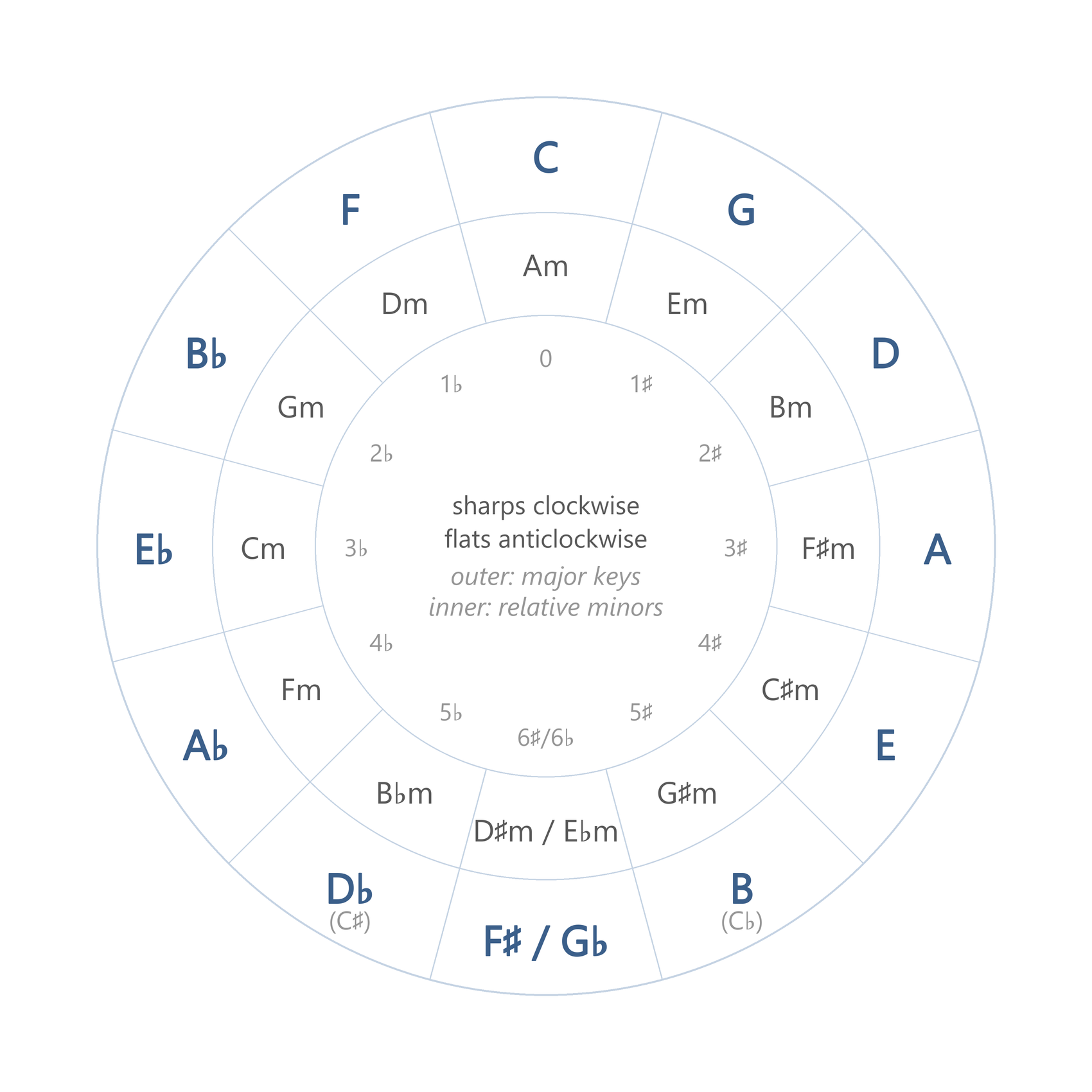
C sits at the top with an empty signature, and the sharp keys run clockwise from it, one accidental more at each step. The outer ring carries the major keys, the inner ring their relative minors, and the number in the centre is the count of sharps or flats the pair shares. At the bottom, where the sharp side meets the flat side, the enharmonic keys are written both ways: B with C♭, F♯ with G♭, and C♯ with D♭.
| Key signature | Major key | Relative minor |
|---|---|---|
| 0 ♯ | C major | A minor |
| 1 ♯ | G major | E minor |
| 2 ♯ | D major | B minor |
| 3 ♯ | A major | F♯ minor |
| 4 ♯ | E major | C♯ minor |
| 5 ♯ | B major | G♯ minor |
| 6 ♯ | F♯ major | D♯ minor |
| 7 ♯ | C♯ major | A♯ minor |
| Key signature | Major key | Relative minor |
|---|---|---|
| 1 ♭ | F major | D minor |
| 2 ♭ | B♭ major | G minor |
| 3 ♭ | E♭ major | C minor |
| 4 ♭ | A♭ major | F minor |
| 5 ♭ | D♭ major | B♭ minor |
| 6 ♭ | G♭ major | E♭ minor |
| 7 ♭ | C♭ major | A♭ minor |
Sharps are always added in the order F, C, G, D, A, E, B. Flats are added in the reverse order, B, E, A, D, G, C, F. The traditional mnemonics run "Father Charles Goes Down And Ends Battle" for sharps, read backwards for flats.
Two shortcuts follow from the order. In a sharp key, the last sharp in the signature is the leading note, so the tonic is a semitone above it. In a flat key, the second-to-last flat is the tonic, and for the single-flat case, F major, there is nothing to do but remember it.
Using the circle
Neighbouring keys on the circle differ by one accidental, so their scales share six of their seven notes. G major is C major with F♯ in place of F, and F major is C major with B♭ in place of B. Every other note is common ground, which is why a move to the next key in either direction sounds like a small step rather than a leap.
The two neighbours also have technical names. One step clockwise from any key lies the key of its dominant, and one step anticlockwise the key of its subdominant. From C, that puts G on one side and F on the other, and the pattern holds all the way round. The circle is a chart of the primary triads: pick any tonic and the roots of IV and V name the keys either side of it. The root fall of the perfect cadence, V to I, is likewise one step anticlockwise.
The inner ring adds the relatives. Each minor key sits directly inside the major whose signature it shares, A minor with C major, E minor with G major, and so on round the ring. Relatives share their key signature outright, which is why 7.1 called the move between them the easiest in tonal music.
Distance round the circle is therefore a fair gauge of how closely two keys are related. The five closely related keys of 7.5 all sit within one step of home: the relative, the dominant and its relative, the subdominant and its relative. Keys further apart have less in common, and the pair directly opposite each other, C major and F♯ major, share only two sounds: B, and the F that F♯ major respells as E♯.
Read this way, the circle is a working tool rather than an ornament. The neighbours of any key supply its subdominant and dominant, its relative sits just inside it on the inner ring, and the number of steps between two keys is a quick estimate of how far a modulation between them has to travel.
7.4 Enharmonic keys
Three pairs of major keys, and their three pairs of relative minors, sound the same and are written differently.
| Written one way | Written the other way | Sharps plus flats |
|---|---|---|
| B major (5 ♯) / G♯ minor | C♭ major (7 ♭) / A♭ minor | 12 |
| F♯ major (6 ♯) / D♯ minor | G♭ major (6 ♭) / E♭ minor | 12 |
| C♯ major (7 ♯) / A♯ minor | D♭ major (5 ♭) / B♭ minor | 12 |
Each pair adds up to twelve accidentals, which is the arithmetic behind the pairing. Composers choose between them for readability. A piece in six flats is easier to read than the same piece in six sharps if the surrounding music is flat-side, and a modulation may land in C♭ major rather than B major purely because the previous key made C♭ the natural spelling.
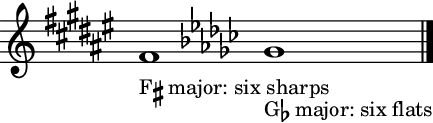
7.5 Closely related keys
Five keys are considered closely related to any given key: its relative, and the four keys whose signatures differ from it by a single accidental. For C major those are A minor (relative), G major and E minor (one sharp), and F major and D minor (one flat). Put in numerals, the closely related keys of a major key are those on ii, iii, IV, V and vi.
Modulation to a closely related key is smooth because the two scales share six of seven notes, so a pivot chord that belongs to both is easy to find.
8. What the numerals do
8.1 The three functions
The seven diatonic chords sort into three groups by what they do in a phrase.
| Function | Chords in major | Chords in minor | Role |
|---|---|---|---|
| Tonic | I, iii, vi | i, III, VI | rest, arrival, the home position |
| Predominant (subdominant) | ii, IV | ii°, iv | departure, preparation for the dominant |
| Dominant | V, vii° | V, vii° | tension demanding resolution to the tonic |
%%{init: {'theme':'neutral'}}%%
flowchart LR
  T["Tonic<br/>I, iii, vi<br/>i, III, VI"] --> P["Predominant<br/>ii, IV<br/>ii°, iv"] --> D["Dominant<br/>V, vii°"] --> T2["Tonic<br/>I or i"]
  T -- "the predominant can be skipped" --> D
  D -. "interrupted cadence goes here instead" .-> S["vi or VI"]
  classDef home fill:#dce8f5,stroke:#3b5f8a,stroke-width:2px
  class T,T2 home
The normal order of a tonal phrase is tonic, then predominant, then dominant, then tonic again. Chords can be skipped and the tonic can be re-established at any point, but the predominant group rarely follows the dominant group without a tonic in between. A progression that does so, such as V-IV, sounds like a rock idiom rather than a classical one, which is a useful thing to notice rather than a rule to obey.
8.2 Cadences
A cadence is the harmonic punctuation at the end of a phrase, and every cadence is defined by its last two chords. British and American terminology differ, so both are given.
| British name | American name | Chords | Effect |
|---|---|---|---|
| Perfect | Authentic | V-I (V-i in minor) | full stop, the strongest close |
| Imperfect | Half | any chord to V, often I-V or ii-V | comma, the phrase hangs open |
| Plagal | Plagal | IV-I (iv-i in minor) | the "amen" close, softer than perfect |
| Interrupted | Deceptive | V-vi (V-VI in minor) | the expected tonic is replaced by the submediant |
%%{init: {'theme':'neutral'}}%%
flowchart LR
  V1["V"] -- "perfect / authentic" --> I1["I<br/>closed, a full stop"]
  IV1["IV"] -- "plagal" --> I2["I<br/>closed, softer"]
  V2["V"] -- "interrupted / deceptive" --> VI["vi<br/>the expected tonic withheld"]
  AC["any chord"] -- "imperfect / half" --> V3["V<br/>left open, a comma"]
  classDef closed fill:#dce8f5,stroke:#3b5f8a,stroke-width:2px
  classDef open fill:#f5ecdc,stroke:#8a6a3b,stroke-width:2px
  class I1,I2 closed
  class VI,V3 open
A perfect cadence is graded further by its voicing. A perfect authentic cadence has both chords in root position and the tonic in the top voice, which is the most conclusive form. An imperfect authentic cadence has an inversion or a different top note, and closes less firmly.
In minor keys, a Phrygian cadence is a half cadence of the form iv6-V, named for the semitone that falls in the bass from degree 6 to degree 5. It is common at the end of slow movements in Baroque music.
The cadential six-four is worth naming because it looks like a chord and behaves like a delay. A tonic triad in second inversion sitting over the dominant bass, I6/4, resolves to V before the cadence completes. Many textbooks label it V6/4-5/3 for that reason, since its function is dominant even though its notes spell the tonic.
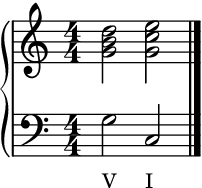
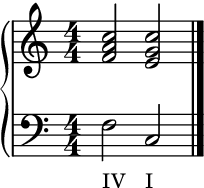
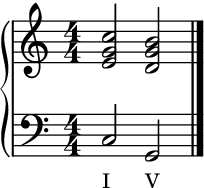
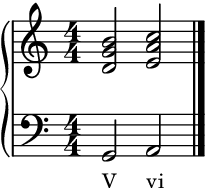
8.3 The primary and secondary triads
I, IV and V are the primary triads in both major and minor. They carry the three functions between them, and their notes cover every degree of the scale. In a minor key they appear as i, iv and V, with V borrowing the raised leading note from the harmonic minor.
ii, iii and vi are the secondary triads. Each shares two notes with a primary triad and can substitute for it: vi for I, iii for I or V, ii for IV. Those shared notes are what make an interrupted cadence work, since vi holds two of the three notes of I and can stand in for it at the last moment.
9. Beyond the seven diatonic chords
9.1 Secondary dominants
Any chord in a key can be given its own dominant, borrowed briefly from the key it would be the tonic of. The result is written as a fraction: V7/V is "the dominant seventh of the dominant". In C major that is D7, the dominant of G.
This is tonicisation, not modulation. A chord is momentarily treated as a tonic and the music moves straight on. The tell is an accidental that does not belong to the key, resolving upward as a leading note into the following chord's root.
%%{init: {'theme':'neutral'}}%%
flowchart LR
  I["C<br/>I"] --> SD["D7<br/>V7/V"] --> V["G<br/>V"] --> I2["C<br/>I"]
  SD -.- NOTE["F♯ is foreign to C major.<br/>It behaves as the leading note of G,<br/>so G is tonicised for one chord."]
  classDef applied fill:#f5ecdc,stroke:#8a6a3b,stroke-width:2px
  classDef gloss fill:#ffffff,stroke:#999,stroke-dasharray:4 3
  class SD applied
  class NOTE gloss
The five common secondary dominants in a major key, in every key:
| Key | V7/ii | V7/iii | V7/IV | V7/V | V7/vi |
|---|---|---|---|---|---|
| C major | A7 (A, C♯, E, G) | B7 (B, D♯, F♯, A) | C7 (C, E, G, B♭) | D7 (D, F♯, A, C) | E7 (E, G♯, B, D) |
| G major | E7 (E, G♯, B, D) | F♯7 (F♯, A♯, C♯, E) | G7 (G, B, D, F) | A7 (A, C♯, E, G) | B7 (B, D♯, F♯, A) |
| D major | B7 (B, D♯, F♯, A) | C♯7 (C♯, E♯, G♯, B) | D7 (D, F♯, A, C) | E7 (E, G♯, B, D) | F♯7 (F♯, A♯, C♯, E) |
| A major | F♯7 (F♯, A♯, C♯, E) | G♯7 (G♯, B♯, D♯, F♯) | A7 (A, C♯, E, G) | B7 (B, D♯, F♯, A) | C♯7 (C♯, E♯, G♯, B) |
| E major | C♯7 (C♯, E♯, G♯, B) | D♯7 (D♯, F𝄪, A♯, C♯) | E7 (E, G♯, B, D) | F♯7 (F♯, A♯, C♯, E) | G♯7 (G♯, B♯, D♯, F♯) |
| B major | G♯7 (G♯, B♯, D♯, F♯) | A♯7 (A♯, C𝄪, E♯, G♯) | B7 (B, D♯, F♯, A) | C♯7 (C♯, E♯, G♯, B) | D♯7 (D♯, F𝄪, A♯, C♯) |
| F♯ major | D♯7 (D♯, F𝄪, A♯, C♯) | E♯7 (E♯, G𝄪, B♯, D♯) | F♯7 (F♯, A♯, C♯, E) | G♯7 (G♯, B♯, D♯, F♯) | A♯7 (A♯, C𝄪, E♯, G♯) |
| C♯ major | A♯7 (A♯, C𝄪, E♯, G♯) | B♯7 (B♯, D𝄪, F𝄪, A♯) | C♯7 (C♯, E♯, G♯, B) | D♯7 (D♯, F𝄪, A♯, C♯) | E♯7 (E♯, G𝄪, B♯, D♯) |
| F major | D7 (D, F♯, A, C) | E7 (E, G♯, B, D) | F7 (F, A, C, E♭) | G7 (G, B, D, F) | A7 (A, C♯, E, G) |
| B♭ major | G7 (G, B, D, F) | A7 (A, C♯, E, G) | B♭7 (B♭, D, F, A♭) | C7 (C, E, G, B♭) | D7 (D, F♯, A, C) |
| E♭ major | C7 (C, E, G, B♭) | D7 (D, F♯, A, C) | E♭7 (E♭, G, B♭, D♭) | F7 (F, A, C, E♭) | G7 (G, B, D, F) |
| A♭ major | F7 (F, A, C, E♭) | G7 (G, B, D, F) | A♭7 (A♭, C, E♭, G♭) | B♭7 (B♭, D, F, A♭) | C7 (C, E, G, B♭) |
| D♭ major | B♭7 (B♭, D, F, A♭) | C7 (C, E, G, B♭) | D♭7 (D♭, F, A♭, C♭) | E♭7 (E♭, G, B♭, D♭) | F7 (F, A, C, E♭) |
| G♭ major | E♭7 (E♭, G, B♭, D♭) | F7 (F, A, C, E♭) | G♭7 (G♭, B♭, D♭, F♭) | A♭7 (A♭, C, E♭, G♭) | B♭7 (B♭, D, F, A♭) |
| C♭ major | A♭7 (A♭, C, E♭, G♭) | B♭7 (B♭, D, F, A♭) | C♭7 (C♭, E♭, G♭, B♭♭) | D♭7 (D♭, F, A♭, C♭) | E♭7 (E♭, G, B♭, D♭) |
There is no V7/vii°, because the diminished triad on degree 7 is not stable enough to be tonicised. Note also that V7/IV has the same notes as a tonic seventh chord, I7, which is why a plain dominant seventh built on the tonic almost always moves to IV.
The related device is the secondary leading-note chord, written vii°7/V and so on, which uses a diminished seventh in place of the dominant seventh and resolves the same way.
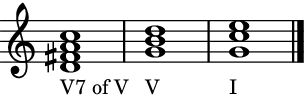
9.2 Borrowed chords
A major key can borrow chords from its parallel minor. The borrowed chords carry flat signs in their numerals because their roots are altered relative to the major scale.
| Borrowed into a major key | From the parallel minor | Sound in C major |
|---|---|---|
| i | tonic minor | C, E♭, G |
| ii° | diminished supertonic | D, F, A♭ |
| ♭III | flattened mediant | E♭, G, B♭ |
| iv | minor subdominant | F, A♭, C |
| ♭VI | flattened submediant | A♭, C, E♭ |
| ♭VII | flattened subtonic | B♭, D, F |
The minor iv in a major key, often at a plagal cadence, is the most common of these and has a long history in hymnody and popular song. ♭VII is a staple of rock harmony.
Borrowing in the other direction, from major into minor, happens too. A minor-key piece that ends on a major tonic chord is using a tierce de Picardie, the raised third of the final chord.
9.3 The Neapolitan and the augmented sixths
Two chromatic families appear often enough in minor keys to be worth tabulating for every key.
The Neapolitan is a major triad on the flattened supertonic, written ♭II or N. It almost always appears in first inversion, ♭II6 or N6, which is why it is usually called the Neapolitan sixth. It functions as a predominant, moving to V or to a cadential six-four.
The augmented sixth chords are built on the flattened submediant, and all contain the interval of an augmented sixth between ♭6 in the bass and a raised 4 above it. That interval expands outward to the octave on degree 5, which is why these chords lead to V. The three types differ only in the note added in the middle.
- Italian sixth: ♭6, 1, ♯4. Three notes, with the tonic doubled in four-part writing.
- French sixth: ♭6, 1, 2, ♯4. Adds degree 2, giving a whole-tone flavour.
- German sixth: ♭6, 1, ♭3, ♯4. Adds degree 3, which makes it sound like a dominant seventh on ♭6 and creates parallel fifths unless it passes through a cadential six-four first.
The augmented sixth itself is what does the work. Its two outer notes move apart by a semitone each and arrive on the same note an octave apart, which is degree 5, so chord V is waiting there. In A minor:
%%{init: {'theme':'neutral'}}%%
flowchart LR
  b6["♭6 in the bass<br/>F"] -- "down a semitone" --> E1["E<br/>degree 5"]
  s4["♯4 above it<br/>D♯"] -- "up a semitone" --> E2["E<br/>degree 5, an octave higher"]
  E1 --- V["the two Es frame chord V<br/>E, G♯, B"]
  E2 --- V
  classDef goal fill:#dce8f5,stroke:#3b5f8a,stroke-width:2px
  class V goal
| Key | Neapolitan ♭II root (triad) | Italian 6th | French 6th | German 6th |
|---|---|---|---|---|
| A minor | B♭ (B♭, D, F) | F, A, D♯ | F, A, B, D♯ | F, A, C, D♯ |
| E minor | F (F, A, C) | C, E, A♯ | C, E, F♯, A♯ | C, E, G, A♯ |
| B minor | C (C, E, G) | G, B, E♯ | G, B, C♯, E♯ | G, B, D, E♯ |
| F♯ minor | G (G, B, D) | D, F♯, B♯ | D, F♯, G♯, B♯ | D, F♯, A, B♯ |
| C♯ minor | D (D, F♯, A) | A, C♯, F𝄪 | A, C♯, D♯, F𝄪 | A, C♯, E, F𝄪 |
| G♯ minor | A (A, C♯, E) | E, G♯, C𝄪 | E, G♯, A♯, C𝄪 | E, G♯, B, C𝄪 |
| D♯ minor | E (E, G♯, B) | B, D♯, G𝄪 | B, D♯, E♯, G𝄪 | B, D♯, F♯, G𝄪 |
| A♯ minor | B (B, D♯, F♯) | F♯, A♯, D𝄪 | F♯, A♯, B♯, D𝄪 | F♯, A♯, C♯, D𝄪 |
| D minor | E♭ (E♭, G, B♭) | B♭, D, G♯ | B♭, D, E, G♯ | B♭, D, F, G♯ |
| G minor | A♭ (A♭, C, E♭) | E♭, G, C♯ | E♭, G, A, C♯ | E♭, G, B♭, C♯ |
| C minor | D♭ (D♭, F, A♭) | A♭, C, F♯ | A♭, C, D, F♯ | A♭, C, E♭, F♯ |
| F minor | G♭ (G♭, B♭, D♭) | D♭, F, B | D♭, F, G, B | D♭, F, A♭, B |
| B♭ minor | C♭ (C♭, E♭, G♭) | G♭, B♭, E | G♭, B♭, C, E | G♭, B♭, D♭, E |
| E♭ minor | F♭ (F♭, A♭, C♭) | C♭, E♭, A | C♭, E♭, F, A | C♭, E♭, G♭, A |
| A♭ minor | B♭♭ (B♭♭, D♭, F♭) | F♭, A♭, D | F♭, A♭, B♭, D | F♭, A♭, C♭, D |
The names are conventional labels invented in England and have no reliable connection to Italian, French or German musical practice.
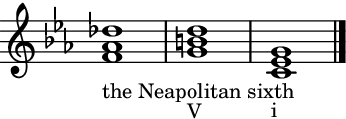
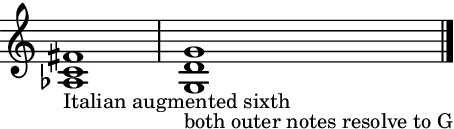
10. The modes and their numerals
The seven modes are rotations of the same seven notes. Each starts on a different degree of the major scale, and each has its own pattern of tones and semitones, which produces a different set of triads.
Modal Roman numerals are counted against the major scale on the same tonic, so a mode's altered degrees carry accidentals in their numerals. This is the opposite of the convention for minor keys, where numerals are counted against the minor scale. Aeolian is the natural minor, and comparing its row below with the natural minor grid in 5.7 shows the difference: the same chords appear as ♭III, ♭VI, ♭VII when the mode is measured against C major, and as III, VI, VII when the key is measured as C minor.
| Mode | White-note form | Built on C | Triads by Roman numeral |
|---|---|---|---|
| Ionian | C to C on the white notes | C, D, E, F, G, A, B, C | I ii iii IV V vi vii° |
| Dorian | D to D on the white notes | C, D, E♭, F, G, A, B♭, C | i ii ♭III IV v vi° ♭VII |
| Phrygian | E to E on the white notes | C, D♭, E♭, F, G, A♭, B♭, C | i ♭II ♭III iv v° ♭VI ♭vii |
| Lydian | F to F on the white notes | C, D, E, F♯, G, A, B, C | I II iii ♯iv° V vi vii |
| Mixolydian | G to G on the white notes | C, D, E, F, G, A, B♭, C | I ii iii° IV v vi ♭VII |
| Aeolian | A to A on the white notes | C, D, E♭, F, G, A♭, B♭, C | i ii° ♭III iv v ♭VI ♭VII |
| Locrian | B to B on the white notes | C, D♭, E♭, F, G♭, A♭, B♭, C | i° ♭II ♭iii iv ♭V ♭VI ♭vii |
The characteristic degree of each mode is the one that distinguishes it from the major or minor scale it most resembles. Dorian is a minor scale with a raised 6, so its IV is major where a natural minor would have iv. Lydian is a major scale with a raised 4, giving it II major and the striking ♯iv°. Mixolydian is a major scale with a lowered 7, so its dominant chord is minor and it gains the ♭VII. Phrygian is a minor scale with a lowered 2, and the ♭II is what makes it recognisable in a bar. Locrian has a diminished tonic triad and no stable home chord, so it is a theoretical curiosity more than a working mode.
11. Quick reference
11.1 The technical names
| Degree | Name | Where it is |
|---|---|---|
| 1 | Tonic | the key note |
| 2 | Supertonic | a tone or semitone above the tonic |
| 3 | Mediant | a third above the tonic |
| 4 | Subdominant | a fifth below the tonic |
| 5 | Dominant | a fifth above the tonic |
| 6 | Submediant | a third below the tonic |
| 7 | Leading note | a semitone below the tonic |
| 7 | Subtonic | a whole tone below the tonic, natural minor only |
11.2 The numerals
| Scale | Degree 1 | 2 | 3 | 4 | 5 | 6 | 7 |
|---|---|---|---|---|---|---|---|
| Major | I | ii | iii | IV | V | vi | vii° |
| Natural minor | i | ii° | III | iv | v | VI | VII |
| Harmonic minor | i | ii° | III+ | iv | V | VI | vii° |
| Melodic minor ascending | i | ii | III+ | IV | V | vi° | vii° |
| Major, sevenths | IMaj7 | ii7 | iii7 | IVMaj7 | V7 | vi7 | viiø7 |
| Harmonic minor, sevenths | iMaj7 | iiø7 | III+Maj7 | iv7 | V7 | VIMaj7 | vii°7 |
11.3 Inversion figures
| Chord | Root position | 1st inversion | 2nd inversion | 3rd inversion |
|---|---|---|---|---|
| Triad | I | I6 | I6/4 | not applicable |
| Triad, ABRSM letters | Ia | Ib | Ic | not applicable |
| Seventh | V7 | V6/5 | V4/3 | V4/2 |
| Seventh, ABRSM letters | V7a | V7b | V7c | V7d |
11.4 Symbol glossary
| Symbol | Meaning |
|---|---|
| ♯ ♭ ♮ | sharp, flat, natural |
| 𝄪 ♭♭ | double sharp, double flat |
| ° | diminished triad, or fully diminished seventh when written °7 |
| ø | half-diminished seventh |
| + | augmented triad |
| Maj7 | major seventh above the root |
| 7 | minor seventh above the root, in the classical convention |
| 6, 6/4 | triad inversions |
| 7, 6/5, 4/3, 4/2 | seventh chord inversions |
| a, b, c, d | ABRSM inversion letters |
| V/x | secondary dominant of chord x |
| N6, ♭II6 | Neapolitan sixth |
| It+6, Fr+6, Ger+6 | Italian, French and German augmented sixths |
12. Practice
- Name the technical name of the 6th degree of A♭ major, and give the note.
- What is the leading note of C♯ minor? What is its subtonic?
- Give the notes of chord iv in F minor, and say which scale form supplies them.
- In E major, what chord is vii°? Give the notes and the quality.
- Write the Roman numeral for the chord B♭, D♭, F in the key of G♭ major.
- Which degree is the subdominant, and why is it not simply "the degree below the dominant"?
- In D minor, give the notes of V7 and identify the accidental that does not come from the key signature.
- What does ♭VI mean in C major, and where is the chord borrowed from?
- Name the three augmented sixth chords in B minor.
- Which two major keys are enharmonic with G♭ major and D♭ major respectively?
- Explain why III appears without a flat sign in a minor key but ♭III appears with one in a major key.
- What is the difference between V6/5 and Vb, and between V6/5 and V7b?
Answers
- The submediant, F. (A♭ major runs A♭, B♭, C, D♭, E♭, F, G.)
- The leading note of C♯ minor is B♯, from the harmonic and melodic forms. The subtonic is B, from the natural form.
- B♭, D♭, F. All three notes come from the key signature of F minor, so every form of the scale supplies them; degrees 4, 6 and 1 are unaffected by the raising of 6 and 7 in the harmonic and melodic forms.
- D♯, F♯, A. Diminished, so it is written vii°.
- iii. G♭ major runs G♭, A♭, B♭, C♭, D♭, E♭, F, so B♭ is degree 3 and the triad B♭, D♭, F is minor.
- The subdominant is degree 4. It is named for lying a fifth below the tonic, mirroring the dominant a fifth above. The "degree below the dominant" reading gives the right answer by accident here but fails for the submediant, which is degree 6 and not degree 2.
- A, C♯, E, G. The C♯ is the raised leading note from the harmonic minor; the key signature of D minor gives only B♭.
- A major triad on A♭, the flattened submediant. It is borrowed from C minor, the parallel minor.
- Italian: G, B, E♯. French: G, B, C♯, E♯. German: G, B, D, E♯.
- F♯ major is enharmonic with G♭ major. C♯ major is enharmonic with D♭ major.
- Numerals in a minor key are counted against the minor scale itself, where the mediant is already a minor third above the tonic, so no accidental is needed. In a major key the mediant is a major third above the tonic, so a chord rooted a minor third above has an altered root and takes the flat sign.
- V6/5 and V7b are the same chord, a dominant seventh in first inversion, written in the figured-bass and ABRSM systems respectively. Vb is a dominant triad in first inversion, with no seventh.
Companion documents: Roman Numeral Analysis for analytical method and modulation; Musical Harmony for voice leading and the acoustics behind these chords; ABRSM Music Theory Grades 1 to 5 for the graded syllabus that introduces this material.